Pakistan’s Energy Bills Pile Up: Gas Liabilities Hit Rs5.454 Trillion as Power Circular Debt Climbs to Rs1.675 Trillion
Pakistan’s Energy Bills Pile Up: Gas Liabilities Hit Rs5.454 Trillion as Power Circular Debt Climbs to Rs1.675 Trillion By Bilal Ahmed | October 21, 2026 Pakistan’s energy crisis now has an official number — and it is staggering. Energy Minister Ali Pervaiz Malik told the National Assembly on Monday, in written replies during Question Hour,…
Pakistan’s Energy Bills Pile Up: Gas Liabilities Hit Rs5.454 Trillion as Power Circular Debt Climbs to Rs1.675 Trillion
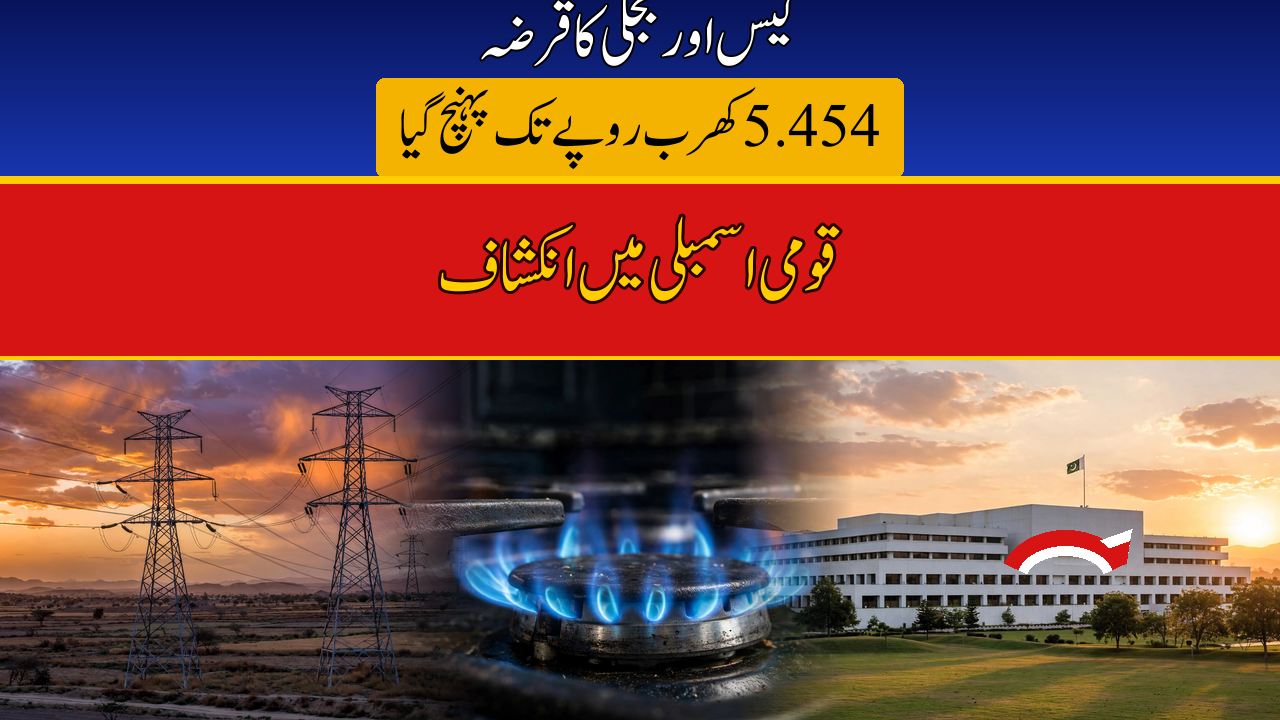
Pakistan’s energy crisis now has an official number — and it is staggering. Energy Minister Ali Pervaiz Malik told the National Assembly on Monday, in written replies during Question Hour, that gas sector liabilities — circular debt plus outstanding payables — have reached Rs5.454 trillion as of June 30, 2026. Disclosures reported by Profit in the same sitting put the power sector’s circular debt at Rs1.675 trillion, up Rs34 billion in FY26. To keep the system running, the government has secured a Rs1.225 trillion financing facility from commercial banks — a six-year loan at KIBOR minus 0.9 percent to clear a chunk of the power sector’s dues. These are not abstract finance-ministry figures. They are the reason your gas bill keeps climbing, why gas pressure vanishes every December, and why the IMF keeps demanding higher tariffs.
What the Minister Told the National Assembly
The numbers came out the way most uncomfortable truths do in Islamabad — quietly, in writing. During Monday’s Question Hour, the energy minister’s written replies laid the gas sector’s books bare: Rs5.454 trillion in circular debt and outstanding payables as of June 30, 2026.
He also disclosed Pakistan’s remaining recoverable reserves: just 276 million barrels of oil — of 1,378 million discovered, 1,102 million already produced. For gas, only 20,664 BCF remain of the 68,803 BCF discovered, with 48,140 BCF extracted. Roughly 80 percent of Pakistan’s discovered oil and 70 percent of its gas are gone.
The disclosure matters because it is official. For years, circular debt figures surfaced through leaks and IMF staff notes. An earlier IMF note, referenced in Business Recorder’s reporting, had estimated gas-sector circular debt at around Rs3.442 trillion in early 2026 — the minister’s reply confirms the official trajectory is worse.
Gas Circular Debt: Where Rs3.631 Trillion Comes From
Circular debt is banker jargon for something brutally simple. Gas is bought or produced at one cost and sold to consumers at a lower, politically fixed price. The gap — the tariff differential — is never fully recovered. Gas companies cannot pay their suppliers, who cannot pay theirs. Unpaid amounts roll forward, and late-payment surcharges compound on top like interest on a credit card that is never cleared.
Here is the minister’s official breakdown of the Rs3.631 trillion gas circular debt:
| Component | Amount |
|---|---|
| Tariff differentials | Rs1.448 trillion |
| Receivables from power companies | Rs131 billion |
| Sales tax and income tax receivables | Rs210 billion |
| Amount stuck in litigation | Rs59 billion |
| Principal subtotal | Rs1.848 trillion |
| Late payment surcharge | Rs1.783 trillion |
| Total gas circular debt | Rs3.631 trillion |
Two things jump out. The tariff differential — Rs1.448 trillion — is the accumulated cost of selling gas below its true price for years. And the late payment surcharge is nearly as large as the principal itself. When almost half your debt is interest, the system is not just borrowing — it is drowning.
The Rs1.823 Trillion Supplier Bill Nobody Talked About
The circular debt figure is only half the headline. On top of it, the gas sector owes another Rs1.823 trillion directly to suppliers — money owed right now, not rolled-forward accounting:
| Owed to | Amount |
|---|---|
| Domestic gas suppliers | Rs1.479 trillion |
| LNG suppliers (RLNG price actualisation, diversion costs) | Rs344 billion |
| Total supplier payables | Rs1.823 trillion |
The Rs344 billion owed to LNG suppliers is especially telling. Imported LNG is priced in dollars on rigid long-term contracts but sold domestically in rupees at regulated prices. Pakistan’s winter gas imports have already cost over a billion dollars, and the gap between what LNG costs and what consumers are charged keeps accumulating — even as the first LNG cargo of October arrives into a system owing its suppliers hundreds of billions.
Power Sector: Rs1.675 Trillion and Still Growing
According to Profit’s reporting on the National Assembly disclosures, power-sector circular debt rose to Rs1.675 trillion by end-June 2026 — up Rs34 billion during FY26 from Rs1.641 trillion a year earlier. Gas-sector liabilities grew by Rs344 billion in the same fiscal year to reach Rs3.631 trillion. The two sectors feed each other: gas that power plants burn but do not fully pay for shows up as circular debt on both books.
Profit’s reporting identifies the principal driver: unpaid electricity bills from K-Electric through the national grid, tied up in a tariff dispute now before the courts. When Karachi’s utility and the national system fight over the price of power, the unpaid gap lands on the circular debt pile — and on every other consumer’s bill.
The Rs1.225 Trillion Bank Lifeline — and What It Really Costs
To stop the power sector’s payables from freezing the system, the government has arranged a Rs1.225 trillion financing facility from commercial banks, spread over six years at KIBOR minus 0.9 percent. In plain language: the state is borrowing from banks to pay bills it already owed, converting circular debt into regular sovereign borrowing.
It is a familiar playbook — refinance the arrears, stretch the repayment, keep the lights on. It buys time, but it converts an accounting mess into hard debt service: interest on Rs1.225 trillion, even at a concessional rate, runs into hundreds of billions over six years. With tariffs still not covering costs, the facility risks becoming a bridge to the next refinancing rather than a solution.
The CDMP: Islamabad’s Plan to Stop the Bleeding
The government says it has a plan. According to the minister’s replies, a Circular Debt Management Plan (CDMP) is being finalised with stakeholders, after which it will go for approval and then be shared with the IMF under the ongoing reform framework. The Fund’s interest is no secret: circular debt is a standing item in every review of Pakistan’s programme, because every rupee of it is a contingent liability on the state.
Its contents remain undisclosed, but the template is well known: tariff rationalisation (higher consumer prices), targeted subsidies replacing blanket ones, recovery drives against defaulters, and settlement of supplier payables. The IMF has already raised its inflation forecast for Pakistan to 9.9 percent for FY27 — a signal that energy price adjustments will keep feeding through to the cost of living.
What It Means for Your Bill
Strip away the trillions, and the question every household asks is the same: what happens to my bill? The honest answer is uncomfortable.
Gas bills will keep rising. The Rs1.448 trillion tariff differential is the accumulated price of keeping gas cheap. The IMF’s reform framework requires cost recovery — regulated gas prices moving toward actual cost. Every review pushes in that direction.
Electricity surcharges are baked in. The Rs1.783 trillion late payment surcharge on gas alone shows how non-payment compounds. On the power side, financing costs from the Rs1.225 trillion bank facility and the unresolved K-Electric tariff dispute will feed into tariff petitions, quarterly adjustments and fuel cost adjustments. Your bill already carries layers of this debt.
Winter will hurt. Low gas pressure in December and January is not a supply accident; it is the physical symptom of this financial disease. Reserves are depleting, LNG arrives on expensive dollar contracts, and the sector owes suppliers Rs1.823 trillion. A system this indebted cannot invest in storage, pipelines or pressure management. Expect the usual ritual: full bills, half pressure.
The reserves clock is ticking. As domestic gas depletes, Pakistan replaces it with imported LNG bought in dollars. The rupee keeps sliding, regulated prices lag, and the tariff differential grows. Breaking the cycle requires new discoveries at scale, pricing gas at its real cost, or both. Monday’s figures put the official price tag on delay: Rs5.454 trillion and counting.