National Savings Profit Rates Hiked From October 21, 2026 — Complete New Rates
National Savings Profit Rates Increased in Pakistan — New Rates Effective October 21, 2026 By Bilal Ahmed, Business Desk | Updated: October 21, 2026 The government has increased profit rates on several National Savings schemes in Pakistan, with the revised rates taking effect from October 21, 2026. Behbood Savings Certificates, Pensioners’ Benefit Accounts and Shuhada…
National Savings Profit Rates Increased in Pakistan — New Rates Effective October 21, 2026
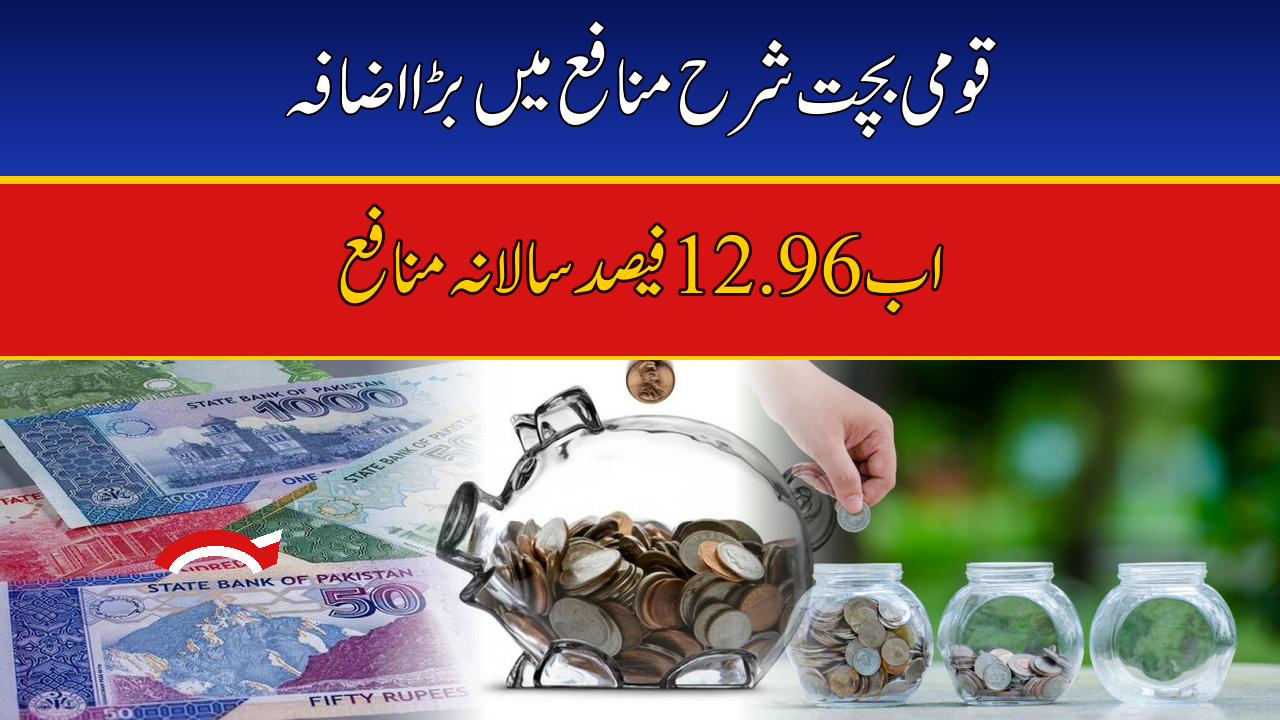
The government has increased profit rates on several National Savings schemes in Pakistan, with the revised rates taking effect from October 21, 2026. Behbood Savings Certificates, Pensioners’ Benefit Accounts and Shuhada Family Welfare Accounts will now pay 12.96% a year (up from 12.72%), Regular Income Certificates rise to 12.12% (up from 11.76%), and Special Savings Certificates move to 12% for the first five six-monthly payments (up from 11.6%). The ordinary Savings Account rate stays unchanged at 10%.
This is the second rate revision in less than three weeks — the previous one took effect on October 1 — and it once again puts National Savings among the most competitive safe options for Pakistani savers. If you or someone in your family holds a Behbood certificate, a Pensioners’ Benefit Account or a Regular Income Certificate, your monthly or six-monthly payout will look different from this week onward. Here is exactly what changed, scheme by scheme, and what it means for your money.
New National Savings Profit Rates at a Glance
The notification was issued by the Ministry of Finance and circulated through the National Savings Department. The table below compares the old and new annual rates for the main schemes.
| Scheme | Old Rate | New Rate (from Oct 21, 2026) |
|---|---|---|
| Behbood Savings Certificates | 12.72% | 12.96% |
| Pensioners’ Benefit Account | 12.72% | 12.96% |
| Shuhada Family Welfare Account | 12.72% | 12.96% |
| Regular Income Certificates | 11.76% | 12.12% |
| Special Savings Certificates (first 5 payments) | 11.60% | 12.00% |
| Special Savings Certificates (6th and final payment) | 12.90% | 12.80% |
| Defence Savings Certificates (6-year) | 86% | 88% |
| Defence Savings Certificates (7-year) | 109% | 113% |
| Defence Savings Certificates (8-year) | 136% | 142% |
| Defence Savings Certificates (9-year) | 168% | 176% |
| Defence Savings Certificates (10-year) | 205% | 215% |
| Sarwa Islamic Term Account (1-year) | 11.33% | 11.84% |
| Short Term Savings Certificates (3-month) | 10.80% | 11.12% |
| Savings Account | 10.00% | 10.00% (unchanged) |
What This Means for Pensioners and Widows
The biggest real-world impact is on the three welfare schemes — Behbood, Pensioners’ Benefit and Shuhada — which are restricted to widows, senior citizens, persons with disabilities, pensioners and the families of martyrs. At Rs1,080 a month on every Rs100,000 invested, a widow with Rs1 million in Behbood certificates will now receive Rs10,800 a month instead of Rs10,600.
That Rs200-a-month difference may look small on paper, but talk to any retired schoolteacher in Lahore or a widow running a household in Multan and you will hear the same thing: this monthly profit is not an investment, it is a salary. The government has clearly treated it that way — these three schemes carry the highest rate of the entire revision at 12.96%, and they are the only schemes exempt from both withholding tax and Zakat.
The investment limits stay as before: a minimum of Rs5,000 for Behbood and Rs10,000 for the Pensioners’ and Shuhada accounts, with a maximum of Rs7.5 million per scheme.
Regular Income Certificates: Rs1,010 a Month per Lakh
If you are a regular saver who does not qualify for the welfare schemes, the Regular Income Certificate is usually the first certificate the National Savings Centre staff will show you. The new rate of 12.12% works out to Rs1,010 a month on every Rs100,000, paid monthly for five years.
In practical terms, a Rs500,000 investment now earns Rs5,050 a month. The catch: Regular Income Certificates deduct withholding tax at 15% for filers and 30% for non-filers, so the headline 12.12% and what lands in your account are two different numbers.
Defence Savings Certificates: The Long Game Pays More
Defence Savings Certificates work differently — they pay nothing until you cash them out, but the compounded profit keeps getting better. Under the new rates, Rs100,000 held for the full ten years matures to Rs315,000 (a 215% cumulative return). For shorter holds, the new cumulative figures are 88% at six years, 113% at seven, 142% at eight and 176% at nine. Cash out early and the table is much less generous (the first year earns only 10% on the sheet), so only lock money you will not need for years.
Sarwa Islamic Schemes Also Rise
The Sharia-compliant Sarwa Islamic range moved up alongside the conventional schemes. The one-year Sarwa Islamic Term Account now carries an expected profit rate of 11.84% (up from 11.33%), payable at maturity — that is Rs11,840 on Rs100,000. The three-year plan sits at 12.10% with semi-annual payments and the five-year plan at 12.12% with monthly payments. The Sarwa Islamic Savings Account has also been set at 11.84%.
For savers who avoid interest-based products, this revision narrows the gap that used to make conventional certificates look more attractive on paper.
What Did Not Change
The ordinary National Savings Savings Account stays at 10% — the government deliberately left it alone, continuing a long pattern of keeping it well below the certificate rates to nudge savers toward longer-term instruments. Short Term Savings Certificates otherwise improved across the board: the three-month rate is now 11.12%, the six-month rate 11.50% and the one-year rate 11.72%.
One quiet footnote worth knowing: the final (sixth) payment on Special Savings Certificates is now 12.80%, slightly below the 12.90% it carried under the October 1 card. The headline hike applies to the first five payments — 11.60% to 12% — so existing holders earn more for most of the certificate’s life.
How This Compares With Bank Deposits
With the State Bank’s policy rate holding steady at 11.5% in recent months, commercial banks have been trimming their deposit rates, and National Savings certificates at 12–12.96% are now meaningfully ahead of most bank savings accounts. That is no accident — the government borrows heavily through these schemes, and higher certificate rates are one way to keep that funding flowing, much like the Rs660 billion raised in the October T-bill auction.
The comparison that matters for most households is simpler: a bank savings account pays you less and your money is liquid; a Behbood or RIC certificate pays you more and your money is locked in. If your emergency fund is covered, the certificate side of that trade keeps winning. And if you are weighing savings against other assets, keep an eye on gold rates and the dollar rate too — Pakistanis rarely put everything in one place, and neither should you.
Before You Invest: 4 Things to Check
1. Your tax status
Withholding tax on certificate profit is 15% for filers and 30% for non-filers. On a 12.12% RIC, a non-filer effectively keeps 8.48%. The government’s IMF-linked revenue push means filer status matters more than ever — becoming a filer is usually the single highest-return move a saver can make.
2. Your eligibility
Behbood is for senior citizens (60+), widows who have not remarried, and persons with disabilities; the Pensioners’ Benefit Account is for pensioners; Shuhada for families of martyrs. The other certificates are open to all adult Pakistanis with a valid CNIC.
3. Where to buy
Certificates are sold at National Savings Centres (Qaumi Bachat centres) across the country — take your CNIC. Behbood applications use form SC-1.
4. Rate-change frequency
National Savings rates changed six times in 2026 alone. Treat every announced rate as “current until further notice” rather than permanent, and confirm the prevailing rate at the centre before handing over money.
Frequently Asked Questions
What is the new profit rate on Behbood Savings Certificates?
From October 21, 2026, Behbood Savings Certificates pay 12.96% per year (up from 12.72%), which works out to Rs1,080 per month on every Rs100,000 invested. The same rate applies to Pensioners’ Benefit Accounts and Shuhada Family Welfare Accounts.
When do the new National Savings rates take effect?
The revised profit rates were notified by the Ministry of Finance and take effect from October 21, 2026. Certificates purchased on or after this date earn the new rates.
What is the profit rate on Regular Income Certificates now?
Regular Income Certificates now pay 12.12% a year (up from 11.76%), equal to Rs1,010 per month on every Rs100,000. Profit is paid monthly for five years, with 15% withholding tax for filers and 30% for non-filers.
Has the Defence Savings Certificate 10-year rate changed?
Yes. The 10-year Defence Savings Certificate now carries a cumulative return of 215% (up from 205%), meaning Rs100,000 matures to Rs315,000. Rates for six, seven, eight and nine years rose to 88%, 113%, 142% and 176% respectively.
Who can buy Behbood Savings Certificates?
Behbood certificates are for senior citizens aged 60 or above, widows who have not remarried, and disabled persons whose CNIC carries the disability logo. Minimum investment is Rs5,000 and the maximum is Rs7.5 million.
Is there any tax on National Savings profit?
Most schemes deduct withholding tax of 15% for filers and 30% for non-filers. Behbood Savings Certificates and Pensioners’ Benefit Accounts are exempt from both withholding tax and Zakat, which is one reason their 12.96% rate is especially valuable.
For pensioners and widows, this revision is genuinely good news: 12.96% on the welfare schemes is the highest rate in the National Savings range, and it is tax-free. For everyone else, 12.12% on Regular Income and 12% on Special Savings make government certificates competitive again against falling bank deposit rates. Just check your filer status and eligibility before you invest — because if 2026 has shown anything, it is that these rates can change again within weeks.