SBP Foreign Exchange Reserves Rise $16 Million to $21.469 Billion in Week Ended October 9, 2026
By Bilal Ahmed | TimelyUps Business Desk | Published: October 16, 2026 Pakistan’s foreign exchange cushion got slightly thicker this week. The State Bank of Pakistan’s reserves rose by $16 million to $21.469 billion during the week ended October 9, 2026, the central bank reported on Thursday (October 15). Total liquid reserves — including the…

Pakistan’s foreign exchange cushion got slightly thicker this week. The State Bank of Pakistan’s reserves rose by $16 million to $21.469 billion during the week ended October 9, 2026, the central bank reported on Thursday (October 15). Total liquid reserves — including the foreign currency held by commercial banks — now stand at $26.863 billion, continuing a record-high run that began with Pakistan’s $3 billion Eurobond inflows.
The weekly increase is modest — $16 million is barely a rounding error on a $21.5 billion stockpile. But the direction is what matters. Reserves have been climbing for weeks even as the trade deficit widens, which is unusual for Pakistan: when the import bill rises, reserves normally fall. This time, external financing inflows are doing the heavy lifting, and the rupee has quietly firmed alongside.
Key Facts: SBP Reserves — Week Ended Oct 9, 2026
- SBP-held reserves: $21.469 billion, up $16 million on the week (from $21.454 billion)
- Total liquid reserves: $26.863 billion, up $65.9 million on the week
- Commercial banks’ holdings: $5.394 billion, up $50.1 million on the week
- Import cover: roughly 3.04 months of imports at current levels
- Backdrop: record-high run since $3 billion in Eurobond proceeds flowed in
- Headwind: the trade deficit is still rising
- Announced: Thursday, October 15, 2026 (SBP weekly statement)
The Week’s Numbers in Detail
Breaking the $26.863 billion total apart tells a cleaner story than the headline. The SBP’s own reserves edged up $16 million from $21.454 billion (ProPakistani’s tabulation has $15.8 million — the difference is rounding across data releases). Meanwhile, the foreign currency held by commercial banks grew $50.1 million to $5.394 billion. Both legs moving the same way is the healthy version of this weekly statement: some weeks one rises while the other falls and the total barely budges; this week both added, lifting the total by $65.9 million.
The number most economists will circle first, though, isn’t the $26.863 billion at all. It’s the 3.04 months of import cover — how long the country could keep paying for imports if every inflow stopped tomorrow. Three months is the classic minimum comfort line; Pakistan sitting just above it means the cushion is real but thin.
Why Reserves Keep Climbing When the Trade Deficit Is Rising
This is the puzzle the SBP’s own statement flags. Normally, a rising trade deficit — more spent on imports than earned on exports — drains reserves mechanically. Yet Pakistan’s reserves have been on a record-high run since roughly $3 billion arrived from the sale of Eurobonds.
The honest answer is that these gains are being bought with financing, not earned through trade. Eurobond proceeds, government commercial borrowing and multilateral inflows have been landing faster than the trade gap can erode them. The pattern matches earlier jumps this year: a $3.06 billion surge when Eurobond money first arrived, a $1.21 billion weekly gain on government commercial loans. This week’s $16 million is a far smaller, more ordinary move — a stable week, not a financing event.
None of this makes the reserves fake, but it does change how to read them. Reserves built on inflows are only as durable as the next inflow: debt repayments are already scheduled to chip away at the stockpile — recall the $229 million weekly decline back in late July when external repayments fell due. The real test isn’t whether reserves rise on inflow weeks; it’s whether they hold up on repayment weeks.
What This Means for You — Dollar Rate, Imports, Petrol
Macro numbers only matter if they touch your wallet. Here is the practical translation.
The rupee got a tiny bit stronger
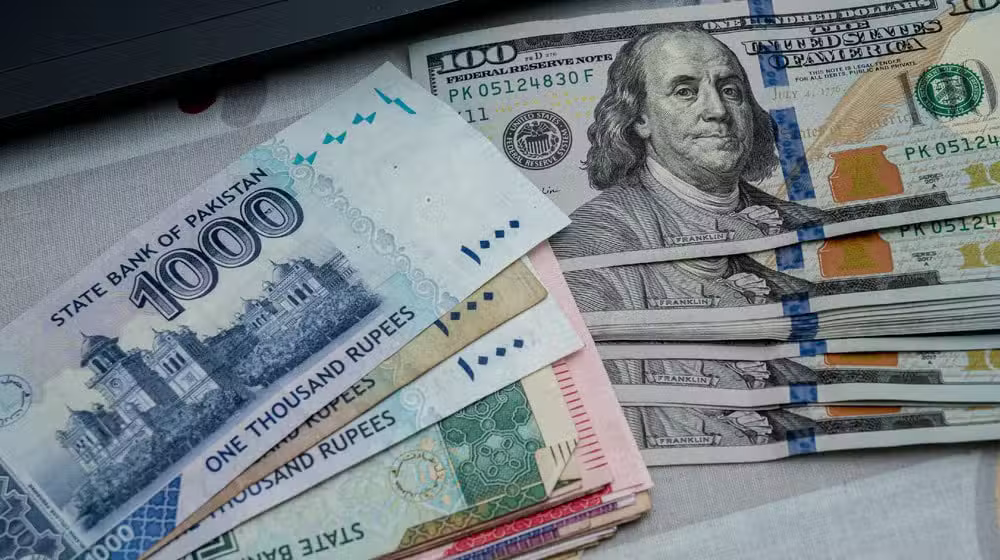
On the same Thursday the reserves data came out, the rupee extended its marginal gains in the inter-bank market, closing at Rs276.92 per dollar — up 3 paisas from Rs276.95. Small moves, but they point the same way as the reserves: external stability is improving at the margin, and the market is not pricing in any near-term panic.
Track current rates in our Dollar Rate Today in Pakistan — interbank vs open market guide, updated through the month.
Imports and prices get breathing room
Three months of import cover means the central bank can comfortably keep dollars flowing to importers — no sudden squeeze on raw materials, machinery or fuel imports. When reserves are comfortable, the SBP doesn’t need to tighten import restrictions, and businesses don’t scramble for dollars at premium open-market rates. That stability feeds through, with a lag, to consumer prices.
Petrol prices indirectly benefit
Pakistan imports nearly all of its petroleum products, paying in dollars. A stable reserve position and a firming rupee both work against imported inflation — and imported oil drives the monthly petrol-price revision. See our daily tracker: Petrol Price in Pakistan Today. One week’s $16 million won’t move petrol prices alone, but the cumulative reserve build-up is one reason the rupee hasn’t slid this autumn.
The Honest Caveats
A weekly gain this small can be wiped out by a single debt repayment, so don’t treat it as a trend by itself. Three things to keep in mind before getting optimistic:
- The trade deficit is rising. The SBP flagged it in the same statement. If imports keep outpacing exports, the reserve cushion erodes from underneath — however good the inflows look.
- Inflow dependence is real. The record-high run traces back to the $3 billion Eurobond raise and later commercial loans. That is borrowed money, not export earnings, and it needs constant refinancing.
- One-week moves are noise. Recent weeks brought gains of $39 million and $15 million, a $229 million decline, and billion-scale jumps. Judge the trajectory over months, not Thursdays.
The Bottom Line
Pakistan’s reserves edged up again — $16 million at the SBP, $65.9 million across the system — holding import cover at just over three months. The record-high run since the Eurobond inflows is intact, the rupee is stable, and the market isn’t worried. But this is a reserves position built on financing, not exports, with a widening trade deficit working against it. Watch the next few weekly statements: holding steady through repayment weeks will matter far more than any single inflow-driven jump.
Frequently Asked Questions
How much are Pakistan’s foreign exchange reserves right now?
SBP-held reserves stand at $21.469 billion as of October 9, 2026. Total liquid reserves, including $5.394 billion held by commercial banks, are $26.863 billion — up $65.9 million on the week.
Why are Pakistan’s reserves rising if the trade deficit is also rising?
Because external financing inflows — led by roughly $3 billion in Eurobond sale proceeds plus government commercial borrowing — are landing faster than the trade gap drains them. The reserves are being built with inflows, not earned through exports.
How many months of imports do Pakistan’s reserves cover?
About 3.04 months at current levels. Three months is the conventional minimum comfort line, so the cushion is real but thin — one serious external shock could push it below that mark.
Did the rupee strengthen on the reserves news?
Marginally. The interbank rupee closed at Rs276.92 per dollar on Thursday, October 15 — up 3 paisas (0.01%) from Rs276.95 — extending a pattern of small recent gains.
What is the difference between SBP reserves and total reserves?
SBP-held reserves ($21.469 billion) are the foreign currency the central bank controls directly. Total liquid reserves ($26.863 billion) add the net foreign currency held by commercial banks ($5.394 billion) on top.
Are higher reserves automatically good news for the economy?
Mostly yes, with caveats. Comfortable reserves stabilize the rupee and keep imports flowing. But when reserves grow on borrowed inflows while the trade deficit widens, the improvement is fragile — debt repayments can reverse it quickly, as happened with a $229 million weekly decline in late July.