Attacks on Gulf Energy Infrastructure ‘Worrying’ for Pakistan’s Economic Outlook, Says Finance Minister Aurangzeb
Attacks on Gulf Energy Infrastructure ‘Worrying’ for Pakistan’s Economic Outlook, Says Finance Minister Aurangzeb By Bilal Ahmed | Published: October 17, 2026 | Category: Business Yes, Pakistan has dodged the worst of the energy shock so far — but Finance Minister Muhammad Aurangzeb now says the escalation hitting Gulf energy infrastructure is what genuinely worries…
Attacks on Gulf Energy Infrastructure ‘Worrying’ for Pakistan’s Economic Outlook, Says Finance Minister Aurangzeb
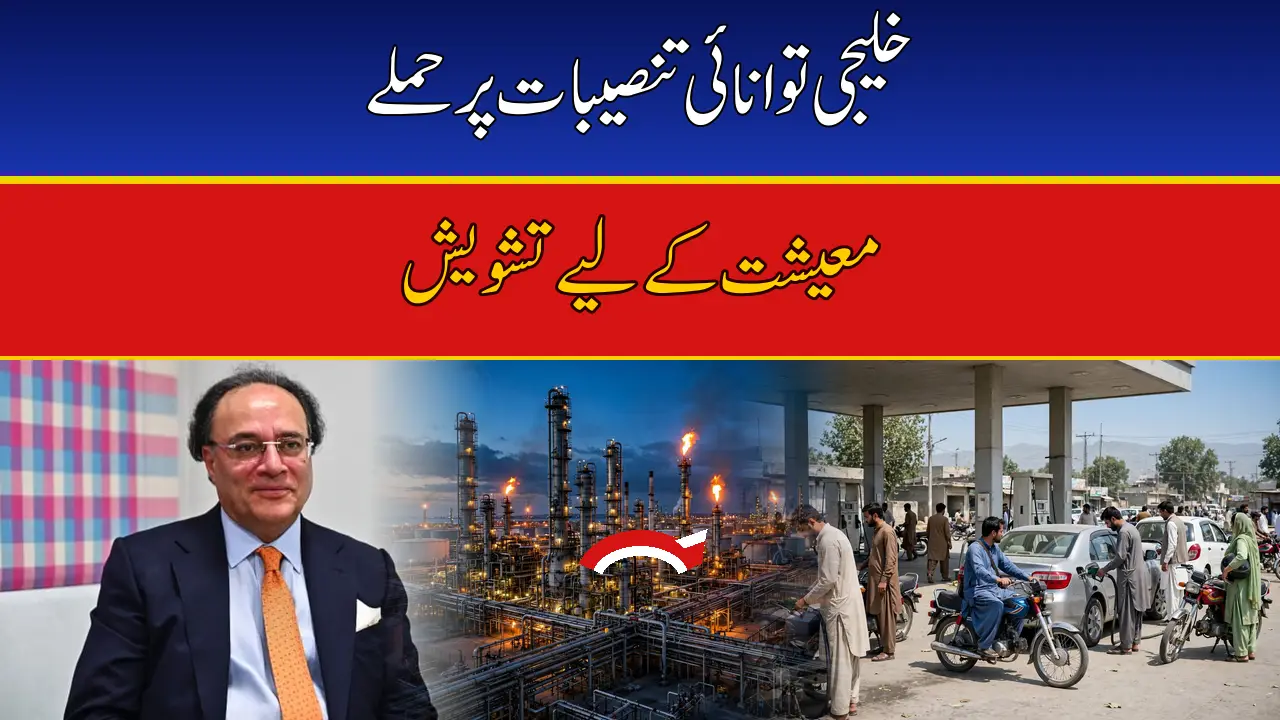
Yes, Pakistan has dodged the worst of the energy shock so far — but Finance Minister Muhammad Aurangzeb now says the escalation hitting Gulf energy infrastructure is what genuinely worries him. Speaking to AFP in Bangkok on Saturday, October 17, 2026, he called the attacks on Saudi and Gulf energy sites “worrying” for Pakistan’s longer-term economic outlook, warning that if the infrastructure keeps getting hit, “the return to normalcy, even if things subside, will take longer.” Pakistan, he said, has secured energy supplies through November — and it will not buy expensive spot LNG cargoes unless there is “an absolute dire need.”
| Quick facts: Aurangzeb’s Bangkok remarks | |
|---|---|
| Who | Finance Minister Muhammad Aurangzeb |
| Where | AFP interview, IMF-World Bank Annual Meetings, Bangkok (QSNCC), Oct 17, 2026 |
| Core message | Pakistan withstood the first shock; attacks on Gulf energy infrastructure now “worrying” for the outlook |
| Energy buffer | Supplies procured to last through November; winter planning underway |
| LNG policy | No spot cargoes unless “an absolute dire need” |
| Trigger | Houthi attacks on Saudi energy facilities and airports; Hormuz shipping ~70% below prewar levels |
What Aurangzeb actually said in Bangkok
The interview took place on the sidelines of the IMF-World Bank Annual Meetings at Bangkok’s Queen Sirikit National Convention Center, and Aurangzeb struck a careful two-part tone. First, reassurance: Pakistan had “so far withstood the shock from skyrocketing energy prices due to the Iran war.” Then, the warning that made headlines.
“The first-order impact has been negotiated well by Pakistan,” he told AFP. “We’ve had no shortage, no queues at the gas stations, and no law and order situation, which at times we have seen in some of the countries.” Pakistan has a living memory of fuel shortages turning into street queues, and the finance minister was essentially saying: not this time. Not yet.
But the second part of his message was the one he spent more words on, and it was noticeably less comfortable.
“What is now (the) worrying part of it is when the energy infrastructure starts getting hit,” Aurangzeb said. “I, to be very honest, I don’t know where that would go. But one thing is very clear: that if the infrastructure continues to get hit, the return to normalcy, even if things subside, will take longer.”
A finance minister saying “I don’t know where that would go” on the record tells you how uncertain the outlook has become.
The November buffer — and why it exists
Aurangzeb’s most concrete disclosure was operational: Pakistan has procured enough energy supplies to last through November and is now planning for the winter months, when household needs typically spike. The government has bought itself roughly six weeks of breathing room and is already thinking past it.
Crisis management most people never see: energy is contracted months ahead, and the minister’s phrasing suggests Islamabad moved early enough to avoid the worst of the price surge. But a buffer is a buffer, not a solution. It expires.
Why Pakistan will not touch the spot LNG market
The other firm commitment: unless the government sees “an absolute dire need,” it will not procure spot LNG cargoes, which tend to be far more expensive than previously contracted shipments.
For a country like Pakistan, this is a discipline call, not a preference. Spot LNG cargoes in a crisis market can cost multiples of contracted prices, and every expensive cargo shows up somewhere — in the power tariff, in the gas bill, or in the foreign exchange reserves. Aurangzeb is signaling to markets, to the IMF, and to domestic consumers at once: we will not panic-buy.
It also means the winter plan hinges on the contracted shipments actually arriving. If Gulf supply lines get disrupted further, that “absolute dire need” threshold is where the real test begins.
The escalation that changed the calculus: Houthis, Aramco, Hormuz
The reason the finance minister’s tone shifted from reassurance to alarm is what happened in the Gulf in recent days. Yemen’s civil war has flared back to life, and the Houthis have repeatedly attacked Saudi infrastructure, including energy facilities and airports.
The picture kept getting worse. A Houthi strike hit Aramco’s headquarters this week, and a Marshall Islands-flagged crude tanker was struck by an unknown projectile about 78 nautical miles northeast of Jubail, losing power and suffering an engine-room fire before its crew was evacuated safely. The UK Maritime Trade Operations agency recorded 12 attacks on vessels in a single week, and one ship was lost after being hit near Ras Shaykh Masud on October 13.
The Hormuz numbers are stark: shipping remains about 70 percent below prewar levels — 125 outbound and 129 inbound transits over the past seven days, down from 129/146 the week before — and Pakistan’s energy lifeline runs through this waterway.
What it means for Pakistan: inflation, bills, and the winter test
Aurangzeb did not put numbers on the inflation risk, and it would be irresponsible to invent any for him. But the transmission chain is well understood, and anyone who filled their tank this week has felt the first link of it. When global energy prices surge, an energy-importing country feels it in layers: first the import bill — more dollars for the same barrels — then exchange-rate pressure, then the petrol and diesel prices households pay directly, and then the slower wave — transport costs into food prices, generation costs into power tariffs, factory costs into everything manufactured.
That is why “the return to normalcy will take longer” matters so much. Even if the war subsides tomorrow, damaged infrastructure does not repair itself overnight, and energy markets price in risk long after the headlines move on. Aurangzeb’s point is that Pakistan’s planning horizon may need to stretch from “get through winter” to something longer.
The winter test is the immediate one. Household gas demand spikes in December and January, and Pakistan has faced winter gas shortages in past years even without a regional war.
The IMF backdrop: a $1.2 billion tranche and fiscal consolidation
No accident these remarks came at the IMF-World Bank meetings: Pakistan is in its 25th IMF programme — at least 11 outright bailouts since independence — with the current $7 billion, three-year programme, and the Fund agreed this month to release a $1.2 billion tranche.
The IMF urged all economies, including those most exposed to the Iran war shock, to consolidate their finances. Aurangzeb’s answer was calm: “Fortunately for us, we have been on this fiscal consolidation path for a while.”
He gave the Fund something concrete. Tax revenues have grown significantly, he said, and the government is targeting the theft of taxes by private sector businesses that collect sales tax from consumers but never deposit it into government accounts — theft running into billions of dollars. There is “room for improvement” on income tax collection too.
And he was candid about the politics of reform: the agenda has faced resistance from industry, lobbying groups, and vested interests. “Every reform, everything that you try to do when you try to change the status quo, there is pushback,” he said. For more on what the IMF itself expects from Pakistan’s economy, see our coverage of the IMF raising Pakistan’s inflation forecast for FY27.
A wider regional picture the minister did not have to spell out
Two data points from the Bangkok meetings frame the warning beyond Pakistan: the IMF’s Jihad Azour projected the region’s economy to contract 0.3 percent in 2026, with Saudi Arabia itself shrinking 3.3 percent, and IMF chief Kristalina Georgieva warned attacks on Saudi Arabia could affect people “everywhere.” Against that, Pakistan’s “first-order impact negotiated well” starts to look like the easy part — and the infrastructure attacks are the part nobody can negotiate with.
What to watch next
Three things will tell you whether Aurangzeb’s worry turns into Pakistan’s problem. First, the winter: do the contracted energy shipments arrive on schedule through a disrupted Gulf, or does “absolute dire need” arrive first? Second, the infrastructure: do the attacks on Saudi and Gulf energy sites continue, pause, or escalate? Third, the buffer: does the market calm enough for Pakistan to rebuild past November, or does the timeline become a cliff edge?
For now, the finance minister’s message is a rare thing in economic policymaking: honest about what has been managed, and honest about what cannot be managed from Islamabad. The buffer is real. The worry is real too.
Frequently asked questions
What did Finance Minister Aurangzeb say about attacks on Gulf energy infrastructure?
Speaking to AFP in Bangkok on October 17, 2026, Muhammad Aurangzeb said attacks on infrastructure in Saudi Arabia and other Gulf countries were “worrying” for Pakistan’s longer-term economic outlook. He warned: “If the infrastructure continues to get hit, the return to normalcy, even if things subside, will take longer.”
Where and when did Aurangzeb make these remarks?
He gave an interview to AFP on Saturday, October 17, 2026, on the sidelines of the IMF-World Bank Annual Meetings at the Queen Sirikit National Convention Center in Bangkok, Thailand.
Has Pakistan faced an energy shortage during the Iran war?
According to Aurangzeb, no: “no shortage, no queues at the gas stations, and no law and order situation.” He credited early procurement that secured supplies through November.
Which attacks was Aurangzeb referring to?
Houthi attacks on Saudi infrastructure — energy facilities and airports — amid Yemen’s civil war flare-up, plus strikes on shipping in and around the Strait of Hormuz. A Houthi strike on Aramco’s headquarters was reported the same week.
Will Pakistan buy expensive spot LNG cargoes this winter?
Only if there is “an absolute dire need,” Aurangzeb said. Spot cargoes are far more expensive than contracted shipments, and the government is avoiding panic buying that would worsen the import bill and consumer prices.
How bad is the disruption in the Strait of Hormuz?
About 70 percent below prewar levels. The UK Maritime Trade Operations agency recorded 125 outbound and 129 inbound transits over the past week (down from 129/146), with 12 attacks on vessels reported in the same period.
How could Gulf energy attacks affect Pakistan’s economy?
Sustained attacks keep global energy prices high and damage infrastructure, delaying any return to normal prices. For Pakistan, that means a bigger import bill, rupee pressure, higher petrol prices, and inflation feeding through transport, food, and power costs.
What did the IMF say about the region’s economy at the Bangkok meetings?
IMF Director Jihad Azour projected the region’s economy to contract 0.3 percent in 2026, with Saudi Arabia shrinking 3.3 percent; IMF chief Kristalina Georgieva warned attacks on Saudi Arabia could affect people “everywhere.” Pakistan is in a $7 billion, three-year IMF programme, with a $1.2 billion tranche agreed this month.