IMF Raises Pakistan Inflation Forecast to 9.9% for FY27, Keeps Growth at 3.5%
The International Monetary Fund now expects Pakistan’s inflation to hit 9.9% in FY2026-27, up sharply from the 8.4% it had projected as recently as July. GDP growth, meanwhile, is stuck at 3.5% — well below the government’s 4% target. The numbers come from the Fund’s October 2026 World Economic Outlook, released on October 13 at…
The International Monetary Fund now expects Pakistan’s inflation to hit 9.9% in FY2026-27, up sharply from the 8.4% it had projected as recently as July. GDP growth, meanwhile, is stuck at 3.5% — well below the government’s 4% target. The numbers come from the Fund’s October 2026 World Economic Outlook, released on October 13 at the annual World Bank-IMF meetings in Bangkok, and they land like a cold splash of water on Islamabad’s economic optimism.
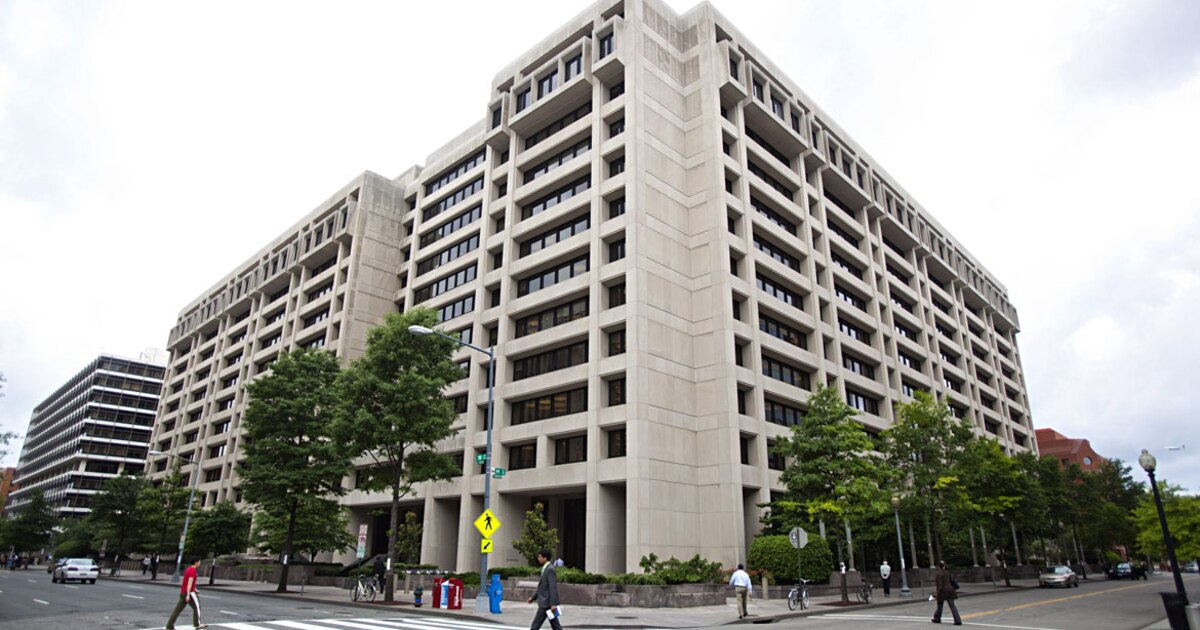
What the new IMF numbers actually say
Let’s put the figures side by side, because the gap between what the government promises and what the IMF expects is the whole story here. The Fund sees consumer prices rising 9.9% across FY27. The government’s own budget target is 8.2%. That is a difference of nearly two percentage points, and it matters because inflation at 9.9% eats into wages, savings and everything in between.
Last fiscal year, inflation came in at 7.1%, so the direction of travel is clearly upward again. On growth, the IMF holds Pakistan at 3.5%, unchanged from its earlier projection. That compares with 3.6% last year and 3.2% the year before. In plain terms: the economy is moving sideways. The government, for its part, is targeting 4% growth this year, and Finance Minister Muhammad Aurangzeb has told Reuters he is confident the economy will grow “north of 4%.” The Fund disagrees, politely but firmly.
There is one bright spot in the table. Unemployment is projected at 6.5%, down from 6.9% last year and 7.1% the year before that. Small comfort, but it suggests the labour market is not deteriorating.
Why the IMF raised the inflation forecast
Curiously, the Fund did not give a Pakistan-specific reason for the revision. It had forecast 8.4% inflation for Pakistan in both April and July, so something shifted in the last three months. The regional explanation is the one the IMF did offer: inflation projections for the Middle East and Central Asia were raised on the back of energy-supply disruptions from the ongoing regional conflict. Pakistan buys its fuel in a market shaped by those same disruptions, so the spillover is real.
There is also a domestic angle the IMF flagged. The government’s fuel relief scheme, which gives motorcyclists Rs2,000 a month and small-car owners Rs3,000 a month, was singled out by the Fund as broad-based and costly. The Fund’s quiet message is hard to miss: relief that is expensive and untargeted pushes the fiscal bill up, and that eventually shows up in prices. If you have ever wondered why petrol relief and inflation forecasts move in opposite directions, this is why.
What it means for the rupee, rates and your wallet
Here’s the chain that matters for ordinary Pakistanis. If inflation really runs at 9.9%, the State Bank of Pakistan will find it much harder to cut interest rates, which means borrowing stays expensive for businesses and for anyone financing a home or a car. The rupee also feels the pressure, because higher domestic inflation against trading partners tends to erode competitiveness unless the exchange rate adjusts.
Then there is the external account. The IMF projects the current account deficit at about 1% of GDP — roughly $4.4 billion — for FY27. That is a swing from the rare 0.5% surplus recorded in FY2025. A deficit itself isn’t a crisis; Pakistan has run them for years. But it means the country will need steady inflows — exports, remittances, and continued Fund support — to keep the balance of payments stable. The staff-level review of Pakistan’s programme concluded just last week, so the Fund relationship remains intact. Still, the message is that the margin for error is thin.
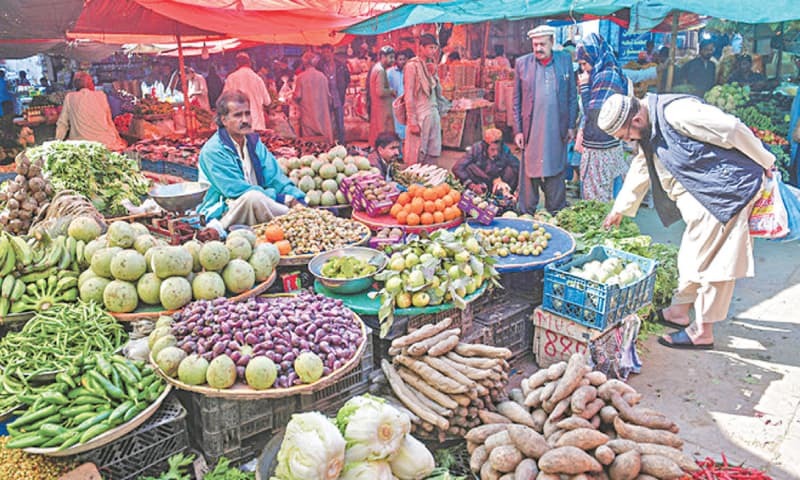
Aurangzeb’s optimism vs the Fund’s arithmetic
The gap between Islamabad and Washington is worth dwelling on. Muhammad Aurangzeb, who is in Bangkok for the annual meetings, has publicly stood by growth “north of 4%.” The IMF says 3.5%. Somebody is wrong, and markets usually trust the Fund’s arithmetic over a finance minister’s talking points — finance ministers everywhere are optimists, it comes with the job.
That said, the government does have some cards to play. Exports have held up, remittances have been resilient, and the energy tariff reforms have begun to stabilise the power sector’s finances. The question is whether any of that translates into the private-sector investment that actually lifts growth above 3.5%. So far, the IMF is not convinced.
The global backdrop is no help either
Pakistan’s numbers don’t exist in a vacuum. The October outlook puts global growth at 3.1% for 2026 and 3.4% for 2027, with world inflation running at 4.7% this year. For an import-dependent economy like Pakistan’s, global inflation is never somebody else’s problem — it shows up in fuel, edible oil and machinery bills.
What to watch next
The next checkpoints are straightforward. Watch the State Bank’s monetary policy decisions in the coming months — if it holds rates, the IMF’s 9.9% is basically confirmed as the working assumption. Watch the December review of the IMF programme, which will test whether the fuel relief scheme survives the Fund’s scrutiny. And watch the monthly inflation readings from the Pakistan Bureau of Statistics; if they start printing above 9% early in the fiscal year, 9.9% will start looking optimistic rather than pessimistic.
For now, the takeaway is simple enough to fit in a sentence: prices are likely to rise faster than the government hoped, and the economy is likely to grow slower than the government promised. Households should plan accordingly — and so should policymakers.
Frequently asked questions
What is Pakistan’s IMF inflation forecast for FY27?
The IMF’s October 2026 World Economic Outlook projects Pakistan’s FY2026-27 inflation at 9.9%, up from the 8.4% it forecast in April and July 2026. That is well above the government’s own 8.2% target and up from 7.1% actual inflation last year.
What GDP growth does the IMF expect for Pakistan?
The Fund holds Pakistan’s FY27 GDP growth at 3.5%, unchanged from its earlier projections. That compares with 3.6% last year, 3.2% the year before, and the government’s 4% target. Finance Minister Muhammad Aurangzeb says growth will be “north of 4%.”
Why did the IMF raise Pakistan’s inflation forecast?
The Fund gave no Pakistan-specific reason. It raised inflation projections across the Middle East and Central Asia on energy-supply disruptions from ongoing regional conflict, which affects Pakistan’s fuel import costs. It also flagged Pakistan’s broad-based fuel relief scheme as costly.
What is the fuel relief scheme the IMF criticised?
The government pays Rs2,000 a month to motorcyclists and Rs3,000 a month to small-car owners as fuel relief. The IMF described the scheme as broad-based and costly, implying it strains the budget without targeting only those who genuinely need help.
What does 9.9% inflation mean for interest rates?
Higher expected inflation makes it harder for the State Bank of Pakistan to cut interest rates, so borrowing is likely to stay expensive for businesses and consumers. Persistently high inflation also puts indirect pressure on the rupee’s exchange rate over time.
When was the IMF’s October 2026 outlook released?
The October 2026 World Economic Outlook was released on October 13, 2026, at the annual World Bank-IMF meetings in Bangkok, where Pakistan’s finance team, led by Muhammad Aurangzeb, is attending.