Pakistan Successfully Test-Fires Extended-Range Fatah-2 Hypersonic Ballistic Missile
Pakistan’s Army successfully test-launched the extended-range version of its Fatah-2 hypersonic ballistic missile on Tuesday, October 13, 2026 — the second high-profile missile test by the country in a week. The military’s media wing, Inter-Services Public Relations (ISPR), announced that the Fatah-2 Extended Range (ER) weapon system is equipped with advanced navigation and state-of-the-art avionics,…
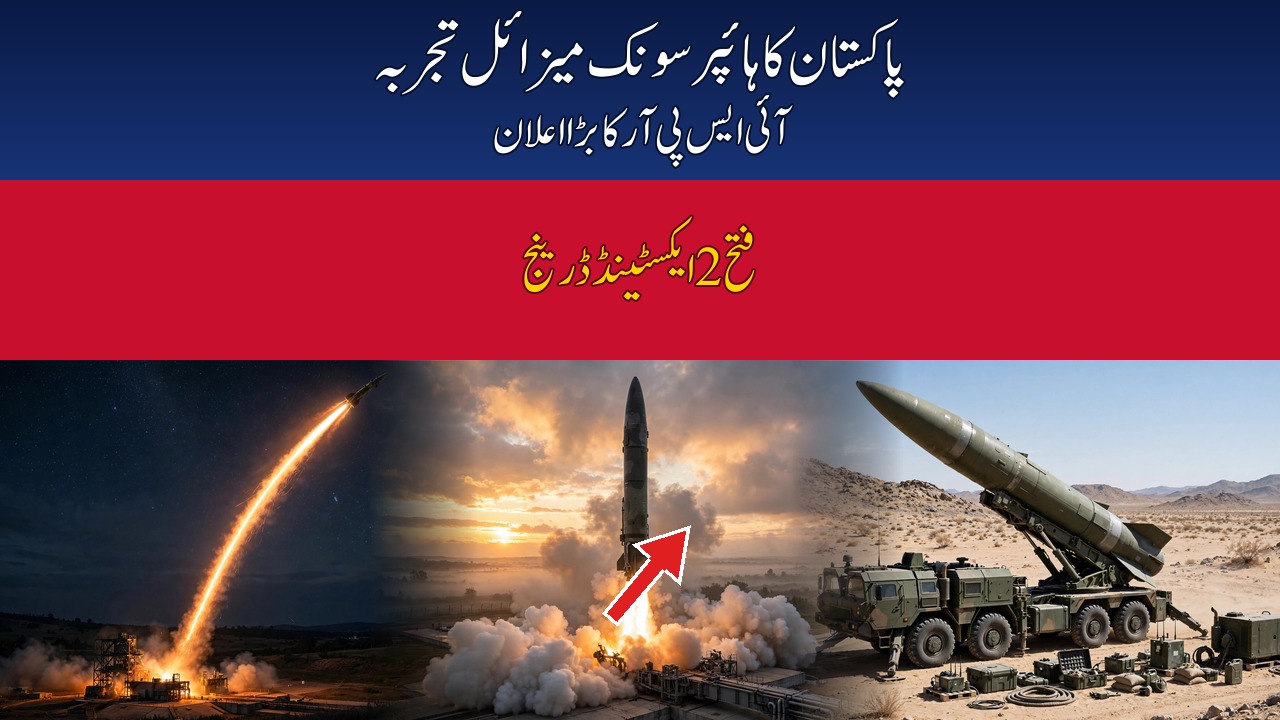
Pakistan’s Army successfully test-launched the extended-range version of its Fatah-2 hypersonic ballistic missile on Tuesday, October 13, 2026 — the second high-profile missile test by the country in a week. The military’s media wing, Inter-Services Public Relations (ISPR), announced that the Fatah-2 Extended Range (ER) weapon system is equipped with advanced navigation and state-of-the-art avionics, and is designed to defeat enemy missile defence systems through its unique trajectory and manoeuvrability.
If you’ve been following the defence beat, this one didn’t come out of nowhere. Barely a week ago, on October 6, Pakistan tested the extended version of its Fatah-4 ground-launched cruise missile. Two successful tests, eight days apart, of two different missile families — that’s a deliberate signal about where the country’s conventional strike capability is heading.
What the ISPR Announced
According to the ISPR statement released on Tuesday, the Fatah-2 ER is “capable of engaging targets with high precision and defeating the enemy’s missile defence systems due to its unique trajectory and manoeuvrability features.” The statement added that the extended range “will further enhance the army’s reach and capability of engaging deep targets.”
The launch was witnessed by the Commander of the Army Rocket Force Command (ARFC), Lieutenant General Nauman Zakaria, along with senior Pakistan Army officers and the scientists and engineers involved in the programme. The ARFC commander praised the dedication and technical expertise of the team behind the weapon system.
President Asif Ali Zardari, Prime Minister Shehbaz Sharif, Chief of Army Staff and Chief of Defence Forces Field Marshal Syed Asim Munir, and the services chiefs all congratulated the scientists and engineers on the successful test. Interior Minister Mohsin Naqvi also congratulated the nation, calling the scientists and engineers of the Pakistan Army a source of pride and describing the test as a significant development in the country’s defence sector.
What Makes the Fatah-2 ER Different
A few things stand out from the official announcement — and a few things were deliberately left unsaid.
Hypersonic speed plus manoeuvrability. The Fatah-2 is described as a hypersonic ballistic missile, meaning it travels at many times the speed of sound. But speed alone isn’t the story here. The ISPR specifically highlighted the missile’s “unique trajectory and manoeuvrability features” — in plain terms, it doesn’t fly in the predictable high arc of a conventional ballistic missile, and it can alter course in flight. That’s what makes it hard for enemy air-defence radars to track and intercept.
Advanced navigation and avionics. The statement emphasised upgraded navigation systems and state-of-the-art avionics — the guidance electronics that let the missile strike with what the military calls “high precision.” For a conventional (non-nuclear) strike weapon, precision is everything: the whole point is to hit a specific target with a conventional warhead.
Extended range — but how extended? The military did not disclose the missile’s exact maximum range, a standard practice with these announcements. What it did say is that the extended range will let the Army “engage deep targets” — i.e., strike targets much farther away than before.
A Busy Week for Pakistan’s Missile Programme
The Fatah-2 ER test follows the October 6 successful test of the extended version of the Fatah-4 ground-launched cruise missile — an indigenously developed system the ISPR said was equipped with advanced avionics and state-of-the-art navigational aids, capable of engaging targets at extended ranges “with high precision and lethality.”
Defence analysts who track these tests note the pattern: Pakistan has been steadily building a family of conventional long-range strike systems — the Fatah series of ballistic missiles alongside the Babur-derived cruise missiles — giving the Army Rocket Force Command a layered set of options. The Fatah-2 ER slots into this as the faster, harder-to-intercept end of the spectrum.
What Readers Are Asking
What is the Fatah-2 missile?
The Fatah-2 is a Pakistani hypersonic ballistic missile developed as a conventional precision-strike weapon. It travels at hypersonic speed and is designed to manoeuvre in flight, making it difficult for enemy missile defences to intercept.
What does “extended range” (ER) mean?
ER stands for extended range — this is an upgraded variant of the Fatah-2 with a longer reach than the original version. The exact range has not been officially disclosed.
When and where was the test conducted?
The test was conducted on Tuesday, October 13, 2026, and announced the same day by the ISPR. The launch was witnessed by the Commander Army Rocket Force Command, Lt Gen Nauman Zakaria, senior officers, and the programme’s scientists and engineers.
Can the Fatah-2 ER defeat missile defence systems?
According to the ISPR, yes — the missile’s “unique trajectory and manoeuvrability features” are designed to defeat enemy missile defence systems by flying an unpredictable path and altering course in flight.
What was the Fatah-4 test last week?
On October 6, 2026, Pakistan tested an extended version of the Fatah-4 ground-launched cruise missile — a slower, terrain-hugging system. The Fatah-2 ER (ballistic, hypersonic) and Fatah-4 (cruise, subsonic) are different missile families serving complementary roles.
Did Pakistan’s leadership comment on the test?
Yes. President Asif Ali Zardari, Prime Minister Shehbaz Sharif, Chief of Defence Forces Field Marshal Syed Asim Munir, the services chiefs, and Interior Minister Mohsin Naqvi all congratulated the scientists and engineers involved.
Published: October 13, 2026 | By Daniyal Sheikh, Pakistan Correspondent