Breast Cancer Awareness Day: PM Shehbaz Pledges Wider Free Screening, Treatment Across Pakistan
By Daniyal Sheikh | October 19, 2026 Prime Minister Muhammad Shehbaz Sharif has pledged to expand free breast cancer screening, diagnosis and treatment across Pakistan, announcing that Lady Health Workers and primary healthcare staff will be trained for early detection and that the Federal Breast Cancer Screening Centre at PIMS Islamabad will continue providing free…
By Daniyal Sheikh | October 19, 2026
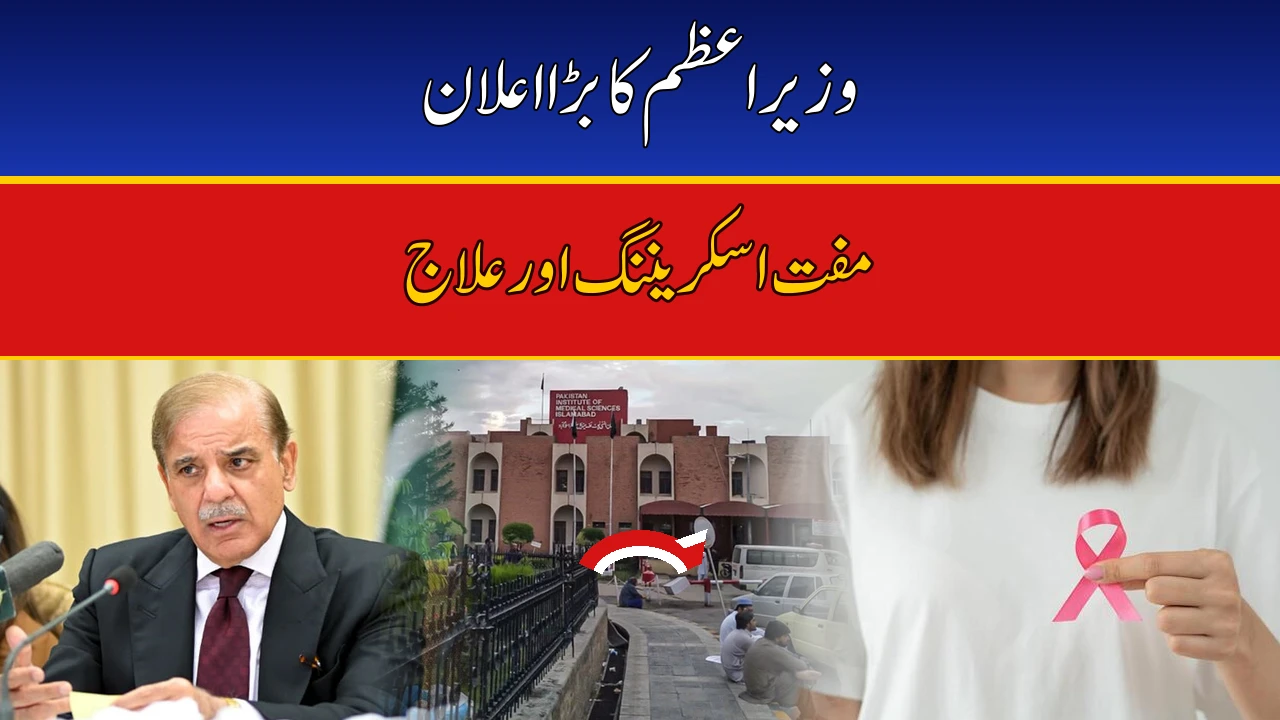
Prime Minister Muhammad Shehbaz Sharif has pledged to expand free breast cancer screening, diagnosis and treatment across Pakistan, announcing that Lady Health Workers and primary healthcare staff will be trained for early detection and that the Federal Breast Cancer Screening Centre at PIMS Islamabad will continue providing free screening, diagnostic services and medicines. The message came on Breast Cancer Awareness Day, observed on October 19, with the premier vowing that no Pakistani woman would be denied timely, quality treatment because of her location or her finances.
A clear message from the top
In his message, the prime minister said Pakistan was joining the international community in raising a strong, collective voice against the serious health challenges facing women, particularly breast cancer. It was the kind of statement families across the country have heard on awareness days before — but this time it came attached to a concrete operational plan: a comprehensive strategy covering early detection, timely medical examinations, access to quality treatment and, critically, continuity of care.
“Breast cancer awareness, early detection, timely treatment and continuity of care were matters of profound concern for every nation that valued the health and lives of its daughters, mothers and sisters,” the prime minister said. The phrasing matters, because anyone who has watched a family in Pakistan navigate a cancer diagnosis knows the real battle is not one hospital visit — it is the long, expensive chain of tests, referrals and follow-ups that follows.
What the government says it will actually do
Training Lady Health Workers
Pakistan has roughly 90,000 Lady Health Workers, and they remain the backbone of healthcare access in rural areas. The prime minister praised their “tireless efforts and dedicated services in remote areas,” calling their role instrumental in extending healthcare to women and saying their contributions deserved the nation’s deepest appreciation.
Under the announced plan, Lady Health Workers will be trained to teach women breast self-examination, recognise symptoms, seek timely medical advice and visit the right healthcare facility without delay. Primary healthcare centre staff in both urban and rural areas will also receive specialised training to strengthen early breast cancer detection. For families in villages where the nearest specialist can be hours away, this is the single most practical part of the announcement: the first point of contact becomes a woman who is trained to spot the early signs.
Free services at PIMS
The Federal Breast Cancer Screening Centre established at the Pakistan Institute of Medical Sciences (PIMS) in Islamabad is providing free screening, diagnostic services and medicines, while ensuring timely referral of suspected cases for further medical evaluation and treatment. The centre is the federal flagship for the campaign, and its services remain free — an important detail for women who delay check-ups because of cost.
The prime minister added that the government was taking steps to expand access to breast cancer screening through public health and social protection programmes, and in collaboration with private organisations. Coordination among healthcare institutions and stakeholders is also being strengthened, he said.
Special focus on rural and underprivileged women
Women living in rural and underprivileged areas, where access to healthcare facilities was often limited, deserve particular attention, the premier said, reaffirming the government’s commitment to ensuring that “no Pakistani woman was deprived of timely and quality treatment because of her geographical location or financial circumstances.”
He also described breast cancer as a devastating disease that can profoundly affect the social and psychological well-being of patients and their families, stressing that a supportive environment, a compassionate approach and due consideration of patients’ needs must remain central to the collective response.
Why early detection changes everything
Health experts have been saying for years what every oncology ward confirms: breast cancer caught early is one of the most treatable cancers there is. According to health experts quoted in awareness campaigns, self-examination enables the earliest possible detection, and early-stage breast cancer is curable with an over 90 per cent success rate.
In Pakistan, the challenge has never been medical knowledge — it has been hesitation. Cultural stigma, fear of the diagnosis itself, and the belief that a lump “will go away on its own” still keep women away from doctors for months. That delay is what turns a treatable early-stage tumour into an advanced case. The prime minister addressed this directly, urging families, communities, the media, religious leaders, educational institutions, civil society and medical professionals to play their part in “breaking the silence and overcoming the hesitation and stigma associated with breast cancer.”
“Let us ensure that the message of awareness reaches every household and that women are equipped with the knowledge, confidence and courage to seek medical assistance without fear, hesitation or apprehension about social attitudes,” he said.
The practical part: what women and families should do now
Learn self-examination
Medical experts describe breast self-examination as a simple, monthly routine: look for visible changes and feel for any unusual lumps, thickening or discharge. The World Health Organisation says such checks should ideally begin by the age of 20 and be repeated every month, preferably a few days after the menstrual cycle. Most breast changes turn out to be benign — but prompt consultation is essential when abnormalities persist.
Know where to go
The Federal Breast Cancer Screening Centre at PIMS offers free screening and diagnostics, and suspected cases are referred onward for treatment. Several public hospitals and provincial programmes also offer subsidised or free mammography for women over 40, while awareness drives promote clinical examination for younger women. Asking your local Lady Health Worker is often the fastest way to find the nearest screening point.
Do not wait on symptoms
“My message to every daughter of Pakistan is your health is a priority for the entire nation. If you have any concerns about your health, please seek medical advice without delay,” the prime minister said. Healthy mothers, he added, were the foundation of healthy families and a brighter future for the country.
Also on Breast Cancer Awareness Day
President Asif Ali Zardari also issued an awareness message marking October 19, urging women to prioritise regular screening and overcome the social taboos that delay medical consultation, saying early detection greatly increases the chances of complete recovery, according to WE News English. His message reaffirmed Pakistan’s commitment to eliminating preventable deaths from breast cancer through awareness and access to healthcare.
Where the gaps remain
Pledges on awareness days are welcome, but families will rightly judge this plan by delivery. Three things will decide whether the announcement translates into saved lives: whether the Lady Health Worker training actually reaches every district and is repeated rather than done once; whether free screening expands beyond PIMS into district hospitals where most women can realistically travel; and whether the referral chain — from a suspicious finding to a biopsy to treatment — works without the patient being bounced between hospitals. The government’s promise to strengthen coordination among institutions is aimed exactly at this, and it deserves to be watched.
What is clear is that the policy conversation has moved in the right direction. The focus is no longer only on building expensive treatment centres in big cities, but on the far less glamorous and far more impactful work of finding the disease early — in villages, in homes, in routine conversations between a Lady Health Worker and the women she visits. That is where breast cancer is actually beaten.
Frequently Asked Questions
Where can women get free breast cancer screening in Pakistan?
The Federal Breast Cancer Screening Centre at the Pakistan Institute of Medical Sciences (PIMS) in Islamabad provides free screening, diagnostic services and medicines, with timely referral of suspected cases for further evaluation and treatment. Several public hospitals and provincial programmes also offer subsidised or free mammography facilities for women over 40.
What did the prime minister announce on Breast Cancer Awareness Day 2026?
PM Shehbaz Sharif pledged to expand awareness and training for Lady Health Workers and primary healthcare staff for early detection, ensure free screening and treatment services at PIMS, and strengthen coordination among healthcare institutions, with special attention to women in rural and underprivileged areas.
When is Breast Cancer Awareness Day observed?
Breast Cancer Awareness Day is observed internationally on October 19 each year, within October’s Breast Cancer Awareness Month. In 2026, Pakistan’s federal leadership issued messages reaffirming the country’s commitment to awareness, early detection and treatment access.
What are the early symptoms of breast cancer to watch for?
Health experts say women should watch for unusual lumps or thickening in the breast, visible changes in breast shape or size, skin changes, nipple discharge, or persistent pain. Monthly self-examination from the age of 20 helps catch changes early, and any persistent abnormality should be checked by a doctor promptly.
How effective is early treatment for breast cancer?
When detected early, breast cancer is highly treatable with survival rates exceeding 90 per cent, according to health experts. Treatment may include surgery, chemotherapy, radiation therapy, hormonal therapy or targeted biological treatment, depending on the stage and spread of the disease.
Who are Lady Health Workers and why are they important in this plan?
Lady Health Workers are community-based female health workers who serve as the frontline of healthcare in Pakistan’s rural and remote areas. The prime minister called their role instrumental in extending healthcare services to women, and the new plan trains them to educate women about self-examination, symptom recognition and timely referral.
Related reading: our earlier coverage of the PCB’s pink-kit initiative for England ODIs touched on the same awareness campaign — a reminder that sport, media and medicine are all pulling in the same direction this October.