Balochistan Earthquake Today: 5.9 Quake Jolts Khuzdar, One Killed
By Daniyal Sheikh | Pakistan Desk | October 17, 2026 A magnitude 5.9 earthquake struck near Khuzdar in Pakistan’s Balochistan province on Saturday morning, October 17, 2026, at 10:07 AM Pakistan time, according to an updated Dawn report. Pakistan’s National Seismic Monitoring Centre recorded the tremor at a depth of 25 kilometres, with the epicentre…
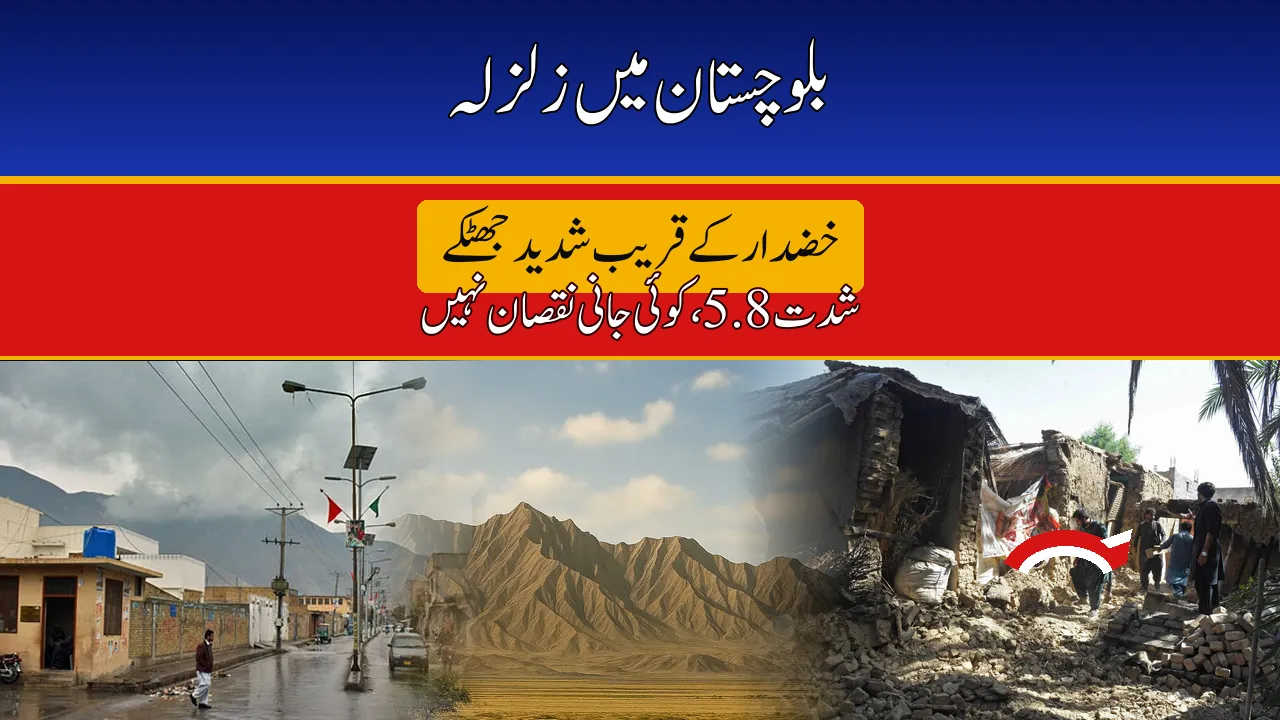
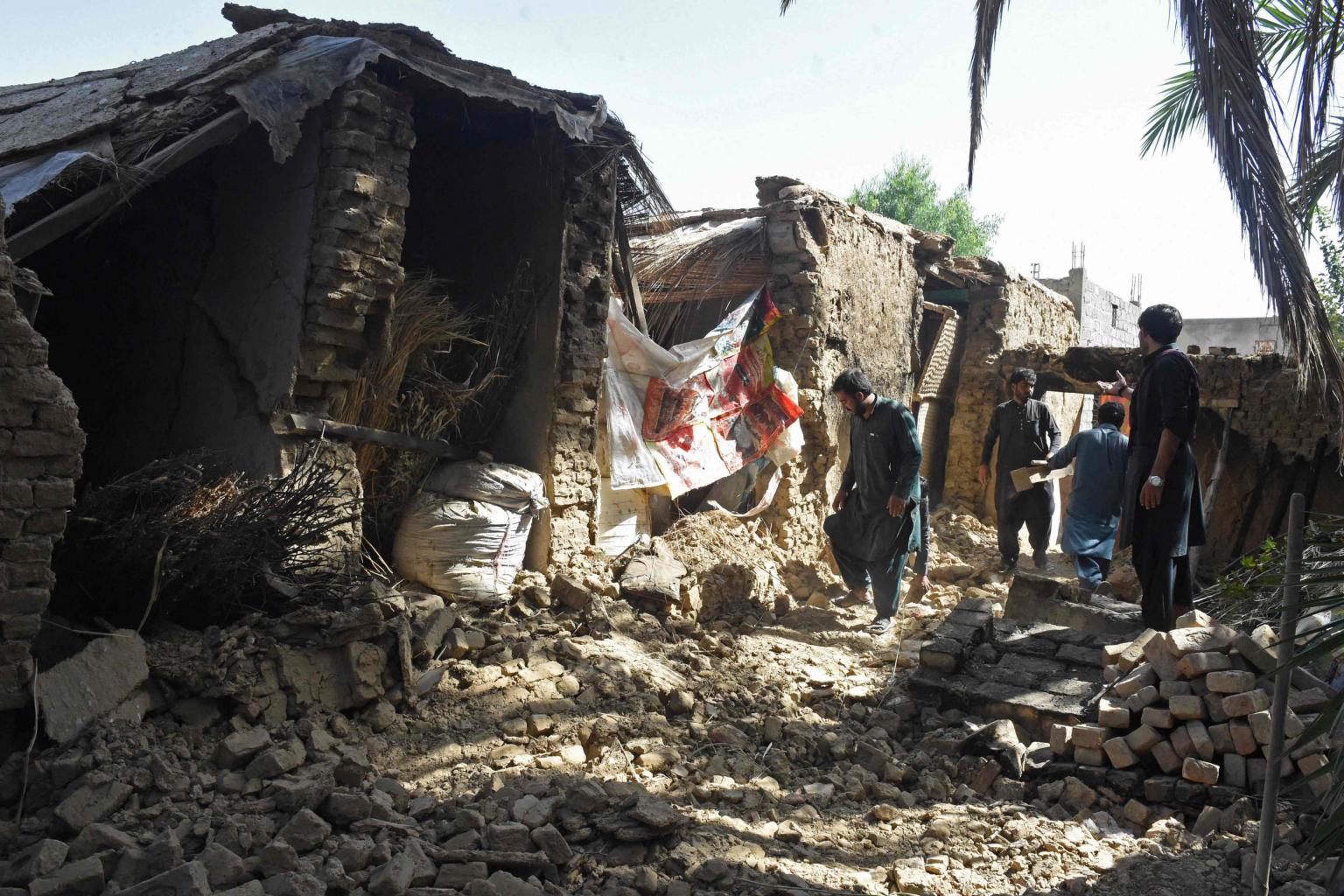
A magnitude 5.9 earthquake struck near Khuzdar in Pakistan’s Balochistan province on Saturday morning, October 17, 2026, at 10:07 AM Pakistan time, according to an updated Dawn report. Pakistan’s National Seismic Monitoring Centre recorded the tremor at a depth of 25 kilometres, with the epicentre about 48 kilometres northwest of Khuzdar. The quake killed one person — Abdul Rahim, a resident of Wadh — after a rock fell from a nearby mountain in Anari, in the Besar area of Naal. Several traditional mud houses were also damaged.
The exact strength depends on which agency you ask: Germany’s GFZ measured 5.6, the US Geological Survey settled on 5.7, and India’s National Center for Seismology put it at 5.8. Early readings almost always shift as more data comes in. Every agency agrees on what matters: a shallow quake struck inland Balochistan near Khuzdar just after 10 in the morning.
The Facts at a Glance
- Magnitude: 5.6 (GFZ) / 5.7 (USGS) / 5.8 (NCS India) — early readings, range 5.6–5.8
- Depth: 10 km (USGS, GFZ); 15 km per NCS India — a shallow earthquake
- Epicentre: About 48 km west-northwest of Khuzdar, Balochistan (28.018°N, 66.171°E)
- Time: Saturday, October 17, 2026, 05:06:57 UTC (10:06–10:07 AM Pakistan time)
- Casualties: None reported so far; emergency services on standby
- USGS alert: Yellow (PAGER): some casualties or damage possible, none confirmed
- Significance: The only quake recorded in the region in 30 days, and the largest at M5.7
What Happened on Saturday Morning
The ground started moving at 10:06 AM local time. In Khuzdar, a city of roughly 141,000 people in central Balochistan, the shaking rattled doors and windows and sent families spilling into the streets.
Because the quake was shallow — just 10 kilometres deep — its energy reached the surface with most of its force intact. Deep earthquakes lose much of their punch travelling up through the crust; shallow ones do not, which is why a 5.7 at this depth can feel far more violent than the number suggests. Within minutes the first readings were out: USGS at 5.7, GFZ at 5.6 via Reuters, and India’s NCS at 5.8.
Three Agencies, Three Magnitudes: Why the Numbers Differ
Seeing 5.6, 5.7 and 5.8 in a single morning is not a contradiction — it is how seismology works in the first hours. Each agency reads the quake through its own station network, from different distances and angles; as more data arrives, the figures usually converge, and seismologists treat every early number as provisional.
What the agencies already agree on matters more than the decimal point: a shallow, moderate earthquake struck inland Balochistan near Khuzdar on Saturday morning, and nobody has reported casualties yet. The USGS yellow PAGER alert is a caution flag based on population exposure and building vulnerability — not a confirmed toll.
Where the Tremors Were Felt
Khuzdar took the brunt of it. USGS modelling puts the city at intensity IV: light shaking, felt by nearly everyone indoors, with dishes and windows rattling. Closer to the epicentre, an estimated 4,000 people experienced very strong shaking (VII), 35,000 felt strong shaking (VI), and 163,000 felt moderate shaking (V). In total, roughly a million people were inside the modelled area at light shaking or above.
Only one public felt report has reached the USGS so far, describing moderate shaking. Shallow quakes of this size are typically felt across a wide area, and more reports from surrounding districts will likely follow.
Why Balochistan Shakes: The Plates Beneath Pakistan
Balochistan sits on some of the most restless geology on earth. Pakistan lies at the meeting point of three major tectonic plates — the Indian, Eurasian and Arabian plates, whose slow collision has carved the country’s five seismic zones, with the Indian plate pushing northward into the Eurasian plate and releasing stress as earthquakes along the region’s faults.
The same boundary produced the 2005 Kashmir earthquake that killed more than 74,000 people. Days before Saturday’s quake, Pakistan’s own Meteorological Department — while dismissing viral social-media “predictions” — reminded the public that tremors can strike anywhere along these boundary lines, citing the 1892 Chaman fault earthquake and the 1935 Chiltan range earthquake near Quetta as proof of what these faults can do.
There is a human side to the geology, too. In this part of Balochistan, most people live in adobe-block and informal mud, timber and sheet-metal housing, structures the USGS classifies as extremely vulnerable to shaking. A 5.7 that would barely crack plaster in a modern concrete city can level a mud-brick village. That vulnerability, more than the magnitude number, decides whether an earthquake becomes a disaster.
A Region That Knows Earthquakes
Saturday’s quake is the latest in a long line of tremors here. In February 2026, a magnitude 5.6 earthquake struck Balochistan with its epicentre 86 kilometres northeast of Khuzdar town, at 13 kilometres depth. It shook Jhal Magsi, Jaffarabad and Nasirabad, and its tremors crossed into Sindh, felt in Sukkur, Qambar-Shahdadkot and Dadu districts.
The more painful memory is October 7, 2021, when a quake hit Harnai district, killing more than 20 people and injuring over 300, many asleep in mud houses that collapsed in the pre-dawn dark. And every Pakistani knows the two names that define the country’s earthquake history: 1935, when Quetta was nearly wiped off the map, and 2005, when the Kashmir earthquake killed over 74,000.
For how much worse these events get at higher magnitudes, read our report on this month’s 7.7-magnitude Panama earthquake.
What To Do When the Ground Starts Moving
Most earthquake injuries do not come from the shaking itself. They come from falling furniture, shattering glass, and panicked stampedes toward doorways. The guidance from disaster agencies worldwide is simple, and worth knowing before you ever need it.
Drop, cover, and hold on. Get under a sturdy table or desk, cover your head and neck, and hold on until the shaking stops. Stay away from windows, mirrors, and anything heavy that could topple. If you are in bed, stay there and shield your head with a pillow.
If you are outdoors, move to open ground — away from buildings, boundary walls, electricity poles and power lines. If you are driving, pull over somewhere clear and stay inside the vehicle. And never use elevators during or right after a quake.
It pays to be ready before the next one. Keep a small emergency bag with water, dry food, a torch, a first-aid kit, essential medicines, copies of important documents and a charged power bank — and agree with your family on a meeting point and one contact person everyone can call if the mobile networks jam, because after a strong quake, they often do.
After the Quake: What the Authorities Say
After Saturday’s tremor, emergency services were placed on standby and the public was advised to stay alert for possible aftershocks. That is standard procedure: a moderate quake is often followed by smaller shocks as the fault settles. Most are too small to feel, but a few can bring down structures already weakened by the main shock.
The standard official guidance is worth repeating: do not re-enter damaged buildings until inspected; check your home for gas leaks, damaged wiring and cracked walls before switching anything on; keep clear of rubble and unstable structures; and get updates from official channels (the PMD’s seismic centre and the National Disaster Management Authority), not the rumour mill on social media.
Pakistan’s National Disaster Management Authority (NDMA) coordinates the country’s disaster response alongside the provincial PDMAs in situations exactly like this one. And as the Met Department stressed just days ago while rejecting viral quake “predictions”: no scientist anywhere can predict the exact time and place of an earthquake. Anyone claiming to is selling something.
The Bottom Line
A moderate, shallow earthquake shook central Balochistan on Saturday morning, and by every early account the region got lucky: no casualties, no confirmed major damage. The magnitude will likely be refined as agencies reconcile their readings, but the decimal point matters less than what decides how this story ends: whether aftershocks stay small, and whether the official damage assessment confirms the early all-clear.
For a province built largely of mud brick on top of one of the world’s most active plate boundaries, every tremor is a drill for the big one. Saturday’s quake was a reminder — loud, brief, and, this time, merciful.
Frequently Asked Questions
What was the magnitude of the Khuzdar earthquake today?
Early readings span 5.6 to 5.8: GFZ (via Reuters) reported 5.6, the USGS settled on 5.7, and India’s National Center for Seismology measured 5.8. The figures usually converge as more data is analysed.
What time did the earthquake strike in Pakistan?
At 05:06:57 UTC on Saturday, October 17, 2026 — 10:06 to 10:07 AM Pakistan Standard Time (PKT).
Where exactly was the earthquake’s epicentre?
About 48 kilometres west-northwest of Khuzdar in central Balochistan (28.018°N, 66.171°E). The focus was shallow: about 10 kilometres deep, or 15 km per India’s NCS.
Was Quetta or Karachi affected by the earthquake?
No confirmed reports of the tremor being felt in Quetta or Karachi. USGS modelling puts Khuzdar at light shaking (intensity IV), with the strongest shaking near the epicentre.
Were there any casualties or damage in the Balochistan earthquake?
No. No casualties or major structural damage have been reported so far. Emergency services are on standby and the USGS issued a precautionary yellow alert, reflecting the region’s vulnerable housing stock rather than any confirmed toll.
Why do GFZ, USGS and NCS report different magnitudes?
Each agency reads the quake through its own station network, from different distances and angles. Preliminary magnitudes almost always differ slightly, then converge, which is normal in the first hours after any earthquake.
Are aftershocks expected after the Khuzdar earthquake?
Quite possibly. Moderate quakes are commonly followed by aftershocks as the fault settles. Officials advise residents to stay alert and avoid re-entering damaged buildings until inspected.
Where can I get official updates on the earthquake?
Follow the PMD’s National Seismic Monitoring Centre for official bulletins, and NDMA / Balochistan PDMA for response updates. Avoid viral “earthquake prediction” posts: PMD states the exact time and place of earthquakes cannot be predicted.