DG ISPR Confirms Pakistani Troops Deployed in Saudi Arabia Under Makkah Defence Pact
BREAKING: DG ISPR Lieutenant General Ahmed Sharif Chaudhry has confirmed that Pakistani troops are deployed in Saudi Arabia in “multiple capabilities” under the Makkah defence pact — the first official confirmation of its kind. In a major development with far-reaching implications for the region, Pakistan’s military spokesperson has publicly confirmed what had long been discussed…
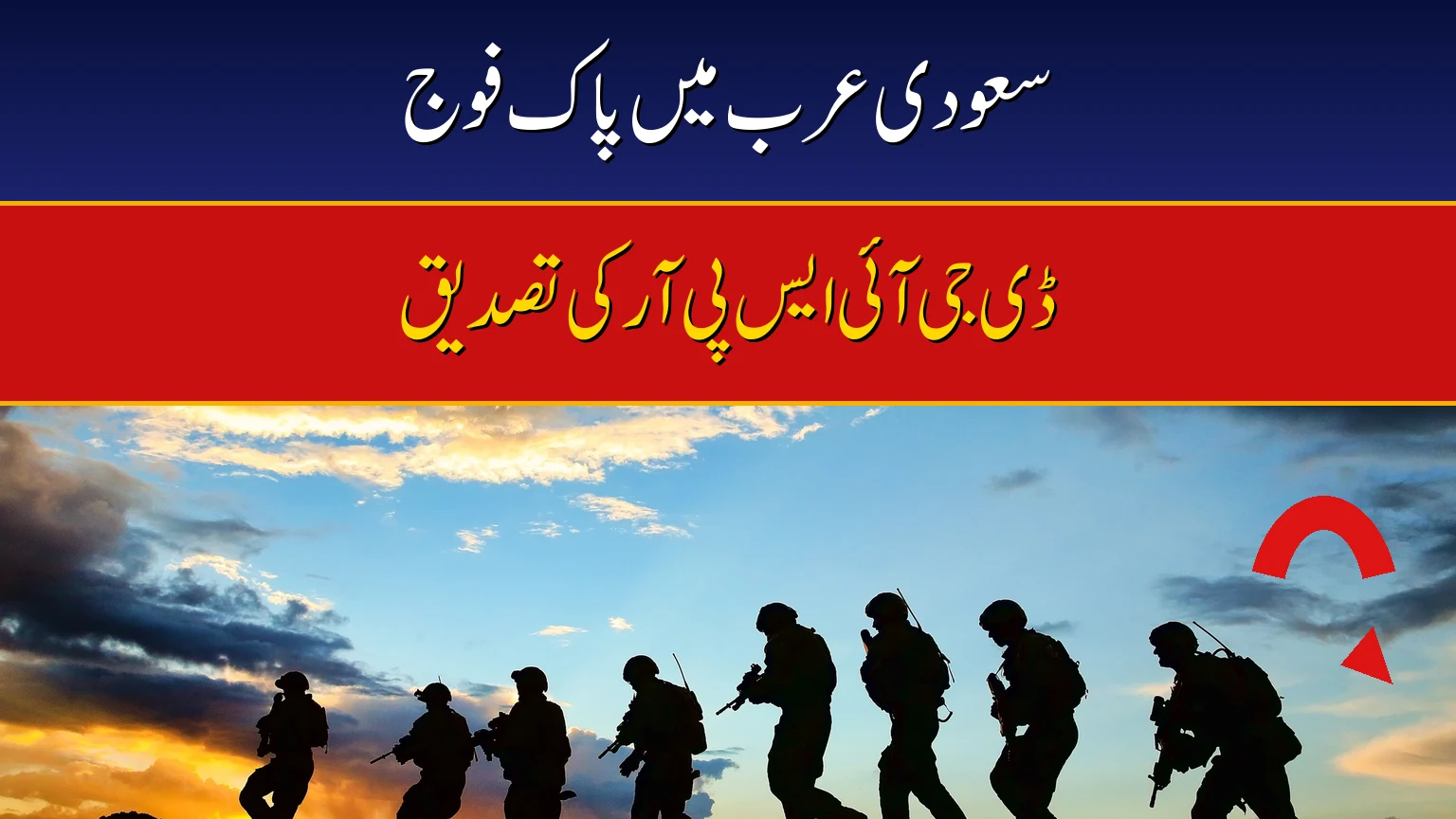
In a major development with far-reaching implications for the region, Pakistan’s military spokesperson has publicly confirmed what had long been discussed behind closed doors: Pakistani forces are on Saudi soil, serving in multiple roles, as the Makkah Joint Defence Agreement moves into its operational phase.
Key Facts at a Glance
- Who confirmed: DG ISPR Lt Gen Ahmed Sharif Chaudhry, in an interview with CNN (October 7, 2026)
- What was said: Pakistani troops are in Saudi Arabia in “multiple capabilities” and “multiple domains” — and have been there “for decades”
- The pact: Makkah Joint Defence Agreement (MJDA), signed August 7, 2026, by Pakistan, Saudi Arabia and Turkiye — an attack on one is treated as an attack on all
- Trigger: Escalating Houthi attacks on Saudi Arabia, including strikes claimed on King Khalid airport in Riyadh
- Emergency meeting: Strategic Political and Defence Committee met in Riyadh on October 5, agreed to “rapid deployment” of forces
- Troop numbers: Not officially disclosed by Pakistan
What DG ISPR Actually Said
The confirmation came during a CNN interview on Wednesday. When asked directly whether Pakistani military personnel were present in the kingdom as part of the Makkah defence alliance, the military spokesperson didn’t dodge the question.
He went further, describing the presence as spanning “multiple domains” — a phrase that covers everything from training and advisory roles to air defence and technical support. He was careful not to give numbers. Pakistan has not disclosed how many troops are currently stationed in the kingdom, nor their specific roles.
Perhaps the most telling line: the Makkah pact, he said, was not born out of a “vacuum.” There is, in his words, “a sustained diplomatic, political, military and people-to-people relationship between Pakistan, Saudi Arabia and Turkiye.”
The Timeline: How We Got Here
This didn’t happen overnight. The road to this moment stretches back months — and in some ways, decades.
| Date | Development |
|---|---|
| August 7, 2026 | Pakistan, Saudi Arabia and Turkiye sign the Makkah Joint Defence Agreement — a trilateral framework where an armed attack on one member is treated as an attack on all. |
| August 31, 2026 | First Strategic Political and Defence Committee meeting held in Istanbul; retired Lt Gen Nauman Mahmood appointed the pact’s first secretary-general. |
| Early September 2026 | Defence Minister Khawaja Asif warns that any unprovoked aggression or spillover from Yemen into Saudi Arabia would set the Makkah agreement into motion. |
| October 2, 2026 | Reuters reports Pakistan deployed 30,000–40,000 troops to Saudi Arabia, citing a Pakistani official. Pakistan’s Information Ministry calls the report “speculative” and says operational details are confidential. |
| October 5, 2026 | Emergency SPDC meeting in Riyadh. Joint statement: the three countries agree to “immediately” implement collective defence commitments and ensure “rapid deployment” of forces in the kingdom. |
| October 7, 2026 | DG ISPR confirms to CNN that Pakistani troops are already in Saudi Arabia in “multiple capabilities.” |
Why Now: The Houthi Factor
The immediate trigger is no secret. Yemen’s Houthis — aligned with Iran — have escalated attacks on Saudi targets in recent weeks. Drones and missiles have been aimed at civilian and economic infrastructure. The group claimed strikes on King Khalid International Airport in Riyadh, an Aramco oil refinery in Rabigh, and a Saudi airbase, though Riyadh hasn’t officially confirmed every claim.
Saudi Defence Minister Prince Khalid bin Salman put it bluntly on X: the emergency meeting reaffirmed the “solidarity and unity” of the three countries in confronting what he called the Houthis’ “heinous attacks against the Kingdom and the holy sites.”
The mention of holy sites matters. Any threat — real or perceived — to Makkah and Madinah changes the calculus entirely in Pakistan, where the security of the Haramain Sharifain is treated as non-negotiable across the political spectrum.
The 30,000–40,000 Troops Question
Here’s where things get murky. On October 2, Reuters reported — citing a Pakistani official — that Pakistan had deployed between 30,000 and 40,000 troops to Saudi Arabia to help defend land borders and assist with drone and missile interceptions. The same report said Islamabad had not decided to send troops into Yemen in a fighting capacity.
Pakistan’s Ministry of Information and Broadcasting pushed back within days. In a formal statement, it urged against relying on “highly speculative reports based on non-attributable and unknown sources.” Operational details, it said, were confidential.
But the ministry also reiterated something important: Pakistan’s commitment to the security of Saudi Arabia and the Haramain Sharifain is “non-negotiable.”
So where does that leave the numbers? Unconfirmed. DG ISPR’s own statement neither confirmed nor denied specific figures — he simply confirmed presence. For now, the honest answer is: troops are there, the exact count is not public.
Turkiye’s Role: Support, Not Boots (Yet)
The third partner in the pact is playing a different game. Turkish Foreign Minister Hakan Fidan has said Turkiye is “assessing” its assistance to Saudi Arabia under the agreement — focused on defensive and technical support rather than a large troop deployment.
This fits Turkiye’s broader posture. Ankara has been trying to balance its role as a defence partner with its diplomatic positioning in the wider regional conflict. Technical support — air defence systems, intelligence sharing, training — is valuable without the political weight of boots on the ground.
Back Home: Rare Political Unity
One of the more striking aspects of this story is the domestic response. Pakistan’s usually fractious political landscape has, at least temporarily, aligned behind the deployment. Politicians across party lines, civil society voices and the public have rallied behind the Shehbaz Sharif government and the armed forces on this one.
That unity isn’t accidental. The Saudi relationship runs deep in Pakistan — millions of Pakistani workers in the kingdom, decades of military cooperation, and the religious significance of the holy sites. When it comes to Saudi Arabia’s security, the debate in Pakistan tends to be about how, not whether.
Internationally, US Secretary of State Marco Rubio backed Saudi Arabia’s right to defend itself against Houthi attacks — a signal that Washington, despite its own complicated regional entanglements, isn’t opposing the arrangement.
What This Means for Pakistanis in Saudi Arabia
Around 2.7 million Pakistanis live and work in Saudi Arabia — the largest Pakistani diaspora community anywhere in the world. For them, this news lands differently than it does in Islamabad’s policy circles.
The reassuring part: Pakistani forces in the kingdom are there in a defensive capacity. The pact is explicitly framed as collective defence, not an expeditionary war. There is no indication of Pakistani troops entering Yemen.
The concerning part: escalation is unpredictable. Houthi attacks have already disrupted flights and targeted economic infrastructure. Pakistani workers should stay in touch with the Pakistani embassy and consulates in Riyadh and Jeddah, and follow official advisories.
Remittances are another angle worth watching. Saudi Arabia is Pakistan’s single largest source of remittances. Any prolonged instability could affect the flow of money that millions of Pakistani families depend on.
What’s Next
The pact has now moved from paper to practice — that much is clear. The October 5 joint statement spoke of “immediate” implementation, and the DG ISPR’s confirmation suggests the machinery is already turning.
What to watch in the coming days and weeks:
Troop numbers. Will Pakistan eventually disclose figures, or keep them classified? The Reuters 30,000–40,000 claim hangs in the air, neither confirmed nor fully denied.
Turkiye’s next move. “Assessing” is doing a lot of work in Ankara’s statements. If Houthi attacks intensify, pressure will grow for Turkiye to move from technical support to something more concrete.
The Houthi response. The whole point of collective deterrence is to make attacks too costly to continue. Whether the Houthis are deterred or provoked remains the open question.
Iran’s reaction. The Houthis are Iran-aligned, and Tehran will be watching this trilateral bloc closely. Pakistan has historically tried to balance its Saudi and Iranian relationships — this deployment tests that balance.
One thing is certain: the Makkah pact is no longer a theoretical framework discussed in conference rooms. It is now an operating reality, with Pakistani boots on Saudi ground and the region watching every move.
Frequently Asked Questions
Are Pakistani troops really in Saudi Arabia right now?
Yes. DG ISPR Lt Gen Ahmed Sharif Chaudhry confirmed it directly to CNN on October 7, 2026, saying Pakistani forces are there in “multiple capabilities” and “multiple domains” — and have been for decades.
How many Pakistani troops are deployed there?
Pakistan has not officially disclosed troop numbers. Reuters reported 30,000–40,000 citing an unnamed official, but Pakistan’s Information Ministry called that report “speculative.” The real figure remains unconfirmed.
What is the Makkah defence pact?
The Makkah Joint Defence Agreement (MJDA), signed on August 7, 2026, by Pakistan, Saudi Arabia and Turkiye. Its core principle: an armed attack on one member is treated as an attack on all three — a collective defence framework.
Will Pakistani troops fight in Yemen?
There is no indication of that. The deployment is described as defensive — protecting Saudi territory, borders and infrastructure. Reuters reported Islamabad had not decided to send troops into Yemen in a fighting capacity.
What is Turkiye doing under the pact?
Turkiye is providing defensive and technical support and is “assessing” further assistance, according to its foreign minister. It has not announced a troop deployment on Pakistan’s scale.
Does this affect Pakistanis living in Saudi Arabia?
Pakistani forces are there defensively, which should reassure the 2.7 million Pakistanis in the kingdom. Still, it’s wise to follow embassy advisories and stay updated, as Houthi attacks have disrupted flights and targeted infrastructure before.
How does this affect Pakistan-Iran relations?
It’s a delicate balance. Pakistan has historically maintained ties with both Saudi Arabia and Iran. The deployment tests that balance, especially since the Houthis are Iran-aligned. Islamabad will be working hard to keep channels open with Tehran.