UN Warns 40.5 Million May Be Forced to Move as Climate Change Hits South Asia
By Fatima Raza | October 17, 2026 | Updated 10:20 AM PKT The United Nations migration chief has warned that climate change could force up to 40.5 million people in South Asia to move from their homes by 2050 in a worst-case scenario. IOM Director General Amy Pope, speaking to AFP in New Delhi on…
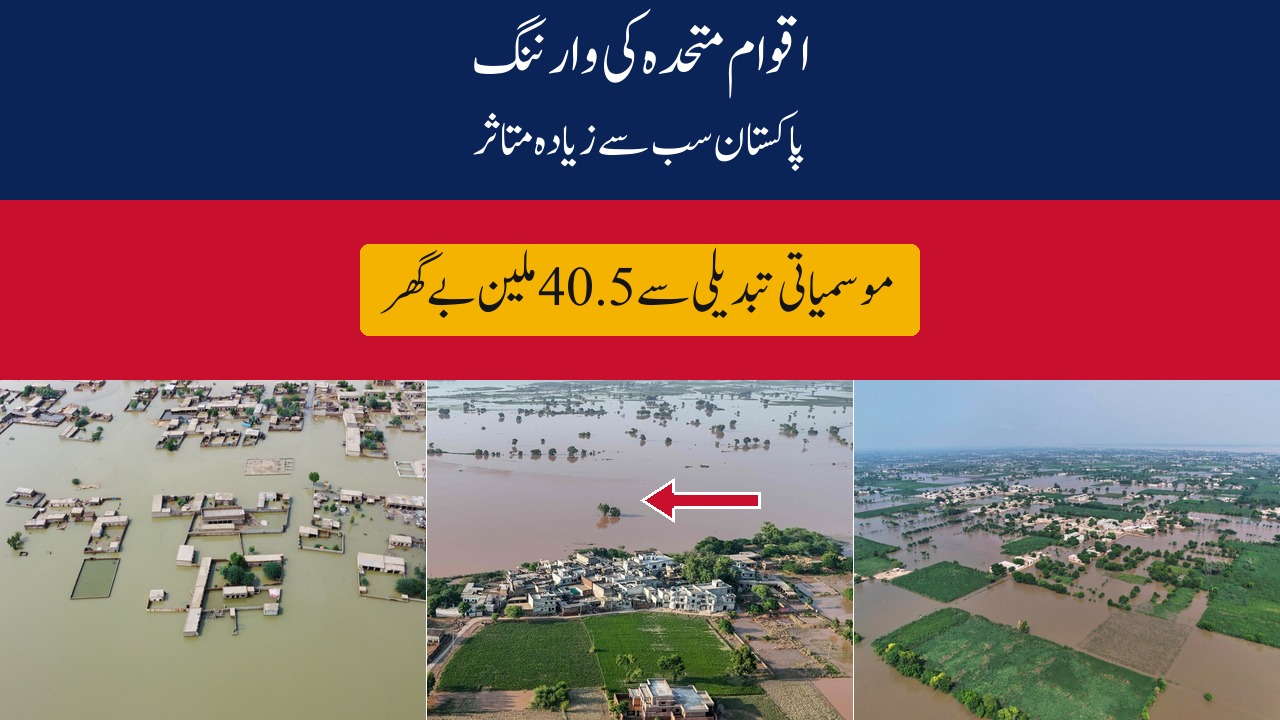
The United Nations migration chief has warned that climate change could force up to 40.5 million people in South Asia to move from their homes by 2050 in a worst-case scenario. IOM Director General Amy Pope, speaking to AFP in New Delhi on October 16, said rising seas, flooding and drought are already threatening homes and farmland across the region — and that for many families, moving is becoming the first and only way to survive. For Pakistan, the warning lands close to home: the country was ranked the most climate-affected country in the world in 2022, and its 2022 floods affected 33 million people.
The numbers in this one stopped me. We are not talking about a distant island nation or some projection for the year 2100. Forty and a half million people — roughly the population of a large country — possibly on the move within the next 25 years, in our own region. The scale is hard to picture, but the direction is not: it is already happening.
Key Facts at a Glance
| Detail | Fact |
|---|---|
| Warning issued by | Amy Pope, Director General, International Organization for Migration (IOM) |
| Statement made | October 16, 2026, in New Delhi, in an interview with AFP |
| Worst-case displacement | Up to 40.5 million people in South Asia by 2050 |
| Threats cited | Rising seas, flooding, drought, extreme heat |
| Reference disaster | Nepal’s August 26, 2026 mountain and glacier collapse with deadly flooding |
| Pakistan context | 2022 floods affected 33 million people; Germanwatch ranked Pakistan the most climate-affected country in 2022 |
| Proposed solutions | AI forecasting, early warning systems, adaptation funding, legal migration routes |
What the UN Migration Chief Said in New Delhi
Amy Pope did not mince her words. Climate change, she said, is threatening livelihoods and forcing people from their homes across South Asia. The mechanism is brutally simple: rising seas, flooding and drought destroy homes and farmland. “When they can’t produce food, when they can’t feed their livestock, it increases the likelihood of displacement,” she said. “The first adaptation is often for people to move.”
For years, climate migration has been talked about as a failure. Pope is reframing it as the start of the response — and the real question for governments is how to make movement planned and safe instead of chaotic and dangerous.
Heat is also driving urbanisation. “As people seek shelter from heat, they’re going into urban centres,” she said — a drift the megacities of South Asia are already absorbing, often without the housing, water or jobs to do it humanely.
The 40.5 Million Figure, Explained
The headline number — 40.5 million displaced in South Asia by 2050 — is the IOM’s worst-case scenario, not a fixed forecast. It depends on how much the world warms and how much, or how little, is invested in adaptation. But it is worth noting that earlier estimates were in the same neighbourhood: the World Bank’s 2021 Groundswell report projected over 40 million internal climate migrants in South Asia by 2050. Different models, same alarming direction.
Where would these people go? Mostly within their own countries, researchers say — from coasts to cities, from drought-hit farmland to industrial towns. A smaller share will cross borders along routes that already exist, especially toward the Gulf.
Why South Asia Is So Exposed
The risks are, in Pope’s words, “particularly acute” in South Asia, because you have the worst possible combination: a vast population, limited resources, and communities that live close to the physical edge — riverbanks, coastlines, glacier-fed valleys, heat-baked plains.
Take Nepal’s August 26 disaster, which Pope highlighted. A mountain and glacier collapse triggered deadly flooding. The IOM sent humanitarian aid, but the message was bigger than one rescue: the Himalayas, which feed the rivers that sustain hundreds of millions of people, are becoming unstable.
Then there is the sea. Rising water threatens the Maldives and Bangladesh’s coastlines, but also Pakistan’s coastal belt in Sindh and Balochistan, where fishing communities have watched groundwater turn salty. Drought in the west, flooding in the east, heat everywhere — the map of livable land is being redrawn.
What This Means for Pakistan
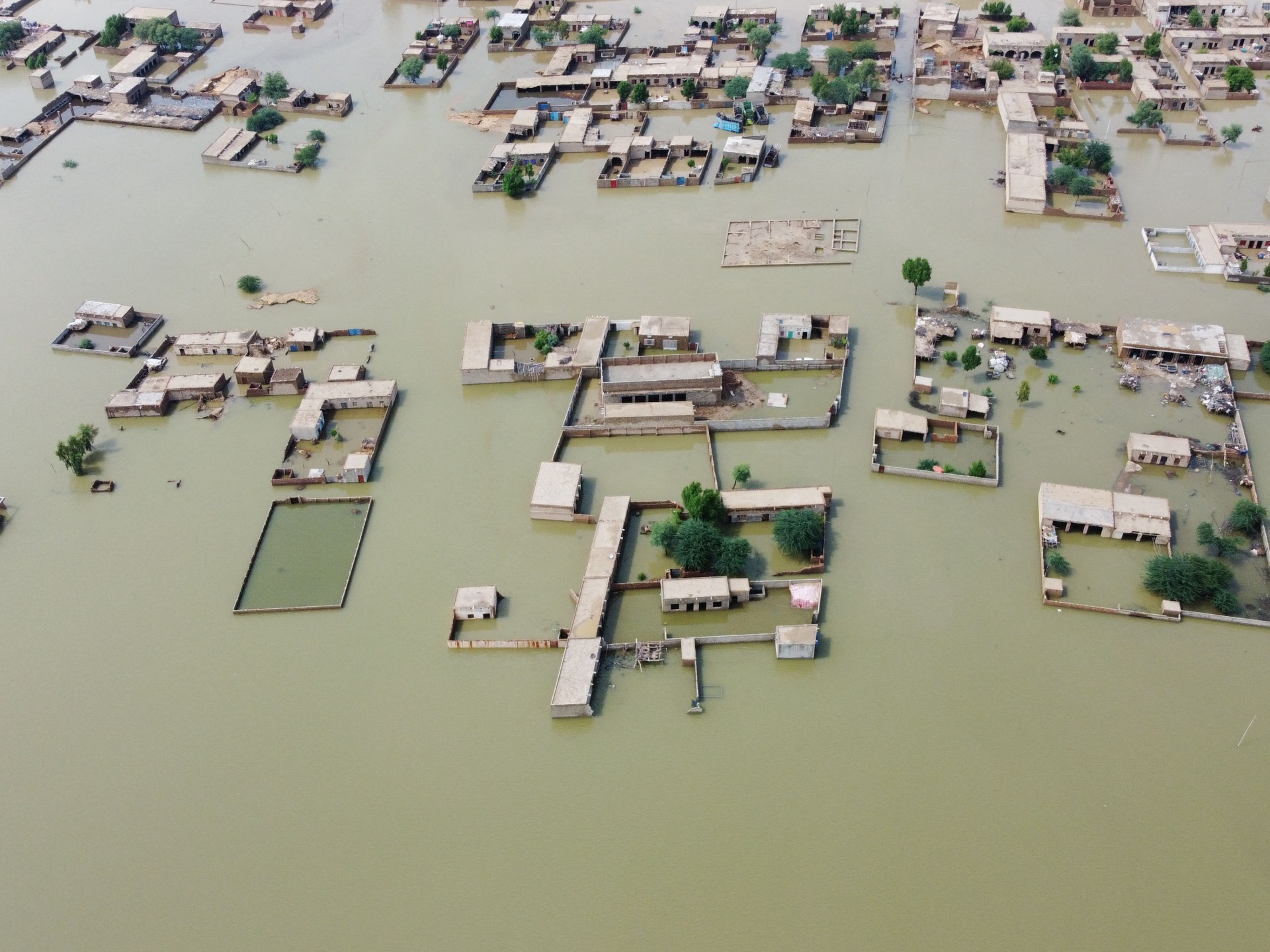
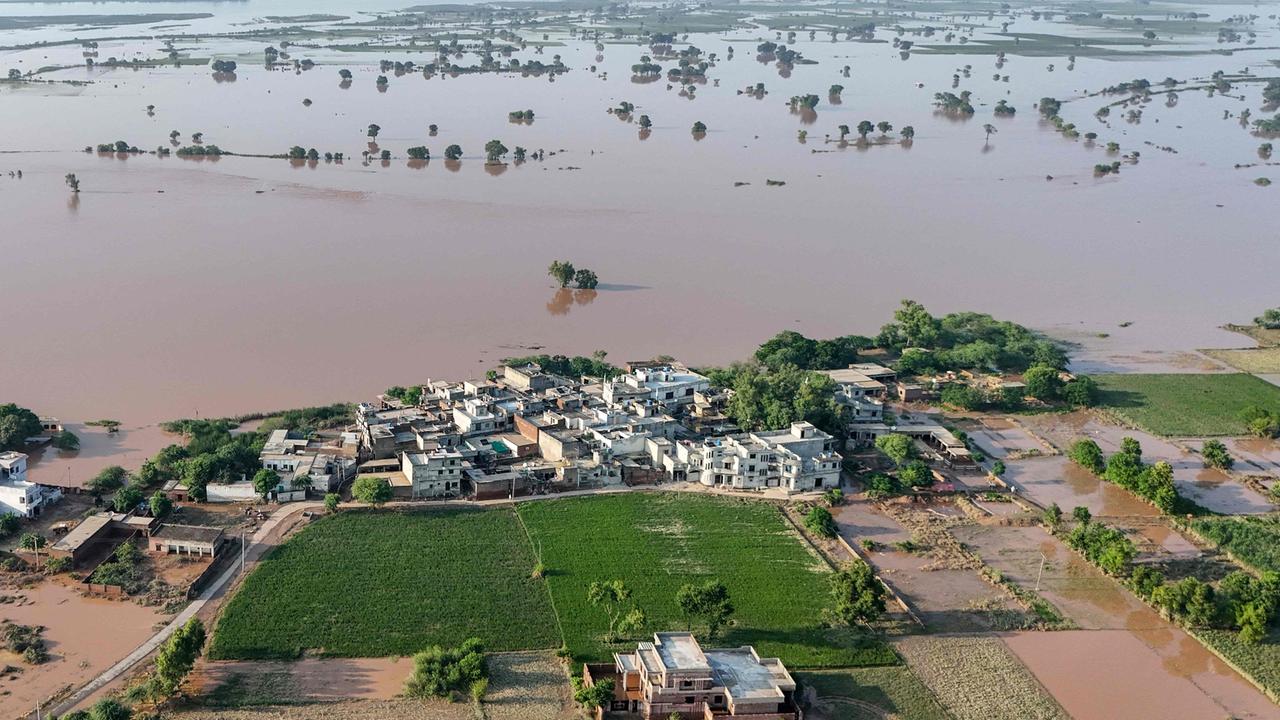
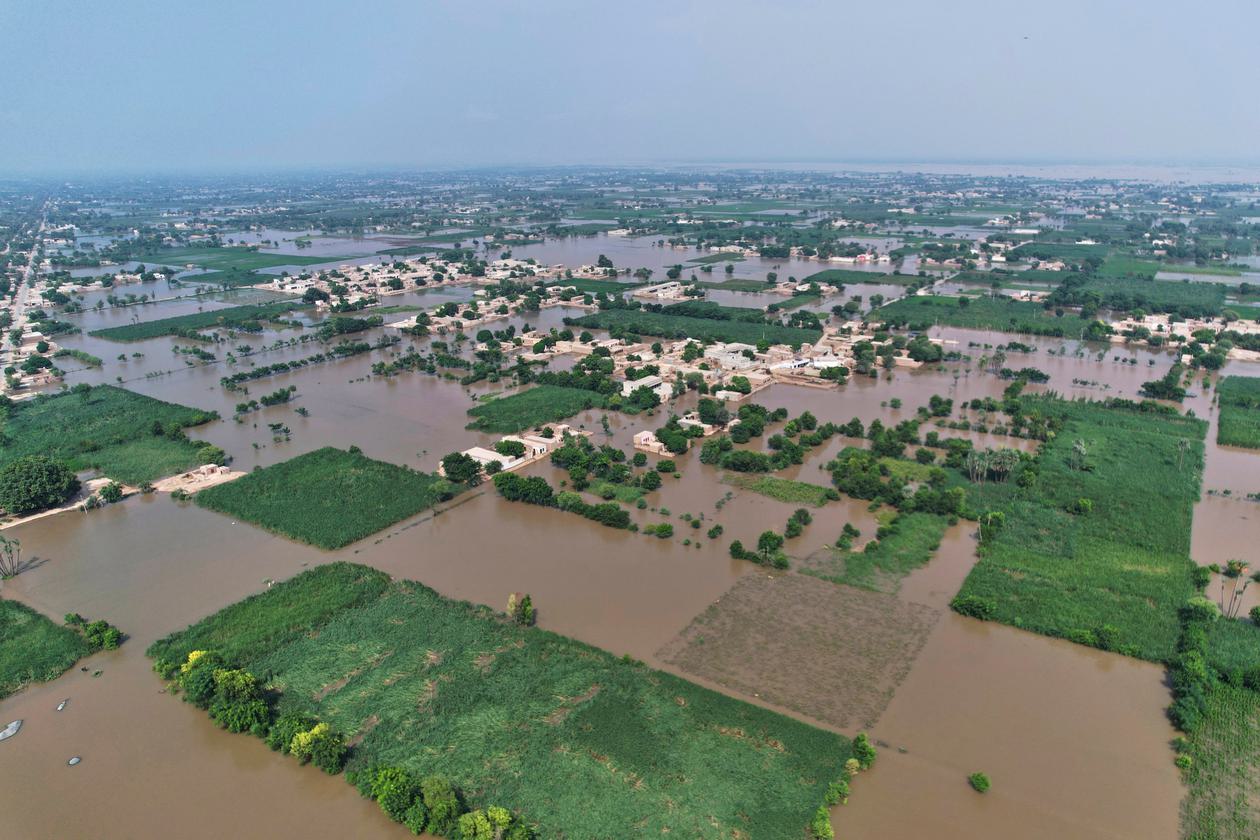
Pope was speaking in New Delhi, but her warning reads like it was written about Pakistan. The Germanwatch Climate Risk Index 2025 ranked Pakistan the most affected country in the world for 2022 — up from eighth place previously — driven by the catastrophic monsoon floods that affected 33 million people, killed nearly 1,700, and displaced around 7.9 million, according to UN figures. The World Bank estimated the damage at over $30 billion and calculated that the floods pushed between 8.4 and 9.1 million people below the poverty line.
And Pakistan contributes less than one percent of global greenhouse gas emissions. That is the moral core of this story, and it is worth repeating every time it comes up: the countries being told to adapt their way out of this crisis did the least to cause it.
The 2022 floods were not a one-off either. Pakistan sits on the same glacier-fed river systems that Pope was talking about in Nepal. The monsoon that drowned Sindh and Balochistan, the GLOFs in Gilgit-Baltistan, the droughts in Thar — this is the country’s normal now. When the IOM chief says the first adaptation is often to move, Pakistani readers do not need an explanation. They watched entire districts of Sindh empty out in 2022.
Migration as a Tool, Not Just a Tragedy
Here is the part of Pope’s message that surprised me, and honestly, the most useful part. She does not just want governments to brace for displacement — she wants them to use migration as development policy.
Her argument runs like this: international migration already helps people earn a living while filling labour shortages abroad. Pakistan knows this intimately — remittances from overseas Pakistanis are one of the country’s largest sources of foreign exchange. But growing demand for workers must be matched with safe, legal routes. Without them, migrants are exploited by traffickers and fraudulent overseas job offers — a problem Pakistan has confronted repeatedly. If climate displacement grows, legal pathways have to grow with it.
AI Forecasting and the Money Problem
The most forward-looking part of Pope’s interview was about prediction. “With the advancements in AI forecasting, you can now better anticipate those communities that are at high risk of displacement,” she said. Combine weather forecasts with data on local livelihoods, and authorities can act before people are forced to move.
The measures themselves are not exotic: improve farming methods, train people for other jobs, and where necessary, relocate communities that keep getting hit by floods or drought. What is missing is the money. Pope was blunt: funding to help residents prepare remains inadequate, there is a “lack of urgency globally,” and governments often struggle to navigate the complex systems that fund climate adaptation. Her economic case is worth quoting: “The cost of a humanitarian disaster is in the billions. The cost of investing in some of the resilience measures can be far less.”
India, she noted, has invested in early-warning systems, disaster response and technology — grounds for optimism, even if no government can meet the scale of the challenge alone. For Pakistan, which lives this cycle every monsoon, the message is identical: early warning and predictable adaptation funding beat emergency relief every time.
What Happens Next
Pope’s warning is not a prediction that can be ignored for another decade. The 40.5 million figure is a worst-case scenario, which means it is also a choice: invest in adaptation now, or pay for displacement later. The technology to anticipate at-risk communities exists. The migration routes already exist. What does not yet exist, in her assessment, is the urgency or the money to match the scale of what is coming.
For Pakistan, the stakes are personal. The country has already lived through the scenario everyone else is now being warned about. The 2022 floods were South Asia’s climate displacement story in real time — and if the IOM’s numbers are right, they were a preview, not the peak.
FAQs: UN Warning on Climate Displacement in South Asia
What did the UN migration chief warn about South Asia?
IOM Director General Amy Pope told AFP in New Delhi on October 16, 2026, that climate change is threatening livelihoods and forcing people from their homes across South Asia, and that in a worst-case scenario up to 40.5 million people could be forced to move by 2050.
How does climate change cause displacement in South Asia?
Rising seas, flooding and drought threaten homes and farmland. When people cannot produce food or feed their livestock, displacement becomes more likely. Extreme heat is also pushing people into cities, accelerating urbanisation.
What happened in Nepal on August 26, 2026?
A mountain and glacier collapse in the Himalayas triggered deadly flooding. IOM Director General Amy Pope cited it as an example of how climate change is destabilising the region, and the IOM sent humanitarian aid to help.
How many people were displaced by Pakistan’s 2022 floods?
Pakistan’s 2022 floods affected 33 million people and displaced around 7.9 million, according to UN figures, with nearly 1,700 deaths and damages estimated at over $30 billion by the World Bank. Germanwatch ranked Pakistan the most climate-affected country in the world for 2022.
Can AI help prevent climate displacement?
According to the IOM chief, advances in AI forecasting can help governments identify communities at high risk of displacement before disaster strikes, by combining weather forecasts with data on local livelihoods — so authorities can act before people are forced to move.
What is “migration as a tool” for climate adaptation?
The IOM argues that planned, legal migration can help people earn a living while filling labour shortages abroad, and that South Asia’s established migration routes can be used for development. But safe, legal pathways are essential to protect migrants from traffickers and fraudulent job offers.