ECP Announces Islamabad Local Government Elections on December 20, 2026 — Full Schedule
ECP Announces Islamabad Local Government Elections on December 20, 2026 — Full Schedule By Daniyal Sheikh | Wednesday, October 21, 2026 | TimelyUps News Desk The Election Commission of Pakistan (ECP) has officially announced the schedule for local government elections in Islamabad, ending months of uncertainty for the capital’s residents. Polling will be held on…
ECP Announces Islamabad Local Government Elections on December 20, 2026 — Full Schedule
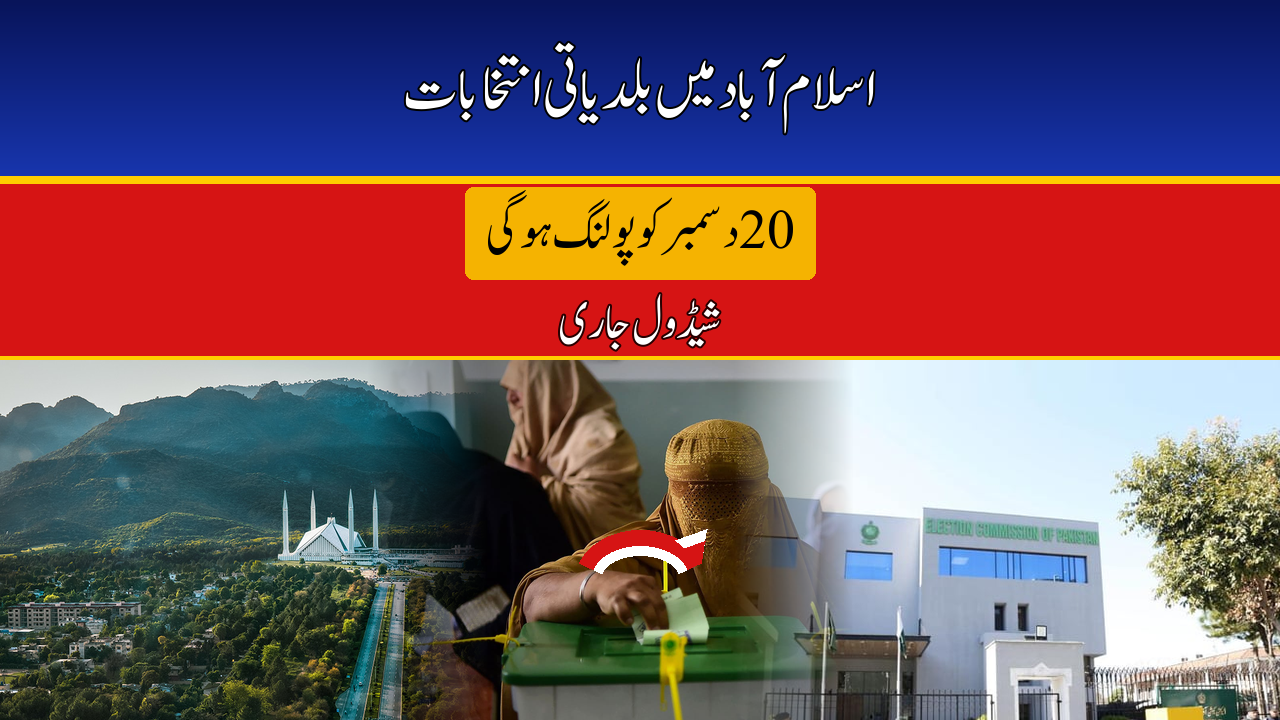
The Election Commission of Pakistan (ECP) has officially announced the schedule for local government elections in Islamabad, ending months of uncertainty for the capital’s residents. Polling will be held on Sunday, December 20, 2026, from 8:00 AM to 4:00 PM, with the consolidation of results scheduled from December 21 to December 24. The announcement came on Wednesday, October 21, after a five-member ECP bench headed by Chief Election Commissioner Sikandar Sultan Raja ordered that elections proceed under the Islamabad Capital Territory Local Government Act, 2015.
For Islamabad’s residents, this is genuinely big news. The capital has been without an elected local government for more than five years — the last elected Metropolitan Corporation Islamabad (MCI) completed its term in February 2021. Since then, neighbourhood-level governance has been handled by administrators rather than elected representatives. That changes now: candidates will begin filing nomination papers in early November, and voters will head to the polls just before the year’s end.
Islamabad LG Elections 2026: Full Polling Schedule
The ECP has laid out a detailed, stage-by-stage schedule. Every date below comes from the official schedule issued on October 21, cross-checked across Dunya News, Aaj English, ARY News, and Bloom Pakistan.
| Activity | Date |
|---|---|
| Public notice inviting nomination papers | October 30, 2026 |
| Submission of nomination papers | November 2–6, 2026 |
| Publication of list of nominated candidates | November 7, 2026 |
| Scrutiny of nomination papers | November 9–13, 2026 |
| Appeals against acceptance or rejection of nominations | November 14–18, 2026 |
| Decisions on appeals by appellate tribunals | November 19–23, 2026 |
| Publication of revised candidate list | November 24, 2026 |
| Last date for withdrawal of candidature | November 25, 2026 |
| Allotment of election symbols | November 26, 2026 |
| Polling day | December 20, 2026 (8:00 AM – 4:00 PM) |
| Consolidation of results | December 21–24, 2026 |
A quick note for anyone considering a run: the November 9–13 scrutiny window is where most paperwork battles are won or lost. Get asset declarations and tax records ready well before November 2 — the appeals window is short, and tribunals rarely show leniency to incomplete files.
Election Code of Conduct: What Is Now Banned in Islamabad
With the schedule announced, the ECP’s code of conduct kicks in across the federal capital. The restrictions are significant, and they affect not just candidates but the entire machinery of government in Islamabad. Here is what is now off-limits:
- Transfers and postings frozen: No government official in Islamabad can be transferred or posted without the prior approval of the Election Commission.
- No new development projects: The announcement of new development schemes or projects in Islamabad is barred for the duration of the election process — a measure designed to stop the ruling setup from using public funds to influence voters.
- Top office-holders cannot campaign: The President, the Prime Minister, the Chairman Senate, chief ministers, governors, ministers, and members of parliament are prohibited from taking part in the election campaign in any way.
- Leave for government employees restricted: Government employees posted in Islamabad cannot proceed on leave without the ECP’s approval during the election period.
- No misuse of official power: The use of official authority, government vehicles, or state resources to influence the election result is strictly prohibited.
This is a broader freeze than many people realise. It mirrors the discipline the ECP applies during general elections — for the next two months Islamabad’s administration is effectively locked into neutral gear, so that no one with power can tilt the field while voters decide.
It is also worth noting that this code of conduct lands alongside the federal government’s wider institutional reform push — the Prime Minister has been publicly pressing the FBR against resisting tax reforms, and governance changes are underway across departments, from Pakistan Post’s revised pension proof-of-life SOP to new Pakistan-Canada investment treaty talks. The LG elections fit squarely into that larger picture of institutional normalisation.
What This Means for Islamabad Residents
Strip away the official language and this is what actually changes for you, as a resident of Islamabad, over the coming weeks:
First, you will finally elect your neighbourhood government. Islamabad’s 101 union councils will elect the chairmen, vice-chairmen, and council members who handle street lights, sanitation, water issues, and the small development works that make daily life livable. For over five years these decisions were taken by administrators with no electoral accountability. That gap is about to close.
Second, expect campaign season. From late November through December 19, Islamabad will see corner meetings, banners, door-to-door visits, and public gatherings. If you live near a busy chowk or a community centre, plan for occasional evening traffic disruptions.
Third, check your voter status now. You can only vote if you are registered as a voter in an Islamabad constituency. If you moved to Islamabad recently — for work, study, or a new posting — verify that your vote is registered in the capital and not still tied to your home district. Polling runs 8:00 AM to 4:00 PM on December 20; December mornings in Islamabad are cold, so an early visit beats the midday rush.
Fourth, the development freeze cuts both ways. Road repairs or lighting works in your sector may pause until the results are out — but the flip side is that no office-holder can dangle new projects as bait for votes. The freeze is protection, not neglect.
One honest note: local government elections affect your daily life more than any other poll. Turnout in local elections is historically lower than in general elections, which means every vote carries disproportionate weight. If you want a say in how your neighbourhood is run, December 20 is your day.
Why Islamabad Has Had No Elected Local Government Since 2021
The delay was never a secret — it was a running story. The last elected Metropolitan Corporation Islamabad completed its term in February 2021. What followed was a long stretch of legal and administrative wrangling: new local government legislation, disputes over the number and delimitation of union councils, court proceedings, and repeated hearings before the Election Commission.
On October 21, the matter finally came to a head. A five-member ECP bench headed by Chief Election Commissioner Sikandar Sultan Raja heard the case on the delayed elections and ordered that the polls proceed under the Islamabad Capital Territory Local Government Act, 2015 — the standing law for the capital’s local governance. The schedule was released the same day.
To put the gap in perspective: the voter rolls for the capital reflect well over a million registered voters, and Islamabad now comprises 101 union councils. That is a sizeable electorate that has had no elected say in neighbourhood governance for over half a decade. The December 20 election is not just another poll on the calendar — it is the restoration of the most local layer of democracy in the federal capital.
There is also a wider constitutional context. Article 140-A of the Constitution requires each province to establish a local government system and devolve political, administrative, and financial authority to elected representatives. Islamabad’s December polls are, at minimum, one long-overdue correction.
How to Participate: Voting on December 20
If you are a registered voter in Islamabad, here is what to do between now and polling day:
- Verify your registration: Confirm your vote is registered in your current Islamabad address through the ECP’s voter verification channels.
- Know your constituency: Islamabad has 101 union councils. Find yours and note your candidates once symbols are allotted on November 26.
- Keep your CNIC ready: You will need your original Computerised National Identity Card at the polling station.
- Plan your visit: Polling runs 8:00 AM to 4:00 PM on December 20. Mornings and mid-afternoons are usually quietest.
- Consider contesting: Nomination papers open November 2–6. If you have ever complained about your sector’s governance, this is the cycle where you can do more than complain.
Frequently Asked Questions
TimelyUps will track this story — candidate lists after November 7, final symbols on November 26, and full polling-day coverage. Mark the date: December 20, 2026.