PM Warns FBR Officers Against Resisting Tax Reforms
Prime Minister Shehbaz Sharif has warned tax officials against resisting reforms in the Federal Board of Revenue, declaring at the weekly review meeting on FBR affairs on Monday that the reforms are “in the larger interest of the state and will continue under all circumstances.” The warning landed just as the FBR suspended two senior…
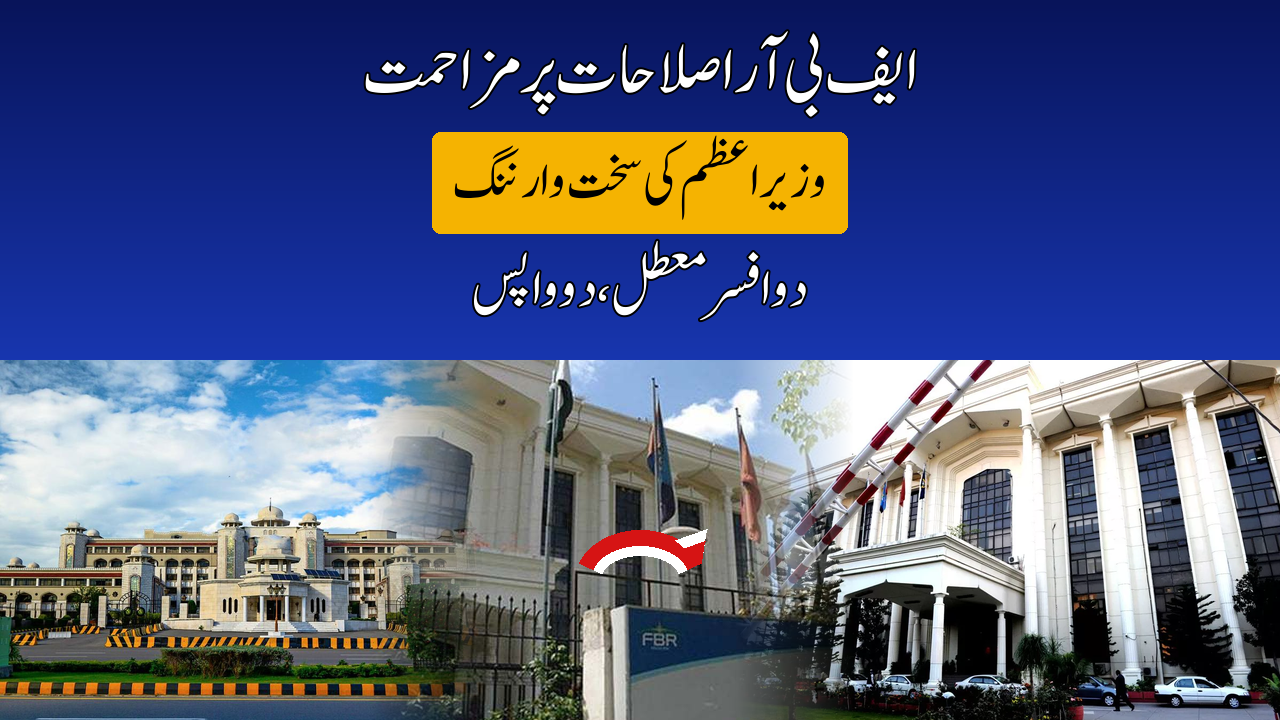
Prime Minister Shehbaz Sharif has warned tax officials against resisting reforms in the Federal Board of Revenue, declaring at the weekly review meeting on FBR affairs on Monday that the reforms are “in the larger interest of the state and will continue under all circumstances.” The warning landed just as the FBR suspended two senior Inland Revenue officers and repatriated two more — and days after the officers’ association backed off a countrywide pen-down strike against the restructuring plan.
The PM’s message: reform, or face the consequences
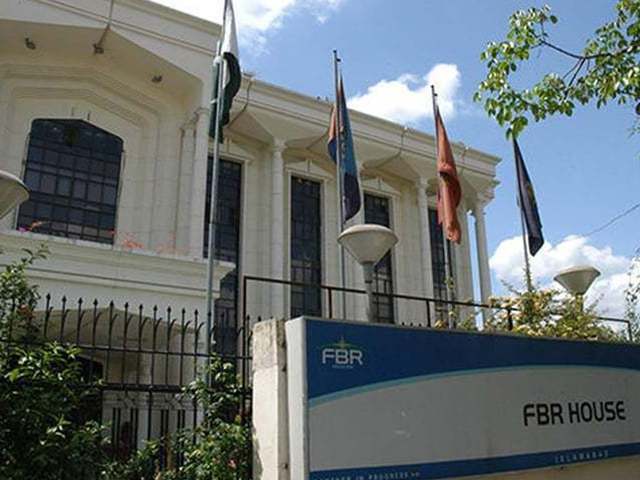
The meeting directed the FBR chairman to speed up the rollout of the faceless assessment system and ordered “indiscriminate action” against officials found involved in corruption.
Officers who are genuinely improving, the PM said, will be given a chance to reform themselves. But the corrupt and the inefficient, in his words, “will have no place in the organisation.”
He also pushed for a faster pace in narrowing the tax gap — the difference between what the state should collect and what it actually does. Officials briefed the meeting that the gap has come down from 6% to 5% of GDP over the past three years, and the PM wants that figure to shrink further, quickly.
Two suspended, two repatriated — the notifications are out
On Monday, the FBR issued two notifications. Two Inland Revenue officers — one in BS-20 and one in BS-19 — were suspended for 120 days, while two more BS-20 officers were repatriated to the FBR headquarters for further investigation.
The reason given was an unauthorised press statement and a call to suspend official work. According to the notifications, this was a prima facie violation of Rules 23 and 26 of the Civil Servants (Conduct) Rules 2026, and disciplinary proceedings will follow under the E&D Rules 2020.
The suspended officers were named as Commissioner RTO Zone-I Hyderabad Naib Ali Pathan and Additional Commissioner Inland Revenue RTO Sargodha Ali Salah Hayat. During the suspension, the two officers are required to report daily — at 9 AM, noon and 4 PM — to the FBR’s Member Admin & HR.
The pen-down strike that never happened
To understand the firmness, look at what happened just before. The Inland Revenue Officers Association had announced a countrywide pen-down strike against the FBR restructuring — a move that would have slowed the tax machinery nationwide. The call was withdrawn after a meeting between the association and the FBR’s Member Administration and Member Operations. The suspensions this week read as a signal to remaining hardliners: the reform train is not stopping.
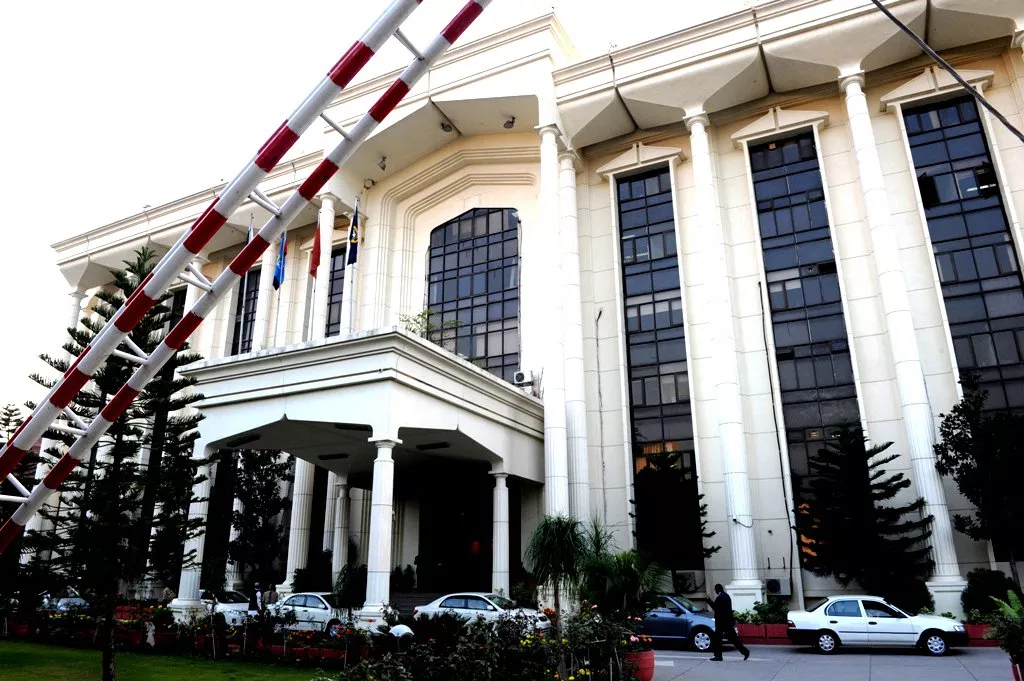
The tax gap: 6% down to 5% of GDP
The tax gap figure is central to the whole argument. A gap of 6% of GDP meant Pakistan was leaving a huge chunk of potential revenue uncollected — through evasion, under-reporting and weak enforcement. Bringing it down to 5% over three years shows progress, and the PM wants bolder numbers now.
For ordinary taxpayers and businesses, this matters directly. A shrinking tax gap achieved through better systems — rather than squeezing the same honest filers harder — is the difference between a fairer system and a harsher one. That is exactly what the faceless system is meant to deliver.
Faceless assessments and the reform toolkit
One of the biggest changes is the National Faceless Centre (NFC) in Islamabad, where audits and assessments happen without any direct contact between tax officials and taxpayers — removing the room for harassment, bargaining and corruption.
The NFC is starting with 27 officials, and the pilot that began on October 1 is processing third-party data of between 300,000 and 400,000 individuals in phases.
Behind the scenes, the FBR is also rebuilding its muscle. As many as 957 auditors have been recruited on merit on a contractual basis, lifting the board’s audit capacity roughly fourfold. New officers are being trained at LUMS, and a peer-rating system has been introduced to measure performance.
The government is also considering dedicated sales tax zones within Large Taxpayer Offices and Corporate Tax Offices — a structural change aimed at sharper, more focused collection from the biggest filers.
What happens next
Separately, the government has reportedly decided to drop the plan for a brand-new tax agency and fix the FBR from within instead. Civil Servants Act amendments are before the National Assembly, and a compulsory-retirement plan for underperforming officials is under discussion.
The picture emerging is consistent: instead of bypassing the FBR, the government is reshaping it — new systems, new people, and clear consequences for resistance. With revenue shortfalls driving everything from borrowing to inflation, the stakes behind these reforms could hardly be higher.
Frequently Asked Questions
What did the Prime Minister say about FBR reforms?
At the weekly review meeting on FBR affairs, PM Shehbaz Sharif warned tax officials against resisting reforms, saying they are in the larger interest of the state and will continue under all circumstances. He ordered faster action to narrow the tax gap and told the FBR chairman to expedite the faceless assessment system.
Which FBR officers were suspended, and why?
The FBR suspended Commissioner RTO Zone-I Hyderabad Naib Ali Pathan and Additional Commissioner Inland Revenue RTO Sargodha Ali Salah Hayat for 120 days, and repatriated two BS-20 officers to headquarters. The notifications cited an unauthorised press statement and a call to suspend official work, treated as a prima facie violation of the Civil Servants (Conduct) Rules 2026.
Did FBR officers go on strike?
No. The Inland Revenue Officers Association had called for a countrywide pen-down strike against the FBR restructuring plan, but withdrew the call after a meeting with the FBR’s Member Administration and Member Operations. The strike never took place.
What is the National Faceless Centre?
The National Faceless Centre in Islamabad carries out tax audits and assessments without direct contact between officials and taxpayers, reducing the scope for harassment and corruption. It has started with 27 officials, and its pilot — launched on October 1 — processes third-party data of 300,000 to 400,000 individuals in phases.
What is Pakistan’s tax gap right now?
According to figures shared at the PM’s review meeting, Pakistan’s tax gap has narrowed from 6% to 5% of GDP over the past three years. The Prime Minister has directed the FBR to narrow it at a faster pace.
Is a new tax agency replacing the FBR?
No. The government has reportedly decided against creating a brand-new tax agency and will instead reform the FBR from within. Amendments to the Civil Servants Act are before the National Assembly, and a compulsory-retirement plan for underperforming officials is under discussion.