Pakistan Launches First National Strategy to End Violence Against Children (2026–2031)
By Fatima Raza | Pakistan Desk | October 15, 2026 | Updated: October 15, 2026 For the first time in the country’s history, Pakistan has a single national plan for protecting its children. The National Strategy to End Violence Against Children (2026–2031) was launched in Islamabad on October 14, 2026 by Parliamentary Secretary for Human…
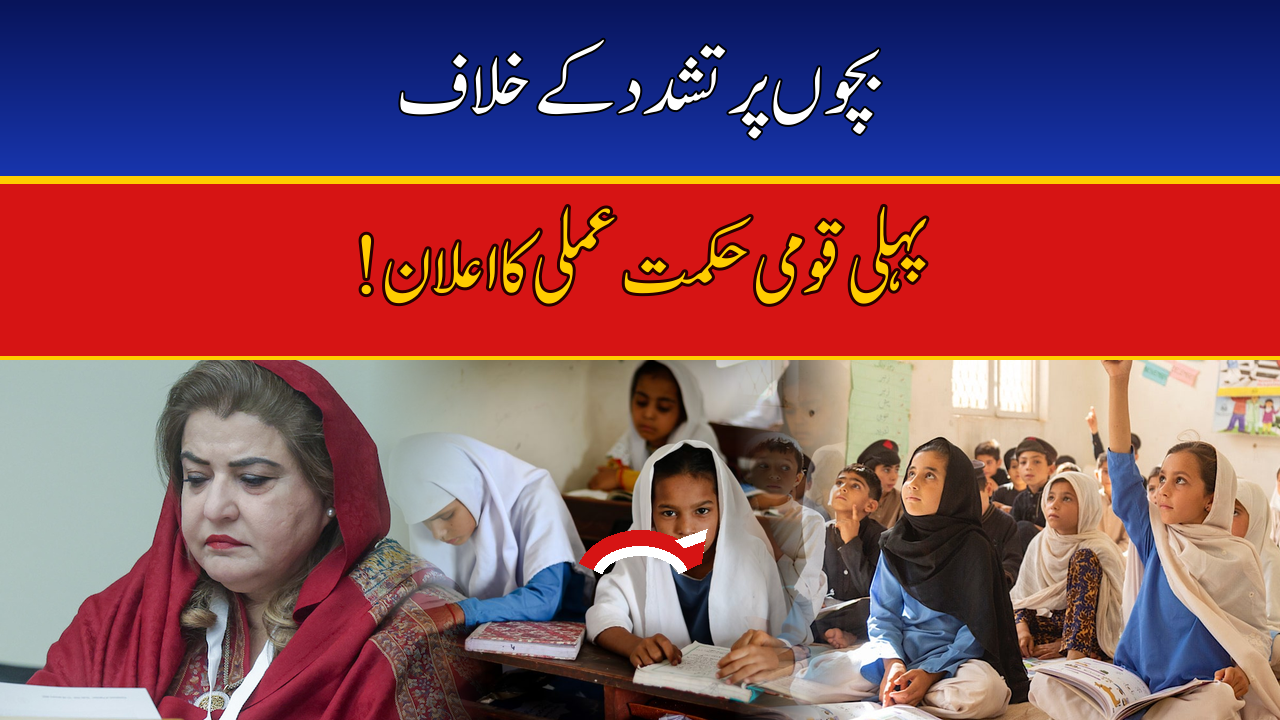
For the first time in the country’s history, Pakistan has a single national plan for protecting its children. The National Strategy to End Violence Against Children (2026–2031) was launched in Islamabad on October 14, 2026 by Parliamentary Secretary for Human Rights Saba Sadiq — a five-year framework developed by the Ministry of Human Rights in collaboration with the World Health Organisation (WHO) to build a coordinated system for preventing abuse, strengthening child protection, and ensuring access to care and justice for millions of vulnerable children.
The launch took place during a national preparatory consultation for the Second Global Ministerial Conference on Ending Violence Against Children, scheduled to be held in Manila in November — meaning Pakistan will arrive at that global table with its own strategy document in hand.
Key Facts: National Strategy to End Violence Against Children
- What: Pakistan’s first National Strategy to End Violence Against Children, covering 2026–2031.
- Launched: October 14, 2026, by Parliamentary Secretary for Human Rights Saba Sadiq.
- Developed by: Ministry of Human Rights in collaboration with the WHO.
- Framework: Based on the internationally recognised INSPIRE approach.
- Key statistic: Up to 8 in 10 children in Pakistan experience violent discipline.
- Online risk: 1 in 16 internet-using children aged 12–17 faces technology-facilitated sexual exploitation or abuse.
- Child marriage: 841,402 children aged 10–17 have been married; millions remain engaged in child labour.
- Global link: Feeds into the Manila ministerial conference in November 2026.
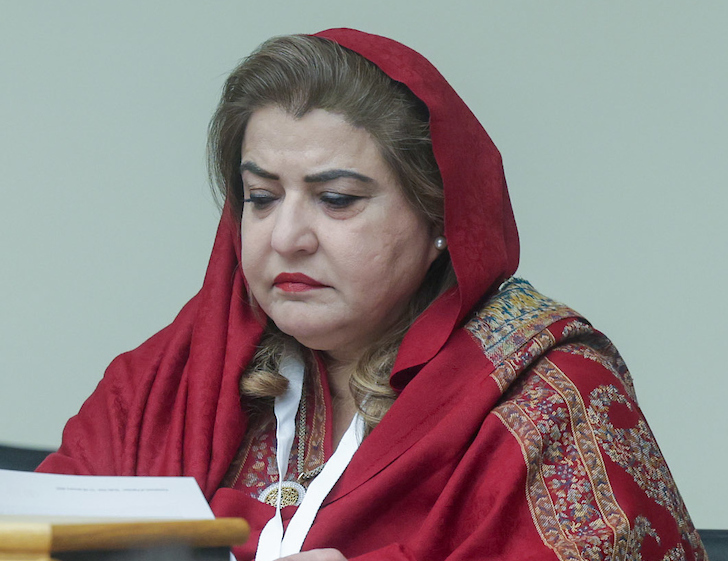
Parliamentary Secretary for Human Rights Saba Sadiq launched the National Strategy to End Violence Against Children (2026–2031) in Islamabad. (Photo: Diplomatic Star)
Why This Strategy, and Why Now
Pakistan has had child protection laws, provincial commissions, helplines and court judgments — but never a single national strategy tying them together. The result, as the strategy document itself acknowledges, is a fragmented response: widespread violence and exploitation affecting children across the country, with prevention, protection and justice operating in separate silos.
The strategy is designed to change that by establishing a coordinated system: prevention of abuse, stronger child protection institutions, and guaranteed access to care and justice for vulnerable children. The timing is deliberate — it gives Pakistan a concrete national commitment to present at the Manila conference next month, where countries will be comparing notes on exactly these systems.
The Numbers That Forced the Move
The strategy does not soften the picture. According to its own data:
- Up to 8 in 10 children in Pakistan experience violent discipline — a figure that makes corporal punishment and harsh discipline the norm rather than the exception.
- One in 16 internet-using children aged 12 to 17 faces technology-facilitated sexual exploitation or abuse — the online dimension of a problem most policy still treats as offline.
- 841,402 children aged 10 to 17 have been married, despite the legal prohibitions on child marriage.
- Millions remain engaged in child labour, with the strategy singling out children who are displaced, migrants, or living in poor and informal urban settlements as the most vulnerable.
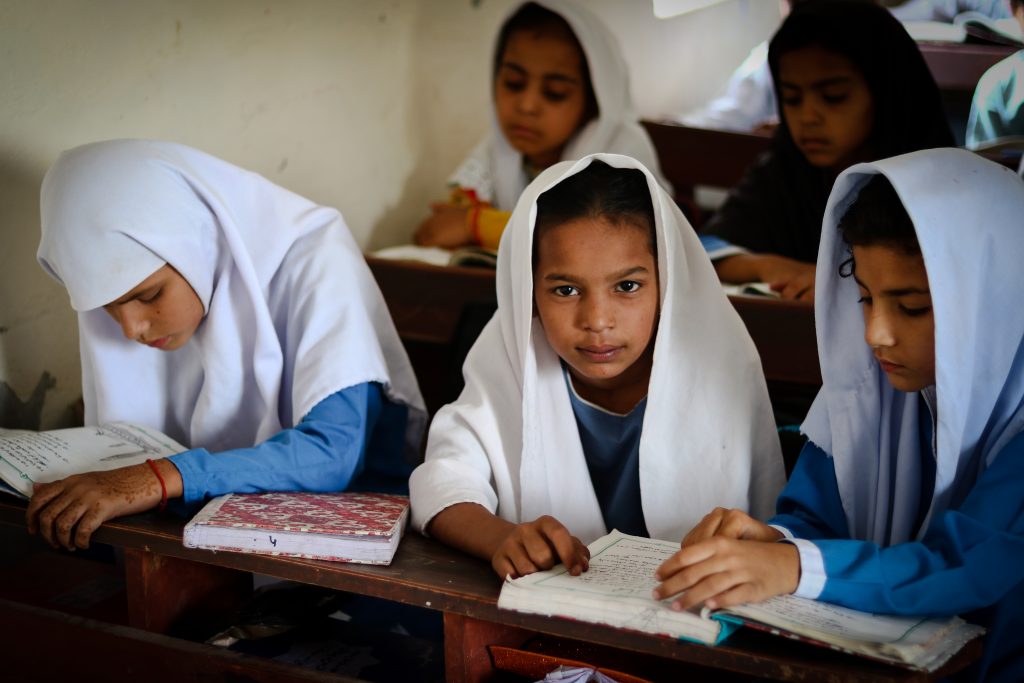
Schoolchildren in a classroom. Up to eight in 10 children in Pakistan experience violent discipline, according to the strategy document. (File photo: IRC Pakistan)
What the Strategy Actually Covers
The framework is deliberately broad. It seeks to address multiple forms of violence rather than cherry-picking one headline issue:
- Physical and sexual abuse
- Psychological violence
- Neglect
- Child marriage
- Trafficking
- Child labour
- Technology-facilitated exploitation
That breadth matters because, in practice, these forms overlap. A child in labour is more exposed to trafficking; a child married early drops out of school and out of protection systems; online exploitation increasingly targets the same children who are already vulnerable offline.
Who It Protects First
The strategy explicitly names the children at highest risk: those who are displaced, migrants, or living in poor and informal urban settlements. These are the children least visible to formal protection systems — no school records, no birth registration in many cases, no fixed address for a social worker to visit.
This prioritisation is one of the document’s more honest admissions: national averages hide the fact that vulnerability is concentrated, and a strategy that treats every district the same will miss the children who need it most.
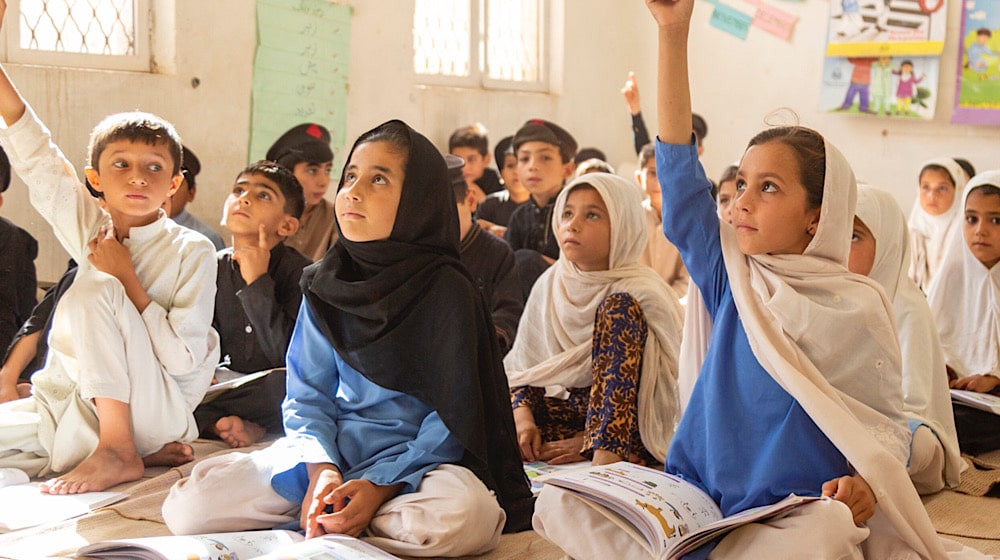
The strategy also covers children aged 12 to 17 facing technology-facilitated exploitation online. (File photo: Ilm Ki Dunya)
The INSPIRE Framework, in Plain Language
The strategy is built on INSPIRE, the internationally recognised seven-part approach developed by the WHO and partners for ending violence against children. In practical terms, it means the plan works on seven fronts at once:
- Stronger laws — implementation and enforcement of legislation protecting children.
- Safer environments — norms and values that reject violent discipline and abuse.
- Support for parents and caregivers — because violent discipline usually starts at home, and parenting support is prevention.
- Financial stability — income and economic strengthening for families, since poverty is a driver of child labour and early marriage.
- Response services — accessible care, reporting and justice mechanisms for children who experience violence.
- Education and life skills — keeping children in school and equipping them to recognise and report abuse.
The honest test of this strategy will not be the document — it will be whether these seven fronts get budgets, staff and timelines, or remain aspirations on paper.
What Changes on the Ground
The strategy’s stated goal is a coordinated system for preventing abuse, strengthening protection and ensuring access to care and justice. For that to be real, three things have to happen that previous efforts struggled with: different departments (health, education, police, social welfare) working from one plan; reliable data on where violence is happening; and services a child or parent can actually reach — a helpline that answers, a shelter with space, a court process that does not re-traumatise.
The Ministry of Human Rights developing this with WHO technical backing is a signal that the government wants the strategy measured against international standards rather than graded on its own curve.
What’s Next: Manila in November
The immediate milestone is the Second Global Ministerial Conference on Ending Violence Against Children in Manila this November, for which the Islamabad consultation was the national preparation. Expect Pakistan’s delegation to present the strategy as the country’s commitment — and expect the follow-up question from international partners to be about implementation funding and provincial rollout, since child protection is substantially a provincial subject in Pakistan.
Frequently Asked Questions
What is Pakistan’s National Strategy to End Violence Against Children?
It is the country’s first national strategy (2026–2031) for preventing violence against children, launched October 14, 2026, by Parliamentary Secretary for Human Rights Saba Sadiq. Developed by the Ministry of Human Rights with the WHO, it aims to build a coordinated system for prevention, protection, care and justice.
What forms of violence does the strategy cover?
Physical and sexual abuse, psychological violence, neglect, child marriage, trafficking, child labour, and technology-facilitated exploitation. It pays special attention to displaced children, migrants, and children in poor and informal urban settlements.
What are the key statistics behind the strategy?
Up to 8 in 10 children in Pakistan experience violent discipline; 1 in 16 internet-using children aged 12–17 faces technology-facilitated sexual exploitation or abuse; 841,402 children aged 10–17 have been married; and millions remain engaged in child labour.
What is the INSPIRE framework?
INSPIRE is the WHO-backed international approach for ending violence against children, built on seven strategies: stronger laws, safer environments, parent and caregiver support, financial stability for families, response services, and education and life skills.
How does this connect to the Manila conference?
The strategy was launched during Pakistan’s national preparatory consultation for the Second Global Ministerial Conference on Ending Violence Against Children, scheduled in Manila in November 2026 — where Pakistan will present the strategy as its national commitment.
Who is responsible for implementing the strategy?
The Ministry of Human Rights led its development with WHO collaboration. Implementation will require coordination across federal and provincial departments — health, education, police and social welfare — since child protection is substantially a provincial subject in Pakistan.