PM Shehbaz Orders Banks to Unlock Rs3.7 Trillion in Housing, Farm and SME Loans
By Bilal Ahmed | Business Desk | October 15, 2026 | Updated: October 15, 2026 If you have ever applied for a home loan in Pakistan and watched your file bounce between bank desks for months, buried under a mountain of documents nobody could fully explain, this one is for you. Prime Minister Shehbaz Sharif…

If you have ever applied for a home loan in Pakistan and watched your file bounce between bank desks for months, buried under a mountain of documents nobody could fully explain, this one is for you. Prime Minister Shehbaz Sharif has ordered banks to throw open the lending taps for housing, agriculture and small businesses — setting a combined financing target of Rs3.7 trillion — and to make the PM’s Apna Ghar housing scheme actually usable: loan applications processed in 15 working days, with required documents slashed from 25 to just five.
Chairing a high-level meeting at the Prime Minister’s House on October 14, 2026, the premier directed banks with unsatisfactory lending records to improve their performance if they want to benefit from government incentives, and instructed the relevant ministries and the State Bank of Pakistan (SBP) to consult stakeholders and submit recommendations for improving existing financing schemes by the end of October.
Key Facts: Rs3.7 Trillion Lending Push
- Combined target: Rs3.7 trillion in financing across housing, agriculture and SMEs.
- Housing target: Rs700 billion for 125,000 housing units during the current year.
- Apna Ghar progress: Rs448 billion approved for 75,198 applicants; Rs76 billion disbursed to 14,000 beneficiaries.
- New relief: Housing loan processing cut to 15 working days; documents reduced from 25 to 5.
- Agriculture: Rs1.352 trillion currently lent to 3.455 million borrowers; target Rs1.5 trillion and 4.5 million beneficiaries by June 2027.
- SMEs: Rs1.137 trillion to 352,000+ businesses; target Rs1.5 trillion and 575,000 businesses by June 2027.
- Next step: Ministries and SBP to submit improvement recommendations by end of October 2026.
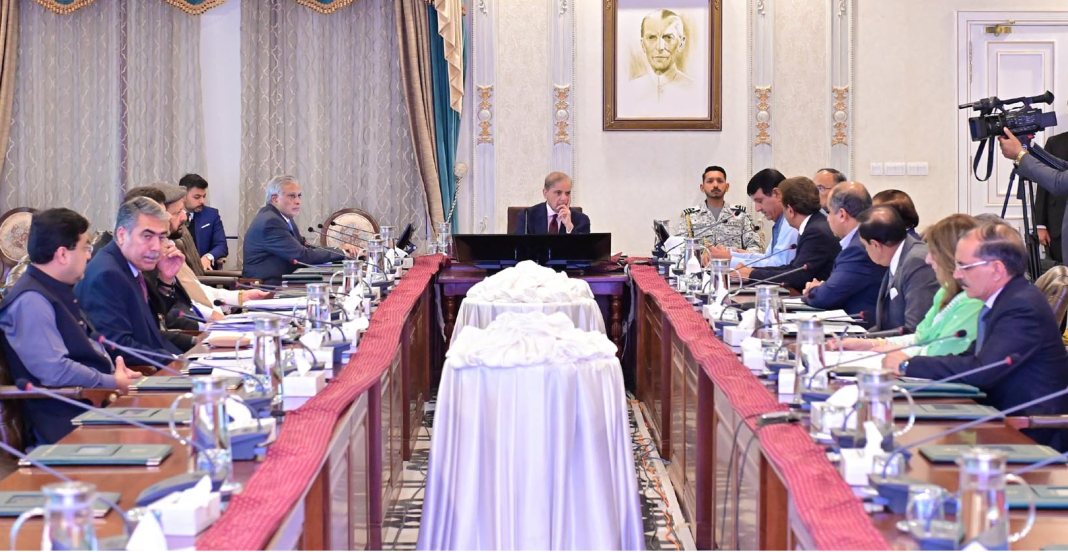
Prime Minister Shehbaz Sharif chairs a high-level meeting at the Prime Minister’s House, Islamabad, reviewing access to financing for housing, SMEs and agriculture. (File photo: Islamabad Post)
What the Prime Minister Ordered
The message from the meeting was blunt: banks that want government incentives must lend. The premier directed commercial banks to expand financing to farmers, small businesses and prospective homeowners, and told underperforming banks to fix their lending record. This is not a request — the incentives-versus-performance framing makes it a condition.
Beyond the targets, the meeting reviewed structural fixes: revised SME regulations, joint risk-sharing arrangements between banks and the state, promotion of supply-chain financing, authenticated data sharing, and efforts to strengthen banks’ institutional capacity to serve all three priority sectors. A committee has also been constituted to promote developers’ finance, with its recommendations expected soon.
Apna Ghar Scheme: 15 Days, 5 Documents
The headline relief for ordinary applicants is in the Prime Minister’s Apna Ghar housing scheme. The meeting decided that banks must now process housing loan applications within 15 working days, and the list of required documents has been cut from 25 to five.
Anyone who has applied for housing finance in Pakistan knows what this means in practice. The old process was notorious: 25 documents including title chains, old sale deeds, NOCs from departments that no longer issue them, and a waiting period measured in seasons rather than weeks. Cutting that to five documents and a 15-day decision window removes the two biggest reasons applicants gave up halfway.
The premier went further, directing additional simplification of procedures — particularly around the requirement for unencumbered property titles, which has historically blocked genuine borrowers whose family properties carry decades-old documentation disputes.
Housing Target: Rs700 Billion for 125,000 Homes
Banks have been assigned a target of Rs700 billion in housing finance for 125,000 housing units during the current year. Against that, the Apna Ghar scheme has so far approved Rs448 billion in loans for 75,198 applicants, of which Rs76 billion has actually been disbursed to 14,000 beneficiaries.
The gap between approvals and disbursement is worth noting — it is exactly the friction the 15-day processing rule and the document cut are meant to close. Approvals mean little if the money does not reach the borrower.
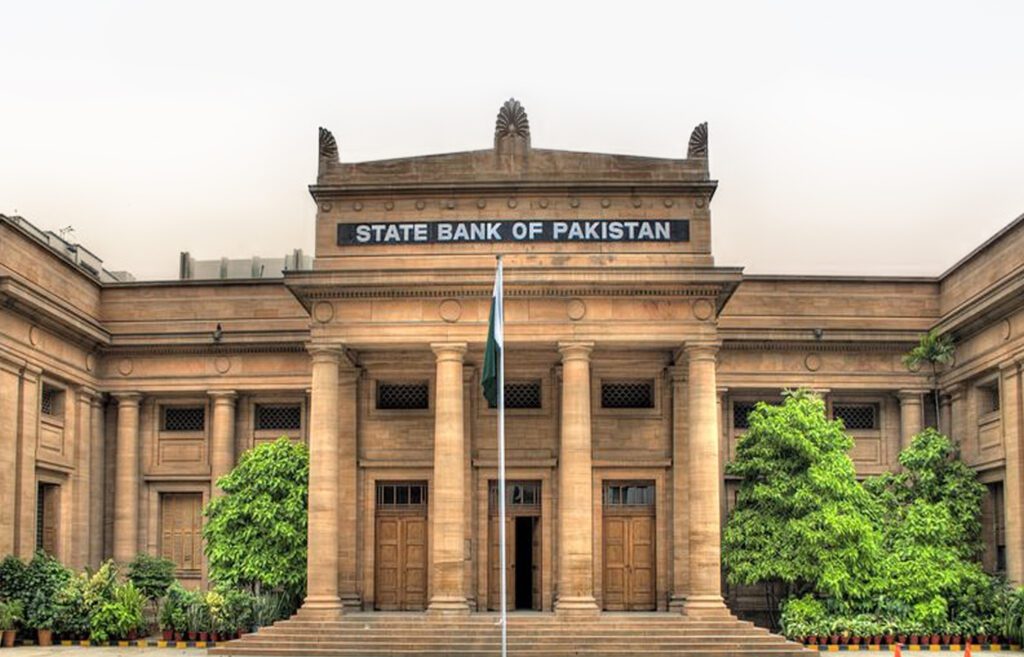
The State Bank of Pakistan building in Karachi. The SBP has been directed to consult stakeholders and submit recommendations on improving financing schemes by the end of October. (File photo: Hum News)
Agriculture Lending: Rs1.5 Trillion by June 2027
Agricultural lending currently stands at Rs1.352 trillion, benefiting 3.455 million borrowers. The government aims to raise farm credit to Rs1.5 trillion and expand the beneficiary base to 4.5 million by June 2027.
Two agriculture-specific decisions came out of the meeting. The prime minister directed that inactive PASSCO (Pakistan Agricultural Storage and Services Corporation) warehouses and silos be operated through public-private partnerships to improve agricultural storage — a chronic weak point that forces distress sales at harvest. He also called for expanding Allied Bank’s model of providing loans against stored agricultural produce, and supported the bank’s proposed investment in an SME park.
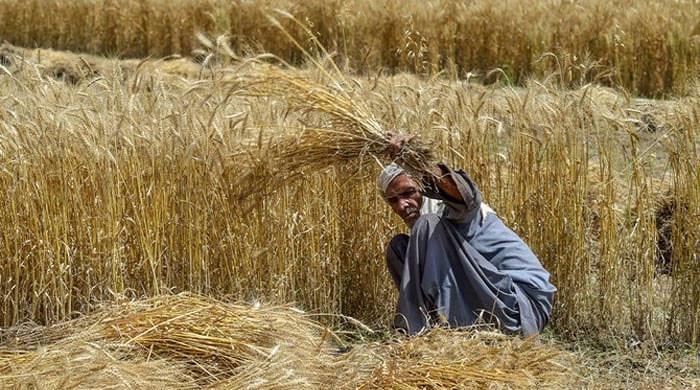
A farmer harvests wheat in Punjab. Farm credit currently reaches 3.455 million borrowers, with a target of 4.5 million by June 2027. (File photo: The News)
SME Financing: From 352,000 to 575,000 Businesses
In the SME sector, more than 352,000 businesses have received Rs1.137 trillion in loans. The target for June 2027 is to increase SME financing to Rs1.5 trillion and extend loans to 575,000 businesses.
The meeting was briefed on steps being taken to introduce revised SME regulations alongside the risk-sharing and supply-chain financing measures — the plumbing that determines whether small businesses can actually access credit, or whether the targets remain on paper.
The SBP Side: Fixed Document List for Home Loans
This meeting did not happen in a vacuum. Just days earlier, on October 9, 2026, the State Bank issued Circular No. 06 of 2026 amending Regulation HF-7 of the housing finance rules: banks may now ask a home loan customer for only the property documents on a fixed SBP list — not “all” title papers, the open-ended demand that let every bank add its own requirements. The same circular also allows banks to extend solar and renewable-energy finance with no security at all.
Taken together, the SBP circular and the PM’s 15-day/5-document decision amount to a coordinated squeeze on the two things that made housing finance painful: open-ended documentation and indefinite waiting.
Who Attended the Meeting
The meeting at the Prime Minister’s House was attended by Federal Ministers Rana Tanveer Hussain, Dr Musadik Masood Malik, Attaullah Tarar, Riaz Hussain Pirzada, Ahad Khan Cheema and Shaza Fatima Khawaja; Adviser to the PM Haroon Akhtar; Minister of State for Finance Bilal Azhar Kayani; the chief executives of JS Bank, Askari Bank, Allied Bank, Habib Metro Bank, Bank of Khyber and MCB Islamic Bank; and senior officials of the relevant institutions.
What Happens Next
The ministries and the SBP have until the end of October 2026 to consult stakeholders and submit recommendations for improving the existing schemes. The developer-financing committee’s report is also pending. For applicants, the practical takeaway is simple: if you were holding off on an Apna Ghar application because of the paperwork, the new 15-day, 5-document regime is the window to watch — and banks now have a performance incentive to say yes.
The broader economic backdrop matters too: with the government simultaneously managing inflation pressures — we recently covered how Pakistan ranked worst in South Asia on the 2026 Global Hunger Index — expanding credit to housing, farms and small businesses is the growth side of the same story.
Frequently Asked Questions
What is the Apna Ghar housing scheme’s new loan process?
Banks must now process Apna Ghar housing loan applications within 15 working days, and the required documents have been reduced from 25 to just five. The changes were decided at a high-level meeting chaired by PM Shehbaz Sharif on October 14, 2026.
What is the government’s housing finance target?
Banks have been assigned a target of Rs700 billion in housing finance for 125,000 housing units during the current year. So far, Rs448 billion has been approved for 75,198 applicants under the Apna Ghar scheme, with Rs76 billion disbursed to 14,000 beneficiaries.
What are the targets for agriculture and SME loans?
Agriculture: raise lending from Rs1.352 trillion (3.455 million borrowers) to Rs1.5 trillion (4.5 million beneficiaries) by June 2027. SMEs: raise lending from Rs1.137 trillion (352,000+ businesses) to Rs1.5 trillion (575,000 businesses) by June 2027.
Can banks still ask for extra property documents for home loans?
No — not beyond the fixed list. The SBP’s October 9, 2026 circular (amending Regulation HF-7) says banks may collect only the title and ownership documents listed in the circular’s Annexure B. The “all title documents” open-ended demand is gone.
What did the meeting decide on agricultural storage?
The prime minister directed that inactive PASSCO warehouses and silos be operated through public-private partnerships to improve storage facilities, and called for expanding Allied Bank’s model of loans against stored agricultural produce.
When will the improved financing schemes be finalised?
The relevant ministries and the State Bank of Pakistan have been instructed to consult stakeholders and submit their recommendations by the end of October 2026. A separate committee on developer financing is also preparing its report.