Pakistan Posts Worst Hunger Score in South Asia as Global Hunger Index 2026 Is Released
Bilal Ahmed Finance & Markets Desk · Published October 15, 2026 · Updated October 15, 2026 Pakistan Posts Worst Hunger Score in South Asia as Global Hunger Index 2026 Is Released Pakistan has scored 25.5 on the 2026 Global Hunger Index, putting it in the report’s “serious” hunger category and making it the worst-ranked country…

Pakistan Posts Worst Hunger Score in South Asia as Global Hunger Index 2026 Is Released
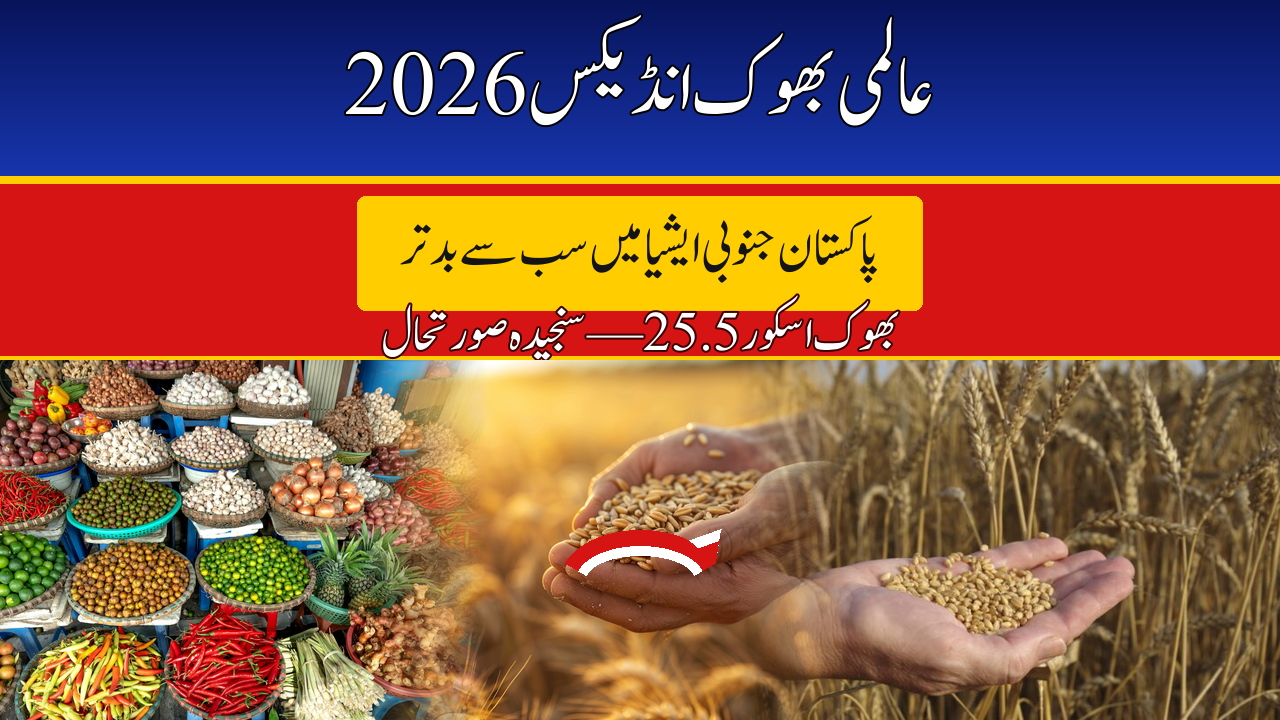
Pakistan has scored 25.5 on the 2026 Global Hunger Index, putting it in the report’s “serious” hunger category and making it the worst-ranked country in South Asia. The index, released on Wednesday, October 14, paints a picture of a country that has made real progress over the long run, yet has slid backwards in recent years as food prices climbed and household incomes failed to keep pace.
Below is the full breakdown — what the score actually means, which numbers moved, how Pakistan compares with its neighbours, and why this is different from the poverty numbers making headlines this month.
Key facts: Global Hunger Index 2026
- Pakistan GHI score: 25.5 — “serious” category, highest in South Asia
- South Asia regional score: 23.5 — also “serious”; was 37.5 (“alarming”) in 2000
- Global score: 18.1
- Pakistan’s long-term trend: 36.2 in 2000 → 25.5 in 2026
- 2026 theme: “No Security Without Food Security”
- Published by: Welthungerhilfe, the Institute for International Law of Peace and Armed Conflict (Ruhr University Bochum), and HELVETAS
What a 25.5 GHI score actually means
The Global Hunger Index is a peer-reviewed annual report that scores countries from 0 (no hunger) to 100 (worst). The banding works like this:
| Score range | Hunger level |
|---|---|
| ≤ 9.9 | Low |
| 10.0 – 19.9 | Moderate |
| 20.0 – 34.9 | Serious (where Pakistan sits) |
| 35.0 – 49.9 | Alarming |
| ≥ 50.0 | Extremely alarming |
So 25.5 is not the worst possible place to be — but it is firmly in “serious” territory, and it is worse than the South Asian regional average of 23.5. Think of it this way: the average Pakistani household faces a harder food-security situation than the South Asian average. That’s the headline, stripped of jargon.
The four indicators behind the number
The GHI doesn’t come from a single statistic. It combines four component indicators — and Pakistan’s movement across them tells the real story:
- Undernourishment — the share of the population not getting enough calories. This has climbed from “low” in 2018 to “medium” today. That’s the single clearest warning light: more Pakistanis are simply not eating enough.
- Child wasting — children under five who are dangerously thin for their height. This has risen toward the “high” threshold, which points to recent, acute food stress rather than just a slow background problem.
- Child stunting — children too short for their age, a sign of chronic undernutrition. This remains very high but keeps falling, so the long grind against generational malnutrition is still working — just too slowly.
- Child mortality — deaths of children under five. This has declined from “very high” in 2000 to “medium” today, and it is arguably the brightest number in the whole report.
Put together: the acute indicators (undernourishment, wasting) are moving the wrong way right now, while the chronic ones (stunting, child deaths) keep their slow downward crawl. That split is exactly what you’d expect when the problem is people’s purchasing power collapsing rather than some new disease arriving.
Why Pakistan’s hunger score moved
The report points to two big drivers, and both will feel familiar to anyone who has done the grocery shopping in the last couple of years.
First, economic instability and sharp food price inflation. When the rupee wobbles and food prices spike, households don’t stop eating overnight — they eat less well: smaller portions, cheaper calories, fewer proteins. Do that across millions of households for a few years and undernourishment and child wasting rise exactly the way this report shows.
Second, heavy rains and flooding caused localized crop losses in Pakistan (and Bangladesh), cutting local food availability and farm incomes in the affected areas. It’s a reminder that climate shocks and food security are the same story in this country — the floods of recent years keep taxing a food system that was already stretched.
The regional picture backs this up: the report notes that South Asia made most of its progress before 2018, and that Pakistan and Afghanistan have deteriorated since 2018 — the years when inflation, currency pressure and political turbulence hit both countries.
How the neighbours are doing
This is where the report gets interesting for anyone tracking the region’s development race:
- Nepal has made what the report calls remarkable progress — the standout performer.
- Bangladesh and India are both improving, despite their own floods and pressures.
- Afghanistan, like Pakistan, has slipped since 2018 — child stunting there has edged up.
So Pakistan isn’t just dealing with a global trend; its neighbours with comparable starting points are managing to move forward. The contrast with Nepal and Bangladesh, in particular, is the uncomfortable part of this report for policymakers.
The part the headlines miss: 36.2 → 25.5
Here’s the balance the doom-only takes will skip. In 2000, Pakistan’s GHI score was 36.2 — well into the “alarming” band. It is now 25.5. That is a genuine, decades-long improvement: fewer children dying, less chronic stunting, more calories reaching more people than a generation ago.
The honest reading is therefore two things at once. Pakistan has achieved real progress against hunger over 25 years — and it has thrown some of that progress into reverse since 2018. Both statements are true, and the report supports both. The policy question is whether the recent slide is a bad patch to ride out or the start of a new, worse trend.
What “No Security Without Food Security” means
The 2026 edition’s theme — “No Security Without Food Security” — links hunger directly to conflict and instability. The argument is simple and, for Pakistan, hard to dismiss: countries where people can’t reliably feed their families are countries where everything else gets harder — politics, public health, economic reform, all of it. For a country already juggling IMF reviews, provincial tensions and a volatile neighbourhood, that framing makes hunger a national-security issue, not just a welfare one.
How this differs from the UNDP poverty report
If you’ve seen the recent UNDP Multidimensional Poverty figures doing the rounds, don’t mix the two up. The UNDP measure covers education, health and living standards — a broad deprivation score. The GHI is narrower and sharper: it measures hunger specifically, through calories, child growth and child survival. A household can rise out of “multidimensional poverty” on paper while still struggling to eat — and the GHI is the report that catches that.