Pakistan–Malaysia Trade Roadmap: $1.5B to $5B Target Set
By Bilal Ahmed | Updated: October 18, 2026 | Category: Business Pakistan and Malaysia have agreed on a concrete roadmap to push their bilateral trade from around $1.5 billion to $5 billion, after the Malaysia–Pakistan Business Engagement 2026 brought the two countries’ ministers, diplomats, chambers and private investors together under one roof in Islamabad. If…
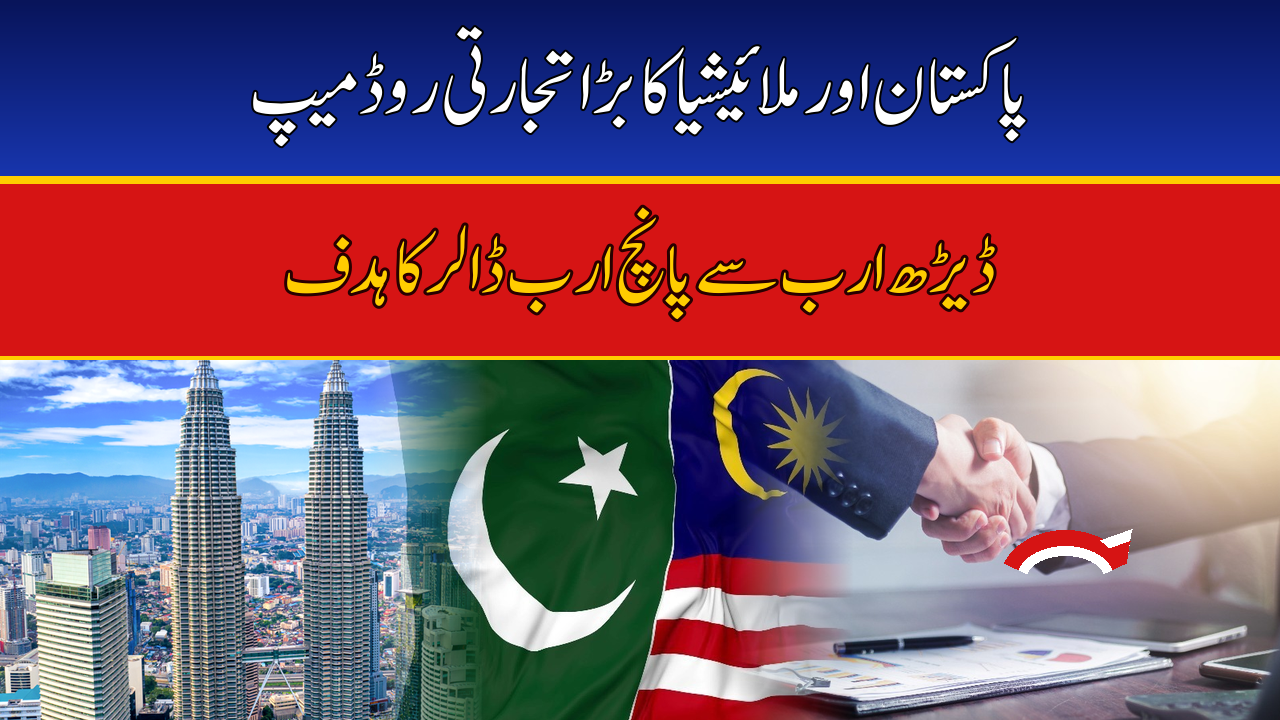
Pakistan and Malaysia have agreed on a concrete roadmap to push their bilateral trade from around $1.5 billion to $5 billion, after the Malaysia–Pakistan Business Engagement 2026 brought the two countries’ ministers, diplomats, chambers and private investors together under one roof in Islamabad. If you are a Pakistani exporter, an investor, or a student of how trade deals actually move, this is one of those moments where the headline number is only half the story — the sectors named, the agreement being reviewed, and the people in the room tell you where the money is likely to flow next.
Below: what was announced, who said what, which sectors made the priority list, what the MPCEPA review means, and how a local company can plug in.
Quick Facts
| Event | Malaysia–Pakistan Business Engagement 2026: Strengthening Trade, Investment and Business Linkages |
| Venue | Mayang Sari Hall, High Commission of Malaysia, Islamabad |
| Date | Friday, October 16, 2026 |
| Host | H.E. Dato Mohammad Azhar Mazlan, Malaysian High Commissioner to Pakistan |
| Guest of Honour | Qaiser Ahmed Sheikh, Federal Minister for Board of Investment |
| Current trade | ~$1.5 billion (about $1.55 billion in 2025, per the High Commission) |
| Stated ambition | $5 billion through deeper commercial engagement and private-sector participation |
What actually happened in Islamabad
Trade announcements come and go in Islamabad, so it is worth noting what made this one different: it was not just a press statement. The engagement was a full working programme — public and private sector representatives, business leaders, investors and chambers sat in the same hall, heard a formal trade presentation, debated in a panel, and then went into a networking session to exchange cards.
Opening the event, High Commissioner Dato Mohammad Azhar Mazlan framed the core argument plainly: it is time to convert the two countries’ longstanding friendship into trade and investment numbers. He called Pakistan a major South Asian trading partner and set the headline ambition — roughly $5 billion in bilateral trade, up from about $1.5 billion — through deeper commercial engagement and greater private-sector participation.
Federal Minister for Board of Investment Qaiser Ahmed Sheikh, attending as Guest of Honour, matched that tone from the Pakistani side. He said the two countries had maintained cordial relations since the early years of Pakistan’s independence, praised Malaysia’s economic transformation in industry, technology and export-oriented growth, and stressed that Pakistan wants to learn from the Malaysian experience — not just admire it.
The $1.5 billion to $5 billion question: is it realistic?
Let us be honest here. Tripling trade is a big claim, and readers should treat it as an ambition rather than a signed contract — no tariff schedule was published at the event. Still, the ambition is not coming out of thin air:
- The base is real. The High Commission put 2025 bilateral trade at approximately $1.55 billion — documented, not estimated.
- Palm oil anchors it. Pakistan is a major market for Malaysian palm oil, and a Pakistani-Malaysian joint venture for edible oil refining already operates at Port Qasim, Karachi.
- The halal channel is proven. The High Commissioner cited Pakistani investment in halal gelatin production in Malaysia as a successful cross-border venture.
- Demographics and geography favour Pakistan — a young population and a gateway position to Central Asian markets, both repeatedly mentioned by the two sides.
The honest caveat: ambitions like this live or die on the private sector. Both the High Commissioner and the Minister said as much, explicitly. Government-to-government warmth opens the door; business-to-business deals walk through it.
Which sectors made the priority list
The two sides did not just talk in generalities. Between the High Commissioner’s remarks and the Minister’s address, a fairly specific sector map emerged. If you run a business in any of these, pay attention:
From the Malaysian side
- Artificial intelligence — named first by the High Commissioner, which is telling about where Kuala Lumpur sees the future
- Education — Malaysia is actively courting Pakistani students; Pakistan already ranks among the top five countries of origin for international students in Malaysia
- Manufacturing and services — broad, but backed by MATRADE’s business-matching machinery
- Halal industry — the flagship corridor, from gelatin to food
- Agriculture, renewable energy and technology
- Edible oil — with the Port Qasim refining JV as the working model
From the Pakistani side
Minister Qaiser Ahmed Sheikh named IT, artificial intelligence, advanced technology, manufacturing, value-added industries, mining and minerals, agriculture, food processing and halal products, invited Malaysian companies into Pakistan’s special economic zones, and promised the Board of Investment would facilitate investors and coordinate with government stakeholders.
The overlap is where the action is: AI, IT, manufacturing, value-added industries, agriculture/food processing and halal products appear on both lists — usually a sign of where the first joint ventures land.
For context, Pakistan’s IT sector is already on a tear — IT exports hit $435 million in September 2026, the second-highest monthly figure on record. And textile exports rose in the first quarter of FY27 — Pakistani manufacturers are in an expansionary mood.
MPCEPA: the agreement being dusted off
One of the most concrete policy signals came from the High Commissioner’s remarks: the need to review the Malaysia–Pakistan Closer Economic Partnership Agreement (MPCEPA) to facilitate greater market access and business opportunities.
Why does this matter? Trade agreements age. Tariff lines, product standards and certification that made sense when an agreement was signed often lag behind what businesses actually want to trade. A review opens the door to better market access — for Pakistani agricultural and halal products entering Malaysia, and for Malaysian technology and manufactured goods entering Pakistan.
The business forum went straight at the practical side: panellists discussed product standards, certification, market access and competitiveness — the unglamorous details that decide whether a trade deal works on the ground — along with food security, Islamic finance and investment partnerships.
The human detail that stood out
One moment deserves a mention, because it shows how trade actually happens. Qaiser Ahmed Sheikh shared his own commercial history with Malaysia — he has visited the country numerous times and personally conducted business with a Malaysian company, including in the rice trade.
It is a small anecdote, but it captures the event’s message better than any communiqué: trade grows through relationships, repeat visits and deals done, not just ministerial handshakes.
What the business forum and MATRADE brought to the table
Beyond the speeches, the programme had working content:
- A MATRADE presentation by Nadar Ali Gangro (Marketing Officer, MATRADE Karachi) on Malaysia’s trade performance and cooperation opportunities — business matching, market intelligence, trade missions and exhibitions for Pakistani firms.
- A business forum featuring Gangro and economist Dr. Jibran Hussain Raza, moderated by First Secretary Mohamad Alif Syafiq Mohd Faudzi, on expanding trade beyond traditional sectors, certification hurdles, food security, the halal industry and Islamic finance.
- Corporate video presentations by the Malaysian Investment Development Authority (MIDA) and MATRADE.
- An interactive Q&A and networking session, closing with tokens of appreciation for the panellists.
The bigger picture: where this fits in Pakistan–Malaysia relations
This engagement did not come from nowhere. Days earlier, on October 13, the same High Commissioner laid out the same themes at a “Meet the Press” programme at the National Press Club in Islamabad. The two countries have maintained diplomatic relations since 1957 and elevated the relationship to a Strategic Partnership in March 2019 covering defence, trade, energy, telecommunications and the halal sector. In other words, the trade roadmap sits on top of an already-warm relationship with working channels in education, tourism, palm oil and halal — a better foundation than most “new era of trade” announcements get.
What to watch next
Announcements are cheap; follow-through is the story. Five things to track:
- The MPCEPA review — whether a formal review process is launched, with a timeline and negotiating scope. That is the single most concrete deliverable to watch.
- BOI facilitation in practice — Malaysian delegations visiting Pakistan, or Pakistani trade missions to Kuala Lumpur.
- Deals in the overlap sectors — AI, IT, halal food processing and edible oil are the most likely candidates for the first announced joint ventures.
- Special economic zone entries — whether any Malaysian manufacturer actually takes space in a Pakistani SEZ.
- MATRADE–chamber linkages — business-matching activity between MATRADE Karachi and Pakistani chambers of commerce.
The $5 billion figure will be judged against these milestones, not against the applause in Mayang Sari Hall. For now, the direction is set, the sectors are named, and the private sector has been handed the baton.