Punjab Sets Rs500bn Saudi Food Export Target
By Bilal Ahmed, Business DeskUpdated: October 22, 2026 Punjab Chief Minister Maryam Nawaz Sharif met Saudi Arabia’s newly appointed ambassador to Pakistan, Dr. Rajeh Albugamy, in Lahore on Wednesday, October 21, and set a target of more than Rs500 billion — roughly $1.8 billion — in Punjab food and agriculture exports to the Kingdom. The…
By Bilal Ahmed, Business Desk
Updated: October 22, 2026
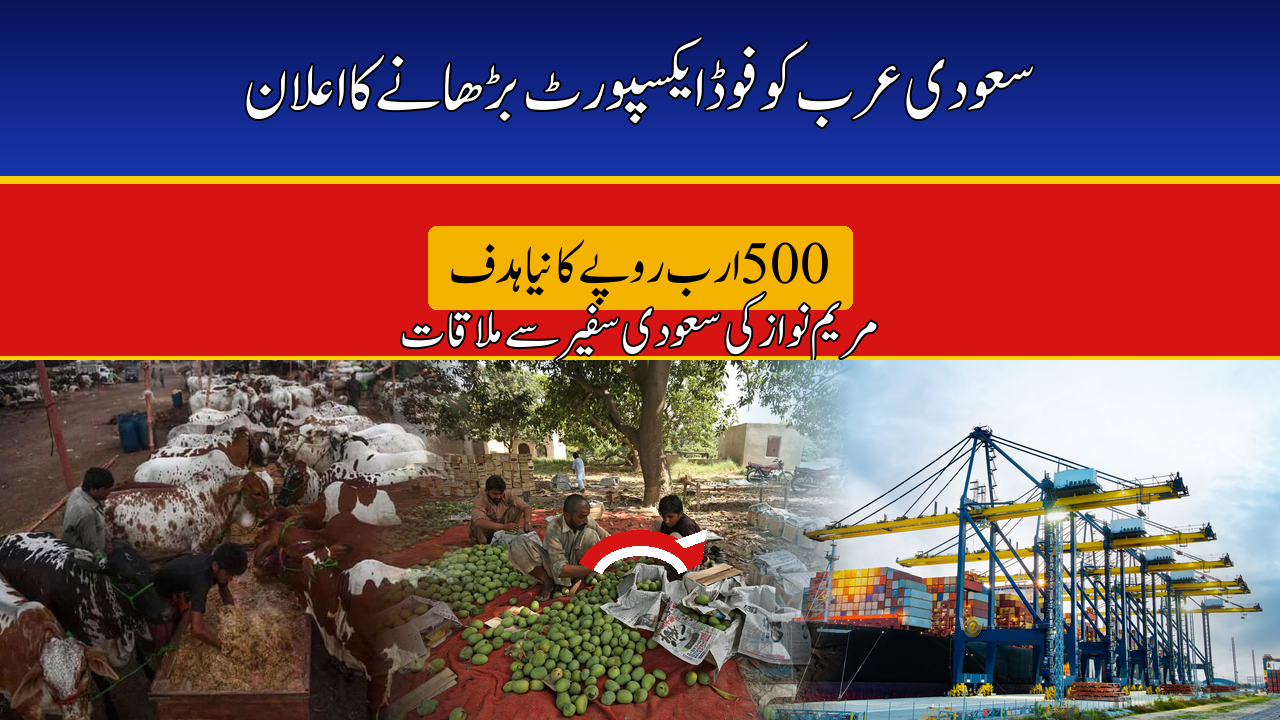
Punjab Chief Minister Maryam Nawaz Sharif met Saudi Arabia’s newly appointed ambassador to Pakistan, Dr. Rajeh Albugamy, in Lahore on Wednesday, October 21, and set a target of more than Rs500 billion — roughly $1.8 billion — in Punjab food and agriculture exports to the Kingdom. The target covers livestock, beef, poultry, mangoes, quinoa, potatoes and shrimp, and Maryam Nawaz framed Punjab as a dependable supplier of halal-certified food products to Saudi Arabia. Here is what was agreed, which products are on the list, why Saudi Arabia’s economic weight matters so much for Pakistan, and what has to happen next for the number to be real.
The Meeting: Who Met Whom in Lahore
The meeting took place at the Punjab chief minister’s office in Lahore on Wednesday. Maryam Nawaz welcomed the Saudi envoy and congratulated him on assuming his diplomatic responsibilities, according to reports of the meeting, while also acknowledging the outgoing Saudi ambassador’s contribution to the relationship between the two countries.
The conversation was wider than exports alone. Both sides discussed attracting Saudi investment to Punjab, cooperation in tourism, and the plan to organise a roadshow in Riyadh to showcase Punjab’s investment opportunities to Saudi investors. Maryam Nawaz invited Saudi citizens to explore Punjab’s tourist destinations, pointing to the province’s cultural heritage, historical landmarks and hospitality as attractions that could deepen people-to-people ties.
For his part, Ambassador Albugamy praised the deep-rooted, fraternal and strategic relationship between Pakistan and Saudi Arabia, and committed to strengthening bilateral cooperation. He thanked Pakistan’s government, armed forces and people for their support to the Kingdom, and spoke warmly about Punjab’s heritage — from Mughal-era monuments to its living traditions — adding that Lahore’s hospitality, cuisine and welcoming atmosphere had a reputation well beyond Pakistan. It was the kind of first-meeting exchange diplomats trade routinely, but the export target that came out of it was unusually specific.
The Rs500bn Target: Which Products Are on the List
The headline outcome was an agreed export target exceeding Rs500 billion for seven product categories: livestock, beef, poultry, mangoes, quinoa, potatoes and shrimp. The figure, reported by Abb Takk News, reflects the provincial government’s push to use Punjab’s agricultural and livestock capacity to meet what it describes as Saudi Arabia’s growing demand for quality food products.
Arab News put the same target at over $1.8 billion, with the chief minister seeking an increase in rice, fruit, vegetable and other farm shipments to the Kingdom. The two numbers are the same target expressed in different currencies — and both are big. For context, Punjab already produces a large share of Pakistan’s wheat, rice, citrus fruit, vegetables and livestock products, so the raw material base exists.
Maryam Nawaz’s own framing was deliberate. “Punjab can become a reliable supplier of Halal-certified food products to the Kingdom of Saudi Arabia,” her office quoted her as saying. The emphasis on halal certification matters because Saudi import requirements are strict, and the certification angle is how Pakistan’s exporters can differentiate themselves against regional competitors. Her office added that discussions covered leveraging Punjab’s resources to increase exports of livestock, beef, poultry, fruits and vegetables.
Closing the gap between a target and a shipment means certified processing plants, cold-chain logistics, and meeting Saudi food safety standards. The meeting discussed the ambition; execution will be measured in export receipts over the coming quarters.
Why Saudi Arabia’s $9.8 Billion Remittance Lifeline Matters
There was a second number in the meeting that explains why this relationship carries so much weight in Lahore and Islamabad: Saudi Arabia is Pakistan’s largest source of remittances, contributing around $9.8 billion a year. Maryam Nawaz expressed gratitude to the Saudi leadership for its economic and financial support to Pakistan, and the remittance figure underlines why trade with the Kingdom is a priority beyond any single meeting.
The trade push sits inside a longer pattern: in October last year, both countries agreed to launch an economic cooperation framework during Prime Minister Shehbaz Sharif’s Riyadh visit. In 2024, they signed 34 memorandums of understanding worth $2.8 billion across multiple sectors. The Punjab target is the latest step in turning those broad commitments into sector-specific numbers — which is also why Pakistan’s economic team has been watching Gulf energy and trade developments so closely, as we reported in our analysis of the Gulf energy outlook.
The practical prize for Punjab is clear. The Kingdom imports a large share of its food, and its buyers pay reliably. If Punjab’s exporters can clear the halal-certification and logistics hurdles, a province that already feeds much of Pakistan can sell a meaningful surplus to one of the world’s most dependable food-import markets. For more on Pakistan’s trade and business stories, see our Business section.
Houthi Attacks Condemned; Makkah Defence Pact Cited
The meeting also touched on security, and the chief minister’s office did not leave it vague. Maryam Nawaz strongly condemned Houthi attacks on the Kingdom and expressed regret over the loss of human lives, saying that assaults on Saudi cities and civilian infrastructure — including attempts to target Makkah and Madinah — were unacceptable. “The people of Pakistan and Punjab stand shoulder to shoulder with the Kingdom of Saudi Arabia,” she said. “Shared economic strength surely guarantees shared security.”
She pointed to the Makkah Joint Defence Agreement, signed in August 2026, as representing a new chapter in bilateral relations and a shared commitment by both countries to protecting their sovereignty and security. The ambassador, in turn, thanked Pakistan for its support in connection with efforts to protect Saudi Arabia’s security, stability and territorial integrity. We report these positions as stated by both sides, without commentary.
What Happens Next: Riyadh Roadshow and the Reality Check
The next step is the Riyadh roadshow, where Punjab’s investment opportunities go directly to Saudi investors. That is where targets meet their first reality check — importers will ask about processing capacity, certification standards, and consistent supply across seasons.
The honest read: Rs500bn is an agreed ambition, not a signed contract. Punjab has the produce; what exporters need is certified, cold-chain infrastructure to land it in Jeddah and Riyadh at competitive prices. Watch whether the roadshow yields signed offtake agreements and whether the 2024 MoUs convert into processing investment in Punjab. If those move, the $1.8bn target starts looking like a plan rather than a press release.
Frequently Asked Questions
What is the Punjab–Saudi Arabia Rs500bn food export target?
Punjab Chief Minister Maryam Nawaz Sharif and Saudi Ambassador Dr. Rajeh Albugamy agreed in Lahore on October 21, 2026, to target more than Rs500 billion (about $1.8 billion) in Punjab food and agriculture exports to Saudi Arabia. The target covers livestock, beef, poultry, mangoes, quinoa, potatoes and shrimp, and the chief minister positioned Punjab as a reliable supplier of halal-certified food products to the Kingdom.
Which products are included in the export target?
The seven named categories are livestock, beef, poultry, mangoes, quinoa, potatoes and shrimp. The chief minister’s office also mentioned broader discussions on increasing exports of livestock, beef, poultry, fruits and vegetables, with Arab News adding rice to the mix. Punjab already produces a large share of Pakistan’s wheat, rice, citrus fruit, vegetables and livestock products.
Who met and when did the meeting take place?
Punjab Chief Minister Maryam Nawaz Sharif met Dr. Rajeh Albugamy, Saudi Arabia’s newly appointed ambassador to Pakistan, in Lahore on Wednesday, October 21, 2026. She congratulated him on his new posting and thanked the outgoing Saudi ambassador for his contribution to bilateral ties. The talks covered exports, Saudi investment in Punjab, a planned Riyadh investment roadshow, and tourism.
How important are Saudi Arabia’s remittances to Pakistan?
Saudi Arabia is Pakistan’s largest source of remittances, contributing around $9.8 billion a year, according to the figures cited at the meeting. That is why the relationship carries weight well beyond trade: the Kingdom is both Pakistan’s biggest remittance source and a key trading partner in the Gulf, and the two countries signed 34 MoUs worth $2.8 billion in 2024.
Is this the same as the $3bn agri-export plan announced in August 2026?
No. The August 2026 figure came from a federal-level joint statement in Islamabad and Riyadh, where both countries agreed to work toward boosting Pakistani agri-food exports to $3 billion. The October 21 announcement is a separate, Punjab-specific target set during the chief minister’s meeting with the new Saudi ambassador — it builds on that earlier framework but is a provincial commitment, not a repeat of the same news.
What did Maryam Nawaz say about the Houthi attacks?
She strongly condemned Houthi attacks on Saudi Arabia and expressed regret over the loss of human lives, saying attacks on Saudi cities and civilian infrastructure — including attempts to target Makkah and Madinah — were unacceptable and condemnable. She cited the Makkah Joint Defence Agreement signed in August 2026 as a new chapter in bilateral relations, and said the people of Pakistan and Punjab stand shoulder to shoulder with the Kingdom.