Punjab Livestock Exports Rise 43%: Farmers to Earn Rs11 Billion Under Livestock Card Scheme
Bilal Ahmed Business & Agriculture Correspondent | Updated: October 19, 2026 Punjab’s livestock sector has recorded a 43 percent increase in animal exports, with 400,000 animals prepared for export in a year and rural livestock farmers expected to earn Rs11 billion, according to a provincial government handout. The growth is being credited to Chief Minister…
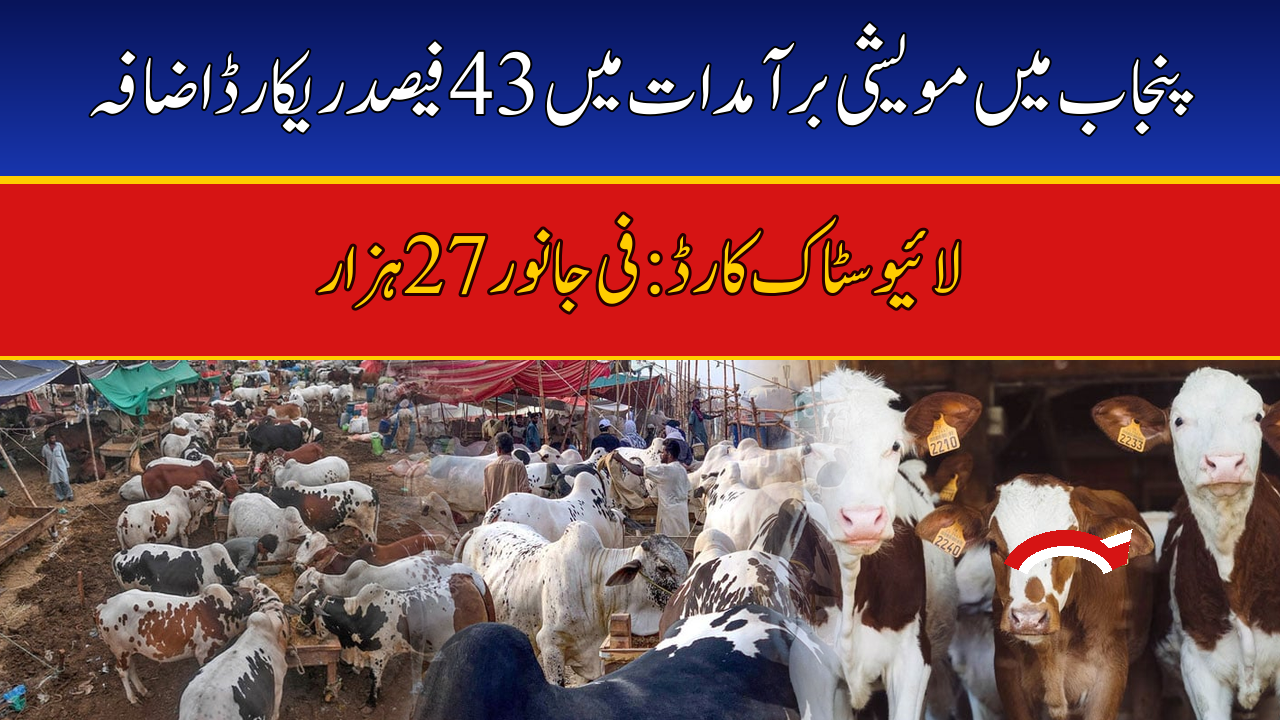

Punjab’s livestock sector has recorded a 43 percent increase in animal exports, with 400,000 animals prepared for export in a year and rural livestock farmers expected to earn Rs11 billion, according to a provincial government handout. The growth is being credited to Chief Minister Maryam Nawaz Sharif’s Punjab Livestock Card Scheme, under which farmers are receiving Rs27,000 per animal to cover feed and fodder expenses. So far, 129,581 animals reared under the scheme have already been exported.
If you keep even one buffalo or a couple of cows in rural Punjab, this story is about your wallet. Below: the scheme, the district numbers, the FMD compartments unlocking foreign markets, the Rs65 billion plan, and the caveats no one should skip.
⚡ Quick Facts
| Export growth | 43% rise in animal exports (govt handout) |
| Animals prepared for export | 400,000 in a year |
| Expected farmer income | Rs11 billion |
| Livestock Card support | Rs27,000 per animal for feed & fodder |
| Scheme animals exported so far | 129,581 |
| FMD compartments | 8 notified, 7 more planned this year |
| Big-ticket plans | 5 meat plants, 5 slaughterhouses, Rs19bn subsidies, Rs65bn private investment |
The Livestock Card Scheme: Rs27,000 Per Animal
The engine behind the headline is the Punjab Livestock Card Scheme, and the idea is overdue. Feed is the single biggest cost in livestock rearing, and anyone who has bought wanda or fodder from a Punjab mandi lately knows prices have been brutal. The card puts Rs27,000 per animal toward feed and fodder, so a farmer can fatten animals to export weight instead of selling them early and cheap to a middleman.
That timing detail matters. Traditionally, a small farmer sells a half-grown animal to a middleman because he cannot afford three more months of feed; the middleman fattens it, exports it, and keeps the margin. If the state covers the feed cost, the farmer holds the animal to export grade and the margin stays in the village. Multiply that by 129,581 scheme animals already exported and the Rs11 billion income figure starts to make sense.
One caution, stated plainly because it matters: the handout does not spell out the card’s disbursement mechanics, eligibility criteria, or whether the Rs27,000 arrives in tranches. If you are a farmer reading this, confirm the terms at your district livestock office before counting the money. Government schemes live or die on their fine print.
District-Wise: Where the Exported Animals Came From
The provincial handout broke the export numbers down by district, and the spread is interesting. This is not a Lahore-only story:
| District | Animals exported |
|---|---|
| Multan | 27,000 |
| Bahawalpur | 24,297 |
| Sargodha | 22,000 |
| Gujranwala + Gujrat | 21,000 |
| Lahore | 20,000 |
| Faisalabad | 12,529 |
| Sahiwal | 2,661 |
Multan topping the list surprises no one who knows south Punjab’s livestock belt. Sahiwal, ironically home of the famous Sahiwal cow breed, sits at the bottom with 2,661, which suggests the rollout is still uneven, and the headroom for growth is largest in the low-number districts.
FMD Compartments: The Real Key to Foreign Markets
Here is the part of the story that decides whether the 43 percent is a one-year spike or the start of something durable. Pakistan cannot simply ship animals to China, Europe, or the United States. Those markets demand certified disease-free supply chains, and foot-and-mouth disease has historically been the locked door.
What is an FMD compartment?
Think of it as a sealed, audited production zone. Animals inside a notified FMD compartment are vaccinated, tagged, tracked, and kept separate from the general livestock population, with documented health records. Importing countries accept meat and live animals from compartments even when the wider country is not FMD-free. Without compartments, Punjab’s meat exporters are stuck selling to a handful of lenient markets at lower prices.
Eight notified, seven more coming
The provincial government has notified eight FMD compartments and plans seven more within this year, explicitly to open exports to China, Europe, and the United States. Fifteen compartments would give Punjab a genuinely export-grade livestock corridor. The practical test to watch: whether the new compartments clear the audit requirements of the target markets. A notified compartment that buyers do not trust is just paperwork.
Punjab Livestock Secretary Ahmad Aziz Tarar has announced zero tolerance for any delay or concealment in reporting livestock disease outbreaks, directing field staff to keep FMD vaccine stocks available down to tehsil level within 24 hours, use the ADRS Info app for real-time reporting, and enforce ring-vaccination around affected areas. That is the unglamorous plumbing behind every export certificate.
Five Processing Plants, Five Slaughterhouses, and a Rs65 Billion Bet
Exporting live animals is the low-margin end of the business. The real money is in processed meat, and the government clearly knows it. The plan includes five meat-processing plants and five modern slaughterhouses, plus meat-packing facilities and commercial and corporate feedlots.
Rs19 billion in financing subsidies
The province will provide Rs19 billion in financing subsidies for integrated livestock value-chain investments, while Rs65 billion in private investment is expected in the meat value chain. Read that split carefully: the public money is the bait, the private money is the catch. If the Rs65 billion materializes, Punjab gets a modern meat industry. If it does not, the province owns expensive buildings.
Punjab’s first FMD vaccine unit
Separately, Punjab plans its first FMD vaccine production unit through a public-private partnership, drawing Rs28 billion in private investment. This is strategically the smartest line item in the whole announcement. Imported vaccines are expensive and supply is unreliable; local production would cut costs for every farmer in the province, not just exporters. It is also part of a wider pattern worth noting: Pakistan is leaning harder on private capital across the economy, from livestock PPPs to the broader privatisation drive aimed at raising fresh revenue.
Livestock Connect: 1,725 Farms Plugged Into Exporters
Under the Livestock Connect system, the government says it has linked 1,725 fattening farms directly with 20 export slaughterhouses, 88 meat exporters, and 34 meat traders. This is the supply-chain matchmaking layer: farms that can produce export-grade animals, meet the people who can sell them abroad, without five layers of middlemen.
The ratio of 88 exporters to 1,725 farms only works if exporters buy at scale on repeat contracts. Farmers should ask one blunt question before signing anything: is there a written offtake agreement, or just a phone number?
Rural Women Farmers: From 90 to 1,107
One of the more striking figures in the handout: the number of rural women livestock farmers registered under the Livestock Card scheme has risen from 90 to 1,107. In rural Punjab, women do a huge share of the actual animal-care work, milking, feeding, cleaning, while the paperwork and the payments sit in a man’s name. A twelvefold rise in registered women farmers suggests the scheme is reaching the people who do the work, which is exactly where the money should land.
What This Actually Means for a Punjab Farmer
The practical takeaway is straightforward. If you rear animals in Punjab, three things moved in your favour: feed support through the Livestock Card, widening export channels through FMD compartments, and buyer linkages through Livestock Connect. Register, document your animals, and vaccinate on schedule, because every benefit here flows through paperwork.
Livestock is the rural household’s shock absorber: when crop income wobbles, a sold animal covers school fees or a medical bill. With flour prices squeezing family budgets this month, a second income stream from fattened animals is a buffer, not a luxury. The farmers who gain most will be those who treat two or three animals like a small business, with records.
The Honest Caveats
Three caveats, stated plainly. First, the 43 percent, the Rs11 billion, and the 400,000 animals all come from a provincial government handout: not false, but unverified by any independent count. Second, schemes announce faster than they disburse; the Rs27,000 per animal is only real when it reaches a farmer’s hands. Third, disease control is the foundation everything else stands on. Fifteen compartments mean nothing if FMD reporting stays patchy at the village level, which is precisely why the livestock secretary’s zero-tolerance warning on outbreak reporting matters as much as any investment figure.
Watch three milestones over the next six months: whether the seven new FMD compartments are actually notified, whether the Rs65 billion in private investment starts showing up as construction rather than memorandums, and whether the Livestock Card’s district numbers start rising in places like Sahiwal that are currently lagging. Those will tell you if this was a press release or a turning point.
Frequently Asked Questions
What is the Punjab Livestock Card Scheme?
It is a Punjab government scheme launched by Chief Minister Maryam Nawaz Sharif that provides livestock farmers Rs27,000 per animal to meet feed and fodder expenses. The aim is to help farmers rear animals to export quality so they can earn more from animal exports. According to the provincial handout, 129,581 animals reared under the scheme have been exported so far.
How much have Punjab’s animal exports increased?
Punjab’s livestock sector has recorded a 43 percent increase in animal exports, with 400,000 animals prepared for export in a year and rural farmers expected to earn Rs11 billion. These figures come from a provincial government handout reported on October 18-19, 2026, and have not been independently verified.
What are FMD compartments and why do they matter?
FMD compartments are notified, audited disease-free zones where animals are vaccinated, tagged, and tracked separately from the general livestock population. They matter because premium markets like China, Europe, and the United States only accept livestock imports from certified disease-free supply chains. Punjab has notified 8 compartments and plans 7 more this year.
Which Punjab districts exported the most animals?
According to the government handout, Multan led with 27,000 animals, followed by Bahawalpur (24,297), Sargodha (22,000), Gujranwala and Gujrat combined (21,000), Lahore (20,000), Faisalabad (12,529), and Sahiwal (2,661).
How can a farmer benefit from the Rs27,000 per animal support?
The support is meant to cover feed and fodder costs so farmers can fatten animals to export weight instead of selling early to middlemen. Farmers should register under the Livestock Card scheme, keep animal records, and confirm disbursement terms, eligibility, and timelines at their district livestock office, as the handout does not publish the fine print.
What is the Livestock Connect system?
Livestock Connect is the government’s supply-chain linkage system that connects 1,725 fattening farms directly with 20 export slaughterhouses, 88 meat exporters, and 34 meat traders. The goal is to cut out middlemen so farmers get better prices. Farmers should still insist on written offtake agreements before committing animals.