EA Shuts Down BioWare, Cancels Mass Effect Game
By Fatima Raza, Technology Desk | Updated: October 22, 2026 Electronic Arts is shutting down BioWare, the legendary studio behind Mass Effect, Dragon Age, and Star Wars: Knights of the Old Republic, and has cancelled the next Mass Effect game that was announced back in 2020. The decision, revealed in a staff memo from EA…
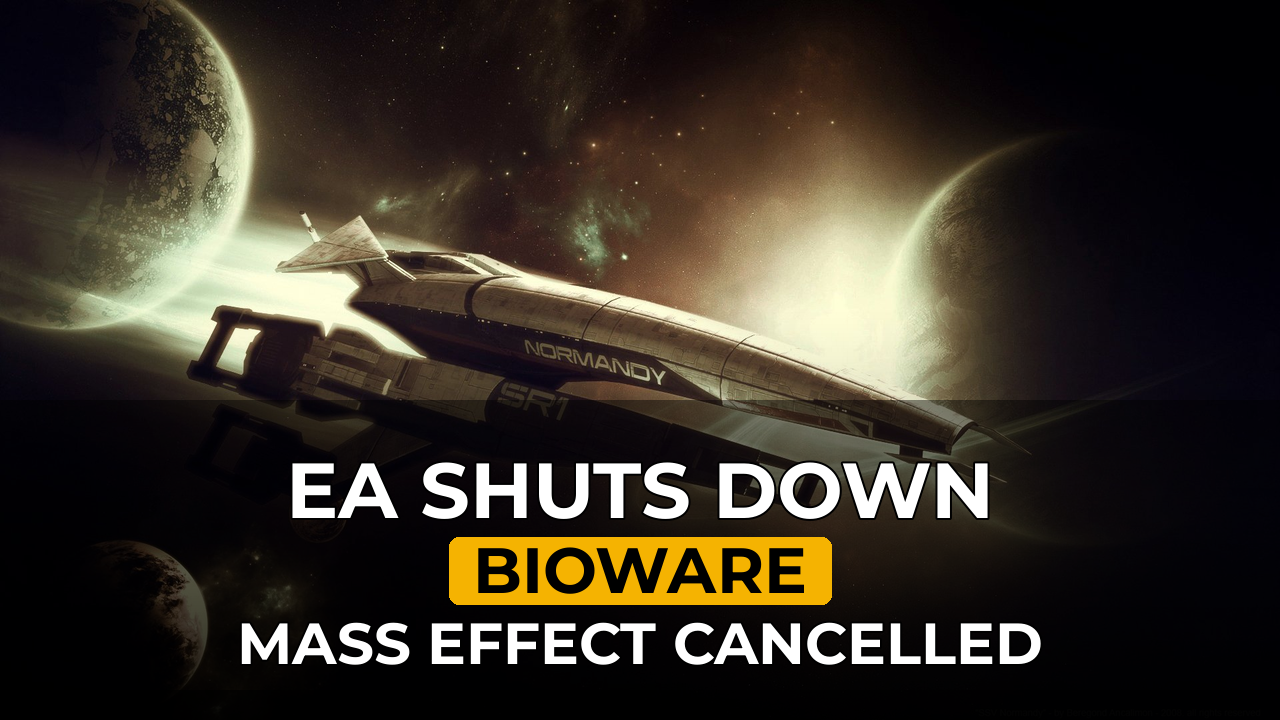
Electronic Arts is shutting down BioWare, the legendary studio behind Mass Effect, Dragon Age, and Star Wars: Knights of the Old Republic, and has cancelled the next Mass Effect game that was announced back in 2020. The decision, revealed in a staff memo from EA executives on Wednesday, October 21, 2026, ends a 30-plus-year run for one of the most influential role-playing game studios ever made. Bloomberg reports that roughly 400 EA employees are being laid off — about 3% of the total workforce, including around 50 people at BioWare.
If you have ever played a game where a dialogue choice made your stomach drop, you have felt BioWare’s fingerprint on gaming history. This was not some failing indie studio being quietly folded — this was the house of story-driven RPGs, gone.
What exactly happened at EA
The announcement came through an internal letter to staff from David Tinson, EA’s chief operating officer, and Cam Weber, the company’s chief studios officer. According to Bloomberg’s reporting, the two executives told employees the company had “taken a hard look” at its business over the past few months and would focus on its proven hits — Apex Legends, Battlefield, and sports titles like Madden.
A statement published on EA’s website said simply: “We’ve made the decision not to move forward with this development, which means we’re closing the studio and our Edmonton workspace. BioWare is a legendary studio that helped define the role-playing genre, and we do not take this decision lightly.”
The small team that remained at BioWare had been working on an early-stage Mass Effect sequel — the project fans have called Mass Effect 5 ever since it was teased in 2020. That project is now cancelled, and the Edmonton workspace that has been BioWare’s home for decades is closing.
BioWare itself confirmed the closure on X, thanking players for “being the most meaningful part of our story.”
BioWare’s 30-year legacy: from Baldur’s Gate to Mass Effect
To understand why this shutdown matters, you need to understand what BioWare built. The studio was founded in 1995 in Edmonton, Canada, and EA acquired it in 2007. In between, BioWare basically wrote the rulebook for modern RPGs.
Baldur’s Gate (1998) showed that a video game story could rival a novel. Star Wars: Knights of the Old Republic (2003) is still, in many people’s eyes, the best Star Wars game ever made. Then came Mass Effect (2007), a trilogy where your choices carried across three entire games, turning Commander Shepard into one of gaming’s most iconic heroes.
Anyone who played through the Suicide Mission in Mass Effect 2 knows this studio was not just making products. It was making worlds people lived in. That is why the loss lands differently — BioWare built a community around choices, consequences, and characters that felt real.
Why EA shut BioWare down
Three forces collided here. First, recent commercial performance. Anthem (2019) flopped hard, and Dragon Age: The Veilguard (2024) fell short of EA’s internal sales projections. Bloomberg has traced the studio’s shrinking fortunes: BioWare’s headcount had already fallen from a peak of over 400 to roughly 50 by the time of Wednesday’s closing.
Second, the money behind EA changed hands. In August 2026, EA went private in a $55 billion buyout led by Saudi Arabia’s Public Investment Fund, alongside Silver Lake and Affinity Partners. The deal loaded roughly $18 billion in debt onto the company’s books, and EA has since told investors it wants to cut up to $700 million in costs, largely by trimming research and development spending. New owners with that much debt do not wait around for a single-player RPG to find its audience in year two.
Third, EA’s strategy has decisively shifted. The memo makes it clear: the company wants fewer, bigger bets, and live-service games with recurring revenue — sports titles, Apex Legends, Battlefield — are the future its leadership sees. A narrative-driven studio whose games take six or seven years to make simply does not fit that spreadsheet.
What EA is focusing on instead
EA laid out its priority list clearly, and it is a very different company than the one that once proudly marketed BioWare’s storytelling:
- Sports: the yearly EA Sports lineup plus two new projects — “Project Gridiron,” a social-first open-world American football game, and a Fight Night boxing revival in pre-production.
- Shooters: Apex Legends (with new multiplayer modes planned), future Battlefield games, and a new Star Wars shooter being co-developed by Respawn and DICE — reportedly a new Star Wars Battlefront.
- Action-adventure: Marvel’s Iron Man and the next Star Wars Jedi title continue as planned, but after those, EA says it will work on fewer large projects at a time.
- The Sims: the team is pausing the “Project Lotus” initiative and refocusing on a different project codenamed “Project Evergreen.”
- skate.: the skateboarding sim is being restructured into a smaller, more focused studio.
EA says it will help affected staff find other roles inside the company.
What happens to Mass Effect and Dragon Age now?
Here is the question every fan is asking, and the answer is complicated. EA owns the Mass Effect and Dragon Age intellectual property outright. Cancelling the game and closing the studio does not put the franchises up for sale — the IP stays with EA. Whether EA ever revives them under a different studio is unknown, but the company’s stated strategy gives little reason for optimism in the near term.
That is the cruelest part for fans. BioWare is gone, but Commander Shepard’s story now belongs to a company that has decided single-player RPGs are not its business anymore. The franchises will sit in a vault, and players will keep debating the ending of Mass Effect 3 for decades — a debate that now feels like an elegy.
BioWare timeline: three decades of RPG history
- 1995 — BioWare founded in Edmonton, Canada.
- 1998 — Baldur’s Gate releases and becomes a landmark PC RPG.
- 2003 — Star Wars: Knights of the Old Republic cements BioWare’s reputation.
- 2007 — EA acquires BioWare; the original Mass Effect launches the same year.
- 2009–2014 — The Mass Effect trilogy and Dragon Age series define a generation of RPGs.
- 2019 — Anthem launches to poor reception, a turning point for the studio.
- 2020 — A new Mass Effect game is teased; fans call it Mass Effect 5.
- 2024 — Dragon Age: The Veilguard releases but misses EA’s sales targets; BioWare headcount is cut to roughly 50.
- August 2026 — EA’s $55 billion Saudi-led buyout closes.
- October 21, 2026 — EA announces BioWare’s closure and cancels the next Mass Effect.
For more breaking stories from the tech world, explore our Technology section — including our coverage of the Redmi K100 launch with Snapdragon 8 Elite and a 10,000mAh battery and DeepSeek V4.1-Flash’s open-weights AI launch.