Power Division Averts Rs6 Per Unit Electricity Hike — September FPA Contained at Rs2.56
By Bilal Ahmed | Published October 15, 2026 | TimelyUps Business Desk Pakistan’s Power Division said on Thursday that electricity consumers have been spared a potential Rs5 to Rs6 per unit hike in the September 2026 fuel price adjustment, holding the projected increase to Rs2.56 per unit through targeted load management and cheaper fuel arrangements….
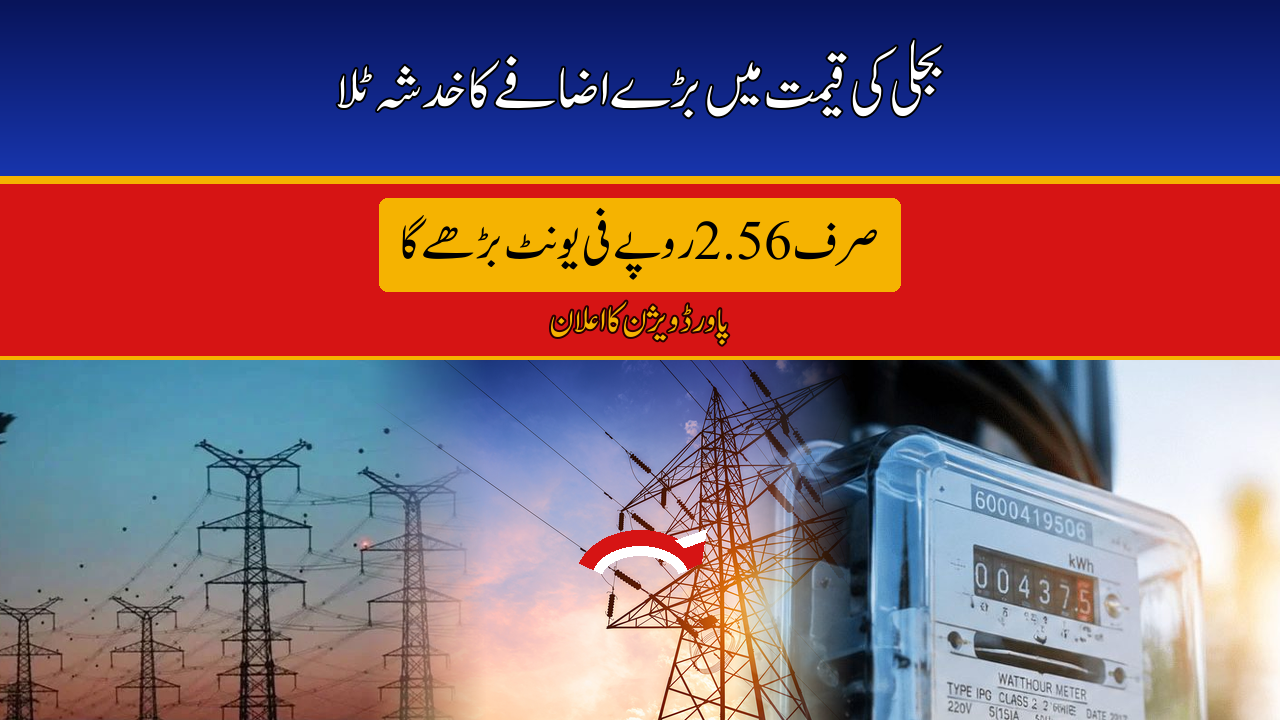
Pakistan’s Power Division said on Thursday that electricity consumers have been spared a potential Rs5 to Rs6 per unit hike in the September 2026 fuel price adjustment, holding the projected increase to Rs2.56 per unit through targeted load management and cheaper fuel arrangements. The adjustment will appear in November 2026 electricity bills, adding up to Rs32.7 billion to consumers’ bills across the country.
Key Facts
- September FPA set at Rs2.56 per unit — NEPRA is expected to approve it for November bills.
- Averted hike: Rs5–6 per unit was possible without intervention; consumers saved up to Rs3.44 per unit.
- Total bill impact: around Rs32.7 billion on November 2026 bills nationwide.
- Why it still rose: Brent crude surged past $120/barrel against the $70 benchmark used for the base tariff, while the Strait of Hormuz closure and Qatar’s force majeure declaration squeezed LNG supply.
- September adjustment is Rs1.45 per unit higher than August’s Rs1.11 per unit.
What the Power Division announced
In a statement issued on October 15, the Ministry of Energy’s Power Division said “timely measures, including targeted load management,” had averted a much larger hit to consumers’ pockets. Fuel costs for power generation rose sharply through September, but the division says consumers will feel only a fraction of that shock.
The statement put a number on what was saved: up to Rs3.44 per unit of additional burden that would have landed on consumers had the government not acted. That is not a small number for an average household. For a family burning through 300 units a month, the difference between the contained adjustment and the worst case is roughly Rs1,032 on a single month’s bill.
The Power Division is continuing to monitor international fuel markets and supply chains, and says it is taking steps to minimise the impact of external price shocks on consumers.
How the bigger hike was avoided
Two moves did most of the heavy lifting in September. First, the division carried out targeted load management for about two to two-and-a-half hours during the month. The brief, planned reductions cut generation from the most expensive fuels — furnace oil and high-speed diesel — which are the costliest options in the generation mix.
Why the adjustment rose at all
The upward pressure on generation costs this September came from three directions at once. Brent crude surged beyond $120 a barrel, against a benchmark of around $70 a barrel that was assumed when the current base electricity tariff was set. Middle East tensions disrupted fuel supply chains after the closure of the Strait of Hormuz, and Qatar declared force majeure on its LNG supplies.
Despite Qatar’s declaration, the division says Pakistan met its RLNG requirements through available contracted supplies plus additional spot cargoes purchased as needed. It also warned that further RLNG shortages would force power producers back toward furnace oil and high-speed diesel, pushing generation costs up again.
What this means for your November bill
Let’s translate the announcement into actual rupees. The fuel price adjustment for September will be added to your November 2026 bill — not October. Here is the simple math:
- 200 units a month: Rs2.56 × 200 = Rs512 added as FCA. Had the Rs6 hike gone through, it would have been Rs1,200.
- 300 units a month: Rs2.56 × 300 = Rs768 added. The averted version would have been Rs1,800.
- 500 units a month: Rs2.56 × 300 = Rs1,280 added, versus Rs3,000 in the worst case.
It is worth noting that this adjustment comes on top of August’s Rs1.11 per unit — so your November bill’s FCA line will be Rs1.45 per unit higher than the one on your October bill. For the 300-unit household, that is Rs435 more than last month’s fuel adjustment alone.
The total impact across all consumers is estimated at Rs32.7 billion — money the Power Division will collect through the September FCA in November bills.
The Jan–Aug track record: only 65 paisa
The division also pointed to its recent record. It said the combined impact of fuel price adjustments and quarterly tariff adjustments during January to August 2026 was limited to just 65 paisa per unit — only 1.9 per cent over the base electricity tariff. It credited tariff rationalisation measures and a package encouraging additional electricity consumption by industrial and agricultural users, which pushed more usage onto the national grid.
That industrial package is not without controversy. Industrial consumers are disputing its claimed benefits, arguing that a marginal cost rate of Rs22.96 per unit helps only a select few, while the actual marginal cost of Rs34 per unit feeds roughly Rs11 per unit into the average consumer tariff — becoming a burden for everyone. NEPRA conducted a public hearing last week on revising or suspending the incremental consumption package, but an outcome is still awaited.
What happens next
NEPRA is expected to approve the Rs2.56 per unit FCA for September, after which it will be applied to November bills. Consumers should watch for the fuel price adjustment line when November bills arrive — and, given the division’s warning about RLNG supplies, the October adjustment (coming in December bills) could face similar pressure.
For now, the headline is relief: a Rs5–6 per unit shock became Rs2.56. That still means real money out of your pocket next month, but it could have been more than double.
Related: Check the latest K-Electric power cut schedule for Karachi and the new petrol and diesel prices to track the full picture of your energy costs this month.
Frequently Asked Questions
What is the fuel price adjustment for September 2026?
The Power Division has projected the September fuel price adjustment (FPA/FCA) at Rs2.56 per unit. It will be charged on November 2026 electricity bills. NEPRA is expected to approve it formally.
How much extra will I pay on my November bill?
Multiply Rs2.56 by your monthly units. A 200-unit consumer pays about Rs512 extra, a 300-unit consumer about Rs768, and a 500-unit consumer about Rs1,280 — purely as the fuel adjustment, on top of your regular tariff.
How did the Power Division avoid the Rs6 per unit hike?
Through two main steps: targeted load management for about 2 to 2.5 hours in September, which reduced generation from expensive furnace oil and high-speed diesel, and supplying RLNG for power generation at domestic gas prices, which cut 83 paisa per unit. Together they saved consumers up to Rs3.44 per unit.
Why did the adjustment increase compared to August?
Global fuel prices surged: Brent crude went past $120 a barrel against the $70 benchmark used when the base tariff was set, the Strait of Hormuz closure disrupted supply chains, and Qatar declared force majeure on LNG. September’s FPA is Rs1.45 per unit higher than August’s Rs1.11 per unit.
What is Qatar’s force majeure and why does it matter?
Force majeure means Qatar invoked an extraordinary-circumstances clause on its LNG contracts. Pakistan kept its RLNG supply going through contracted volumes plus spot cargoes, but the disruption pushed up fuel costs — one of the reasons the adjustment rose this month.
How much have electricity bills actually risen this year?
According to the Power Division, the combined effect of fuel price and quarterly tariff adjustments from January to August 2026 was limited to 65 paisa per unit — just 1.9 per cent over the base tariff.
What is NEPRA’s role in this?
NEPRA, the power regulator, must formally approve the fuel cost adjustment before distribution companies can bill it. Approval of the Rs2.56 per unit September FCA is expected, after which it will appear in November 2026 bills. NEPRA also held a public hearing last week on the industrial incremental consumption package, with a decision pending.