PSX Crashes 2,000 Points as Oil Crosses $112 After Houthi Attacks on Saudi Arabia
The Pakistan Stock Exchange suffered one of its heaviest single-day falls of the year on Thursday, October 22, 2026, as the benchmark KSE-100 Index plunged 2,006.67 points — a drop of 1.21 percent — to close at 163,924.31. The sell-off was triggered by a dramatic escalation in the Middle East: fresh Houthi attacks on Saudi…
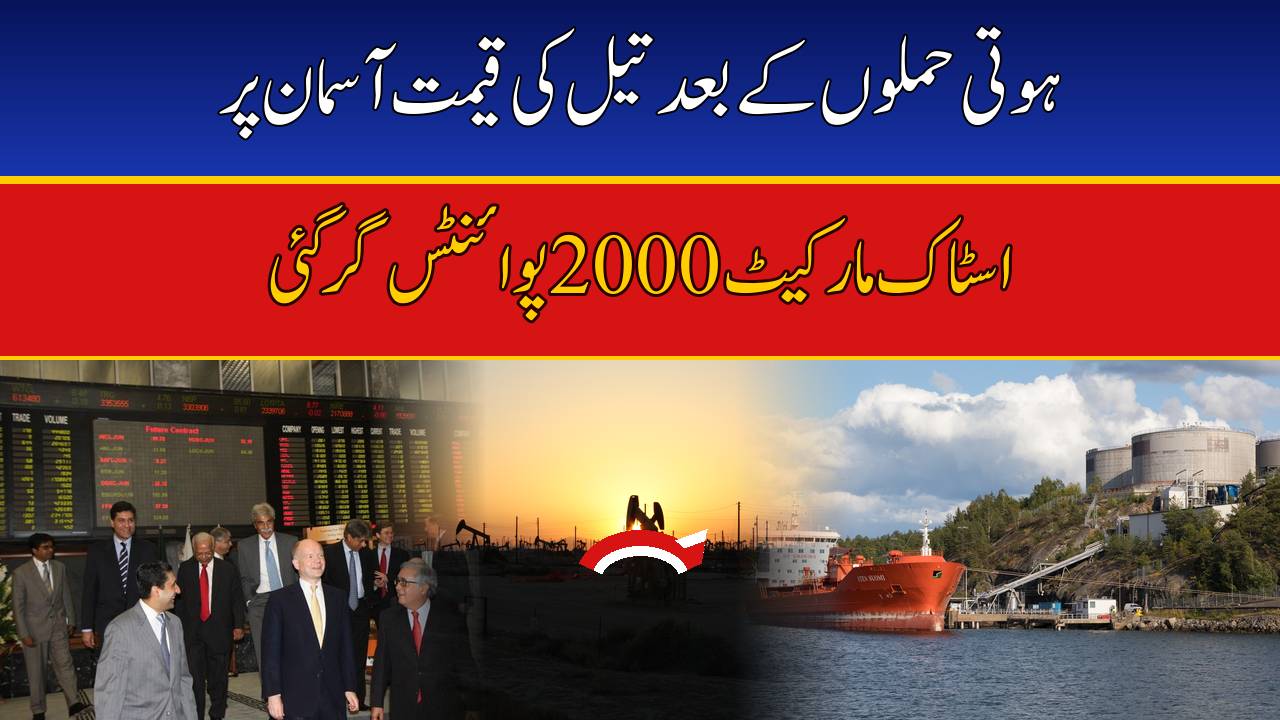
The Pakistan Stock Exchange suffered one of its heaviest single-day falls of the year on Thursday, October 22, 2026, as the benchmark KSE-100 Index plunged 2,006.67 points — a drop of 1.21 percent — to close at 163,924.31. The sell-off was triggered by a dramatic escalation in the Middle East: fresh Houthi attacks on Saudi Arabia sent Brent crude surging past $112 a barrel, its highest level since May, and rattled investors across the region.
For ordinary Pakistanis, the market crash and the oil spike are two sides of the same coin. Pakistan imports the bulk of its petroleum, and every sustained rise in global crude eventually shows up at the local petrol pump. Here is everything that happened today, why it matters, and what it could mean for fuel prices in the coming weeks.
PSX crash at a glance — everything confirmed today
| Detail | Confirmed information |
|---|---|
| KSE-100 close | 163,924.31 — down 2,006.67 points (-1.21%) |
| Previous close | 165,930.99 (Wednesday, October 21) |
| Intraday range | High 166,180.32 — low 163,782.41 |
| Biggest drags | ENGROH, UBL, HUBC, HBL and PTC — together pulled the index down by roughly 752 points (Topline Securities) |
| Brent crude | $112.17–$112.67 a barrel, up about 3% — highest since May 18, 2026 |
| WTI crude | $99.55–$99.83 a barrel, up about 2.5% |
| Trigger | Houthi attacks on Saudi Arabia’s Dammam airport and the Shaybah oil facility on Wednesday, plus tanker incidents in the Gulf |
| Date | Thursday, October 22, 2026 |
What happened at the PSX today
The market opened on a cautious note and never really recovered. The KSE-100 shed more than 500 points in the opening minutes, and selling intensified after midday, dragging the benchmark to an intraday low of 163,782.41 — a fall of over 2,100 points from the previous close at its worst. Minor recoveries in the afternoon failed to hold, and the index settled at 163,924.31 at the closing bell.
The selling was broad-based. According to market reports, pressure hit nearly every major sector: commercial banks, oil and gas exploration and marketing companies, power generation, cement, automobile assemblers, refineries, fertiliser, pharmaceuticals, and technology stocks all closed in the red. Index heavyweights including OGDC, PPL, Mari, Hubco, PSO, HBL and UBL traded lower through the session.
“Persistent geopolitical uncertainty, coupled with concerns over rising oil prices and their potential implications for Pakistan’s economic outlook, kept investors on the defensive. The absence of positive triggers further dampened sentiment, with selling pressure intensifying as the session progressed,” brokerage house Topline Securities said in its post-market report.
Why oil surged past $112
Benchmark crude prices climbed to a near six-month high on Thursday after Yemen’s Iran-aligned Houthi forces struck targets inside Saudi Arabia, stoking fears of a wider regional conflict and disruptions to crude supplies from the world’s key exporting region.
Brent crude futures for December delivery rose about 3 percent to $112.17 a barrel, touching an intraday high of $112.67 — the highest since May 18. US benchmark West Texas Intermediate gained roughly 2.5 percent to trade near $99.83, after briefly crossing $100 earlier in the session.
“Reports of Middle East crude oil exports exceeding pre-conflict levels are more than countered by attacks on ships in the Strait of Hormuz and the Houthi strikes on Saudi Arabia and on its oil infrastructure,” PVM Oil analyst Tamas Varga told Reuters. “No de-escalation is anticipated until the US midterm elections, which should keep oil prices elevated.”
Morgan Stanley analysts estimated that Middle East crude exports were running at around 17 million barrels per day last week — a reminder of just how much of the world’s oil flows through a region now thick with military risk.
The attacks that spooked the markets
On Wednesday, Houthi forces targeted King Fahd International Airport in Dammam, eastern Saudi Arabia. Reuters reported that at least one person was killed and eight more wounded in the airport strike. A separate drone attack on a Saudi oil field killed two more people.
The Houthis also attempted a drone strike near Saudi Aramco’s Shaybah oil facility. Saudi Arabia’s Energy Ministry said air defences intercepted the attack outside the facility’s perimeter and that it did not affect operations — but the message to markets was unmistakable: even the Kingdom’s most strategic energy assets are within reach.
US evacuates diplomats; Aramco sends staff home
Two developments on Thursday convinced traders this was not a one-day scare. The US State Department ordered some diplomats and their family members to leave American missions in Saudi Arabia, and US officials told Reuters that family members would also be withdrawn from a number of other US missions across the Middle East.
Separately, oil giant Saudi Aramco instructed staff to evacuate its headquarters in Dhahran and work remotely, according to six people familiar with the matter cited by international media. When the world’s largest oil company clears its own headquarters, markets listen.
Tankers under fire in the Gulf
The threat has spread to the shipping lanes that carry Gulf crude to the world. Iran’s armed forces claimed on Thursday to have struck four oil tankers in the Persian Gulf and said another three vessels had collided with mines in the Strait of Hormuz. The United Kingdom Maritime Trade Operations centre separately reported that a tanker was struck in the Gulf of Oman on Wednesday.
Analysts tracking shipping data say at least 18 attacks on commercial shipping have been recorded in the region over the past two weeks, and warn that threats now extend beyond the Strait of Hormuz to routes further afield — jeopardising the loadings and ship-to-ship transfers on which Gulf crude exports depend.
What it means for Pakistan: petrol and diesel prices
This is the part that hits home. Pakistan is a net oil importer, and the government revises petrol and diesel prices every fortnight based on international market trends. When Brent holds above $110 for an extended period, the pressure to pass the increase on to consumers becomes very difficult to resist.
Just today, the government notified the latest petrol and diesel prices — but those were calculated on earlier, lower international averages. If Brent stays elevated through the current pricing window, the next fortnightly review could bring an upward revision. Higher diesel prices, in particular, feed straight into transport costs and food inflation, since goods move by road across the country.
There is also a second-round effect: expensive oil widens Pakistan’s import bill, pressures the current account, and can weaken the rupee — which in turn makes every imported barrel costlier in rupee terms. It is a cycle Pakistani consumers know well.
What it means for Pakistani investors
Today’s crash erased the gains from Wednesday’s rebound, when the KSE-100 had risen 779.34 points on institutional buying, hopes of US–Iran de-escalation and expectations around the draft Auto Policy 2026–31. That optimism lasted exactly one session.
Brokerages expect the market to stay volatile and range-bound in the near term, with direction driven almost entirely by oil prices, geopolitical headlines and corporate earnings. For small investors, the standard advice applies with extra force right now: avoid panic selling on red days, avoid panic buying on green ones, and do not make leveraged bets on geopolitical news. (This is general market commentary, not investment advice.)
Pakistan’s broader reform story — from privatisation proceeds to improving consumer protections in banking — remains intact, but in the short run, geopolitics is driving the bus.
The bottom line
A 2,000-point crash, oil at a six-month high, diplomats leaving Riyadh and tankers burning in the Gulf — October 22 was the day the Middle East conflict arrived at Pakistan’s doorstep in the most direct way possible: through the stock market and the petrol pump. Whether this becomes a sustained crisis or a sharp but passing shock depends on what happens in the Gulf in the coming days. TimelyUps will keep tracking both the KSE-100 and the oil price — and what they mean for your wallet.
By Bilal Ahmed — Business Desk, TimelyUps. Updated: October 22, 2026.