Labour Federations Oppose PMDC Privatisation, Warn Thousands of Jobs at Risk
By Bilal Ahmed | Business Desk | Updated: October 23, 2026 Labour federations have come out swinging against the proposed privatisation of the Pakistan Mineral Development Corporation (PMDC), warning that selling off the state-owned miner could put thousands of jobs at risk and damage the economic interests of local communities in Balochistan. The opposition was…
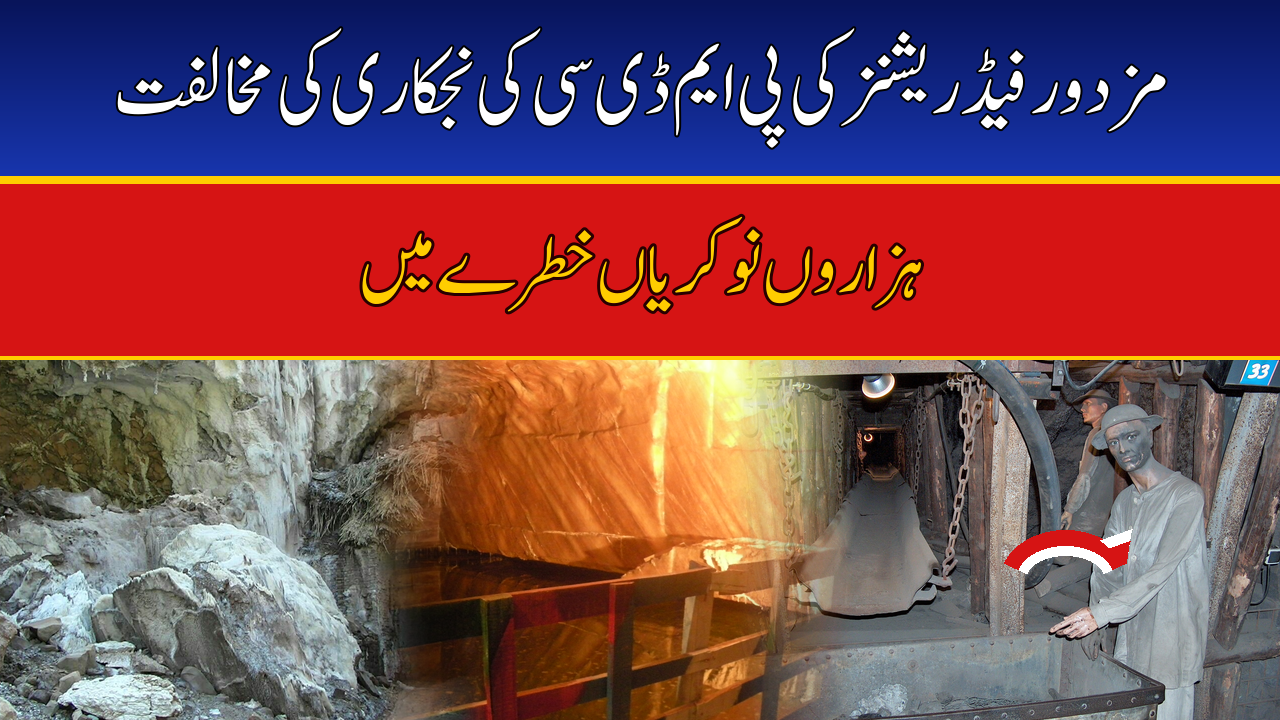
Labour federations have come out swinging against the proposed privatisation of the Pakistan Mineral Development Corporation (PMDC), warning that selling off the state-owned miner could put thousands of jobs at risk and damage the economic interests of local communities in Balochistan. The opposition was voiced at a press conference on Thursday, October 22, 2026, at the Quetta Press Club by Lala Muhammad Sultan, who heads both the All Pakistan Labour Federation and the Pakistan Central Mines Labour Federation (PCMLF).
| Key Facts at a Glance | |
|---|---|
| What happened | Labour federations rejected the proposed privatisation of PMDC and the cancellation of its mining leases |
| Where / When | Quetta Press Club, Quetta — Thursday, October 22, 2026 |
| Who spoke | Lala Muhammad Sultan, President of the All Pakistan Labour Federation and the Pakistan Central Mines Labour Federation |
| Union’s warning | Privatisation could threaten thousands of jobs and harm local communities in Balochistan (union’s claim) |
| Government plan | PMDC named in the Petroleum Division rightsizing plan, Phase I — alongside Saindak Metals and ENAR Petrotech (cabinet summary dated March 26, 2026) |
| Earlier opposition | The Senate Standing Committee on Petroleum rejected the PMDC privatisation proposal over layoff concerns; Petroleum Division officials said PMDC remained profitable for three years |
What the federations said
Standing before reporters at the Quetta Press Club, Lala Muhammad Sultan did not mince words. The federation president said the labour bodies outright reject both the proposed privatisation of PMDC and the cancellation of the corporation’s mining leases — two moves he argued would land hardest on the very workers who dig, haul and process the country’s mineral wealth.
His main warning was about jobs. According to the federation, the privatisation could threaten the livelihoods of thousands of workers and cut into the economic interests of local communities in Balochistan, a province where mining is one of the few dependable sources of household income. The federation’s figure of “thousands at risk” is its own claim — not a government-confirmed number — but the union treats it as a genuine danger rather than a bargaining slogan.
The federations also pushed a process demand: the federal and provincial governments should withdraw the proposal and, before taking any further step, sit down with labour federations and workers’ representatives. Sultan vowed that the unions would continue what he called their “constitutional, legal and democratic struggle” to protect workers’ rights — a signal that legal challenges and organised protest remain on the table if the plan moves ahead.
What PMDC actually is
The Pakistan Mineral Development Corporation is a federal state-owned enterprise under the Petroleum Division, and it is not a struggling asset by the government’s own account. Petroleum Division officials, speaking before the Senate Standing Committee on Petroleum, said PMDC had remained profitable for the past three years — a detail that makes its placement on a privatisation list a harder sell, at least in the federation’s telling.
PMDC operates mineral assets in several parts of the country, including the famous Khewra Salt Mine in Punjab, while its coal mining leases matter most in Balochistan — the same province where Thursday’s press conference was held. That geography explains why the Quetta event was led by the Pakistan Central Mines Labour Federation: Balochistan’s mining workforce sits closest to any decision on the corporation’s future.
The government’s privatisation plan
The privatisation proposal did not appear out of thin air. On June 9, 2026, reporting by Profit revealed that the federal government had approved a Petroleum Division rightsizing plan under which PMDC would be privatised in the first phase — alongside Saindak Metals Limited (SML) and ENAR Petrotech Services.
The cabinet’s approval came through the Committee on Rightsizing’s Phases III and IV, cleared via a summary dated March 26, 2026, with implementation plans ordered within 90 days. In other words, the push to sell PMDC is part of a broader government effort to shrink the footprint of state-owned enterprises — an agenda tied to fiscal reform commitments that have been in the news all year. Workers’ advocates have been watching similar privatisation and rightsizing drives across the economy, including large-scale government employment and development programmes announced to absorb displaced labour.
The Senate committee already said no
What gives Thursday’s press conference extra weight is that the unions are not the first to object. The Senate Standing Committee on Petroleum had already rejected the proposed privatisation of PMDC, citing concerns over roughly 5,000 employee layoffs — a figure the committee put on record, though the government has not confirmed it as final. Committee members also heard from Petroleum Division officials that PMDC stayed profitable for three years, which sat awkwardly with the case for selling it.
The federations are now leaning on that earlier rejection. Their argument, in plain terms: if a parliamentary committee has already turned the proposal down on jobs grounds, pushing ahead without consulting workers would ignore both the committee and the people most affected.
What this means for workers and Balochistan
For Balochistan, mining is not just an industry — it is one of the province’s largest private employers, absorbing labour in districts where few alternatives exist. The PCMLF’s longstanding position makes the stakes concrete: as far back as June 2023, the federation said cancelling PMDC’s leases could render about 5,500 workers jobless. The union presents that as its standing figure, not a fresh October count, and it should be read as a union claim rather than an official estimate.
The broader worry in labour circles is precedent. If a profitable, committee-defended corporation can still be sold, unions argue, no state enterprise job is safe — and that anxiety is playing out against an economy where official growth forecasts keep being trimmed. Recent IMF forecasts for Pakistan’s region underline how thin the margin for policy error has become, which is why the federations want every step scrutinised.
The government’s side of the story, of course, is fiscal: rightsizing is meant to stop the bleeding of loss-making enterprises and free up resources — including large federal outlays such as the Rs160 billion development package for Khyber Pakhtunkhwa — for growth instead of subsidies. Whether PMDC, a corporation officials themselves call profitable, belongs in that category is exactly the argument the unions want settled in parliament and at the negotiating table, not by executive order.
What happens next
Two things are worth watching. First, whether the Petroleum Division’s implementation plans — due within 90 days of the March 2026 cabinet summary — surface publicly, and whether they address the Senate committee’s layoff concerns. Second, whether the federations follow through on their vow of a “constitutional, legal and democratic struggle,” which could mean court petitions, parliamentary lobbying, or strikes in the mining districts.
For now, the message from Quetta is unambiguous: the workers are organised, the committee is on record against the sale, and the unions say they will not go quietly if the privatisation moves forward without them.
What is PMDC?
The Pakistan Mineral Development Corporation is a federal state-owned enterprise under the Petroleum Division that operates mineral assets, including the Khewra Salt Mine and coal mining leases in Balochistan. Petroleum Division officials told a Senate committee that PMDC remained profitable for the past three years.
Why are labour federations opposing PMDC’s privatisation?
The All Pakistan Labour Federation and the Pakistan Central Mines Labour Federation say privatisation — along with the cancellation of PMDC’s mining leases — would threaten thousands of jobs and harm the economic interests of local communities in Balochistan. The federations also want workers’ representatives consulted before any further step.
How many jobs are at risk?
There is no confirmed official figure. The federation warns of “thousands” of jobs at risk; the Senate Standing Committee on Petroleum cited concerns over roughly 5,000 layoffs; and the PCMLF has long quoted a figure of about 5,500 workers. Treat all of these as union or committee claims, not government-verified numbers.
Hasn’t the Senate already rejected this privatisation?
Yes — the Senate Standing Committee on Petroleum rejected the proposed PMDC privatisation over layoff concerns. The government, however, approved a Petroleum Division rightsizing plan in March 2026 (summary dated March 26, 2026) that places PMDC in the first phase of privatisation alongside Saindak Metals and ENAR Petrotech.
Is PMDC a loss-making company?
According to Petroleum Division officials quoted in Senate committee coverage, PMDC remained profitable for the past three years. That profitability is central to the federations’ argument against selling it.
What did the federations vow to do next?
At the October 22, 2026 Quetta press conference, federation president Lala Muhammad Sultan vowed to continue the unions’ “constitutional, legal and democratic struggle” to protect workers’ rights — signalling possible legal challenges, parliamentary lobbying and organised protest.