PM Youth Programme Signs Deal With US PRG for Healthcare Jobs
ISLAMABAD: Pakistan’s Prime Minister’s Youth Programme (PMYP) and Physicians Revenue Group (PRG) Pakistan signed a Letter of Intent (LOI) on Thursday, 22 October 2026, to set up a PMYP United States Secretariat for Healthcare Services Cooperation — a dedicated platform meant to channel young Pakistanis into United States healthcare-sector jobs, including healthcare administration, medical and…
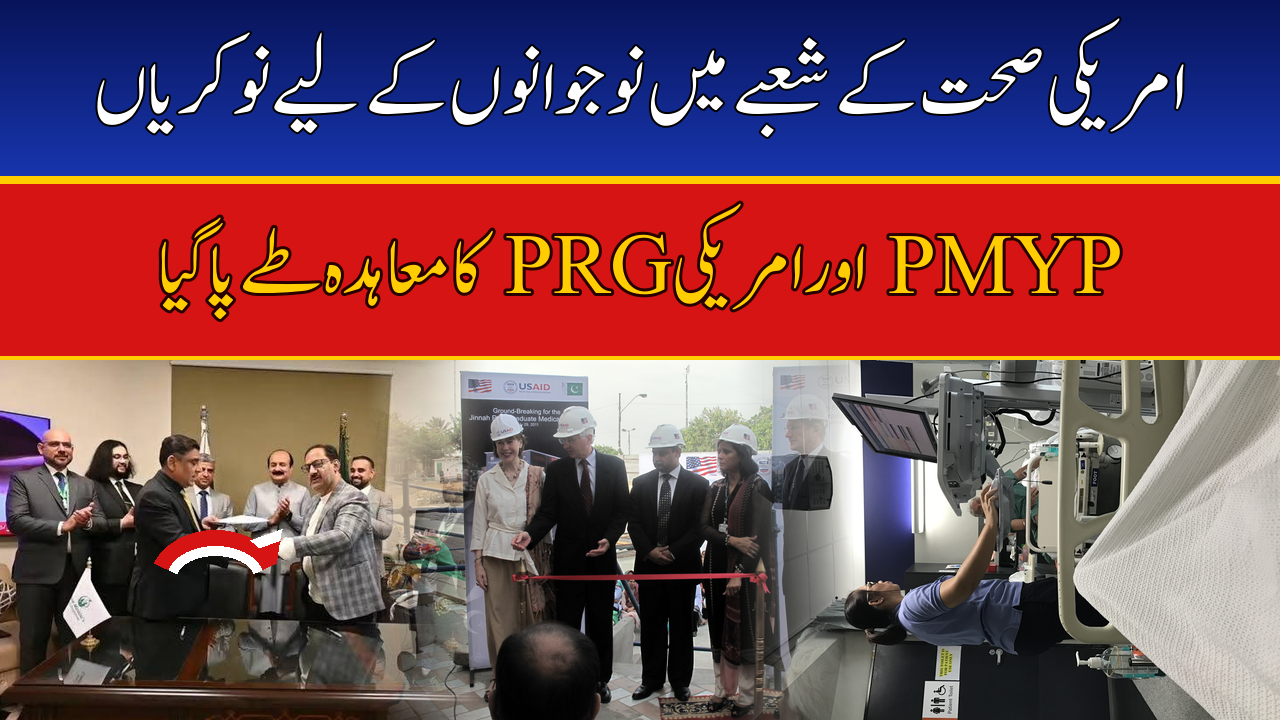
ISLAMABAD: Pakistan’s Prime Minister’s Youth Programme (PMYP) and Physicians Revenue Group (PRG) Pakistan signed a Letter of Intent (LOI) on Thursday, 22 October 2026, to set up a PMYP United States Secretariat for Healthcare Services Cooperation — a dedicated platform meant to channel young Pakistanis into United States healthcare-sector jobs, including healthcare administration, medical and dental billing, revenue cycle management, care coordination and healthcare technology.
The LOI was signed at the Prime Minister’s Office in Islamabad in the presence of PMYP Chairman Rana Mashhood Ahmed Khan. PMYP Director General Dr Shahbaz Shamsi and PRG Pakistan Chairman and Chief Executive Officer Mansoor Ahmed attended the ceremony alongside other officials. Before anything else, one honest note: this is a cooperation agreement, not a job advertisement. No vacancy count, no salary package and no application deadline was announced. What was signed is the framework through which future jobs are supposed to flow.
PMYP–PRG Deal: Key Facts at a Glance
| Event | Letter of Intent (LOI) signing between PMYP and PRG Pakistan |
|---|---|
| Date | 22 October 2026 |
| Venue | Prime Minister’s Office, Islamabad |
| Witnessed by | Rana Mashhood Ahmed Khan, Chairman, PMYP |
| Attended by | Dr Shahbaz Shamsi, DG PMYP; Mansoor Ahmed, Chairman & CEO, PRG Pakistan |
| Initiative | PMYP United States Secretariat for Healthcare Services Cooperation |
| Target job fields | Healthcare administration; medical and dental billing; revenue cycle management (RCM); care coordination; healthcare technology |
| Status | Framework agreement signed; focal person, secretariat coordinator and joint working group to be appointed |
| Vacancies announced | None yet — this is an LOI, not a recruitment drive |
What the PMYP–PRG Agreement Actually Is
A Letter of Intent is not the final deal — it is both sides putting on record that they intend to build something together. In this case, that “something” is a US-based secretariat that will act as a coordination bridge between Pakistani institutions and the American healthcare system.
According to the details released by the Prime Minister’s Youth Programme, the secretariat will connect Pakistani institutions with:
- US healthcare providers (hospitals, clinics, physician groups),
- American universities and professional bodies,
- Industry stakeholders in the healthcare services space, and
- The Pakistani-American medical community, for institutional partnerships, knowledge exchange and skills development.
The joint working group will now plan the secretariat’s activities, and the two sides will start engaging institutions in Pakistan and the US. This is designed as a standing, ongoing channel — not a one-off hiring event.
Which Jobs Is This Deal Chasing?
The five fields named in the announcement are worth understanding one by one, because they are very different careers:
1. Medical and Dental Billing
This is the headline opportunity. The US healthcare system runs on insurance billing — every patient visit generates a claim that must be coded, submitted and followed up with insurers. Pakistani billing professionals already do this work remotely for US doctors, but the deal aims to scale it up into a recognised, compliant industry. Training here is skills-based: courses in medical terminology, insurance claim filing and billing software, plus employer-specific training.
2. Revenue Cycle Management (RCM)
RCM is the bigger umbrella billing sits under — the full journey of a patient’s bill from appointment scheduling to final payment. US healthcare providers increasingly outsource RCM to specialist firms, and this is where PRG’s commercial interest sits. For Pakistani youth, RCM roles demand English communication, attention to detail and knowledge of US insurance processes.
3. Healthcare Administration
The back-office engine of hospitals and clinics: scheduling, record-keeping, patient intake, compliance paperwork. Many of these roles are already remote-friendly and are expanding as US healthcare digitises.
4. Care Coordination
A fast-growing role in US healthcare where coordinators make sure patients follow treatment plans, attend follow-ups and move smoothly between specialists. It blends administrative skill with basic medical literacy and strong communication.
5. Healthcare Technology
Health-tech covers electronic health records (EHR) support, telehealth operations and health data work. PMYP Chairman Rana Mashhood specifically noted that training young people in health technology had become increasingly important in the evolving global job market.
Why the Compliance Angle Matters More Than It Sounds
One clause in the announcement is easy to skip but is actually the engine of the whole deal: the two sides agreed to develop industry standards and regulatory frameworks for Pakistan’s medical billing and healthcare services sector, aligned with US data protection, privacy and compliance requirements.
This matters because billing work means handling Americans’ medical records. US healthcare organisations will only trust foreign teams if those teams can prove they handle sensitive patient data the way US law demands. By building the compliance framework upfront, the secretariat is trying to make Pakistan a credible, trustworthy source of healthcare support services — which is precisely what could turn scattered freelance billing work into a structured national industry.
Mansoor Ahmed of PRG Pakistan said cooperation with the US healthcare sector could create new opportunities in medical billing, and expressed his commitment to helping Pakistani youth gain greater recognition in the international employment market. Rana Mashhood, for his part, said the government was committed to providing young people with dignified and sustainable employment, and to equipping them with modern skills that meet international standards.
What This Could Mean for Pakistan’s Services Exports
Seen from a policy angle, the deal fits a bigger story: Pakistan is trying to export services, not just goods. IT and freelancing have shown that Pakistanis can serve foreign markets from home; healthcare support services could become a second leg of that story. The initiative describes itself as an inclusive platform open to other institutions in both countries, so it is designed to grow beyond the two original signatories.
It is also worth reading alongside Pakistan’s broader youth-skills push: with a massive young population and a persistent skills gap, schemes that link training directly to paying foreign employers are exactly the kind of model policymakers want to replicate. The World Bank’s estimate that Pakistan’s youth skills crisis is costing the country billions underlines why programmes like this one matter.
How Young Pakistanis Can Prepare — Honestly
Let us be straight: there is no application form yet, and anyone asking you for money to “book a seat” in this programme is running a scam. But the fields this deal targets reward preparation. Here is what genuinely moves the needle:
- Build the underlying skill: medical billing certifications, courses in revenue cycle management and EHR/health-tech training are the concrete credentials these employers look for. Private institutes already teach these; choose ones with verifiable placement records, not just ads.
- Polish professional English: US healthcare support roles live or die on communication. Spoken and written fluency is as important as the technical skill.
- Learn the US insurance basics: even a beginner’s understanding of how American health insurance works (claim cycles, denials, patient privacy rules) makes you far more employable in this space.
- Watch the official channels: when the secretariat actually announces training programmes or job intakes, they will be announced through the PMYP’s official portal — pmyp.gov.pk — not through forwarded WhatsApp messages or random Facebook pages.
And a final word of caution that applies to every youth scheme: never pay anyone for placement in a government programme, never hand over your CNIC copies to unofficial recruiters, and verify any “PMYP healthcare jobs” advertisement against the official portal before you act on it.
What’s Next
The joint working group and the appointed focal person and coordinator will now plan the secretariat’s activities, and the two sides will start engaging institutions in Pakistan and the US. Realistically, the pipeline — training programmes, employer partnerships, actual job announcements — will take months to materialise. TimelyUps will track it, and the moment real applications open, you’ll read about it here with verified details.
For now, the accurate summary is: a framework is signed, the intent is real, the target fields are clear — and the waiting game for actual jobs has begun. Anyone preparing in the meantime is building an advantage.
Frequently Asked Questions
Has the PMYP announced any jobs under this deal yet?
No. The 22 October 2026 signing was a Letter of Intent — a cooperation framework, not a recruitment drive. No vacancy count, salary details or application deadline has been announced. Watch the official PMYP portal at pmyp.gov.pk for real announcements.
What kinds of jobs will the PMYP US Healthcare Secretariat target?
Five fields: healthcare administration, medical and dental billing, revenue cycle management (RCM), care coordination, and healthcare technology. Most of these involve supporting US healthcare providers — much of the work can be done remotely from Pakistan.
Who signed the agreement and where?
The LOI was signed between the Prime Minister’s Youth Programme and Physicians Revenue Group (PRG) Pakistan at the Prime Minister’s Office in Islamabad on 22 October 2026, in the presence of PMYP Chairman Rana Mashhood Ahmed Khan. DG PMYP Dr Shahbaz Shamsi and PRG Pakistan Chairman/CEO Mansoor Ahmed attended.
Do I need to be a doctor to benefit from this initiative?
No. The named fields — billing, revenue cycle management, healthcare administration, care coordination and health technology — are non-clinical support roles. They need skills training, professional English and knowledge of US healthcare processes, not an MBBS.
How can I avoid scams around this programme?
Never pay anyone for a place in a government scheme, never share your CNIC or documents with unofficial recruiters, and treat any “PMYP healthcare jobs” post as unverified until you see it on the official portal or a trusted news outlet.
By Daniyal Sheikh | Updated: October 23, 2026
Related: the US–Pakistan Knowledge Corridor and free GRE training for US scholarships, and the verified Sindh government’s 571-job walk-in interview notice.