Baltistan Road Landslide: Thousands Stranded as Skardu-Gilgit Route Blocked
By Daniyal Sheikh | October 23, 2026 | Updated: October 23, 2026 A massive landslide near Shangus in Roundu Valley, Skardu, completely blocked the Baltistan Road on Thursday morning (October 22), cutting off Skardu from Gilgit and leaving thousands of passengers — including tourists — stranded on both sides. The Gilgit-Baltistan Disaster Management Authority (GBDMA)…
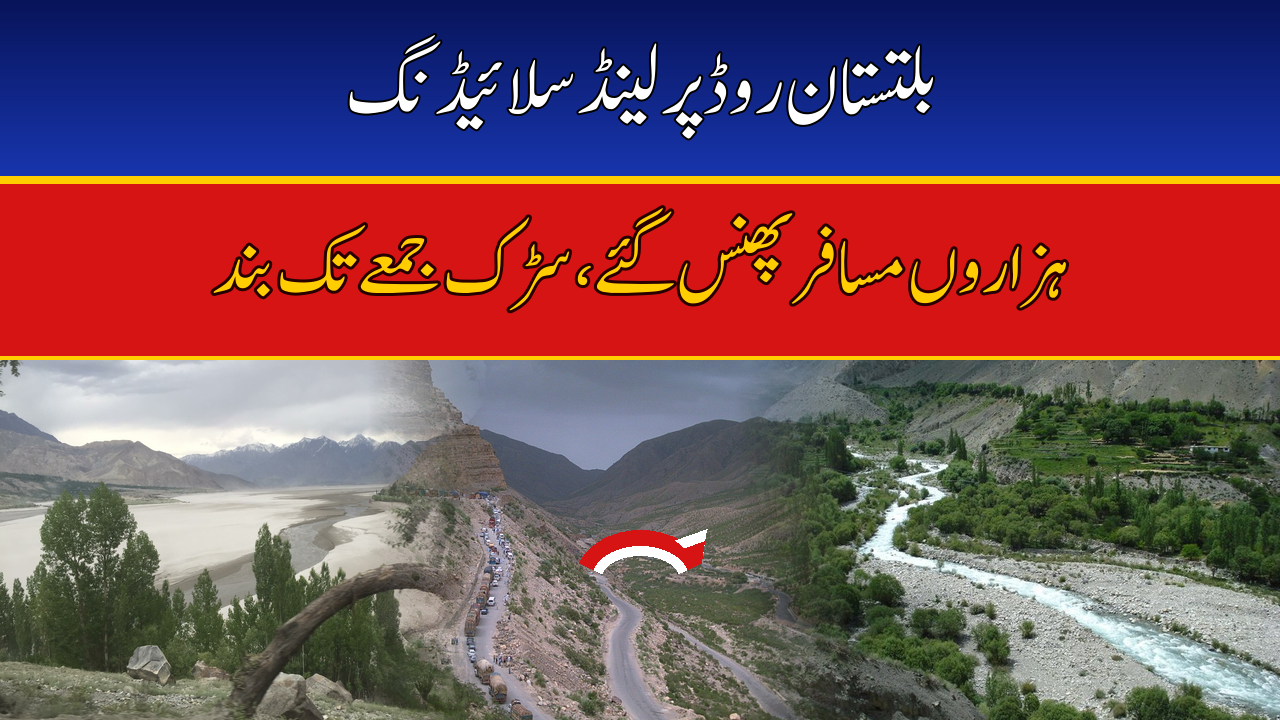
A massive landslide near Shangus in Roundu Valley, Skardu, completely blocked the Baltistan Road on Thursday morning (October 22), cutting off Skardu from Gilgit and leaving thousands of passengers — including tourists — stranded on both sides. The Gilgit-Baltistan Disaster Management Authority (GBDMA) says debris is still sliding down the slope and the giant boulders blocking the road can only be removed through blasting — so the road will remain closed at least until Friday, October 23.
| Key Facts at a Glance | |
|---|---|
| Incident | Major landslide — road completely blocked by mud, debris and huge boulders |
| Location | Shangus, Roundu Valley, Skardu (Shyok Times spells it “Shengus”) |
| Date | Thursday morning, October 22, 2026 |
| People affected | Thousands of passengers stranded on both sides, including tourists |
| Road closure | Traffic fully suspended — road closed at least until Friday, October 23 |
| Clearance | FWO (Frontier Works Organisation) mobilizing a blasting team to break the boulders |
| Advisory | Avoid non-essential travel — call police helpline 15 for the latest road status |
What Happened — A Routine Journey Turned Into an Overnight Ordeal
On Thursday morning, vehicles travelling from Skardu to Gilgit and Gilgit to Skardu were moving along the mountain route through Roundu Valley when a section of the mountainside above Shangus suddenly gave way. According to Dawn’s reporting, the volume of mud and rock that crashed onto the road was so enormous that traffic stopped instantly — and within hours, long queues of vehicles had formed on both sides of the blockage.
This was no minor rockfall. The GBDMA has confirmed that the slide is still active, with debris coming down intermittently — which means any clearing attempt is dangerous until the slope settles. The authority has stated plainly that the large boulders cannot be removed by machinery; they will have to be blasted apart.
Thousands Stranded — Tourists Among Them
The number of passengers stuck on both sides of the blockage is reported to be in the thousands, with tourists forming a significant share of those affected. Late October is still an active travel window for northern Pakistan, so local commuters, students and visitors travelling between Skardu and Gilgit are all caught in the disruption.
The hardest part for those stranded is that there is effectively no alternative route. The Juglot–Skardu Road — renamed the Baltistan Road — is the only land link for all four districts of Baltistan: Skardu, Kharmang, Shigar and Ghanche. Flights exist, but they are not available to every stranded traveller and remain subject to mountain weather.
If you have travel plans in the next few days, check the latest road status before leaving — the police helpline 15 can give you the most current information.
Official Response — FWO’s Blasting Team Moves In
The Frontier Works Organisation has mobilized a blasting team to clear the debris, and it will break the giant boulders with controlled explosions before machinery can move in. This is the standard procedure on this hazardous mountain route, where heavy equipment alone is useless against boulders of this size.
The GBDMA has advised tourists and the general public to avoid non-essential travel and has warned people not to attempt crossing the landslide zone on foot, as more debris could come down at any moment. According to the authority, the road will stay closed at least until Friday, and traffic will only resume after the situation is reviewed following the clearance work.
Why This Road Matters — A 167-km Lifeline
The Juglot–Skardu Road — now officially the Baltistan Road — stretches 167 kilometres along the Indus River and ranks among the most dangerous mountain routes in the world. On one side: deep gorges. On the other: sheer rock faces. That scenery is exactly what makes it breathtaking — and treacherous.
The road’s importance goes far beyond tourism. Daily essentials, food supplies, medicines, construction material and business activity for all four districts of Baltistan move along this single road. When it closes, the region’s entire supply chain feels it. The reconstructed road was formally inaugurated in 2021, but seasonal landslides remain a permanent reality of this terrain.
The economic stakes of connectivity here are real — a recent World Bank report notes that reforms could triple Pakistani incomes by 2050, and growth like that depends on keeping remote regions like Baltistan reliably connected to the rest of the country.
Practical Guidance for Travellers
If you were planning to travel to Skardu or Gilgit in the coming days, keep these points in mind:
1. Confirm before you leave: Call the police helpline 15 for the latest road status. Do not rely on social media rumours.
2. Plan your fuel and budget: Long waits or rerouted plans make fuel costs matter — check the latest petrol and diesel rates before budgeting your trip.
3. Carry essentials: Warm clothing, water, dry food and medicines — temperatures in the mountains drop sharply at night.
4. Stay away from the slide zone: Blasting operations are expected during clearance — moving toward the affected section without official clearance could be fatal.
Where is the Baltistan Road closed, and since when?
The road has been completely closed since Thursday morning, October 22, 2026, after a landslide at Shangus in Roundu Valley, Skardu. Mud and large boulders have blocked it from both sides.
When will the road reopen?
According to the GBDMA, the road will remain closed at least until Friday, October 23. The FWO blasting team is clearing the debris, and traffic will only resume after the situation is reviewed. Call police helpline 15 for the latest updates.
How many people are stranded?
Reports put the number in the thousands on both sides of the blockage, including a large number of tourists travelling between Skardu and Gilgit.
Is there an alternative route to Skardu?
Practically, no — the Juglot–Skardu (Baltistan) Road is the only land link for Baltistan’s four districts. Air travel is an option but is not available to every traveller and depends on weather. The safest advice is to wait for the road to reopen.
Can the landslide zone be crossed on foot?
Absolutely not. The GBDMA has clearly warned that debris is still sliding and blasting operations are underway — attempting to cross the zone could be fatal.
Why is the Baltistan Road considered so dangerous?
The 167-km road runs along the Indus River between deep gorges and towering mountains. Landslides during rain and snow seasons are a regular occurrence, which is why it is counted among the world’s most dangerous mountain routes.