Lahore Tops World’s Most Polluted Cities as Smog Season Grips Punjab — AQI, Health Risks and Precautions
By Daniyal Sheikh | October 23, 2026 | Updated: October 23, 2026 Lahore was ranked the world’s most polluted major city on Thursday, October 23, 2026, as the annual smog season tightened its grip on Punjab. The provincial capital topped IQAir’s live global ranking with an Air Quality Index (AQI) of 189 — in the…
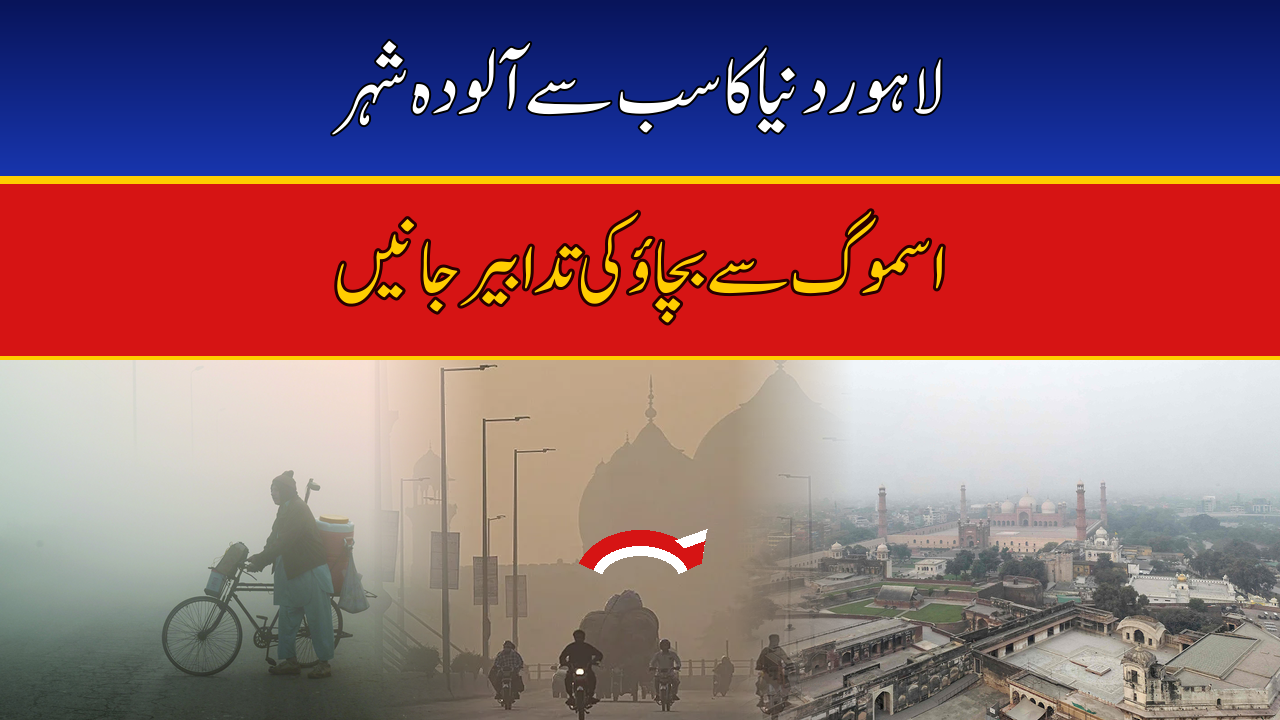
Lahore was ranked the world’s most polluted major city on Thursday, October 23, 2026, as the annual smog season tightened its grip on Punjab. The provincial capital topped IQAir’s live global ranking with an Air Quality Index (AQI) of 189 — in the “unhealthy” bracket — pulling ahead of Delhi (183) and Kolkata (172). The reading is part of a wider deterioration across the province: official Punjab dashboards showed Rajanpur touching a staggering 339, while Rawalpindi, Faisalabad and Multan all recorded AQIs above 200. With the smog season running from October 15 to January 15, doctors are warning of a surge in respiratory complaints and urging residents — especially children, the elderly and asthma patients — to take precautions now.
| Key Facts at a Glance | |
|---|---|
| Headline | Lahore ranked world’s most polluted major city on IQAir’s live tracker (October 23, 2026) |
| Lahore AQI | 189 — “Unhealthy” on the US AQI scale (ahead of Delhi’s 183) |
| Worst in Punjab | Rajanpur at 339, followed by Kasur (266) and Faisalabad (251) |
| Smog season | October 15 to January 15, every winter |
| Main causes | Vehicle exhaust, brick-kiln smoke, industrial emissions, crop-residue burning, construction dust — trapped by cold winter air |
| Most at risk | Children, elderly people, and those with asthma or heart conditions |
| Official advice | Wear masks outdoors, keep windows closed, limit outdoor exertion, consider air purifiers |
Lahore Beats Delhi to an Unwanted Title
It is the kind of number-one spot no city wants. On Thursday morning, IQAir’s live ranking — which compares air quality across more than 100 major cities worldwide — placed Lahore at the very top with an AQI of 189. Delhi followed at 183, Kolkata at 172, Kuala Lumpur at 169 and Mumbai at 166. Because the tracker updates continuously, the order can shift through the day, but the message does not change: the air over Lahore right now is firmly in the “unhealthy” category, meaning it can cause health effects for the general public, not just sensitive groups.
This is not a one-day spike either. Just over a week ago, on October 14, Lahore had already touched a “very unhealthy” 210 late at night, with one monitoring station at the Urban Unit in Lahore Cantonment recording 298. The pattern is depressingly familiar to anyone who has lived through a Punjabi winter: October arrives, the air thickens, and by November the city is breathing soup.
How Bad Is It Across Punjab? The City-by-City Picture
Lahore may grab the headlines, but the Punjab Environmental Protection Agency’s own dashboard shows the problem stretches far beyond the provincial capital. In Thursday evening’s update, Rajanpur recorded the province’s highest reading at a severe 339. Kasur followed at 266, Faisalabad at 251, Pakpattan at 245 and Vehari at 233. Kot Addu stood at 229, Rawalpindi at 221, Dera Ghazi Khan at 219, Multan at 217 and Bhakkar at 208. Lahore itself was at 198 in the provincial dashboard’s update — 12th in the province at that hour, a reminder that the official network and international trackers can differ in their moment-to-moment readings.
The twin cities are feeling it too. Air pollution has been climbing across Islamabad and Rawalpindi, with Rawalpindi earlier recording 147 overall and up to 163 in areas around industrial units and brick kilns. Even Murree — the “Queen of the Hills” — crossed 100 to reach 115, while Attock, Jhelum and Talagang all posted readings between 137 and 150. A few days earlier, Gujranwala had touched 213 and Islamabad 131. In short: from the mountains to the south Punjab plains, hardly any district is breathing clean air this week.
Why Does This Happen Every Winter?
Smog is not bad luck; it is chemistry plus weather. Through the year, Punjab’s air absorbs vehicle exhaust, smoke from brick kilns, industrial emissions, dust from construction sites and smoke from crop-residue burning in the fields. In summer, heat and wind disperse much of it. But as temperatures drop from mid-October, a layer of cold air settles close to the ground and acts like a lid — a phenomenon called temperature inversion — trapping every pollutant where people breathe. That is why the smog season officially runs from October 15 to January 15.
The timing also coincides with the post-harvest period, when stubble burning adds a fresh load of smoke to air that already cannot clear itself. Add Diwali-season fireworks across the border and the calm, windless nights of late October, and you get the grey haze that has become Punjab’s unwelcome winter signature. As this winter sets in, the same atmospheric patterns that bring cold waves also lock pollution in place — which is why smog and winter now arrive hand in hand.
What the Government Is Doing About It
Authorities insist this year is different — that enforcement started before the season, not after it. Since October 1, the Environmental Protection Department, the Regional Transport Authority and traffic police report shutting down 20 stone-crushing machines, demolishing 14 brick kilns and sealing another 119. Notices have gone out to 1,403 farmers over crop-residue burning. On the roads, 11,953 vehicles were fined a combined Rs35.859 million for excessive emissions, while the RTA separately inspected 811 vehicles, issued 201 challans and collected Rs502,500 in fines.
In the Rawalpindi Division, officials have gone a step further: drones and CCTV cameras are being used to monitor smoke emissions and catch polluters in the act. The idea is to identify violations faster than ground teams alone can. Whether this enforcement wave actually bends the AQI curve will be the real test — earlier efforts, including imported anti-pollution vehicles and equipment, have so far failed to stop the yearly deterioration, and hospitals are already reporting the familiar October rise in patients.
The Health Toll: Who Should Worry Most
Ask any government hospital OPD in Lahore right now and you will hear the same story: more patients walking in with burning eyes, irritated throats, persistent colds and worsening asthma. Even before the peak season, clinics have reported a clear uptick in respiratory complaints — and doctors expect it to climb as November approaches.
Smog is hardest on three groups: children, whose lungs are still developing; older people; and anyone with asthma, bronchitis or heart disease. Fine particles (PM2.5) — currently the primary pollutant over Lahore — are small enough to slip deep into the lungs and even the bloodstream. For most healthy adults, a few days of moderate smog means irritation and fatigue. For a child with asthma or an elderly person with a heart condition, it can mean a hospital visit. The Punjab EPA’s standing advice is blunt: watch your local AQI reading and cut back outdoor exertion when it climbs.
How to Protect Yourself and Your Family
You cannot fix the city’s air, but you can sharply cut what your family breathes. Here is what doctors and the EPA actually recommend — the practical stuff, not the generic advice:
1. Wear a real mask outdoors. A cloth mask or surgical mask does almost nothing against PM2.5. Use an N95 or KN95 when the AQI crosses 150, especially for school runs, market trips and morning walks — the early hours are usually the worst.
2. Keep windows closed during peak hours. Smog is typically thickest in the early morning and late evening. Ventilate your home around midday when readings dip, then shut windows again.
3. Rethink outdoor exercise. That morning jog in Gulberg or along the Canal is doing more harm than good on high-AQI days. Move workouts indoors or shift them to midday. Children should not be playing outdoor sports when the air looks visibly grey.
4. Consider an air purifier for bedrooms. You spend a third of your life asleep — a HEPA purifier in the bedroom makes a genuine difference, particularly for asthma patients and infants. Even a DIY box-fan filter is better than nothing.
5. Watch the vulnerable. Keep nebulisers, inhalers and prescribed medication within reach, and do not skip doses because “it’s just smog.” If anyone develops persistent coughing, wheezing or chest tightness, see a doctor rather than waiting it out. Punjab has already shifted government schools to winter timings — parents should keep an eye on official announcements in case smog forces further changes.
Will the Smog Lift Anytime Soon?
The honest answer: probably not without rain. Smog needs either strong winds or a good downpour to break up, and the Pakistan Meteorological Department is currently forecasting dry weather across the country — which means no natural washout in the immediate outlook. The last rain alert for Lahore and Rawalpindi has passed, and until the next wet spell arrives, the haze is likely to build further as November sets in.
The season runs until January 15, and the worst weeks are historically November and December. If the current trajectory holds, Lahore’s residents should prepare for several more weeks of grey mornings — and plan their precautions accordingly, not as a one-day response but as a winter routine.
What is the AQI in Lahore today?
On October 23, 2026, Lahore recorded an AQI of 189 on IQAir’s live global ranking — “unhealthy” on the US scale — making it the world’s most polluted major city that day, ahead of Delhi (183). The Punjab EPA’s own dashboard showed Lahore at 198 in its evening update. Readings change through the day, so check a live tracker before heading out.
When does smog season end in Punjab?
Punjab’s smog season officially runs from October 15 to January 15. The worst period is typically November and December, when cold air traps pollutants close to the ground. Air quality usually improves from mid-January as temperatures rise.
Is smog dangerous for children?
Yes. Children are among the most vulnerable because their lungs are still developing and they breathe faster than adults, inhaling more polluted air relative to body weight. On high-AQI days, limit children’s outdoor play, ensure they wear N95 masks outdoors, and keep asthma medication accessible.
Do surgical masks help against smog?
Not really. Surgical and cloth masks do not filter the fine PM2.5 particles that make smog dangerous. For meaningful protection when the AQI is above 150, use a properly fitted N95 or KN95 mask.
Will schools close because of smog?
No closure has been announced so far. Punjab has already moved government schools to winter timings from October 16. In previous severe smog episodes, the province has ordered temporary school closures and shifted classes online — parents should follow official EPA and school education department announcements.
What is the government doing to control smog?
Since October 1, authorities report shutting 20 stone-crushing units, demolishing 14 brick kilns, sealing 119 kilns, issuing notices to 1,403 farmers over stubble burning, and fining 11,953 vehicles Rs35.859 million for emissions violations. Rawalpindi Division is also using drones and CCTV cameras to monitor smoke emissions.