Extremely Rare Eagle Rescued In Sindh After Its Eyes Were Sewn Shut
A rare eagle rescued in Sindh has drawn fresh attention to the illegal capture of birds of prey in Pakistan, after rescuers said the bird was found in Sukkur with its eyes reportedly sewn shut and its wings clipped. The case involves a white-tailed sea eagle, a large raptor that is only rarely recorded in…
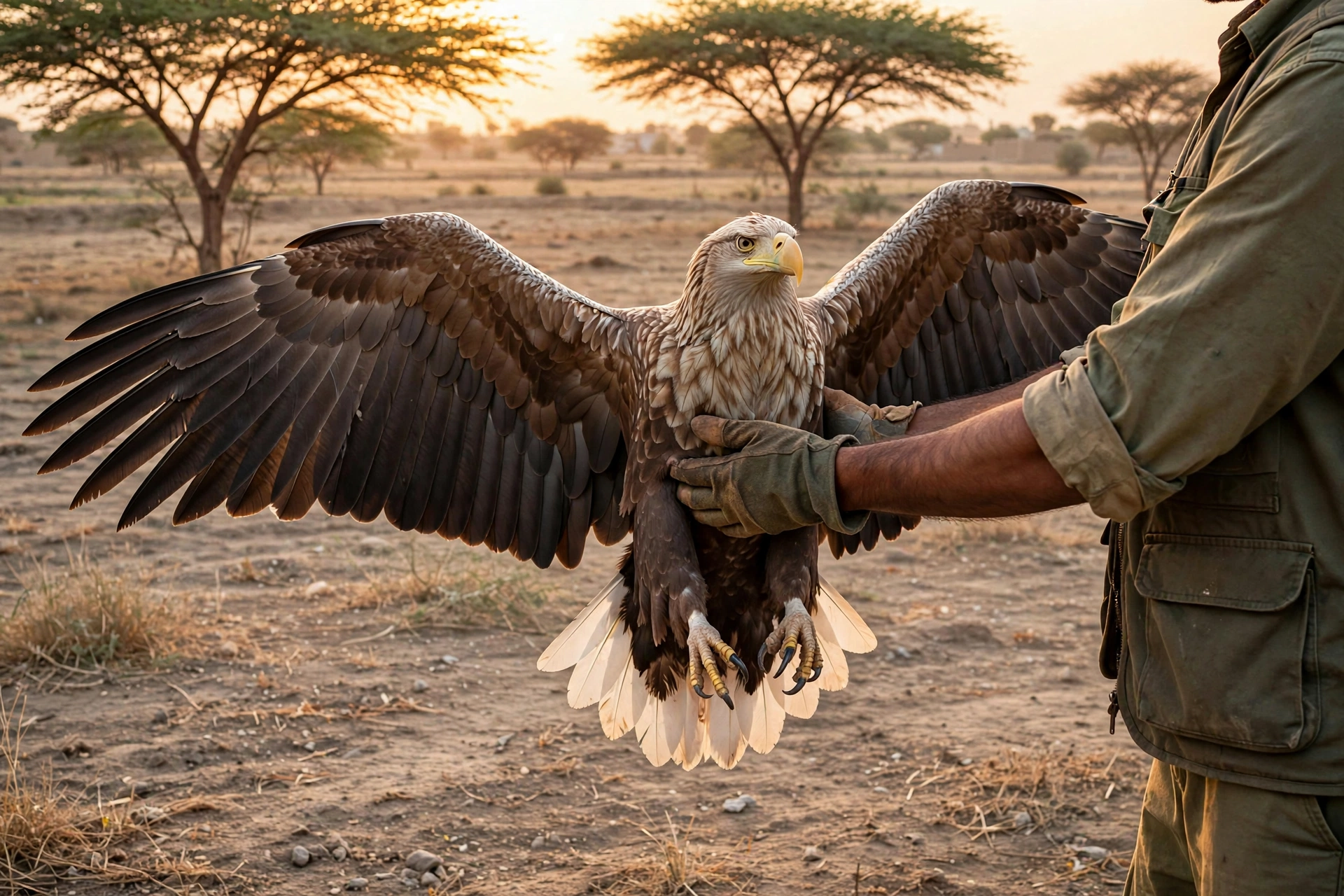
A rare eagle rescued in Sindh has drawn fresh attention to the illegal capture of birds of prey in Pakistan, after rescuers said the bird was found in Sukkur with its eyes reportedly sewn shut and its wings clipped. The case involves a white-tailed sea eagle, a large raptor that is only rarely recorded in the country, and its condition has raised urgent questions about how it was kept and whether it will ever be able to fly again.
According to the account shared by the wildlife rescue team, the bird was taken from captivity in Sukkur and the rescue took place in November 2025. The team was led by Haroon Yousafzai, who described a bird that had allegedly been held for use in hunting. That detail is central to the concern around this rare eagle rescued in Sindh, because a bird treated in this way can suffer severe stress, injury and long-term damage even after it is freed.
The story was reported on 5 October, bringing the earlier rescue back into public discussion. While many facts about the journey of the eagle remain unclear, the outline is enough to make wildlife observers take notice. A species more closely associated with northern coasts and cold wetlands had appeared in Sindh, in human hands, and in a state that suggested it had been prevented from seeing and flying.
A Rare Visitor Far From Its Usual Range
The white-tailed sea eagle is among the most imposing birds of prey found across Europe and Asia. Its usual range stretches across colder regions from Scandinavia towards Siberia, where it hunts over coasts, lakes and wide wetlands. It is a powerful bird, built for soaring over open water and taking fish and other prey, so its presence in southern Pakistan stands out immediately to anyone familiar with its normal distribution.
In Pakistan the species is described as a rare winter visitor rather than a regular part of the local birdlife. The report cited only around 12 to 15 documented sightings, or possibly fewer, during the whole of the 20th century, while also noting that this historical figure has not been independently verified. Even allowing for uncertainty in older records, that context explains why a single bird in Sukkur was treated as an exceptional find by wildlife watchers.
How this individual reached Sindh is still not known. Ideas that extreme weather or tensions in the Middle East may have pushed it away from a more familiar route remain speculative, and there is no firm evidence in the report to settle that question. For now, the safest conclusion is simply that a very uncommon visitor arrived, or was brought, far from the landscapes where it is normally expected to survive and hunt.
Held For Hunting, With Its Sight And Flight Taken Away
The most disturbing part of the case is the condition in which the eagle was reportedly found. Its eyes were said to have been sewn shut and its wing feathers clipped, steps that would stop it escaping and make it easier to control in captivity. The rescue team linked that treatment to an alleged plan to use the bird for hunting, a practice that puts a wild raptor under intense human control and removes the freedoms it needs.
For a bird that depends on keen eyesight and strong flight, both actions carry serious risks. Sewing the eyes can cause pain, infection and lasting damage to vision, while clipping wings removes the ability to exercise, escape danger and behave naturally. The rare eagle rescued in Sindh therefore became more than a curiosity about an unusual sighting; it became a stark example of the harm that illegal keeping and trade can do to protected wildlife.
- Species: white-tailed sea eagle
- Rescue location: Sukkur, Sindh
- Rescue team lead: Haroon Yousafzai
- Reported condition: eyes sewn shut and wings clipped
- Current status: sight and release prospects remain unclear
What Happens Next Is Still Unclear
At present it is not clear whether the eagle’s sight was restored or whether it can eventually be released back into the wild. Those unanswered questions matter, because a successful rescue is only the first step for a bird that has been held in captivity. It would need careful veterinary checks, time to recover and a full assessment of its vision, feathers and strength before any release could be considered safe for the bird.
Until more is confirmed, the Sukkur case stands as both a remarkable wildlife record and a warning. Protecting a rare visitor means more than moving it away from captivity; it means giving it expert care and making sure other birds do not face the same treatment. For readers following the rare eagle rescued in Sindh, the next update on its recovery will be the one that truly counts.
Source: ProPakistani https://propakistani.pk/2026/10/05/extremely-rare-eagle-rescued-in-sindh-after-its-eyes-were-sewn-shut/