Pakistan Targets $723 Million From State Asset Sales by June 2027
By Bilal Ahmed — 8 November 2026 Pakistan expects to raise up to $723 million from the privatisation of state-owned businesses and airport operations by June 2027, Privatisation Adviser Muhammad Ali has told Arab News. The target covers at least six transactions this fiscal year: the sale of three electricity distribution companies, two state-owned financial…
By Bilal Ahmed — 8 November 2026
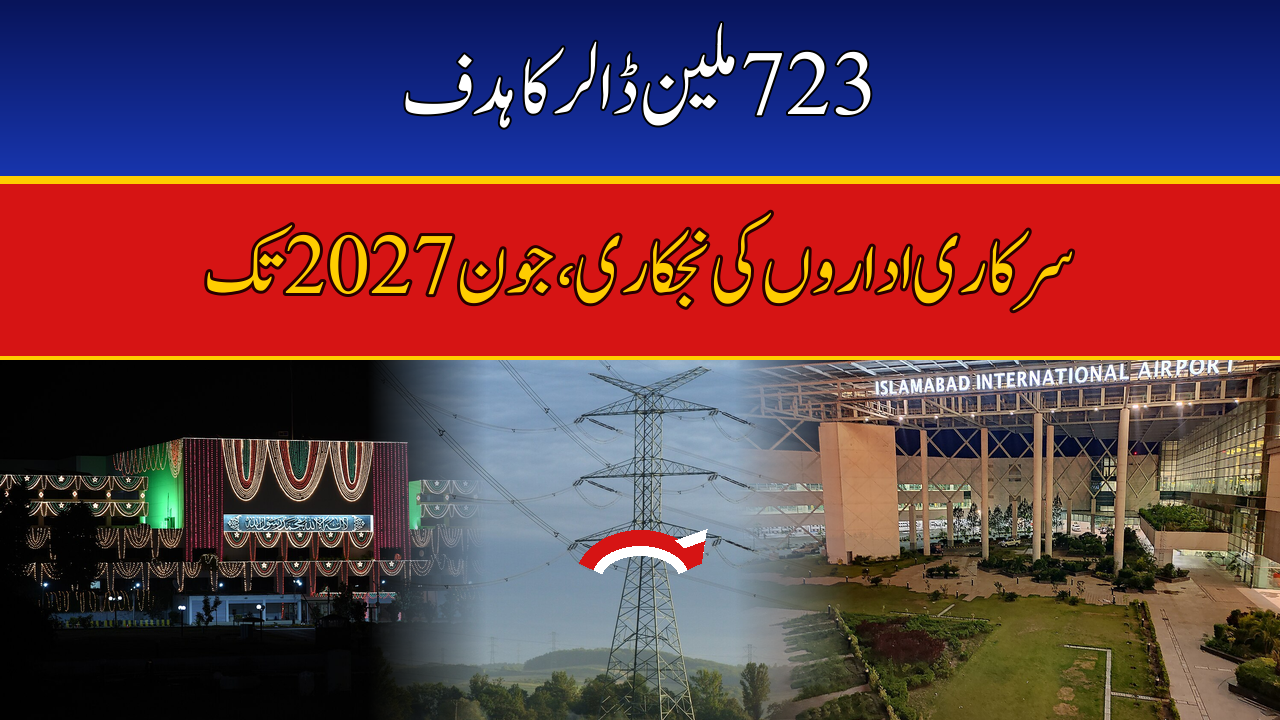
Pakistan expects to raise up to $723 million from the privatisation of state-owned businesses and airport operations by June 2027, Privatisation Adviser Muhammad Ali has told Arab News. The target covers at least six transactions this fiscal year: the sale of three electricity distribution companies, two state-owned financial institutions, and a long-term agreement to hand over operations at Islamabad International Airport. The sales are part of the reform programme Pakistan agreed under its $7 billion International Monetary Fund (IMF) package, and the government says the aim is to attract private investment, cut the financial burden on the national exchequer, and improve public services.
For ordinary Pakistanis, this is not just a headline number about government finances. Three of the six transactions are the power companies that supply electricity to homes and businesses in Faisalabad, Gujranwala and Islamabad. The airport deal concerns the day-to-day running of the country’s main international gateway in the capital. Whether the target is met will depend on the first sales — the three power distributors, expected in the first quarter of 2027 — closing on time.
Key Facts: Pakistan’s $723 million privatisation target
| Detail | Fact |
|---|---|
| Target for this fiscal year | Up to $723 million from state asset sales by June 2027 |
| Range given by the government | Rs150–200 billion, or $542–723 million, this fiscal year |
| Announced by | Muhammad Ali, Adviser to the Prime Minister on Privatisation and Chairman of the Privatisation Commission, in an interview with Arab News published on 7 November 2026 |
| Transactions targeted | At least six — three electricity distribution companies, two financial institutions, and a long-term agreement for Islamabad International Airport operations |
| Power companies for sale | Faisalabad Electric Supply Company (FESCO), Gujranwala Electric Power Company (GEPCO), Islamabad Electric Supply Company (IESCO) |
| Financial institutions for sale | Zarai Taraqiati Bank Limited (ZTBL) and House Building Finance Corporation (HBFC) |
| Airport transaction | Long-term agreement to hand over operations at Islamabad International Airport |
| First sales expected | The three power distributors are to go under the hammer in the first quarter of 2027, with due diligence underway |
| Programme behind the sales | Pakistan’s $7 billion IMF Extended Fund Facility, signed in 2024 |
| Stated aims | Attract private investment, reduce the financial burden on the national exchequer, improve public services |
What Muhammad Ali actually said
Speaking to Arab News on Friday, 6 November, Muhammad Ali put the figure in plain terms: “Hopefully, we are looking at around Rs150-200 billion [$542-723 million] this fiscal year.” The interview was published on Saturday, 7 November 2026. The wording matters: $723 million is the top of a range, not a fixed promise. The lower end is Rs150 billion, about $542 million — so the government expects somewhere between roughly half a billion and three-quarters of a billion dollars.
Ali, who is both the prime minister’s adviser on privatisation and the chairman of the Privatisation Commission, said the government was targeting at least six transactions — a deliberately broad programme spanning the power sector, banking and housing finance, and airport operations, rather than betting the whole target on a single big sale.
The six transactions: what is actually being sold
Half of the programme is the power sector. The three distribution companies — FESCO in Faisalabad, GEPCO in Gujranwala and IESCO in Islamabad — are the first to be offered. These are the companies that buy electricity in bulk and sell it on to households, shops and factories in their regions, and they are also where line losses and recovery problems show up first. Selling them is the most direct way to bring private management into the distribution end of the power chain.
The other two sales are financial institutions. Zarai Taraqiati Bank Limited, better known as ZTBL, is the agriculture-focused lender that finances farmers and rural businesses, while the House Building Finance Corporation finances home purchases and construction. Both are specialist state-owned lenders rather than mainstream commercial banks. For customers, the practical question is whether lending continues and improves; the government says the aim of the sales is to improve public services, and that will be the test that matters to borrowers.
The sixth transaction is different. At Islamabad International Airport, the government is not selling the airport but offering a long-term agreement to hand over its operations to a private operator. The state keeps ownership, while a private company runs the terminal, services and commercial operations under a concession.
The Rs150–200 billion range, explained
One figure in the announcement deserves a closer look, because it is easy to misread. The government is not saying it will collect exactly $723 million. It hopes to raise around Rs150–200 billion this fiscal year, which Arab News converted into $542–723 million. The $723 million is the top end; the bottom end, $542 million, is what the target looks like if the programme lands at the lower end of the range.
That matters for two reasons. First, it sets honest expectations: the programme could fall short of the headline number and still be a substantial result. Second, it tells you the government is pricing its own target with a margin for the things that can go wrong in any sale — a buyer pulling out, due diligence running late, or a transaction slipping into the next fiscal year.
The deadline is part of the story too. June 2027 is the end of the current fiscal year, so money raised before then counts towards this year’s fiscal effort and money raised after it does not — which puts pressure on closing the power distributors early in 2027.
The power distributors go first
The three power companies are the most advanced part of the programme. The Express Tribune reported on 1 November 2026 that FESCO, GEPCO and IESCO are to go under the hammer in the first quarter of 2027, with due diligence already underway. Potential investors have asked for more time, which is normal for sales of this size, but it also shows why the timetable is tight.
The first quarter of 2027 gives the government roughly four to five months to finish due diligence, invite bids and close the sales. That is doable, but it leaves little room for delay. The sequencing is sensible: power distribution is where the government believes private management can make the fastest difference, and three early sales would build momentum for the rest of the programme.
For consumers in Faisalabad, Gujranwala and Islamabad, the sale of their local distributor is the part of this story that could touch daily life most directly. The companies set no tariffs on their own — electricity prices are regulated — but they keep the lights on, fix faults, read meters and collect bills. A new private owner would be judged on whether the power stays on more reliably and whether billing and customer service improve.
The IMF link: why the sales are happening now
The privatisation drive is part of the reforms Pakistan agreed under its $7 billion IMF programme, the Extended Fund Facility signed in 2024. Selling state-owned enterprises is one of the programme’s structural benchmarks: the Fund has long argued that loss-making or underperforming state companies drain the budget, and the government has committed to reducing that burden.
That context explains the timing. IMF programmes run on review schedules, and progress on structural reforms — including privatisation — is part of what the Fund assesses at each review. A credible set of completed sales by June 2027 would show the programme is moving, while a stalled pipeline would raise questions. For the latest on the IMF programme itself, see our report on the IMF talks and the expected $1.2 billion release.
Pakistan’s engagement with its international lenders has been active on several fronts this year — the country was recently elected to chair the governing council of the Borrowers’ Platform, a forum for borrowing countries. The privatisation programme sits inside that wider effort to stabilise the economy and rebuild credibility with creditors.
How this fits the bigger privatisation picture
The $723 million target does not stand alone. In October, Finance Minister Muhammad Aurangzeb said five or six entities could raise more than $1 billion this fiscal year, with around a dozen entities in the pipeline, including the power distributors and airport outsourcing. That estimate is larger than the privatisation adviser’s range: the finance minister was describing the potential of the pipeline, while the privatisation adviser was describing the transactions the government is actively targeting. The $723 million figure is the one tied to specific, named sales.
The most important recent precedent is Pakistan International Airlines, privatised last year. That sale showed the government is willing to move on a large, politically sensitive state enterprise — and how long these processes can take. The current programme is broader but made of smaller pieces, which may make it easier to complete. For background on the finance minister’s earlier estimate, read our report on the plan to raise more than $1 billion from five or six entities.
What this means for ordinary Pakistanis
The honest answer is that the effects will be indirect at first, and direct only later. The money raised goes to the government, not to households, and its immediate value is fiscal: it reduces the amount the state has to spend propping up state-owned companies, and it brings in private capital. If the sales succeed, the benefit shows up over time as a lighter burden on the budget.
The direct effects depend on the asset. In the power sector, a well-run private distributor could mean fewer outages, faster fault repairs and fairer billing — but also tougher collection from customers who do not pay, which is part of why distribution companies lose money. At Islamabad airport, a private operator could mean a better-run terminal, which passengers would notice quickly. At the two banks, the test will be whether lending becomes easier and cheaper for farmers and homebuyers, or tighter and more expensive.
There is also a risk worth stating plainly. Privatisation only works if the sales are transparent, the buyers are serious, and the terms protect consumers. A rushed sale to the wrong buyer, or a sale with weak conditions, can leave the public worse off. The government’s stated aims — private investment, less burden on the exchequer, better services — are the right aims, but they are aims, not guarantees.
What to watch next
The first real test comes in the first quarter of 2027, when the three power distributors are due to go under the hammer. Watch for the completion of due diligence, the names of the bidders, and whether the sales close on schedule. If all three close early in the year, the $723 million target will look realistic. If they slip, the government will need the bank sales and the airport concession to carry more of the weight.
The second test is the airport agreement. A long-term concession is a complex negotiation, and the terms — how long it lasts, what the operator must invest — will matter as much as the headline value. The third test is the simplest: whether the money actually arrives before June 2027. Announcements are not receipts, and the target will only be met when the transactions close and the funds are in.
Frequently Asked Questions
How much does Pakistan expect to raise from state asset sales by June 2027?
Up to $723 million. Privatisation Adviser Muhammad Ali said the government is looking at around Rs150–200 billion, or $542–723 million, this fiscal year. The $723 million figure is the top of that range, not a fixed guarantee.
Which state-owned companies are being sold?
At least six transactions are targeted: three electricity distribution companies — FESCO, GEPCO and IESCO — two financial institutions — Zarai Taraqiati Bank Limited (ZTBL) and House Building Finance Corporation (HBFC) — plus a long-term agreement to hand over operations at Islamabad International Airport.
When will the power companies be sold?
The three distribution companies — FESCO, GEPCO and IESCO — are to go under the hammer in the first quarter of 2027, according to the Express Tribune on 1 November 2026. Due diligence is underway and potential investors have asked for more time.
Is Islamabad airport being sold?
No, the airport itself is not being sold. The government plans a long-term agreement to hand over the airport’s operations to a private operator, while the state keeps ownership of the asset. Airport outsourcing was already part of the privatisation pipeline named in October.
Why is Pakistan selling state-owned companies now?
The sales are part of reforms under Pakistan’s $7 billion IMF Extended Fund Facility, signed in 2024. The government says the aim is to attract private investment, reduce the financial burden on the national exchequer, and improve public services.
How does this compare with the $1 billion figure mentioned in October?
Finance Minister Muhammad Aurangzeb said in October that five or six entities could raise more than $1 billion this fiscal year, with around a dozen entities in the pipeline. The privatisation adviser’s $723 million figure is more conservative and is tied to six named transactions, while the minister’s estimate described the wider pipeline.
What does privatisation mean for electricity consumers?
The three distribution companies supply power in Faisalabad, Gujranwala and Islamabad. A private owner would take over running the network, fixing faults and collecting bills, but electricity tariffs remain regulated. The practical test will be whether reliability and customer service improve after the sale.