Getz Pharma’s Astola Facility Wins WHO Prequalification — Pakistan’s Second
By Bilal Ahmed | 8 November 2026 | Updated 8 November 2026 Getz Pharma’s Astola manufacturing facility in Karachi has won World Health Organization (WHO) prequalification, granted on 2 November 2026, making it the company’s second production site to earn the global quality stamp. Executive Chairman Khalid Mahmood announced the achievement on Saturday night, 7…
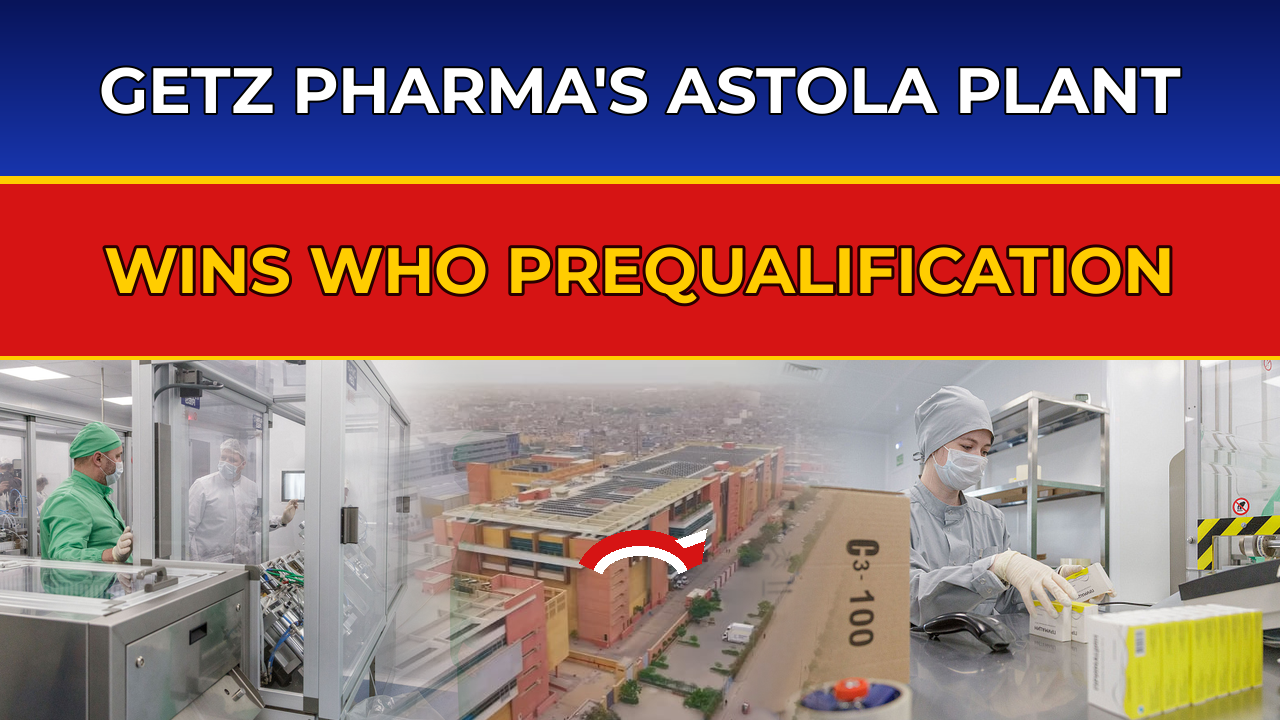
Getz Pharma’s Astola manufacturing facility in Karachi has won World Health Organization (WHO) prequalification, granted on 2 November 2026, making it the company’s second production site to earn the global quality stamp. Executive Chairman Khalid Mahmood announced the achievement on Saturday night, 7 November, at an event held at the Astola facility itself, attended by hundreds of physicians, surgeons and healthcare professionals. The first Getz Pharma facility was prequalified by the WHO back in 2017, so this second recognition puts the company in a league of its own in Pakistan — no other Pakistani drugmaker holds WHO prequalification for two separate manufacturing sites.
For ordinary Pakistanis, the news matters more than it might look at first glance. WHO prequalification is the closest thing the global medicines trade has to a seal of approval: it tells buyers, regulators and aid agencies around the world that a factory’s medicines are made to the same standards as those produced anywhere else on earth. When a Karachi-made tablet carries that stamp, it can compete for orders that would otherwise go to India, China or Europe — and every export order is foreign exchange Pakistan badly needs.
What happened on Saturday night
Khalid Mahmood chose the Astola facility itself as the stage for the announcement, addressing a hall full of the doctors and surgeons who prescribe Getz Pharma medicines every day. He described the prequalification as a major milestone not just for the company but for Pakistan’s pharmaceutical industry as a whole, saying it would strengthen international confidence in Pakistani medicines and open new doors for exports.
“Pakistan has the talent, expertise and industrial capacity to manufacture medicines that meet international standards,” he told the gathering, adding that greater international acceptance of Pakistani pharmaceutical products could strengthen the country’s image as a reliable manufacturing destination. It was a deliberately national framing: the chairman was not just celebrating a company certificate, he was pitching Pakistan as a place the world can buy medicines from.
Deputy Managing Director Zeeshan Ahmed struck a similar note, saying continued investment in modern manufacturing technology, quality assurance systems and skilled professionals was essential for improving Pakistan’s competitiveness in the global pharmaceutical market. Bariatric surgeon Dr Fahad Mirza and members of the Pakistan Aesthetic Surgery Society were among those who congratulated the company’s leadership on the night, saying achievements like this build confidence in locally manufactured medicines.
Key facts: Getz Pharma Astola WHO prequalification
| Detail | Fact |
|---|---|
| Facility | Astola manufacturing facility, Karachi |
| Recognition | WHO prequalification |
| Date granted | 2 November 2026 |
| Announced | 7 November 2026 by Executive Chairman Khalid Mahmood |
| Company’s WHO-prequalified sites | 2 (first facility prequalified in 2017) |
| Astola facility built | 12 years to design and complete; operational since 2022 |
| Scale | Six manufacturing facilities for different therapeutic categories |
| Company founded | 1995, headquartered in Karachi |
| Employees | 5,001–10,000 |
| Export reach | More than 45 countries; around 50% of Pakistan’s total pharmaceutical exports |
| Other approvals | PIC/S member countries and the Eurasian Economic Union (EAEU) |
Inside the Astola facility: 12 years in the making
Astola was not built in a hurry. According to Khalid Mahmood, the facility took 12 years to design and complete before it became operational in 2022, and it comprises six manufacturing facilities catering to different therapeutic categories. The plant is named after Astola Island, the protected island off Pakistan’s Makran coast, and it was designed from the start to meet WHO standards — a bet that has now paid off with formal prequalification.
That long build explains why the announcement felt like a payoff rather than a surprise. Getz Pharma has been working towards this for the better part of a decade: its first facility went through the WHO’s inspection process in the mid-2010s — including a detailed audit in August 2017 — before winning prequalification the same year, when its tuberculosis medicine moxifloxacin became the first Pakistani drug to be accredited by the WHO. Astola is the second chapter of the same story, on a much bigger scale.
The facility also carries a green credential that sets it apart in the region. Astola is the first pharmaceutical facility in South Asia to receive LEED Platinum certification from the US Green Building Council, a recognition of its energy-efficient and environmentally sustainable design. For buyers in Europe and other strictly regulated markets, that kind of credential increasingly matters alongside the medicine itself.
What WHO prequalification actually means
It is worth being precise about what has happened here, because “WHO prequalification” is often misunderstood. The WHO does not manufacture or sell medicines. Its prequalification programme inspects factories, laboratories and quality systems in detail — manufacturing processes, good manufacturing practices, quality control, quality assurance and safety standards — and only then lists the site’s products as meeting international requirements.
Khalid Mahmood made exactly this point on Saturday night: the value of the recognition is that an international regulatory body has independently endorsed the company’s quality control, manufacturing processes and safety standards. That endorsement is what unlocks the next level of business. United Nations agencies such as UNICEF and the Global Fund buy medicines for distribution across the developing world, and they buy from WHO-prequalified sources. When Getz Pharma’s first facility was prequalified in 2017, its moxifloxacin tablets became eligible for sale to world bodies such as UNICEF — the same door now opens wider with a second prequalified site.
There is also a domestic dividend. Pakistani patients and doctors have long had to wrestle with questions about the quality of locally made medicines. A WHO stamp on a second major facility is a practical answer: the same production lines that supply Karachi’s pharmacies have passed the same inspections as factories supplying Europe.
Why this matters for Pakistan’s exports
Getz Pharma is Pakistan’s largest pharmaceutical company, and its export numbers show why this story is about more than one firm. Deputy Managing Director Zeeshan Ahmed said the company exports medicines to more than 45 countries and accounts for approximately 50 percent of Pakistan’s total pharmaceutical exports. In other words, roughly half of every rupee Pakistan earns from selling medicines abroad comes from this one company — so anything that widens its access to strictly regulated markets moves the national export figure.
That access is the real prize. Many countries with tough drug regulators will only register medicines made at WHO-prequalified plants. With two such sites, Getz Pharma can now bid for contracts and registrations that were previously out of reach, particularly in markets with stringent regulatory requirements. Zeeshan Ahmed said the latest prequalification would help expand access to international markets, and that is not corporate boilerplate: it is the difference between selling to 45 countries and selling to the hardest-to-enter ones among them.
The timing helps too. Pakistani exporters have been stacking up wins this year — from Pakistan agreeing to export 70,000 more tonnes of rice to Malaysia to Pakistan’s tech industry winning 11 awards at ASOCIO in Jakarta — and the economy has steadied after the IMF staff-level agreement for $1.2 billion in October 2026. A WHO-prequalified second plant fits that pattern: Pakistani firms proving they can meet world standards and sell on them.
Getz Pharma at a glance
Founded in 1995 and headquartered in Karachi, Getz Pharma has grown from a local manufacturer into Pakistan’s biggest pharmaceutical exporter, employing between 5,001 and 10,000 people. Its portfolio runs to more than 300 products, according to the Pakistan Credit Rating Agency, with a presence in over 45 countries.
The company says it is Pakistan’s only pharmaceutical company to have achieved both WHO prequalification and recognition under the Pharmaceutical Inspection Co-operation Scheme (PIC/S), the grouping of medicines regulators whose members inspect and approve each other’s factories. Its own profile adds that it is the first pharmaceutical company in Pakistan whose manufacturing facility was prequalified by the WHO in Geneva and approved by PIC/S member countries and the Eurasian Economic Union (EAEU). Put together, that is a regulatory record no other Pakistani drugmaker can match — and now it covers two facilities instead of one.
What happens next
The immediate next step is commercial rather than ceremonial: registering Astola-made products in new markets and bidding for institutional supply contracts that require WHO-prequalified manufacturing. That process takes months, not days, as each importing country’s regulator still has to approve individual products. But the hardest part — the factory inspection — is done.
For the wider industry, the question is whether other Pakistani companies follow. Pakistan has around 600 drug manufacturing units, yet until Getz Pharma’s first prequalification in 2017, not a single manufacturing facility in the country was accredited by the WHO. Nine years later, the count of prequalified sites held by one company has doubled to two. If the export returns prove as strong as the company expects, competitors will have a powerful reason to invest in the same standard — and that, more than any single certificate, is how a national industry moves up.
For now, the milestone belongs to Getz Pharma and to the team at Astola. Twelve years of design and construction, four years of operation, and one WHO inspection later, Karachi has a second factory the world is willing to buy from. That is good news for the company, good news for Pakistan’s export earnings, and — since better-regulated factories make better medicines — good news for the millions of patients who depend on safe, effective and affordable drugs.
Frequently asked questions
What is WHO prequalification?
WHO prequalification is the World Health Organization’s programme for assessing whether a medicine, vaccine or manufacturing site meets international quality, safety and efficacy standards. WHO teams inspect the factory’s manufacturing processes, quality control laboratories, good manufacturing practices and safety systems. A site that passes is listed as prequalified, which signals to buyers and regulators worldwide that its products are made to global standards.
When did Getz Pharma’s Astola facility get WHO prequalification?
The Astola manufacturing facility in Karachi received WHO prequalification on 2 November 2026. The achievement was publicly announced by Executive Chairman Khalid Mahmood on Saturday night, 7 November 2026, at an event at the facility attended by hundreds of physicians, surgeons and healthcare professionals.
How many WHO-prequalified facilities does Getz Pharma have now?
Two. The Astola facility is the company’s second WHO-prequalified production site. Its first manufacturing facility was prequalified by the WHO in 2017, when its tuberculosis medicine moxifloxacin became the first Pakistani drug to be accredited by the WHO.
What is the Astola facility and where is it?
Astola is Getz Pharma’s large manufacturing complex in Karachi, named after Astola Island off Pakistan’s Makran coast. According to the company, it took 12 years to design and complete, became operational in 2022, and comprises six manufacturing facilities catering to different therapeutic categories. It is also the first pharmaceutical facility in South Asia to earn LEED Platinum certification from the US Green Building Council.
Why does WHO prequalification matter for Pakistan?
It strengthens international confidence in Pakistani medicines and opens export markets that only accept drugs from WHO-prequalified plants. Getz Pharma already accounts for around 50 percent of Pakistan’s total pharmaceutical exports and sells to more than 45 countries, so wider market access directly supports national export earnings. It also reassures Pakistani patients and doctors that locally made medicines meet the same standards as those made anywhere in the world.
Does WHO prequalification let Getz Pharma sell to the United Nations?
Yes, in practical terms. UN agencies such as UNICEF and the Global Fund procure medicines from WHO-prequalified sources. When Getz Pharma’s first facility was prequalified in 2017, its moxifloxacin tablets became eligible for sale to world bodies such as UNICEF. The second prequalified site widens the range of products the company can offer to those institutional buyers.
Is Getz Pharma the only Pakistani company with WHO prequalification?
Getz Pharma was the first Pakistani pharmaceutical company whose manufacturing facility was prequalified by the WHO, and the company says it is Pakistan’s only drugmaker to hold both WHO prequalification and PIC/S recognition. Its facilities are also approved by PIC/S member countries and the Eurasian Economic Union (EAEU). No other Pakistani company has announced WHO prequalification for a manufacturing site.