Petrol Price in Pakistan Drops to Rs346, Diesel to Rs378 From November 7
By Bilal Ahmed | Updated: November 7, 2026 Petrol in Pakistan now costs Rs346 per litre and high-speed diesel costs Rs378 per litre, after the government cut petrol by Rs6.59 and diesel by Rs4.25 in a notification issued by the Oil and Gas Regulatory Authority (OGRA) on Friday, November 6. The new rates take effect…
By Bilal Ahmed | Updated: November 7, 2026
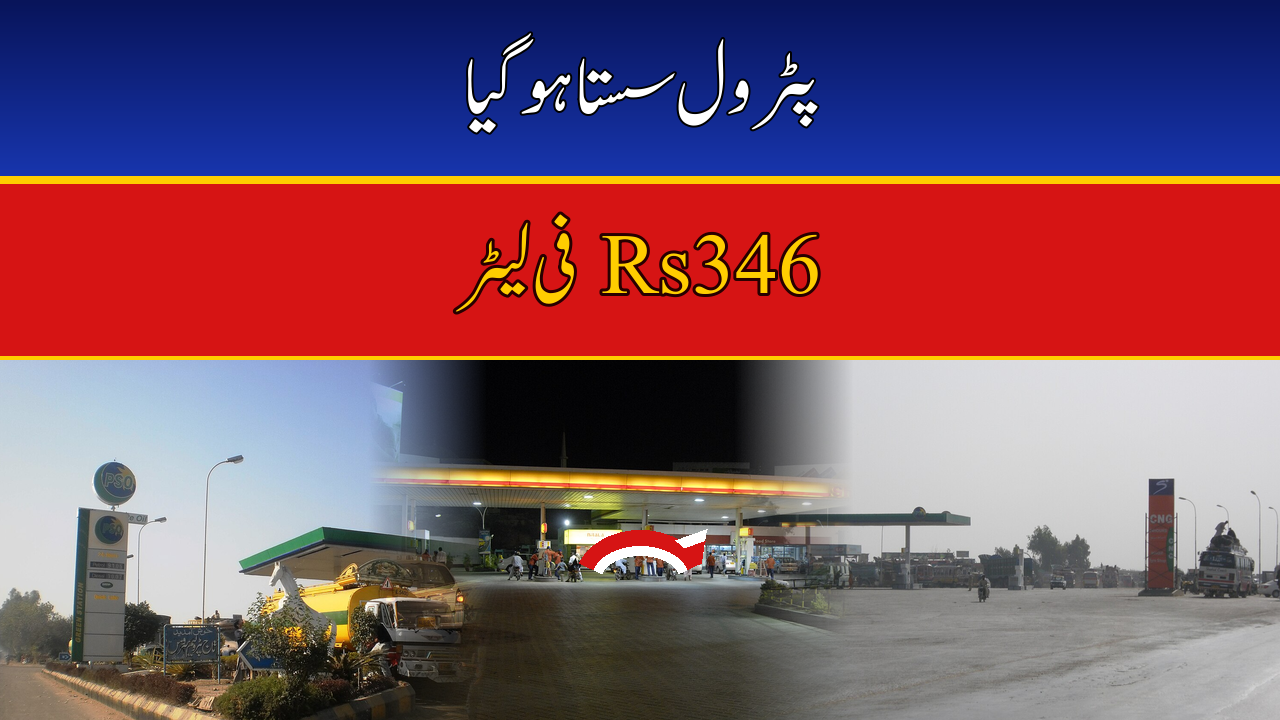
Petrol in Pakistan now costs Rs346 per litre and high-speed diesel costs Rs378 per litre, after the government cut petrol by Rs6.59 and diesel by Rs4.25 in a notification issued by the Oil and Gas Regulatory Authority (OGRA) on Friday, November 6. The new rates take effect from Saturday, November 7, and will stay in place until Tuesday, November 10, because Monday, November 9, is a public holiday for Iqbal Day. It is the fifth consecutive cut in fuel prices — and the third in three days.
If you filled up yesterday, you paid Rs352.59 a litre for petrol; from today it is Rs346, and diesel is Rs378 instead of Rs382.25. On one fill-up the difference is modest — but after five straight cuts, the weekly fuel bill is noticeably lighter than a month ago.
| Key fact | Detail |
|---|---|
| New petrol price | Rs346 per litre (down Rs6.59 from Rs352.59) |
| New diesel (HSD) price | Rs378 per litre (down Rs4.25 from Rs382.25) |
| Effective dates | November 7–10, 2026 (Saturday to Tuesday) |
| Why four days, not one | November 9 is a public holiday (Iqbal Day), so Friday’s rates stand through Tuesday |
| Announced by | OGRA notification, Friday, November 6, 2026 |
| Consecutive cuts | Fifth in a row, according to Dawn |
| Taxes and duties | Rs114 per litre on petrol; Rs100 per litre on diesel (unchanged) |
| Petroleum Minister | Ali Pervaiz Malik |
| Pricing system | Daily price review, based on international oil prices |
What changed at the pump today
What makes this cut different from the fortnightly revisions Pakistani motorists were used to for years is the speed: this is the third price change in three days. Under the daily price-review system, international oil price movements now reach the pump almost immediately — downwards as well as upwards.
OGRA now publishes daily prices on its own website, so anyone can check the official rate before heading to the pump. Under the old fortnightly system a global price fall took two weeks to reach a filling station; now the lag is measured in hours.
Yesterday’s rates — petrol at Rs352.59, diesel at Rs382.25 — lasted barely a day. See our report on the November 6 petrol price of Rs352.59 for the full picture of the previous cut.
A week of cuts: three days, three reductions
Here is how petrol and diesel have moved this week, day by day:
| Date | Petrol (Rs/litre) | Petrol cut | Diesel (Rs/litre) | Diesel cut |
|---|---|---|---|---|
| November 4 | Rs369.06 | Rs5.45 | Rs391.52 | Rs3.68 |
| November 5 | Rs362.00 | Rs7.06 | Rs387.81 | Rs3.71 |
| November 6 | Rs352.59 | Rs9.41 | Rs382.25 | Rs5.56 |
| November 7 | Rs346.00 | Rs6.59 | Rs378.00 | Rs4.25 |
A litre of petrol that cost Rs369.06 on November 4 costs Rs346 today — Rs23.06 less in four days. Diesel has fallen Rs13.52 a litre over the same stretch, from Rs391.52 to Rs378.
For the longer trend in fuel prices, including every revision this year, see our petrol price in Pakistan pillar page.
Why are prices falling every day now?
Two things are happening at once: global oil prices are easing, and Pakistan’s pricing mechanism has changed so that the benefit reaches consumers faster.
The mechanism changed in stages this year. After the United States–Iran war broke out on February 28, the government switched from fortnightly revisions to a weekly system in early March. On July 17, Petroleum Minister Ali Pervaiz Malik announced daily price fixing, and the federal cabinet formally approved the revised mechanism on October 30. OGRA now sets the ex-depot price every day.
Under the revised formula, the import price is worked out from the actual cost of the relevant PSO cargo, and refinery charges are temporarily fixed at pre-war March 7, 2026 levels for 30 days.
A second, quieter reason sits behind this week’s cuts. Under an arrangement announced on Monday for 30 days, oil refineries are contributing to the petroleum levy by bearing a cumulative impact of Rs15 billion, which Dawn reports allows a Rs14.71 reduction in the petrol price at the consumer end. The minister has said a similar arrangement is being explored for liquefied petroleum gas (LPG).
What it means for your pocket
Petrol is mainly used in private transport, small vehicles, rickshaws and two-wheelers, so this cut lands directly on the daily commute of middle and lower-middle-class households. Diesel powers heavy transport, power plants and large generators, so its cut feeds through to freight costs, bus fares and farm expenses.
In plain rupees: a motorbike with a 10-litre tank costs Rs65.90 less to fill than yesterday; a small car with a 30-litre tank saves Rs197.70; and a 50-litre diesel tank — the kind on a pickup or small truck — saves Rs212.50. Stacked on the November 5 and 6 cuts, that same 30-litre tank costs Rs691.80 less to fill today than it did on November 4.
Whether the relief reaches bus and truck fares is a separate question. Transporters have repeatedly warned that fare decisions follow fuel prices with a lag — and sometimes not at all. Our earlier report on the goods transporters’ fare-hike warning and strike threat explains why freight operators say their costs do not fall as fast as pump prices. For now, the saving sits with whoever pays at the pump.
The tax question: Rs114 a litre is still there
One number has not moved at all through this week’s cuts: the tax. The government still levies Rs114 per litre on petrol and Rs100 on diesel — roughly a third of every litre of petrol you buy is tax, not fuel.
This is the part of the price the daily mechanism does not touch: global oil can fall, but the pump price can only fall as far as the tax floor allows. The tax alone is more than two-fifths of the Rs266 petrol price of the first week of March.
How long will Rs346 last?
Under the daily review system, the honest answer is: until the next notification. Friday’s rates were set for November 7–10 specifically because November 9 is a public holiday, so no fresh notification is expected over the long weekend — Rs346 is the price for Saturday through Tuesday.
One note for careful readers: Dawn and Profit report the rates as effective November 7–10, while Geo News’ table lists November 7–9. The prices — Rs346 and Rs378 — are identical in every report; only the end date differs by a day.
After Tuesday, everything depends on the next OGRA notification and on international oil prices — the same daily mechanism that delivered three cuts in three days can deliver an increase just as quickly.
The bigger picture: still far below the April peak
Today’s prices are a long way from the worst of this year. Petrol peaked at Rs458.41 per litre on April 3, after climbing from Rs266 in the first week of March. Diesel peaked at Rs520.35 the same day, having risen from Rs281 after the US-Iran war began on February 28. Against those peaks, petrol is now Rs112.41 a litre cheaper and diesel Rs142.35 cheaper.
That April spike is why the government moved to daily pricing: a fortnightly system leaves consumers paying last month’s price for this month’s oil. The daily system is not a promise prices will keep falling — only that the pump will reflect the world market, up or down, within a day.
For motorists, the practical advice is simple: the Rs346 rate is locked in until November 10, so there is no rush to queue at the pump this weekend. Fill up as normal and check the next OGRA notification on Tuesday evening — if international prices keep easing, a sixth consecutive cut is possible.
Frequently asked questions
What is the petrol price in Pakistan today?
Petrol costs Rs346 per litre from November 7, 2026, after a cut of Rs6.59; high-speed diesel costs Rs378, after a cut of Rs4.25. The rates were announced by OGRA on Friday, November 6.
How long will the new petrol price of Rs346 stay in effect?
From Saturday, November 7, to Tuesday, November 10, 2026 — four days instead of the usual one, because Monday, November 9, is a public holiday for Iqbal Day. Geo News’ table lists the same rates as effective November 7–9; Dawn and Profit report November 7–10.
How much has petrol fallen this week?
Petrol has fallen Rs23.06 a litre in four days — Rs369.06 on November 4, Rs362 on November 5, Rs352.59 on November 6 and Rs346 on November 7. Diesel has fallen Rs13.52 over the same period, from Rs391.52 to Rs378.
Is this the fifth consecutive petrol price cut?
Yes. Dawn describes the November 7 cut as the fifth consecutive reduction. The November 5 cut was reported as the third in a row at the time, which fits the sequence through November 4, 5, 6 and 7.
How much tax is included in the petrol price?
Rs114 per litre on petrol and Rs100 per litre on diesel. Neither has changed during this week’s cuts, so about a third of the Rs346 pump price is tax.
Why are petrol prices changing every day now?
Pakistan moved to a daily fuel price review system in July 2026, replacing weekly revisions in place since early March. OGRA now fixes the ex-depot price each day from international oil prices and PSO cargo costs, so global changes reach the pump within a day. The cabinet formally approved the revised mechanism on October 30.
Will bus and truck fares come down after the diesel cut?
Not automatically. Fare decisions have historically lagged behind pump prices, and whether the Rs4.25 diesel cut reaches passengers depends on transporters and provincial fare regulators, not on the OGRA notification alone.