Goods Transporters Announce 5% Fare Hike After Fuel Price Surge, Warn of Nationwide Strike
Goods transporters across Pakistan have announced a further 5% increase in freight fares, blaming the repeated fuel price hikes for making current rates unworkable. The All Pakistan Goods Transport Ittehad made the announcement on Saturday, October 10, and warned that a nationwide strike could resume next week if the government fails to honour the commitments…
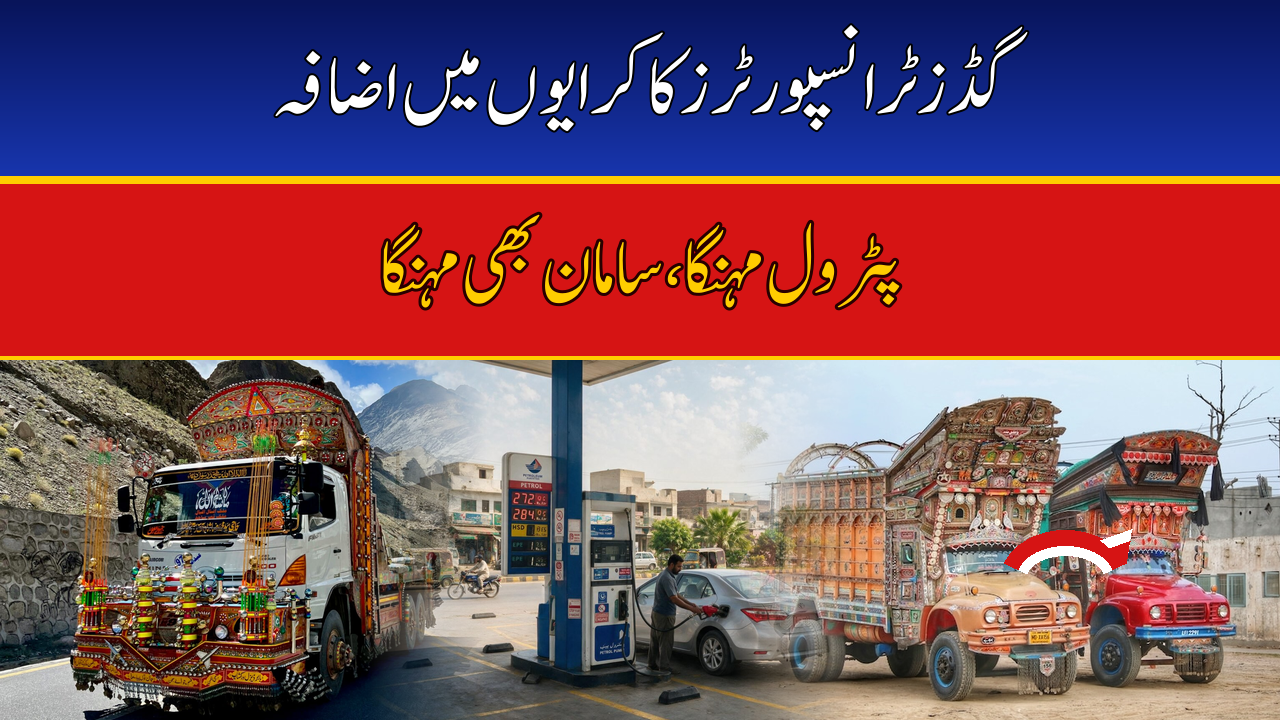
Goods transporters across Pakistan have announced a further 5% increase in freight fares, blaming the repeated fuel price hikes for making current rates unworkable. The All Pakistan Goods Transport Ittehad made the announcement on Saturday, October 10, and warned that a nationwide strike could resume next week if the government fails to honour the commitments it made to transporters earlier.
For ordinary Pakistanis, the development matters for a simple reason: when freight costs rise, the prices of everyday goods — from vegetables and flour to construction material — usually follow within days.
What the transporters announced
Addressing transporters, the association’s president Malik Shahzad Awan said the continuous rise in petroleum prices had left the goods transport sector with no choice but to pass the extra cost on. The latest 5% increase follows a 7% freight hike announced a day earlier, also attributed to the surge in diesel and petrol prices.
Awan said transporters had condemned the government’s decision to keep raising fuel prices, arguing that the repeated hikes were placing an additional burden not only on the transport sector but on consumers across the country.
Why fuel prices are the trigger
Fuel prices have moved almost every day in recent weeks. According to a weekly price tracking of October 5–9, petrol rose by a net Rs5.54 per litre across the week, reaching Rs398.30 per litre effective October 10–12, while high-speed diesel settled at Rs396.24 per litre. Thursday’s adjustment alone pushed petrol up Rs2.31 per litre in a single day.
Awan claimed diesel had risen by roughly Rs20 per litre and petrol by Rs24 per litre within just four days — a statement that reflects how transporters are experiencing the cumulative impact of back-to-back revisions. The transporters’ association has also criticised the daily revision of petroleum prices, calling the policy unacceptable and demanding its immediate withdrawal.
Notably, the petroleum minister had earlier assured transporters that fuel prices would not be revised on a daily basis — an assurance the association says has not been honoured. For the latest fuel rates, see our daily petrol price update.
The 40-day deadline — and the strike warning
Behind the fare announcement sits a bigger threat. Transporters had previously postponed a nationwide strike for 40 days on the basis of assurances given by the federal and provincial governments. That 40-day period expires next week.
Awan warned that if the agreements reached with the transporters are not implemented, goods transporters across the country will resume their nationwide strike — a move that would halt the movement of commercial goods and disrupt supply chains nationwide. An earlier ultimatum had already set October 10 as a possible start date for a wheel-jam strike, before the postponement was agreed.
What transporters are demanding
The association’s charter of demands includes:
- End daily fuel price revisions — return to a predictable pricing schedule
- Relief in taxes — reduce withholding tax, toll charges and other levies on the transport sector
- Implement past agreements — the commitments made during previous rounds of negotiations
- Release seized containers and vehicles — detained during earlier protests and sit-ins, with compensation for affected owners
Awan argued that if the government considers fuel price increases unavoidable, it should at least offset them by cutting the tax burden on transporters.
What this means for you
Freight charges feed directly into retail prices. Trucks and trailers move everything — wheat, cooking oil, cement, medicine — from production hubs and ports to wholesale markets and shops. When freight rises twice in a week, wholesalers and retailers rarely absorb the difference for long.
Economists and the transporters themselves agree on the likely outcome: further upward pressure on the prices of essential commodities in the coming weeks, on top of the inflation households are already facing. If the strike warning materialises, the disruption would be sharper — empty shelves in some markets and transport of goods brought to a standstill.
For context on why fuel costs keep climbing, read our explainer on how global oil tensions affect petrol prices in Pakistan.
Frequently asked questions
How much have goods transport fares increased?
The All Pakistan Goods Transport Ittehad announced a 7% freight increase on Friday, October 9, followed by a further 5% increase on Saturday, October 10 — both attributed to rising fuel prices.
Why are transporters threatening a strike?
Transporters postponed a nationwide strike for 40 days after receiving assurances from the federal and provincial governments. That period expires next week, and the association says it will resume the strike if its agreements and demands are not implemented.
What are the current petrol and diesel prices in Pakistan?
Effective October 10–12, petrol is at Rs398.30 per litre and high-speed diesel at Rs396.24 per litre. Prices are being revised frequently, so check our daily petrol price update for the latest rates.
How will the fare hike affect prices of everyday goods?
Higher freight charges raise the cost of moving food items, industrial products and other necessities from suppliers to markets. Transporters and analysts warn this could push up the prices of essential commodities in the coming weeks.
What relief are transporters asking from the government?
The association wants an end to daily fuel price revisions, plus reductions in withholding tax, toll charges and other taxes on the transport sector, along with implementation of earlier agreements.
TimelyUps will continue tracking this story. If the strike goes ahead next week, we will publish a detailed guide on which services and routes are affected.