JazzCash Raast QR Merchants Hit 1.9 Million as Cashless Pakistan Push Accelerates
By Fatima Raza | Updated: October 14, 2026 JazzCash has grown its network of interoperable Raast QR-enabled merchants to 1.9 million, nearly double the figure at the start of 2026, and now aims to cross 2 million by year-end. The milestone, announced by CEO Murtaza Ali at the IAMTN Annual Summit 2026, marks one of…
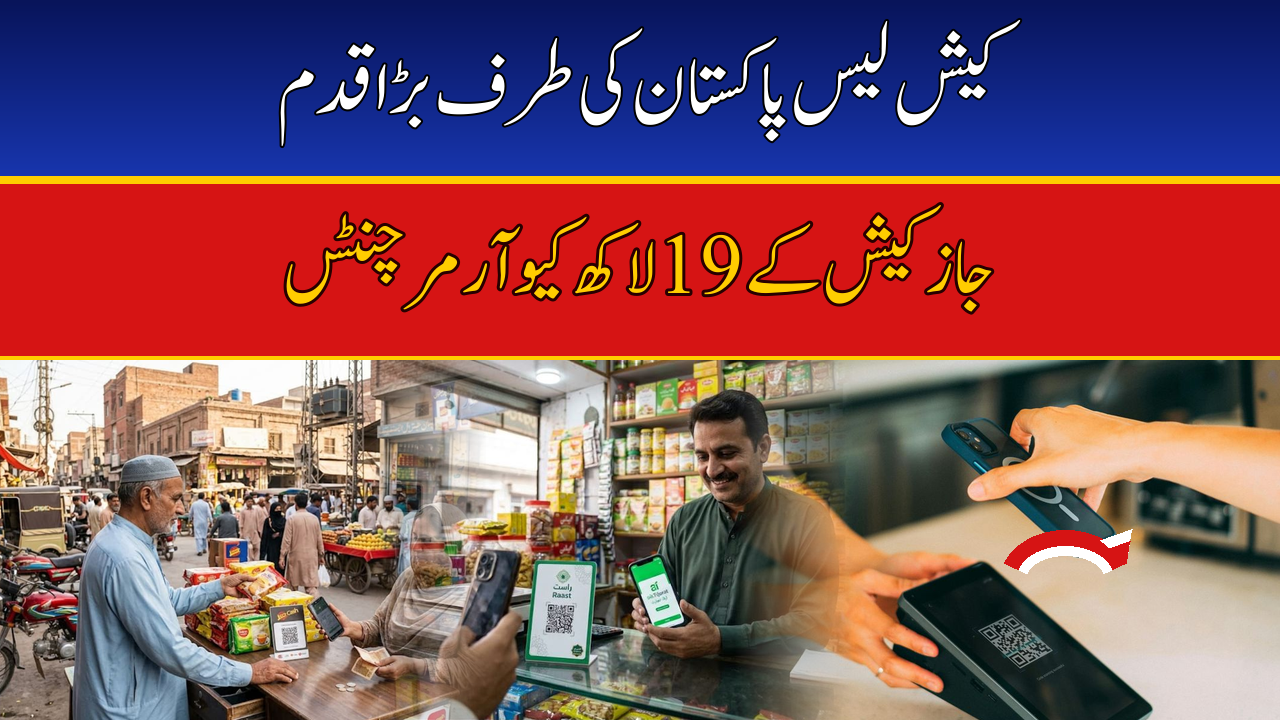
JazzCash has grown its network of interoperable Raast QR-enabled merchants to 1.9 million, nearly double the figure at the start of 2026, and now aims to cross 2 million by year-end. The milestone, announced by CEO Murtaza Ali at the IAMTN Annual Summit 2026, marks one of the fastest merchant-digitisation runs Pakistan has seen — and puts a simple printed QR code at the centre of the country’s cashless ambitions.
Key Facts
- 1.9 million — JazzCash’s interoperable Raast QR merchants now, up from fewer than 1 million in January 2026
- 2 million — company target by December 2026
- ~PKR 150 billion/month — QR payment volume moving through the network as of mid-2026
- 64 million — JazzCash’s registered customer base
- 8x — JazzCash’s QR merchant network compared with the fewer than 200,000 card terminals installed nationwide
- 99% — NADRA service-centre payments now digitized, per the Finance Division’s October 13 review
What happened at the IAMTN summit
Murtaza Ali disclosed the numbers during a panel titled “Merchant Adoption of Digital Payments” at the International Association of Money Transfer Networks (IAMTN) Annual Summit 2026. He shared the stage with Ainsley Merchant of Worldpay and Georges Ferre of IYU, with Roberto Linares of Remitly moderating the session.
The panel dug into why small merchants adopt digital payments — and why they hesitate. For Ali, the answer came down to two things: cost and trust. In his words: “Small, thin-margin merchants weigh any upfront cost carefully, and trust comes down to when settlement lands.”
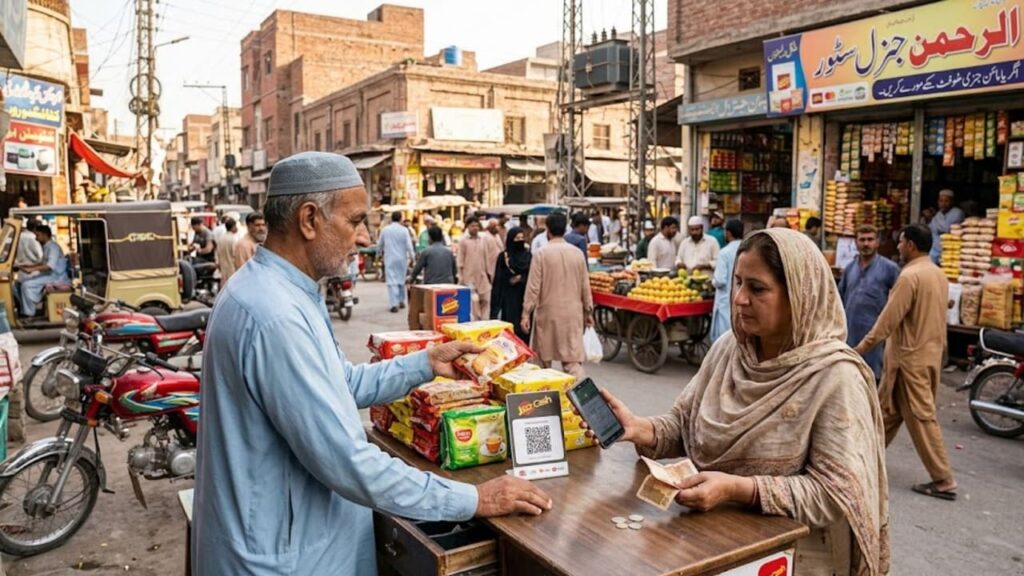
That line captures the entire story. A corner shop in Lahore will not buy a card machine costing tens of thousands of rupees. But a printed QR standee on the counter costs almost nothing — and the payment lands the same way every time.
The numbers behind the surge
The growth curve is striking: roughly 900,000 merchants in January, about 1.7 million by July, and 1.9 million now. Monthly QR volumes touched around PKR 150 billion, per the company’s Chief Product Officer Aamir Aftab in August.
Put that beside Pakistan’s card-terminal footprint — fewer than 200,000 machines nationwide — and the scale becomes clear. QR quietly built an acceptance network eight times larger than the one banks spent decades installing.
Why QR beat the card machine
For merchants, the advantages stack up fast:
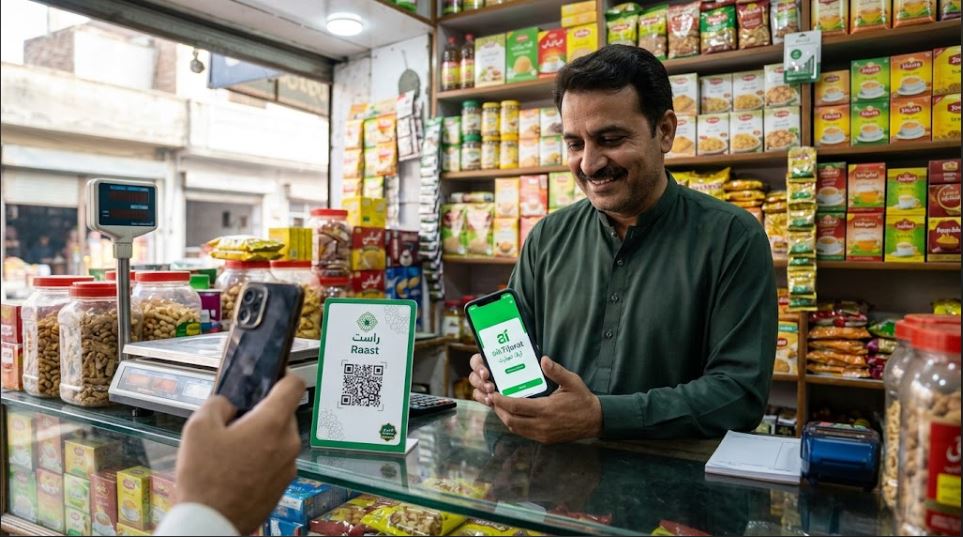
- No hardware cost. A printed QR code replaces a PoS terminal. For thin-margin shops, salons and home-based businesses, that removes the single biggest barrier to going digital.
- One code for everyone. Because the QR runs on Raast, Pakistan’s instant-payment rails built by the State Bank, a customer from any bank or wallet can pay the same merchant. No separate deals with separate banks.
- Simple onboarding. Merchants sign up through the JazzCash Business App, with identity and biometric checks plus on-ground field staff helping shopkeepers who have never used a business app before.
- Instant settlement. Money moves immediately — and as the CEO put it, for a small merchant, when the money lands is the whole trust equation.
The government’s cashless push is doing the heavy lifting
This is not happening in a vacuum. The numbers were disclosed a day after the Finance Division’s October 13 review of the cashless economy drive, chaired by Minister of State for Finance Bilal Azhar Kayani. The figures shared there show the same momentum from the policy side: NADRA has digitized 99% of payments at its service centres, merchants accepting digital payments rose fourfold in the last fiscal year, and roughly three-quarters of payments across federal government entities are now digital.
There is a fiscal reason to care too: the State Bank’s currency-printing bill has climbed to PKR 31.3 billion, up from PKR 13 billion in 2020. Every transaction that moves to a QR code is one less note the country needs to print.
What this actually means for small merchants
The most interesting part is what comes after the QR sticker. A merchant who accepts digital payments builds a verifiable sales history — a digital trail documenting business activity for a shop that never kept formal books. In time, it can unlock formal credit.
Ali made the point directly at the summit: the industry’s next job is to move beyond enabling payments and use that transaction history to build merchant lending and working-capital products. For a small business with no collateral and no bank statements, a year of QR receipts could become the difference between “no credit history” and a real loan. That is where digitisation stops being a payments story and becomes an inclusion story.
Worth remembering too: if a digital transaction ever goes wrong, consumers are not on their own — the Banking Mohtasib recovered Rs1.2 billion for customers through complaint resolution, which is exactly the kind of backstop that builds confidence in going cashless. (Read about the Banking Mohtasib’s Rs1.2 billion in customer refunds.)
AI, security and what’s next
The panel also looked past payments. Ali said financial services are likely to become increasingly conversational, with customers interacting with financial apps through AI instead of navigating screen after screen — eventually offering personalised help across payments, savings, investments and credit.
His caution: “The more AI we bring in, the more robust our security has to be,” with customer data remaining sovereign. For 64 million registered JazzCash customers, that trust infrastructure — settlements that land on time, security that holds, data that stays in Pakistan — is what the whole 2-million-merchant bet rests on.
The broader digital backbone is expanding on other fronts too, from instant-payment rails to connectivity projects like Pakistan’s satellite internet framework nearing completion — each layer making it easier for a shopkeeper anywhere in the country to plug into the formal economy. (Read about Pakistan’s satellite internet framework.)
Frequently asked questions
How many Raast QR merchants does JazzCash have now?
1.9 million interoperable Raast QR-enabled merchants as of October 2026, up from fewer than one million at the start of the year. The company targets 2 million by year-end.
What is a Raast QR payment?
It is a QR-code payment that runs on Raast, the State Bank of Pakistan’s instant-payment system. Because it is interoperable, customers from any participating bank or digital wallet can pay by scanning the same merchant QR code.
Why are small merchants choosing QR over card machines?
Cost. A printed QR standee is effectively free, while a conventional PoS terminal is a significant upfront investment. For thin-margin shops, salons and home-based businesses, QR removes the hardware barrier entirely.
How does a merchant get a JazzCash QR code?
Merchants onboard through the JazzCash Business App, which includes identity and biometric verification, with field staff available to help shopkeepers through the process.
Can QR payment history help merchants get loans?
That is the direction the industry is heading. A consistent record of digital transactions documents business activity for merchants without formal books, which lenders can use to assess creditworthiness for working-capital and merchant-financing products.
What is the government’s Cashless Economy Initiative?
It is the Prime Minister’s programme to reduce cash dependence and bring more economic activity into the formal economy, backed by the State Bank’s Raast infrastructure. Recent milestones include NADRA digitizing 99% of its service-centre payments and a fourfold rise in merchants accepting digital payments last fiscal year.