Pakistan Needs $188 Billion for Clean Energy by 2035, PM Tells COP31
By Bilal Ahmed | 12 November 2026 Pakistan needs around $188 billion by 2035 to complete its clean energy transition, Prime Minister Shehbaz Sharif told world leaders at COP31 in Antalya, Turkiye, on Wednesday. The figure breaks down into about $138 billion for low-carbon power generation and another $50 billion to replace coal-based power with…
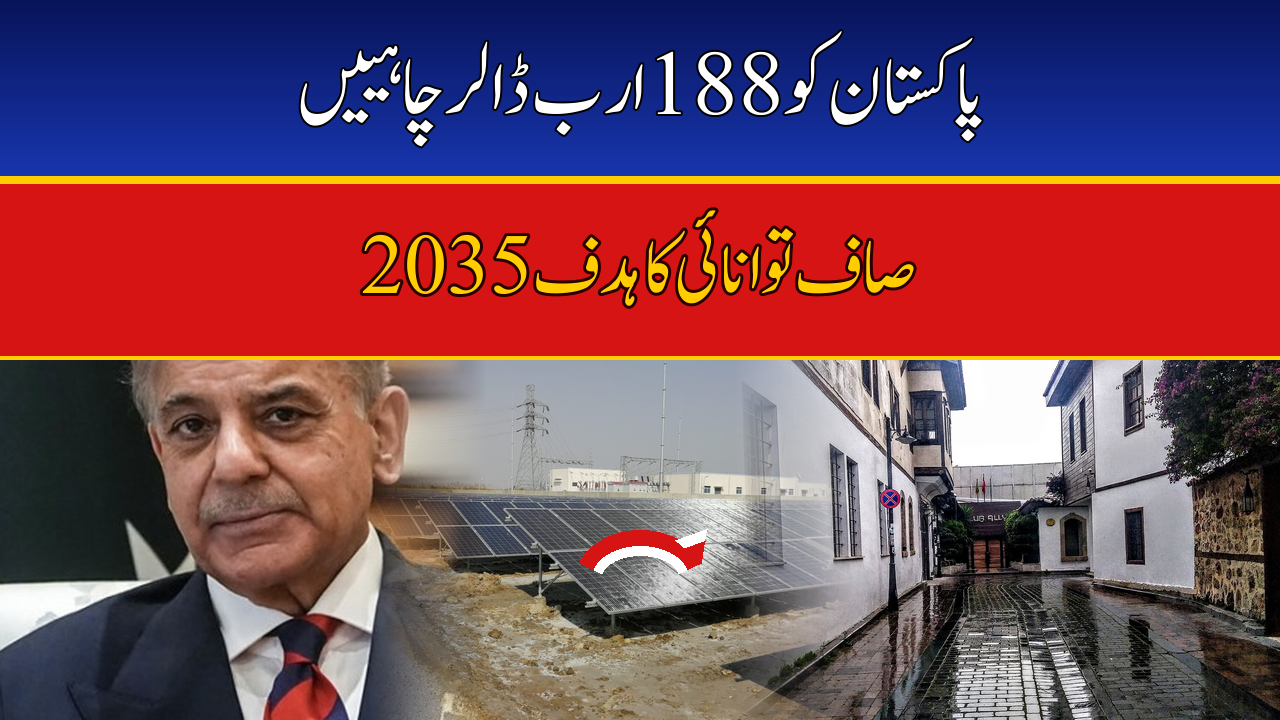
By Bilal Ahmed | 12 November 2026
Pakistan needs around $188 billion by 2035 to complete its clean energy transition, Prime Minister Shehbaz Sharif told world leaders at COP31 in Antalya, Turkiye, on Wednesday. The figure breaks down into about $138 billion for low-carbon power generation and another $50 billion to replace coal-based power with solar energy. It is a request, not a done deal: the financing has not been committed, and the prime minister used his address to press richer countries for the concessional finance and affordable technology that developing nations need to get there.
The ask was made at a high-level session titled “Clean Energy Transition by 2035: Powering the Future”, held on the sidelines of the 31st United Nations Climate Change Conference, COP31, which runs from 9 to 20 November 2026 in Antalya. Pakistan has set up a pavilion at the conference with 54 events scheduled across the two weeks, putting the country’s climate case in front of negotiators, lenders and investors.
Key Facts
| Fact | Detail | Status |
|---|---|---|
| Total clean energy funding needed by 2035 | Approximately $188 billion | Verified (PM’s stated figure) |
| Low-carbon power generation | About $138 billion | Verified |
| Replacing coal power with solar | About $50 billion | Verified |
| Clean energy share of Pakistan’s energy mix | Nearly 55% | Verified (PM’s figure) |
| Rooftop solar added in two years | Nearly 22,000 MW (22 GW) | PM’s stated figure — not independently verified |
| Chashma Nuclear Power Plant-5 | 1,200 MW of clean electricity; Pakistan’s seventh nuclear power plant | Verified |
| “35 by 35” pledge | Electricity to reach ~35% of total final energy consumption by 2035 | Verified |
| COP31 dates and venue | 9–20 November 2026, Antalya, Turkiye | Verified |
| Pakistan pavilion events | 54 events scheduled | Verified |
| Financing committed so far | Not committed — $188 billion is the government’s stated requirement | Verified |

What Pakistan Asked For
The headline number is $188 billion, and the prime minister was clear about what it is for: rebuilding Pakistan’s power system around clean energy within a decade. Speaking at the session in Antalya, he framed the transition as a national priority that Pakistan cannot finance alone. Developing countries, he said, cannot meet their climate ambitions without affordable finance, and he called for concessional financing — loans on easier terms than the market offers — alongside the transfer of affordable clean-energy technology.
That framing draws a line between ambition and ability. Pakistan has put forward one of the more concrete national price tags at this COP, with a named deadline of 2035 and a split between generation and coal replacement. What it has not yet got is the money. Whether lenders, climate funds and private investors answer the call will decide how much of the transition actually happens.
Where the Money Goes
Of the $188 billion, the larger share — around $138 billion — is earmarked for low-carbon power generation. That covers the building blocks of a cleaner grid: new solar and wind capacity, hydropower, nuclear power and the transmission lines and storage needed to carry that electricity to homes and factories. It is the infrastructure bill for a power system that no longer leans on imported fossil fuels.
The remaining $50 billion is for a more specific job: replacing coal-based power with solar energy. Solar power, once installed, has no fuel bill, and Pakistan has no shortage of sunshine. The two numbers describe a transition with two fronts: adding clean capacity fast enough to meet growing demand, and retiring the dirtiest part of the existing system. Both need capital up front, which is why the government is asking for concessional terms rather than commercial-rate borrowing.
Solar Boom and the 55% Mix
The prime minister’s pitch rests on a striking claim about how far Pakistan has already come: clean energy sources now account for nearly 55% of the country’s energy mix. That figure, if it holds, puts Pakistan well ahead of where most developing economies sit, and it is the foundation of the argument that the transition is already under way and worth backing.

The most eye-catching number behind it is solar. According to the prime minister, Pakistan has added nearly 22,000 MW — 22 gigawatts — of rooftop solar capacity in just two years. The surge has been visible across the country, from factory rooftops to homes, as falling panel prices and rising grid tariffs pushed consumers and businesses toward generating their own power. It is worth noting plainly, though, that the 22,000 MW figure is the prime minister’s stated number, and at least one report of the address notes that it has not been independently verified. Even with that caveat, the direction of travel is not in doubt — but matching that household-level momentum at grid scale is exactly what the $138 billion generation plan is meant to fund.
Chashma-5 and Nuclear
Before travelling to Antalya, the prime minister inaugurated a key section of the Chashma Nuclear Power Plant-5, Pakistan’s seventh nuclear power plant. Once complete, the plant will add 1,200 MW of clean electricity to the national grid — power that runs around the clock, unlike solar, and produces no carbon emissions while it generates.
Nuclear power plays a particular role in the transition the prime minister described. Solar and wind are cheap but intermittent; the sun sets and the wind drops. A large, steady source like a nuclear plant gives the grid a backbone that lets variable renewables do more of the work. Chashma-5 is the newest piece of that backbone, and its inauguration on the eve of the COP31 trip was deliberate stage-setting: Pakistan arrived in Antalya able to point to a major clean-energy project already under way.
What “35 by 35” Means
Pakistan has also signed on to the global “35 by 35” electrification pledge, which aims to raise electricity’s share of total final energy consumption to around 35% by 2035. In plain terms, it means more of the energy the country uses — for transport, heating, cooking and industry — should come as electricity rather than from burning fuel directly.
The pledge matters because electrification is how clean power reaches beyond the power sector. An electric car charged from a solar-powered grid is far cleaner than a petrol car. But the target only works if the electricity itself is clean, which brings the argument back to the $188 billion: the pledge and the funding ask are two halves of the same plan.
What Happens Next at COP31
COP31 continues in Antalya until 20 November, and the coming days will show whether Pakistan’s $188 billion ask finds takers. The formal negotiations cover the global stocktake of climate action and the mechanics of climate finance, but much of the real business happens in the pavilions and side sessions, where countries pitch their plans to development banks, climate funds and private investors.

Pakistan’s delegation has 54 pavilion events to make its case, and the prime minister’s address has set the terms: a specific number, a specific deadline and a specific request for concessional finance and technology transfer. If the money comes, the 2035 targets — the $138 billion of low-carbon generation, the $50 billion coal-to-solar switch and the 35% electrification goal — move from ambition to plan. If it does not, Pakistan will have to decide how much of the transition it can fund itself, and how fast.
Frequently Asked Questions
How much money does Pakistan need for clean energy by 2035?
Pakistan needs approximately $188 billion by 2035, according to Prime Minister Shehbaz Sharif’s address at COP31. About $138 billion is for low-carbon power generation and around $50 billion is to replace coal-based power with solar energy. The figure is the government’s stated requirement; the financing has not yet been committed.
What share of Pakistan’s energy mix is clean energy?
Clean energy sources now account for nearly 55% of Pakistan’s energy mix, according to the prime minister’s figures presented at COP31. The mix includes hydropower, nuclear power and renewables, including the rapidly growing rooftop solar sector.
How much rooftop solar has Pakistan added?
The prime minister said Pakistan added nearly 22,000 MW (22 GW) of rooftop solar capacity in two years. This is his stated figure, and at least one report of the address notes that it has not been independently verified.
What is the Chashma Nuclear Power Plant-5?
Chashma Nuclear Power Plant-5 is Pakistan’s seventh nuclear power plant. The prime minister inaugurated a key section of it before travelling to COP31 in Antalya. Once complete, it will add 1,200 MW of clean electricity to the national grid.
What is the “35 by 35” pledge?
The “35 by 35” electrification pledge aims to raise electricity’s share of total final energy consumption to around 35% by 2035. Pakistan fully supports the pledge. It means more transport, heating, cooking and industry running on electricity rather than directly burned fuel.
When and where is COP31 being held?
COP31, the 31st United Nations Climate Change Conference, runs from 9 to 20 November 2026 in Antalya, Turkiye. Pakistan has a pavilion at the conference with 54 events scheduled.
For more on Pakistan’s economy and energy, see the Pakistan Minerals Investment Forum 2026 in Islamabad, the IMF raising Pakistan’s inflation forecast to 9.9% for FY27 and IRSA’s 22% water shortage warning for the Rabi season wheat target.