PSX KSE-100 Sheds 1,494 Points on Friday as Global AI Sell-Off Hits Pakistan
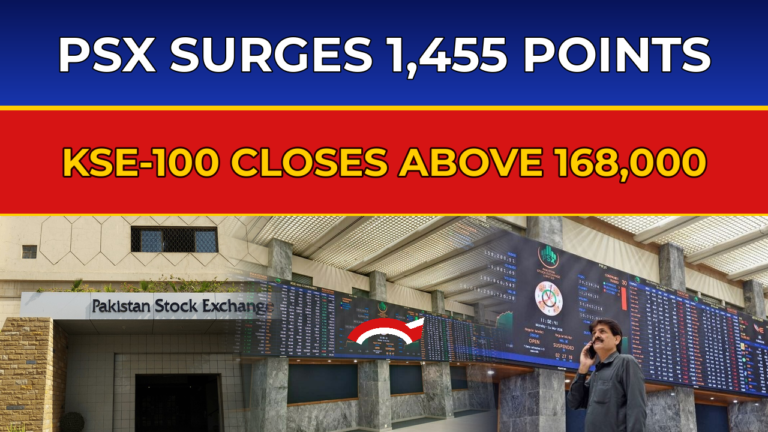
Friday Close: KSE-100 Ends at 173,886.68, Down 1,493.18 Points Updated: Friday, November 6, 2026 (evening). The Pakistan Stock Exchange closed the week on a weak note. The benchmark KSE-100 Index settled at 173,886.68 at the close of Friday’s session, down 1,493.18 points or 0.85% from Thursday’s close of 175,379.86. The market barely moved after the…

Friday Close: KSE-100 Ends at 173,886.68, Down 1,493.18 Points
Updated: Friday, November 6, 2026 (evening). The Pakistan Stock Exchange closed the week on a weak note. The benchmark KSE-100 Index settled at 173,886.68 at the close of Friday’s session, down 1,493.18 points or 0.85% from Thursday’s close of 175,379.86.
The market barely moved after the midday prayers break — the index stood at 173,885.77 at midday, so the final close was almost identical to the midday level. During the session the index touched an intraday high of 174,369.19 and an intraday low of 172,809.89, with 195.81 million shares traded. The KSE-30 Index closed at 51,443.57, down 667.81 points or 1.28%.
The sell-off followed Thursday’s strong rally, when the KSE-100 had gained 3,366.38 points (1.96%) to close at 175,379.87. Friday’s retreat mirrored a sharp global sell-off: the US Nasdaq fell 5.52%, Japan’s Nikkei lost around 6%, and South Korean and Taiwanese markets fell more than 8%, as investors worried about tighter regulation of artificial intelligence after the US midterm elections.
Trading resumes on Monday, November 9. Investors will watch whether Friday’s profit-taking was a one-day pause in the rally or the start of a deeper correction.
The KSE-100 index fell 1,494.09 points, or 0.85%, to 173,885.77 at midday on Friday, November 6, 2026, as a brutal global sell-off in AI stocks reached Karachi. The benchmark had plunged 2,500+ points in the opening minutes to an intraday low of 172,809.89 before recovering some losses by midday. These are midday, intraday figures — not the final close — because Friday trading at the Pakistan Stock Exchange (PSX) pauses for the Jummah break and resumes for a second session in the afternoon.
| Key fact | Detail |
|---|---|
| KSE-100 at Friday midday | 173,885.77, down 1,494.09 points (-0.85%) from Thursday’s close |
| Thursday’s close (Nov 5) | 175,379.87, after a gain of 3,366.38 points (+1.96%) |
| Friday intraday low | 172,809.89 — a fall of more than 2,500 points in early trading |
| KSE-100 volume (midday) | 112,193,669 shares |
| US trigger (Thu Nov 5) | Nasdaq -5.52% to 24,315.00; Dow -1,833.06 (-3.44%) to 51,523.06; S&P 500 -4.36% to 7,353.73 |
| Asian fallout (Fri Nov 6) | Nikkei -6%; South Korea’s KOSPI -8%+ (circuit breaker triggered); Taiwan -8%+ |
| Root cause | Fears of tighter AI data-centre regulation after the Democrats’ US midterm sweep on Tue, Nov 3 |
| Figures status | All Friday PSX figures are midday/intraday — the second session resumes after Jummah, so the final close may differ |
What happened at the PSX on Friday
After four straight sessions of gains, selling returned to the Pakistan Stock Exchange on Friday. The KSE-100 opened weak, losing more than 2,500 points within minutes before buyers trimmed the damage. By 12pm the index was hovering at 173,885.77, down 1,494.09 points from Thursday’s close of 175,379.87.
Part of the fall was simple profit-taking. The market had just enjoyed one of its strongest runs of the year, and with a long weekend ahead, many investors chose to book gains. “We expect the market to witness some profit-taking today following the recent rally, as investors may prefer to book gains ahead of the long weekend,” Ismail Iqbal Securities said in a note on Friday morning.
Thursday’s rally: the day before the fall
Thursday had been a very different day. On November 5, the KSE-100 surged 3,366.38 points, or 1.96%, to close at 175,379.87 — its fourth consecutive positive session. The index touched an intraday high of 176,604.52, and the buying was broad: 83 shares advanced against just 15 that declined, according to Arif Habib Ltd.
Two forces powered that rally: sharply lower international oil prices — good news for an oil-importing economy — and improved global risk appetite after the US midterms. Read our full report on that session here: KSE-100 Crosses 176,000 as PSX Rally Extends on November 5.
In less than 24 hours, the same midterm results that lifted markets on Thursday became the reason investors sold on Friday. The difference was not the election outcome — it was what investors decided the outcome meant for the world’s most crowded trade: artificial intelligence.
The global AI sell-off that started it all
Wall Street suffered its worst day since the tariff-driven rout of April 2025 on Thursday, November 5. The technology-heavy Nasdaq Composite plunged 5.52% to 24,315.00, entering correction territory after falling more than 10% below its October record high. The Dow Jones Industrial Average lost 1,833.06 points, or 3.44%, to close at 51,523.06, while the S&P 500 dropped 4.36% to 7,353.73. Around $3 trillion was wiped off the market value of companies in the S&P 500, and the Magnificent Seven tech giants alone lost roughly $1 trillion. Wall Street’s volatility gauge, the VIX, surged sharply as investors rushed for safer assets.
The damage was concentrated where the AI boom lives: the Philadelphia Semiconductor Index crashed 12.25% in a single session. Nvidia fell 9.5%. AMD plunged 17.35%, Micron dropped 16.98%, SanDisk tumbled 22.21% and Broadcom slid 10.39%.
Full coverage of the Wall Street rout is here: Nasdaq Plunges in AI Sell-Off as Chip Stocks Crash.
Why the US midterms rattled AI stocks
The trigger was the Democratic Party’s sweeping victory in the US midterm elections on Tuesday, November 3, which handed the party control of both chambers of Congress. A day after the results, the Dow had actually surged more than 1,500 points. But by Thursday, investors were pricing in a different consequence: tighter scrutiny of the AI data-centre building boom.
Several newly elected Democratic officials have called for stricter regulation of data-centre projects, particularly over electricity and water use and impact on local communities. Incoming governors in Texas, Ohio and Georgia are among those expected to push for moratoriums or tighter rules on new construction. Microsoft has already begun reconsidering some of its investment plans, and Meta has warned that data-centre construction could face disruption.
Asia followed: Nikkei, Korea and Taiwan sink
By Friday morning the sell-off had gone global. Japan’s Nikkei fell 6%, its largest one-day decline since April 2025. South Korea’s KOSPI dropped more than 8% and triggered a circuit breaker before recovering slightly after trading resumed. Taiwan’s market was also down more than 8% in early trade.
Asian chipmakers and data-centre suppliers were hit hardest. Samsung Electronics fell nearly 10%, SK Hynix slid 11.7%, Taiwan’s TSMC dropped 8.5% and Japan’s Kioxia plunged 14%. SoftBank Group, one of the world’s biggest AI investors, slid 11%.
Pakistan’s market is not an AI market — there are no Nvidia-style chip giants listed on the PSX. But in a global sell-off, that distinction matters less than investors might hope. When global funds pull money out of risk assets, emerging markets feel it. And when local investors watch the Nasdaq fall 5.5% overnight, the instinct to sell first and ask questions later is hard to resist — especially after a four-day rally that left plenty of profit on the table.
What it means for Pakistani investors
Keep Friday’s numbers in perspective. A 0.85% fall at midday, after a 1.96% gain the day before, still leaves the KSE-100 far above where it stood at the start of the week — even Friday’s intraday low stayed within the week’s trading range. This is a correction inside a rally, not — at least not yet — the end of one.
What matters now is the second session. A close that recovers toward 175,000 would suggest the morning was mostly profit-taking; a close near the day’s low would suggest the global mood is weighing heavier. Beyond that, watch whether US tech stocks find a floor, whether any data-centre moratorium is announced, and whether foreign investors stay in the market. For a closer look at how big money moves in Pakistan’s financial sector, see also: NBP CEO’s Rs 95 Million Monthly Salary Package.
A strong market met a terrible global day, took a 1,494-point hit by midday, and now waits for the second session — and Wall Street — to decide what happens next. We will update this story when the final closing figures are confirmed.
Frequently Asked Questions
How much did the KSE-100 fall on Friday, November 6, 2026?
The KSE-100 was down 1,494.09 points, or 0.85%, at 173,885.77 at midday on Friday, against Thursday’s close of 175,379.87. It had fallen more than 2,500 points early to an intraday low of 172,809.89 before recovering part of the losses. These are midday, intraday figures — not the final close.
Is the 173,885.77 figure the final closing level for Friday?
No. It is the midday reading at the end of the first trading session. Friday trading at the PSX pauses for the Jummah break around 12:30pm and resumes for a second session in the afternoon, so the final close may be higher or lower.
Why did the PSX fall on Friday?
Profit-taking after a four-day rally that pushed the index above 176,000 intraday on Thursday, plus a sharp global AI and chip sell-off after the US midterms raised fears of tighter data-centre regulation. The Nasdaq fell 5.52% on Thursday, and Asian markets fell 6% to 8%+ on Friday.
How much did the KSE-100 gain on Thursday, November 5?
The KSE-100 surged 3,366.38 points, or 1.96%, to close at 175,379.87 on Thursday, its fourth straight positive session. The index touched an intraday high of 176,604.52, with 83 shares up and 15 down, driven by falling oil prices and improved risk appetite after the US midterms.
How badly did US tech stocks fall?
On Thursday, November 5, the Nasdaq fell 5.52% to 24,315.00 — its worst day since April 2025, and more than 10% below its October record (correction territory). The Dow lost 1,833.06 points (-3.44%) and the S&P 500 fell 4.36%. Nvidia dropped 9.5%, AMD 17.35%, Micron 16.98%, SanDisk 22.21% and Broadcom 10.39%, while the Philadelphia Semiconductor Index crashed 12.25%.
What is the link between the US midterms and the AI sell-off?
The Democrats’ midterm sweep on November 3 raised expectations of tighter regulation of AI data centres, including possible moratoriums in states such as Texas, Ohio and Georgia over electricity and water use. Microsoft is reconsidering some investment plans and Meta has warned of possible disruption to data-centre construction.
When does the PSX resume trading after the Friday Jummah break?
The first session ends around 12:30pm for Jummah; the second resumes around 2:30pm. The final close is confirmed only after the second session ends.