NBP CEO Imran Sarwar Gets Rs9.5 Million Monthly Salary: Full Rs114M Package Breakdown
By Bilal Ahmed | Updated: 23 October 2026 The National Bank of Pakistan will pay its new President and CEO, Imran Sarwar, a gross monthly salary of Rs9.5 million — Rs114 million a year before allowances and bonuses — after shareholders approved a lavish three-year compensation package at an extraordinary general meeting (EGM) in Karachi…
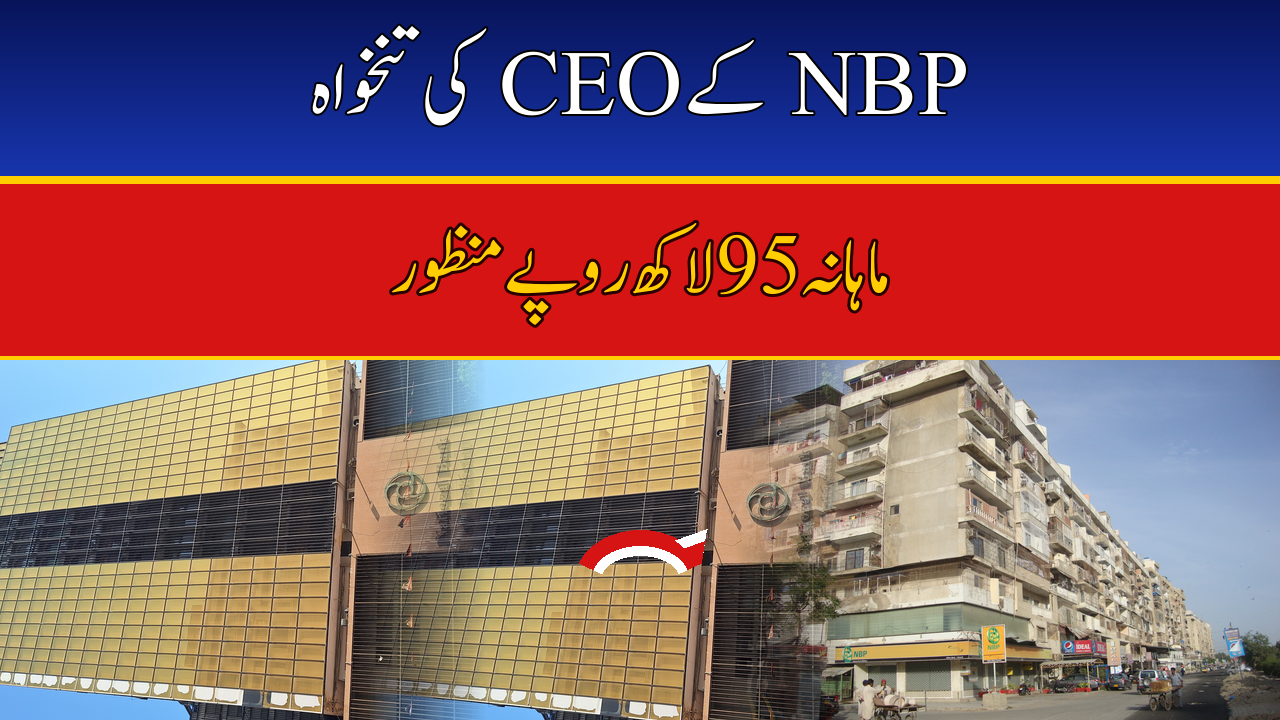
The National Bank of Pakistan will pay its new President and CEO, Imran Sarwar, a gross monthly salary of Rs9.5 million — Rs114 million a year before allowances and bonuses — after shareholders approved a lavish three-year compensation package at an extraordinary general meeting (EGM) in Karachi on 22 October 2026.
The package, disclosed to the Pakistan Stock Exchange (PSX) in a regulatory filing on Friday, also hands Sarwar a Rs1 million monthly house rent allowance, two vehicles, four round-the-clock security guards, five domestic staff, Rs30 million in life insurance cover, a Rs1.5 million generator facility, club memberships and a performance-linked annual bonus — all fixed for the 2026–2029 term, subject to applicable taxes.
| New President & CEO | Imran Sarwar |
|---|---|
| Approved by | NBP shareholders at EGM, Karachi, 22 October 2026 |
| Contract term | 3 years (2026–2029); appointment effective 3 September 2026, package effective 9 September 2026 |
| Gross monthly salary | Rs9.5 million (Rs114 million a year, excluding allowances and bonuses) |
| House rent allowance | Rs1 million per month — combined fixed salary plus housing: Rs126 million a year |
| One-time furnishing grant | Rs9.5 million (equal to one month’s gross salary) |
| Vehicles | Two — one entitlement vehicle of up to 3,500cc and one from the bank’s pool; option to buy at 10% of cost or written-down value at contract end |
| Drivers | Two drivers, or salary reimbursed at Rs45,000 per driver per month |
| Security | Four guards at residence, working 12-hour shifts |
| Domestic staff | Five workers; salaries reimbursed up to Rs150,000 a month |
| Life insurance | Rs30 million cover; annual premium split 50/50 between the CEO and the bank |
| Generator facility | Up to Rs1.5 million at residence, amortised over the tenure |
| Medical/dental | Self and dependent family in Pakistan, at actual cost |
| Utilities & phones | Electricity, gas and water at actual cost; two residential phones and two mobile phones with bills paid |
| Clubs | Entry fees for two clubs, subscriptions and charges for three clubs |
| Leave | 30 days annual + 18 days casual/sick leave per year; annual leave accumulates to 90 days and is encashable at last-drawn gross salary |
| Gratuity | One month’s last-drawn gross salary for each year of service |
| Bonus | Variable annual performance bonus linked to key performance indicators approved by shareholders and assessed by the board |
What shareholders approved
The pay deal was passed under Section 11(3)(a) of the Banks (Nationalization) Act, 1974, following a recommendation from NBP’s board of directors. Sarwar’s Rs9.5 million monthly salary works out to Rs114 million a year before any allowances — and once the Rs1 million monthly housing allowance is added, the fixed cash component alone reaches Rs126 million annually.
Note that the housing allowance comes in lieu of the concessional staff home loan NBP’s framework otherwise offers. Sarwar has opted not to use the house loan facility at all, choosing the straight allowance instead.
Alongside the cash, shareholders approved a one-time home furnishing allowance equal to one month’s gross salary — a further Rs9.5 million for the duration of his presidency.
The perks in detail
The headline salary is only part of the story. The approved terms read like a comprehensive corporate lifestyle package:
- Cars and drivers: Sarwar gets two vehicles — one entitlement vehicle with an engine capacity of up to 3,500cc, and a second from the bank’s existing pool. At the end of his contract he may purchase the entitlement vehicle for 10 percent of its cost or its written-down value, whichever is higher. Fuel is covered at actual cost, and the bank provides two drivers — or reimburses Rs45,000 per driver per month instead.
- Security: Four guards at his residence, working in 12-hour shifts — two guards per shift, around the clock.
- Home help: Salaries for five domestic workers, reimbursed up to Rs150,000 a month.
- Insurance: Rs30 million of life insurance for the contract term, with the yearly premium shared equally between Sarwar and the bank.
- Power backup: A residential generator costing up to Rs1.5 million, amortised across the tenure — a telling detail in a country where load-shedding still shapes executive life.
- Health: Medical and dental expenses for Sarwar and his dependent family members within Pakistan, reimbursed at actual cost.
- Bills and lines: Electricity, gas and water at actual cost, plus two residential telephone connections and two mobile phones with their monthly bills paid.
- Clubs: Entry fees at two clubs of his choice, plus subscription and other charges for three clubs.
- Travel: Official travel reimbursed under NBP’s senior-executive policy.
Leave entitlement is equally generous: 30 days of annual leave and 18 days of casual or sick leave each year. Unused annual leave can pile up to 90 days and be encashed at the last-drawn gross salary. Gratuity stands at one month’s last-drawn gross salary for each year of service, with six months or more of service counted as a full year.
Crucially, the resolution states the salary and benefits package will remain fixed throughout the contract period — no mid-term raises, at least on paper.
Early exit means a full payout
The contract’s separation terms deserve attention. If NBP terminates Sarwar before the three-year term expires, he is to be paid for the remaining unexpired term of the agreement under the approved contractual terms. In plain terms: an early sacking could cost the state-owned bank tens of millions in unearned salary.
On the other side, if Sarwar resigns, he must proceed on three months’ “gardening leave” as part of the notice period — paid time off during which he cannot join a competitor. This is standard practice for senior bankers, but it is now formally written into NBP’s CEO contract.
Shareholders withdrew the 2026 KPI vote
There is one intriguing wrinkle. While Sarwar’s annual performance bonus is supposed to be linked to key performance indicators approved by shareholders and evaluated by the board each year, the EGM agenda item covering the approval of his 2026 performance indicators was withdrawn during the meeting.
In effect, the bonus mechanism exists on paper, but the 2026 benchmarks it would be measured against were never put to a vote. Shareholders did not approve the indicators — they withdrew the item entirely. How the board will evaluate “performance” without shareholder-approved 2026 indicators is a question the bank has yet to answer.
Who is Imran Sarwar?
Sarwar is a 36-plus-year veteran of banking in Pakistan and international markets, with experience spanning corporate, institutional and investment banking, credit and risk management. Before taking NBP’s top job, he was Group Executive for Risk & Credit Policy and Chief Risk Officer at United Bank Limited (UBL). He previously held senior leadership roles at Standard Chartered Bank, including Managing Director and Head of Corporate Banking for the UAE.
He has also sat on the boards of Khushhali Microfinance Bank and the Pakistan Mortgage Refinance Company (PMRC).
Also decided at the EGM
The meeting was not only about the CEO’s pay. Shareholders also elected Muhammad Afzal as a director representing private shareholders for a three-year term beginning 22 October 2026, replacing Farid Malik, whose tenure had ended. Afzal secured 213,498,993 votes — 75.45% of the 282,961,201 votes cast. His appointment remains subject to clearance from the State Bank of Pakistan. The minutes of NBP’s 77th annual general meeting, held on 30 March 2026, were confirmed as well.
Why this package matters
NBP is Pakistan’s largest state-owned bank, majority owned by the government, and its CEO’s pay inevitably draws public scrutiny — particularly in an economy where ordinary depositors face high inflation. Shareholder approval at the EGM provides legal cover, but the size of the package (Rs126 million in fixed salary-plus-housing alone), the full-payout termination clause, and the quietly withdrawn KPI vote together make this a story that goes beyond one executive’s paycheck.
For bank investors, the fixed nature of the package over three years brings cost certainty. For governance watchers, the real test will be whether the promised performance-linked bonus is actually tied to measurable results — and whether shareholders demand those missing indicators before the 2027 bonus cycle.
Frequently asked questions
How much is the NBP CEO’s monthly salary?
Imran Sarwar, the newly appointed President and CEO of the National Bank of Pakistan, will receive a gross monthly salary of Rs9.5 million, approved by shareholders at an EGM on 22 October 2026. That works out to Rs114 million a year, before allowances and bonuses.
What is the total annual package including housing?
The fixed salary (Rs114 million) plus the Rs1 million monthly house rent allowance (Rs12 million a year) comes to Rs126 million per year, before the performance bonus, furnishing grant and other benefits.
When does the package apply from?
Sarwar was appointed for a three-year term effective 3 September 2026, and the approved compensation applies from 9 September 2026, when he assumed office.
What happens if NBP fires the CEO before his term ends?
The contract states that if the employer terminates the agreement before expiry, Sarwar is paid for the remaining unexpired term under the approved terms. On resignation, he must serve three months’ gardening leave as part of his notice period.
Why was the 2026 KPI agenda item withdrawn?
Shareholders withdrew the agenda item approving the President and CEO’s 2026 performance indicators during the EGM. The bonus is meant to be linked to shareholder-approved KPIs assessed by the board, but no reason for the withdrawal was given in the PSX disclosure — leaving the basis for any 2026 bonus unclear.
Who is Imran Sarwar?
He is a banker with over 36 years of experience, previously Group Executive for Risk & Credit Policy and Chief Risk Officer at UBL, with senior roles at Standard Chartered including MD and Head of Corporate Banking for the UAE. He has served on the boards of Khushhali Microfinance Bank and the Pakistan Mortgage Refinance Company (PMRC).