Pakistan Assembles 18.66 Million Mobile Phones in Eight Months
By Fatima Zahra | October 5, 2026 | Karachi KARACHI: Pakistan’s local mobile phone assembly plants produced 18.66 million handsets in the first eight months of 2026, as locally made phones continued to meet almost all of the country’s demand. The figures were shared by the Pakistan Telecommunication Authority (PTA) and reported by Profit by…
By Fatima Zahra | October 5, 2026 | Karachi
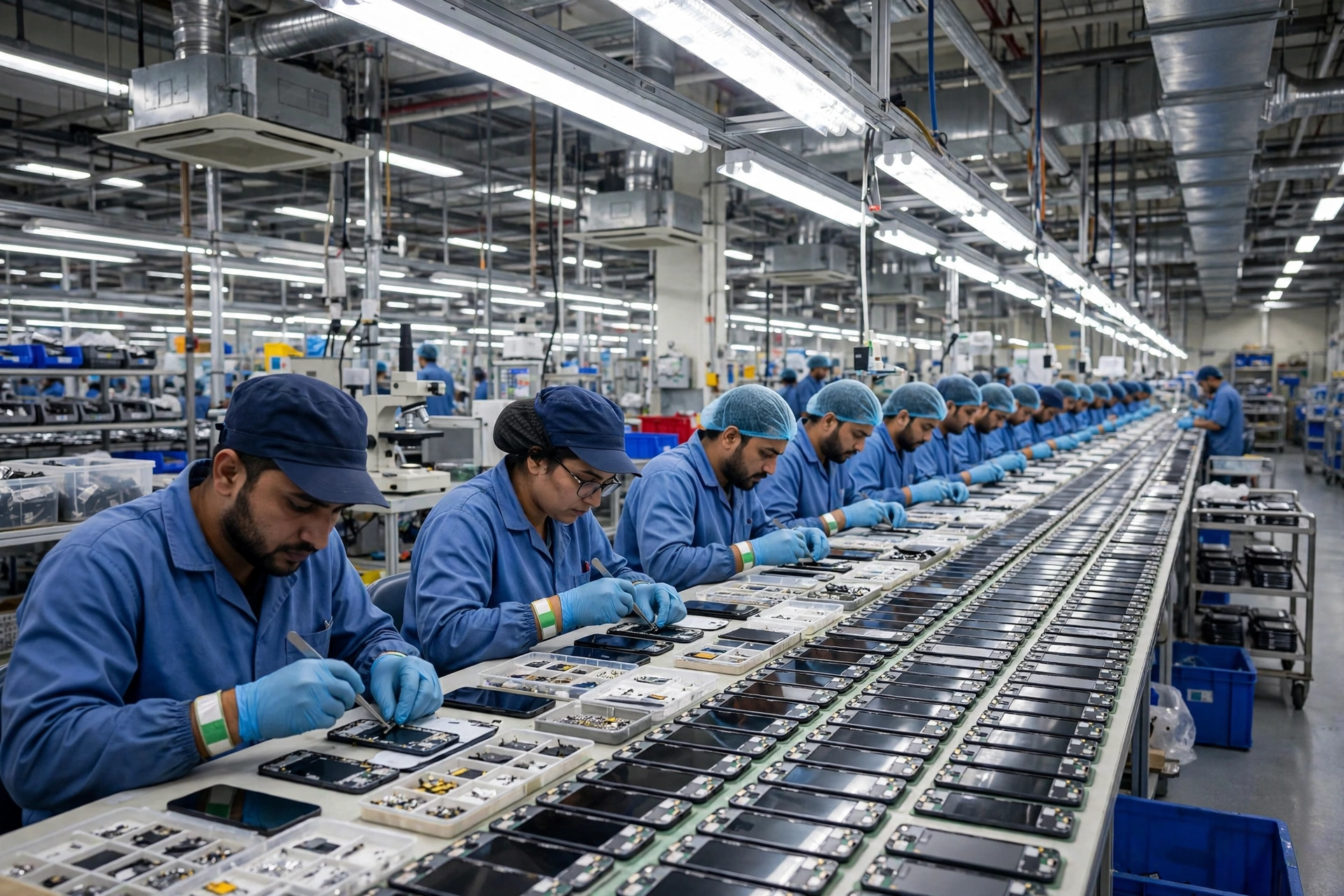
KARACHI: Pakistan’s local mobile phone assembly plants produced 18.66 million handsets in the first eight months of 2026, as locally made phones continued to meet almost all of the country’s demand.
The figures were shared by the Pakistan Telecommunication Authority (PTA) and reported by Profit by Pakistan Today, citing Topline Securities. They show how strongly the local assembly model now shapes the mobile phone market in Pakistan.
In August alone, local plants assembled 1.66 million phones and met about 95 percent of national demand, while only 80,000 finished phones were imported during the same period.
For more coverage of phones, telecom and digital services, readers can visit our Technology and Business sections.
Local assembly meets 95 percent of demand
Pakistan now fulfils the vast majority of its mobile phone needs through local assembly. That shift has reduced pressure on imports and on the current account, because fewer finished handsets need to be bought from abroad in foreign currency.
Officials and industry watchers say the policy has also created jobs inside factories and in the wider chain that supports them, including distribution, retail, repair and after-sales service.
For buyers, the biggest visible effect is choice at lower price points. Entry-level and mid-range smartphones, which drive most sales in Pakistan, are more widely available when they are assembled locally and are not exposed to the full cost of importing a finished device.
- 18.66 million handsets assembled in the first eight months of 2026
- 1.66 million handsets assembled in August alone
- About 95 percent of national demand met by local assembly in August
- Only 80,000 finished phones imported in August
VGO Tel leads, Infinix and itel follow
Among assemblers, VGO Tel led the market with 2.45 million units during the eight-month period. Infinix was second with 1.96 million units, followed by itel with 1.56 million units.
The three brands compete mainly in the budget and mid-range segments. Those segments matter in Pakistan because many buyers look closely at price, battery life, screen size and after-sales service before choosing a phone.
Why budget and mid-range phones dominate
For a large number of families, a smartphone is the main way to access the internet, online banking, education material, social media and digital payments. A reliable phone at an affordable price is therefore not a luxury item, but a daily tool for work and study.
Brands that can offer service centres, spare parts and software support at a reasonable price tend to build trust in this market. Local assembly helps those brands keep supply steadier than a model that depends entirely on imported finished stock.
August dip after a budget-cycle high
Industry watchers noted that August output was lower than July’s. July had seen a spike as buyers and dealers completed purchases around the new budget cycle.
Traders say demand usually cools after such peaks. Buyers who rushed to purchase before or just after budget changes pause for a few weeks, dealers clear existing stock, and the market then prepares for the next cycle of launches and promotions.
Demand is expected to pick up again towards the end of the year, when new models are launched and promotional offers increase. Retailers often use that period to attract buyers upgrading from older devices.
What local assembly means for jobs and industry
Local assembly is more than a sales figure. Each plant needs technicians, quality checkers, packers, logistics staff and managers. Outside the factory, distributors, shopkeepers and service technicians also depend on a steady flow of devices.
Analysts believe local assembly will remain dominant as long as import duties and policies favour phones made in Pakistan. They add, however, that assembly is only one step.
The next step: local parts and manufacturing
The bigger long-term goal for the industry is to move from assembling imported kits towards deeper manufacturing, including more locally made parts. That step would create more skilled jobs, reduce import dependence further and help Pakistan keep more of the value of each phone sold in the country.
Reaching that stage will require consistent policy, investment in component supply and training for technical staff. Industry watchers say progress is likely to be gradual, but the scale already achieved in assembly shows that demand is strong enough to support further investment if conditions remain stable.
What buyers should watch in the coming months
Buyers planning to purchase a new phone may want to watch three things in the coming months.
- New model launches: Fresh launches can push prices of older models down.
- Promotional offers: End-of-year offers may include discounts or bundles.
- After-sales support: A slightly cheaper phone may not be good value if service is hard to find in your city.
Checking the PTA status of a device and buying from a trusted retailer also remain important steps for buyers, especially when purchasing a phone for online work or study.
How this story connects to the wider economy
Mobile phone assembly is often used as an example of import substitution, where a country replaces imported finished goods with local production. When it works, it can save foreign exchange, support jobs and keep prices more stable for consumers.
At the same time, analysts caution that the benefits grow when local production moves beyond assembly and when policies remain predictable for investors and manufacturers.
Readers following the business side of this industry can find more updates in our Business coverage, while national updates are available in Pakistan news.
Other stories on TimelyUps
Job seekers may also want to read about the NDMA jobs announced in Islamabad, with applications due by October 6.
For daily conditions before travelling or commuting, see our PMD weather forecast, and for political developments, read the latest on talks between the government and PTI and the long march towards Islamabad.
Bottom line
Pakistan assembled 18.66 million mobile phones in the first eight months of 2026, with local plants meeting about 95 percent of demand in August. VGO Tel, Infinix and itel led the market during the period.
If the current policy environment continues, local assembly is expected to remain the main source of phones in Pakistan, with the next challenge being a gradual move towards deeper local manufacturing.
Source: Profit by Pakistan Today / Pakistan Telecommunication Authority (PTA), citing Topline Securities