US Proposes Tougher Green Card Rules: 90-Day Hiring Wait, Nurses Lose Fast Track — What It Means for Pakistanis
By Bilal Ahmed | Published: 18 November 2026 | Updated: 18 November 2026 The United States has proposed the biggest overhaul of its employment-based green card rules in nearly two decades. Under the plan, published in the Federal Register on 17 November 2026, American employers would have to advertise jobs for at least 90 days…
By Bilal Ahmed | Published: 18 November 2026 | Updated: 18 November 2026
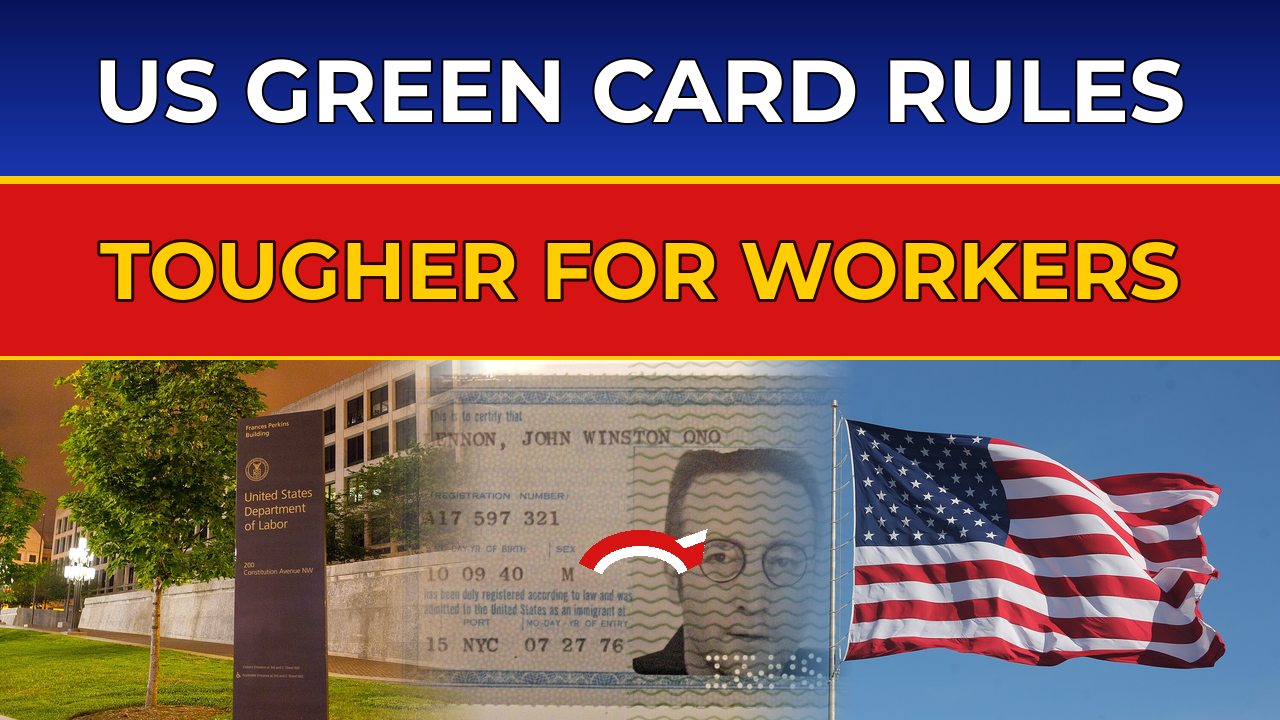
The United States has proposed the biggest overhaul of its employment-based green card rules in nearly two decades. Under the plan, published in the Federal Register on 17 November 2026, American employers would have to advertise jobs for at least 90 days before sponsoring a foreign worker, instead of the current 30 days, and hospitals would lose the fast-track route they have used for decades to hire foreign nurses. This is a proposal, not final law: nothing changes today, and the current rules stay in force while the public comment period runs until 19 January 2027.
The changes would affect the EB-2 and EB-3 green card categories, which run through the Permanent Labour Certification (PERM) programme. That is the route many Pakistani professionals, including engineers, IT workers, doctors and nurses, use to gain permanent residence in the United States. If the proposal becomes law in its current form, getting an employer-sponsored green card would take longer, cost employers more, and become much harder for nurses in particular.

Key Facts at a Glance
| Detail | What we know |
|---|---|
| Proposed rule | “Modernizing the Labor Market Test and Improving Protections for U.S. Workers in the PERM Immigrant Visa Program” |
| Published | 17 November 2026, Federal Register (Document 2026-23370, 91 FR 73916) |
| Who it affects | Employers sponsoring foreign workers under EB-2 and EB-3 green card categories through PERM |
| Minimum recruitment | 90 calendar days, up from 30 calendar days |
| Biggest single change | Schedule A exemption eliminated – nurses and physical therapists lose their fast track |
| Layoff restriction | Employers that laid off US workers in the same or similar job in the same area in the past 2 years cannot get certification (current rule: 6 months) |
| Public comments due | 19 January 2027, via regulations.gov (Docket No. ETA-2026-0133) |
| Status today | Proposal only – current PERM rules remain in force; no final rule or effective date yet |
What Is PERM, and Why Does It Matter?
Before most employers can sponsor a foreign worker for an employment-based green card, they must first obtain a labour certification through the PERM programme. The idea is simple: the employer has to show that no qualified American worker is available for the job, and that hiring the foreign worker will not harm the wages or working conditions of American workers in the same field.
To do that, employers run a recruitment process, advertise the vacancy, consider American applicants, and then file a certification application with the Department of Labor. Only after certification is granted can the employer file the immigrant petition with US Citizenship and Immigration Services. The proposed rule rewrites the recruitment part of that process, which the department has not overhauled in a comprehensive way for nearly two decades.
Labour Secretary Keith Sonderling said the existing rules had allowed companies to sponsor foreign workers “without fully considering American applicants”, a practice the department wants to address through “expanded recruitment and enforcement requirements”.
What Is Changing: The Old Rules vs the Proposed Rules
| Rule | Current system | Proposed change |
|---|---|---|
| Minimum recruitment period | 30 calendar days | 90 calendar days; employers that normally advertise longer must follow their own longer schedule |
| Recruitment timing | Looser timing rules | Recruitment must be completed no more than 60 days and no fewer than 30 days before filing |
| Where jobs are advertised | Sunday newspaper ads plus a menu of optional steps | Fully electronic: online job boards, corporate websites, social media, job fairs and campus recruiting |
| Salary in job ads | Not required in the ad | Ads must disclose the offered wage or salary range |
| Proof and paperwork | Recruitment reports and American applicants’ resumes mostly kept by the employer, produced only on audit | Must be submitted with the application, including recruitment reports, supporting records and resumes of American applicants |
| Layoff restriction | Employers must notify and consider US workers laid off within the previous 6 months | Employers that laid off US workers in the same or similar occupation in the same area in the preceding 2 years are restricted from certification; covers third-party staffing-company layoffs too |
| Schedule A fast track | Nurses, physical therapists and certain exceptional-ability workers skip standard recruitment | Exemption eliminated – these workers go through the same full recruitment and certification as everyone else |

The 90-Day Hiring Wait, Explained
The headline change is the recruitment period. Today, an employer must keep a job order with the state workforce agency active for at least 30 days. Under the proposal, that minimum becomes 90 calendar days, and the 90 days includes the state job order. If an employer customarily advertises a similar role for longer than 90 days, the longer period applies instead.
Recruitment would also have to finish within a tighter window: no more than 60 calendar days and no fewer than 30 calendar days before the application is filed. In practice, that means the whole hiring process for a sponsored worker would stretch over several months before the employer can even file the certification.
At the same time, the proposal modernises how jobs are advertised. The old requirement to place ads in Sunday newspapers would go, replaced by electronic recruitment through employer websites, job-search sites, social media, job fairs and campus recruiting. Job ads would also have to state the offered wage or salary range, and employers would have to show that American applicants received fair consideration.
The paperwork burden rises sharply as well. Employers would have to submit recruitment reports, supporting records and the resumes of American applicants along with their labour certification applications. Today, much of that material is simply retained by the employer and produced only if the application is selected for a federal audit.
Nurses Lose Their Fast Track as Schedule A Ends
The change likely to be felt most in hospitals is the elimination of Schedule A. For more than three decades, Schedule A has let employers sponsor professional nurses and physical therapists (Group I) and certain people with exceptional ability in the sciences or arts (Group II) without completing the standard labour-market recruitment process. Employers could file directly with immigration authorities instead.
Under the proposal, that exemption disappears. Hospitals and healthcare facilities would have to advertise vacancies, consider qualified American applicants and obtain labour certification before proceeding with immigration petitions for foreign nurses and physical therapists. The Department of Labor says it no longer has evidence of a nationwide shortage of nurses or physical therapists to justify keeping the exemption.
This matters for Pakistan because nursing is one of the established routes through which Pakistani healthcare workers reach the United States. If the rule is finalised as proposed, a Pakistani nurse’s US employer would first have to run a 90-day recruitment campaign and prove no qualified American nurse was available, a process that is both slower and less certain than today’s direct filing.
Layoffs Now Block Sponsorship for Two Years
Another major provision targets employers that have recently cut American jobs. Today, an employer must notify and consider potentially qualified American workers it laid off within the previous six months. The proposal extends that look-back period to two years: a company that laid off American workers in the same or similar occupation in the same geographical area during the preceding two years would be restricted from obtaining labour certification for those positions.
The restriction would also cover certain layoffs involving third-party staffing companies, and employers would have to report subsequent workforce reductions and keep considering qualified displaced American workers during the related immigration petition process. For Pakistani professionals working in US tech and engineering, where layoffs have been common, this could matter: an employer that recently let American staff go may simply be unable to sponsor a foreign worker for the same kind of role.

What It Means for Pakistanis
For Pakistanis planning a US move through an employer, the proposal changes the timeline, not the destination. The EB-2 and EB-3 categories remain open, and no existing green card holder is affected. But three practical effects stand out.
First, everything takes longer. A 90-day recruitment period, plus the 30-to-60-day filing window, means months of advertising and paperwork before a certification application can even be filed. Applicants already waiting in long EB-2 and EB-3 queues should expect the front end of the process to slow down further.
Second, nurses face the biggest shift. Schedule A has been the reliable route for foreign nurses for over thirty years. Its removal means Pakistani nurses would need a full PERM process, with real competition from American applicants at every step. Hospitals that relied on the fast track may hire fewer foreign nurses, or take much longer to do so.
Third, the employer matters more than ever. A sponsor that has recently laid off American staff in the same field, or that cannot document a genuine 90-day recruitment effort, may not be able to sponsor at all. Pakistani professionals should ask a prospective employer about its recent layoffs and its PERM track record before accepting a US job offer tied to sponsorship.
The stakes are real for Pakistan’s economy as well as for individual families. Pakistanis working abroad send large sums home every month; Pakistan’s remittances hit $3.9 billion in October 2026, nearly covering the country’s trade gap. Any policy that slows the flow of Pakistani workers to the United States is therefore worth watching closely, even though this proposal, on its own, changes nothing yet.
It is also worth remembering that the United States is not the only destination attracting Pakistani workers and travellers. Pakistan is now Dubai Airport’s fourth-biggest market, with 800,000 passengers in the third quarter of 2026, and Italy has just opened its largest diplomatic mission abroad in Islamabad, a sign of growing European engagement with Pakistan.
What Happens Next — and What Has NOT Changed
The proposal is now open for public comment until 19 January 2027, through regulations.gov under Docket No. ETA-2026-0133. Only after that window closes can the Department of Labor issue a final rule, and that final rule would carry its own effective date. If finalised, the rule would take effect 60 days after publication, followed by a 30-day transition period. None of this is certain: the department could change the proposal, delay it, or drop parts of it after reviewing the comments.
What has not changed: the current PERM rules, including Schedule A, remain fully in force today. No employer has to follow the 90-day rule yet, no nurse has lost the fast track yet, and no existing green card application is affected. Anyone already in the PERM process should continue under the existing rules and keep an eye on the final rule when it appears.

What Pakistani Applicants Should Do Now
If you are a Pakistani professional or nurse hoping for US employer sponsorship, the sensible steps are straightforward. First, do not panic: this is a proposal, and the rules in force today are unchanged. Second, if your employer is ready to start a PERM case, earlier is better than later, since applications filed before any final rule takes effect would be judged under the old rules. Third, keep copies of your qualifications, experience letters and credentials ready, because the proposed rules would demand far more documentation from employers. And fourth, follow the comment period: the final rule, when it comes, may look different from this proposal.
We will update this article when the Department of Labor publishes the final rule or announces any change to the timeline.
Frequently Asked Questions
Are the new US green card rules already in effect?
No. The changes were published as a proposed rule on 17 November 2026. The current PERM rules, including the Schedule A exemption for nurses, remain in force while the public comment period runs until 19 January 2027. Only after that can the Department of Labor issue a final rule with its own effective date.
What is the 90-day rule in the green card proposal?
Employers sponsoring a foreign worker for an EB-2 or EB-3 green card would have to advertise the job for at least 90 calendar days, up from the current 30 days. If the employer normally advertises similar jobs for longer, the longer period applies. Recruitment must also finish 30 to 60 days before the application is filed.
What is Schedule A, and why does its removal matter for nurses?
Schedule A is a decades-old exemption that lets employers sponsor professional nurses, physical therapists and certain exceptional-ability workers for green cards without the standard recruitment process. The proposal would end it, so hospitals would have to advertise, consider American applicants and get labour certification first. This directly affects Pakistani nurses, for whom Schedule A has been a key route to the US.
Which green card categories are affected by the PERM overhaul?
The EB-2 and EB-3 employment-based categories, which use the Permanent Labour Certification (PERM) programme. These are the main routes for foreign professionals, skilled workers and healthcare staff sponsored by a US employer.
How do the proposed layoff rules affect sponsorship?
An employer that laid off American workers in the same or similar occupation in the same area during the preceding two years would be restricted from obtaining labour certification for those roles. The current rule only covers layoffs within the previous six months. The proposal also covers certain third-party staffing-company layoffs.
What should Pakistanis applying for a US green card do now?
Stay calm and continue under the current rules, which are unchanged. If your employer can start a PERM case soon, earlier is better, since cases filed before a final rule takes effect are judged under the old rules. Keep your qualifications and experience documents ready, and watch for the final rule after the comment period closes on 19 January 2027.