Italy Opens New Embassy in Islamabad — Its Largest Diplomatic Mission Abroad
By Fatima Raza | 17 November 2026 | Updated 17 November 2026 Italy has formally opened its new embassy building in Islamabad, and the new chancery is now Italy’s largest diplomatic mission anywhere in the world outside its own borders. The building was inaugurated on Monday, 16 November 2026, by Ambassador Riccardo Guariglia, secretary-general of…
By Fatima Raza | 17 November 2026 | Updated 17 November 2026
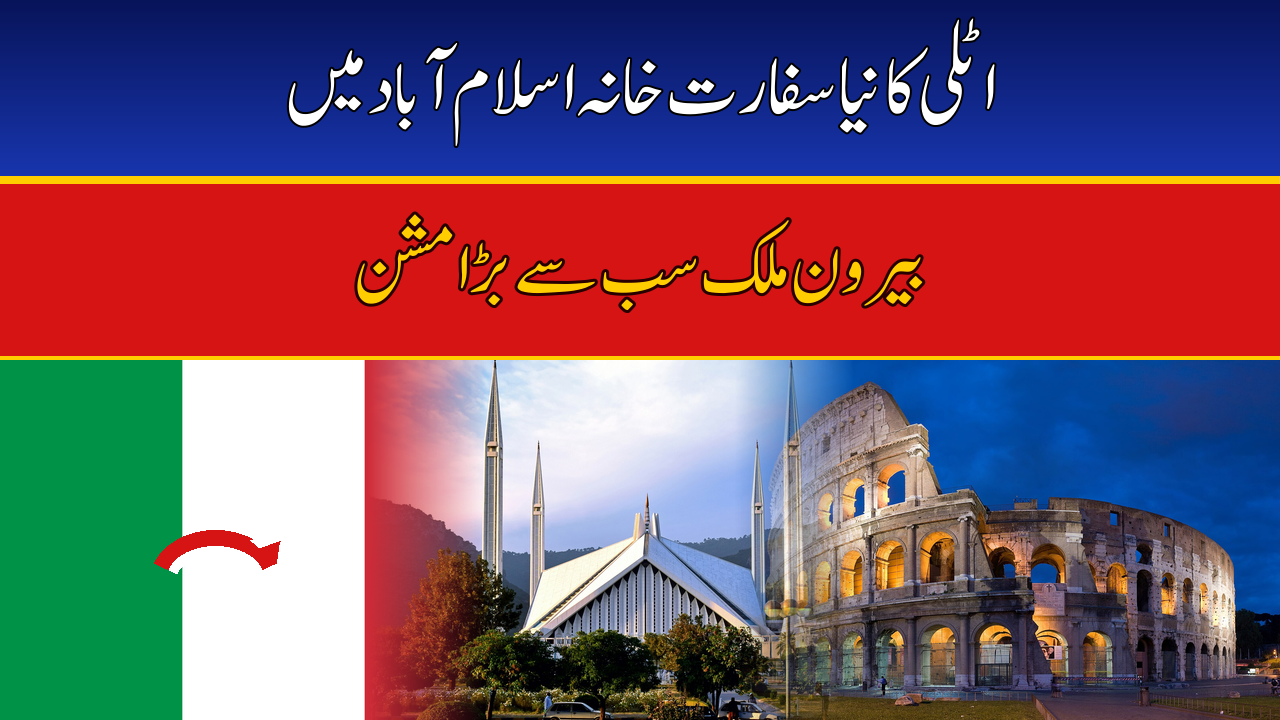
Italy has formally opened its new embassy building in Islamabad, and the new chancery is now Italy’s largest diplomatic mission anywhere in the world outside its own borders. The building was inaugurated on Monday, 16 November 2026, by Ambassador Riccardo Guariglia, secretary-general of Italy’s Ministry of Foreign Affairs and International Cooperation (MAECI), in a ceremony attended by senior officials from both countries and members of the diplomatic corps.
The opening is more than a change of address. Rome has chosen Pakistan’s capital for its biggest mission abroad, and the timing says a great deal about where the relationship is heading. The inauguration coincided with the 7th Round of Pakistan-Italy Bilateral Political Consultations, and it follows two landmark agreements in the past eighteen months: a labour mobility pact signed in May 2025 and a visa-waiver agreement for diplomatic passport holders signed in Rome in June 2026.
| Key fact | Detail |
|---|---|
| What happened | New Embassy of Italy building formally inaugurated in Islamabad |
| Date | Monday, 16 November 2026 |
| Inaugurated by | Ambassador Riccardo Guariglia, Secretary-General of MAECI (Italy’s Ministry of Foreign Affairs and International Cooperation) |
| Significance | Italy’s largest diplomatic mission abroad |
| Italian Ambassador to Pakistan | Ugo Ciarlatani |
| Held alongside | 7th Round of Pakistan-Italy Bilateral Political Consultations |
| Labour mobility MoU | Signed in Islamabad, May 2025 — Pakistan’s first labour accord with a European country |
| Diplomatic visa waiver | Agreement signed in Rome, June 2026, removing visa requirements for diplomatic passport holders |
| Pakistanis in Italy | Around 150,000 — the largest Pakistani community in the European Union |
| Worker quota | 10,500 places reserved for Pakistani workers over the next three years |
| Student visas | More than 3,200 issued to Pakistani students for the 2025-26 academic year |
| Bilateral agreements | 15 government-to-government agreements in force |

A ceremony that marked a milestone
The inauguration ceremony brought together Italian Ambassador to Pakistan Ugo Ciarlatani, senior officials of Pakistan’s Ministry of Foreign Affairs, members of the diplomatic corps and distinguished guests. The Italian flag had already been hoisted at the new premises earlier in November, after the embassy officially relocated its offices to the new building.
Speaking at the ceremony, Secretary-General Guariglia described the new embassy as a symbol of the enduring friendship between Italy and Pakistan, and of Italy’s long-term commitment to deepen cooperation in trade, investment, culture, education, labour mobility and development. The message was deliberate: this is not a routine property upgrade, but a statement of intent from Rome.
Italy does not hand out its largest missions lightly. A chancery of this scale signals that Rome expects its work in Pakistan — visas, trade, cultural exchange and consular services for a large diaspora — to keep growing. For Islamabad, hosting Italy’s biggest mission abroad is a diplomatic vote of confidence, and one that arrives as Pakistan actively courts European partners for trade, jobs and investment.
Why the new embassy matters beyond the building
Embassies are often judged by their architecture, but their real value is measured in what they make possible. The new premises will strengthen Italy’s diplomatic presence in Pakistan and make people-to-people contact easier — the phrase both sides kept returning to during the ceremony.
That matters because the human link between the two countries is already unusually strong. Italy is home to the largest Pakistani community in the European Union, comprising around 150,000 Pakistanis. Many of them arrived over decades of migration and now work in Italian industry, agriculture and services, sending remittances home and forming a living bridge between the two countries.
A bigger mission means more capacity: more consular windows, more cultural programming, and more room for the trade and education work both governments want to expand. It also gives the relationship a visible anchor in the capital, one that visiting Italian ministers, business delegations and students will now pass through.

Labour mobility: the agreement that changes lives
The single most consequential thread in the Pakistan-Italy relationship right now is labour mobility. In May 2025, the two countries signed a memorandum of understanding on labour mobility and migration in Islamabad — Pakistan’s first labour accord with a European country.
The numbers attached to it are striking. Italy has reserved a quota for 10,500 Pakistani workers over the next three years, opening a legal, structured route to employment in Europe at a time when irregular migration remains dangerous and costly. For Pakistani workers, a formal quota means a work visa, a contract and legal protections, rather than the uncertainty of informal channels.
Guariglia recalled the MoU during his address, and it is easy to see why. Italy needs workers for sectors facing shortages, Pakistan needs overseas jobs for its young workforce, and both governments would rather manage migration through agreements than through crises. The new embassy will be the institution that turns the MoU’s promises into visas, appointments and paperwork.
Students: more than 3,200 visas and counting
Education is the second pillar of the relationship’s recent growth. More than 3,200 student visas were issued to Pakistani students for the 2025-26 academic year, a figure that reflects how quickly Italian universities have become a destination for Pakistani applicants.
Italy offers what many Pakistani students are looking for: respected public universities, relatively affordable tuition by European standards, and programmes in engineering, architecture, design and the sciences.
The embassy’s expanded footprint should make the student pipeline smoother, from visa interviews to pre-departure guidance. And as the student community grows, so does the demand for the cultural and consular services a larger mission is built to provide.

Fifteen agreements and the seventh round of talks
Pakistan and Italy’s relationship rests on a broad legal foundation: 15 government-to-government agreements covering tourism, culture, science and technology, sports, higher defence studies and counter-narcotics, among other areas. Few bilateral relationships of Pakistan’s have that breadth, and it gives both sides plenty to work with.
The inauguration coincided with the 7th Round of Pakistan-Italy Bilateral Political Consultations, the regular dialogue where the two foreign ministries review the full agenda and set priorities. Holding the embassy opening alongside the consultations was a deliberate choice: it framed the building as part of an active, working partnership rather than a standalone event.
One of the more recent fruits of that dialogue is the agreement signed in Rome in June 2026 to abolish visa requirements for diplomatic passport holders. It is a narrow measure — it covers officials, not tourists or workers — but it removes friction from exactly the kind of high-level contact the consultations are meant to encourage. Diplomats who travel freely meet more often, and meetings are where agreements are made.
Diplomatic engagement of this kind is becoming a pattern in Islamabad. In recent months the capital has hosted a string of high-level visitors, including Oman’s Foreign Minister Badr Albusaidi for the joint ministerial commission and Russia’s Interior Minister Vladimir Kolokoltsev on a first-ever visit, while forums such as the Gandhara Strategic Dialogue 2026 in Islamabad have kept the capital’s diplomatic calendar busy.
What the new embassy means for Pakistanis
For most Pakistanis, the practical question is simple: what changes? In the short term, the new mission should mean better consular services, from visa processing to assistance for the Pakistani community in Italy and Italians living in Pakistan. Larger premises and more staff usually translate into shorter queues and faster appointments.
In the medium term, the building is a platform. Trade delegations, education fairs, cultural exhibitions and business forums all need a venue and an organiser, and a mission of this size is built to host them. If the labour quota is filled and student numbers keep rising, the embassy’s workload will only grow.
There is also a symbolic point worth noting. Countries build their largest missions where they see their future, and Italy has just told the world, in concrete and glass, that it sees a significant part of its future in partnership with Pakistan. The next test is whether the trade figures, the worker quota and the student numbers follow the building.

Frequently asked questions
When was the new Italian embassy in Islamabad inaugurated?
The new Embassy of Italy building in Islamabad was formally inaugurated on Monday, 16 November 2026, by Ambassador Riccardo Guariglia, secretary-general of Italy’s Ministry of Foreign Affairs and International Cooperation (MAECI). The Italian flag had been raised at the new premises earlier in November after the embassy relocated its offices.
Why is the new Italian embassy in Islamabad significant?
The new chancery is Italy’s largest diplomatic mission abroad, which underlines how much importance Rome attaches to its partnership with Islamabad. It also coincides with the 7th Round of Pakistan-Italy Bilateral Political Consultations and follows major agreements on labour mobility and diplomatic visas.
How many Pakistanis live in Italy?
Around 150,000 Pakistanis live in Italy, making it the largest Pakistani community in the European Union. Italy has also reserved a quota for 10,500 Pakistani workers over the next three years under the labour mobility framework.
What is the Pakistan-Italy labour mobility MoU?
The memorandum of understanding on labour mobility and migration was signed in Islamabad in May 2025. It was Pakistan’s first labour accord with a European country and created a formal, legal route for Pakistani workers to take up employment in Italy, with a quota of 10,500 places over three years.
Do Pakistanis still need a visa to visit Italy?
Yes. Ordinary Pakistani travellers, workers and students still need a visa. The June 2026 agreement signed in Rome only removes visa requirements for diplomatic passport holders. Work and study visas are issued through the embassy under the labour mobility and student frameworks.
How many agreements do Pakistan and Italy have?
The two countries have 15 government-to-government agreements covering tourism, culture, science and technology, sports, higher defence studies and counter-narcotics, among other areas. The relationship is reviewed through regular Bilateral Political Consultations, the seventh round of which coincided with the embassy inauguration.