United Airlines System Outage Hits Departing Flights Days After FAA Ground Stop
By Hira Shahid | Updated: 17 November 2026 United Airlines confirmed a widespread system outage on Monday afternoon, 16 November 2026, that disrupted departing flights across the United States, just three days after a nationwide FAA ground stop brought American air travel to a standstill. The airline says it was troubleshooting a technology issue affecting…
By Hira Shahid | Updated: 17 November 2026
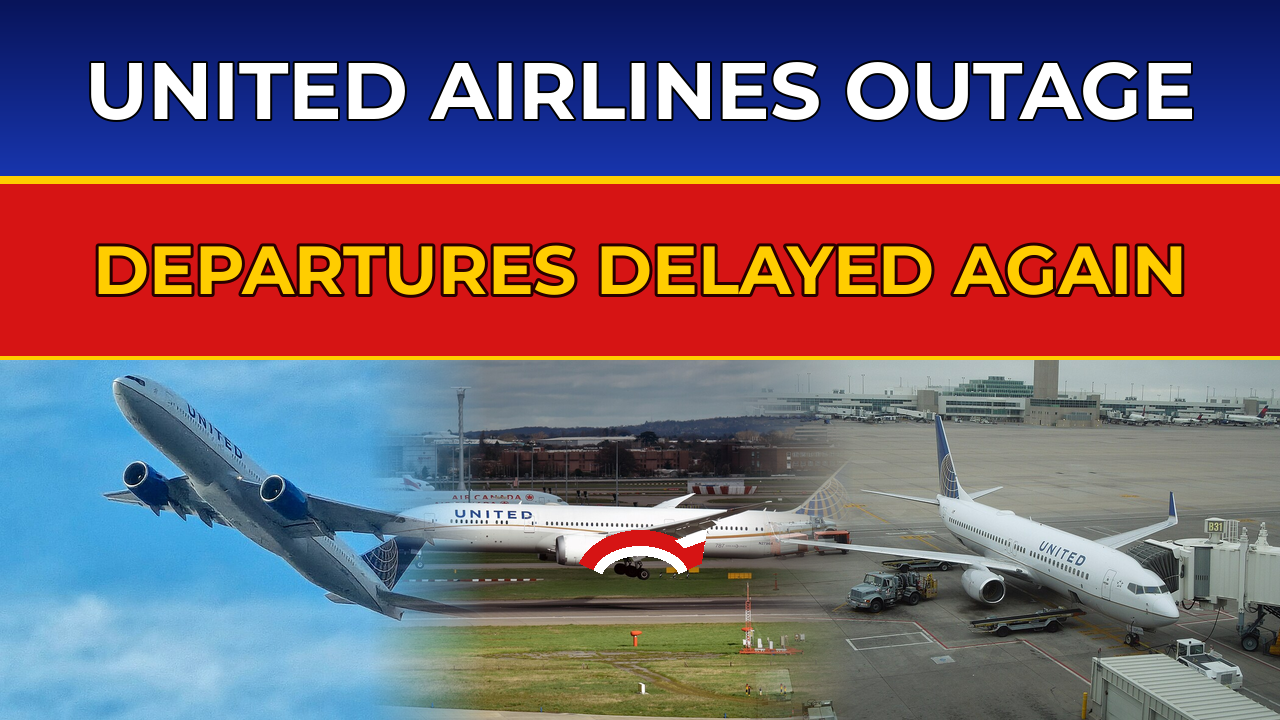
United Airlines confirmed a widespread system outage on Monday afternoon, 16 November 2026, that disrupted departing flights across the United States, just three days after a nationwide FAA ground stop brought American air travel to a standstill. The airline says it was troubleshooting a technology issue affecting departures, but flights already in the air and its regional United Express network were not affected. United later confirmed on Monday evening that the technology issue had been resolved.
Passengers at major hubs including Houston, Chicago and Newark reported planes held at gates while crews waited for the airline’s systems to come back online. United apologised to customers on social media and said its teams were working hard to get things back up and running as soon as possible.
| Key fact | What we know |
|---|---|
| What happened | United Airlines confirmed a widespread, systemwide technology outage on Monday afternoon, 16 November 2026 |
| Confirmed at | Around 5 p.m. ET on Monday, in a statement to USA Today and on social media |
| What is affected | Departing flights across the United States |
| What is not affected | Flights already in progress, and United Express regional flights |
| Cause | A technology issue United was troubleshooting; the airline has not given a detailed cause |
| Status | Resolved — United confirmed on Monday evening, 16 November 2026, that the technology issue had been fixed |
| Context | Comes three days after the FAA’s nationwide ground stop on Friday, 13 November 2026 |
What United Airlines said about the outage
United confirmed the problem in a statement on Monday afternoon after passengers began reporting delays and long waits at departure gates. “We are troubleshooting a technology issue affecting departing flights,” the Chicago-based airline said, adding that there was no impact on flights in progress or on United Express flights, its regional network.
On social media, the airline told customers: “We’re aware of the widespread system outage, and our teams are working hard to get things back up and running as soon as possible. We appreciate your patience while we work through this.”
It was not immediately clear which of the airline’s internal systems were affected. A recording posted on the ATC app, which combines live air traffic control radio feeds with real-time aircraft tracking, showed a United pilot in Houston asking the tower for permission to stay put at the gate until the system was working again.
Importantly, the Monday outage does not appear to be related to the technical problems that caused Friday’s nationwide ground stop, and other US airlines did not appear to be affected by United’s issue.
Which flights are affected — and which are not
The distinction matters for anyone travelling on Monday night or Tuesday. United’s statement draws a clear line between departures and flights already in the air, and the airline’s regional arm is operating normally.
| Flight type | Status during the outage |
|---|---|
| Departing United flights | Affected — delays and holds at departure gates while systems were down |
| Flights already in progress | Not affected — airborne aircraft continue to their destinations |
| United Express flights | Not affected — the regional network operated normally |
| Other US airlines | Not affected — the problem appears limited to United’s own systems |
That is a very different picture from Friday, when no airline could fly at all. But for passengers booked on a United departure on Monday evening, the practical advice is the same: check your flight status before leaving for the airport, and expect delays even if your aircraft is sitting at the gate.
A weekend of chaos: how the FAA ground stop set the scene
Monday’s outage landed on an aviation system that was already exhausted. On Friday, 13 November, the Federal Aviation Administration ordered every flight in the United States grounded after a new router installed as part of an upgrade from copper wire to fibre-optic cable began sending faulty signals that flooded data into the FAA’s ageing air traffic control system.
The router, in El Dorado, Arkansas, overwhelmed communications between planes and air traffic control centres. Out of an abundance of caution, officials shut down US airspace for more than four hours — the longest nationwide ground stop since the 9/11 attacks in 2001 brought American airspace to a standstill.
The disruption then snowballed through the weekend. Aircraft and crews ended up in the wrong cities, and airlines spent Saturday and Sunday trying to untangle the backlog. Read our full report on the FAA nationwide ground stop that grounded all US flights on 13 November.
| When | What happened |
|---|---|
| Friday 13 Nov | FAA orders a nationwide ground stop lasting more than four hours after a faulty router floods the ATC network |
| Friday 13 Nov | American, Delta, Southwest and United each cancel more than 1,000 flights; United reports 530 cancellations |
| Sat–Sun 14–15 Nov | Airlines work through the backlog; United and Delta impose extra temporary ground stops at individual airports on Saturday as gates run short |
| Monday 16 Nov (morning) | Recovery under way — 312 US flights cancelled and 2,238 delayed by 11 a.m., according to FlightAware; Delta and United record 10 cancellations each, against 159 at American |
| Monday 16 Nov (afternoon) | United confirms a separate, widespread system outage affecting its departing flights |
Over the whole weekend, more than 18,000 US flights were cancelled and more than 27,000 delayed, and over a million passengers were left stranded or sleeping in airports. By Sunday evening, the outlook had improved sharply — only 88 cancellations were showing in preliminary flight-tracking data — and US Transportation Secretary Sean Duffy said operations should be running at full capacity by Monday.
United’s chief executive, Scott Kirby, said on Sunday night that he was proud of the airline’s response to the crisis, but added that “this moment must be a call to action” on staffing and modernising US air traffic control facilities. Monday’s fresh outage will only sharpen that debate.
What United passengers should do now
If you are booked on a United flight in the next 24 to 48 hours, do not assume your departure time is safe. Check your flight status on United’s website or app before heading to the airport, and keep an eye on the airline’s social media accounts, where it has been posting updates.
Passengers caught up in the wider weekend disruption already have rebooking protection. United has offered a travel waiver that lets affected travellers change their plans without paying a change fee or a fare difference, as long as the new flight departs no later than Friday, 20 November, in the same cabin and between the same cities. Travellers who decide not to travel at all, or who cancel, can get a full refund.
Airlines handle in-flight problems very differently from ground delays — a PIA flight recently made an emergency landing in Karachi after a passenger suffered a heart attack, a reminder that crews train for mid-air emergencies while ground systems are a separate challenge altogether.
The key points for United travellers are simple: departures were the problem, airborne flights were fine, and the airline confirmed on Monday evening that the issue had been fixed. If your flight is delayed or cancelled, keep your booking reference handy and use the app or the airline’s rebooking tools rather than joining the queue at the airport desk, where lines are likely to be long.
A rough week for American technology
United’s computer problem is just the latest in a run of high-profile technology failures in the United States. Earlier on Monday, thousands of people reported being unable to access their online accounts at several major US banks after JP Morgan Chase had a technical problem. Read our report on the Chase Bank outage that hit online banking on 16 November.
One day earlier, Microsoft experienced a major disruption to its Outlook email service. Microsoft said on Saturday that its services were fully restored.
Three separate meltdowns — air traffic control, banking and email — in four days will raise uncomfortable questions about how much of daily life now depends on a small number of ageing or fragile systems. The FAA’s router failure and United’s outage are not the same problem, but they hit the same week, the same travelling public, and the same nerves.
What happens next
United confirmed on Monday evening that its systems had been restored, bringing the disruption to an end after a few hours of departure delays. The next figures that matter are FlightAware data showing United’s departure delays returning to normal levels.
Because the outage was fixed within a few hours, the damage was limited to Monday evening departure delays rather than a fresh wave of disruption for passengers who had only just got moving again after the worst weekend for US aviation in years.
We will update this story as fresh delay and cancellation figures become available.
Frequently asked questions
Is United Airlines still flying during the system outage?
During the outage, only in part. Flights already in the air were not affected and continued to their destinations, and United Express regional flights operated normally. The problem affected departing United flights, which were delayed or held at gates until the system was restored.
When did the United Airlines outage start?
United confirmed the widespread system outage on Monday afternoon, 16 November 2026, in a statement to USA Today at around 5 p.m. ET. The airline said it was troubleshooting a technology issue affecting departing flights.
Is the United outage connected to the FAA ground stop?
No, it does not appear to be. The FAA ground stop on Friday, 13 November was caused by a faulty router in the air traffic control network, while United’s Monday problem is in the airline’s own systems. Other US airlines were not affected by Monday’s United outage.
How many flights were cancelled over the weekend?
More than 18,000 US flights were cancelled and more than 27,000 delayed between Friday and Monday as a result of the FAA ground stop and the recovery backlog, according to USA Today. On Friday alone, American, Delta, Southwest and United each cancelled more than 1,000 flights.
Can I rebook or get a refund if my United flight is disrupted?
Yes. United’s travel waiver lets affected passengers rebook without a change fee or fare difference if the new flight departs by Friday, 20 November, in the same cabin and between the same cities. Passengers who cancel or decide not to travel can get a full refund.
Has the United Airlines outage been fixed?
Yes. United confirmed on Monday evening, 16 November 2026, that the technology issue had been resolved. The outage briefly delayed departing flights on Monday afternoon and evening; check United’s website, app or social media accounts for the latest status before travelling.