Azerbaijan School Hijab Ban Sparks Protests and Arrests as Enforcement Widens
By Sana Tariq | TimelyUps World Desk | Published: October 16, 2026 Schools across Azerbaijan have begun turning hijab-wearing girls and women away from classrooms under a new uniform rule, and the backlash has been swift: student walkouts, boycotts by boys, parents threatening to keep their children home, and dozens of reported arrests. It started…
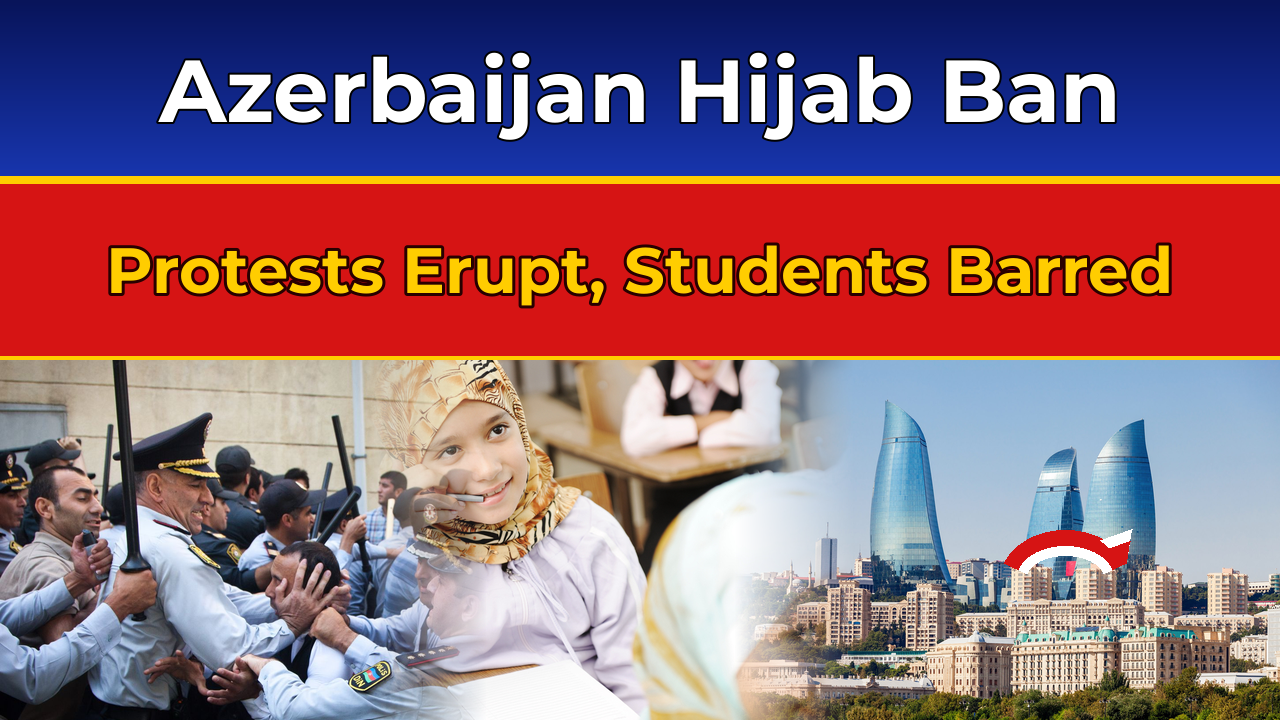
Schools across Azerbaijan have begun turning hijab-wearing girls and women away from classrooms under a new uniform rule, and the backlash has been swift: student walkouts, boycotts by boys, parents threatening to keep their children home, and dozens of reported arrests. It started as an administrative amendment to school dress codes. Within weeks it became one of the most closely watched religion-and-state stories in the Muslim world — and Pakistanis are paying especially close attention.
This is a story where both sides believe the stakes are the country’s future. The government says it is defending secularism and uniform classrooms. The protesters say it is policing faith. Here is what is verified so far, what each side argues, and what to watch next.
Key Facts: Azerbaijan’s School Hijab Ban — October 2026
- The rule: Cabinet of Ministers Resolution No. 309 (adopted September 21, 2026) amended school uniform regulations, banning school clothing that breaks uniformity or conflicts with the “principle of secularism”. The text never mentions the hijab. On October 6 the standard was extended to teachers.
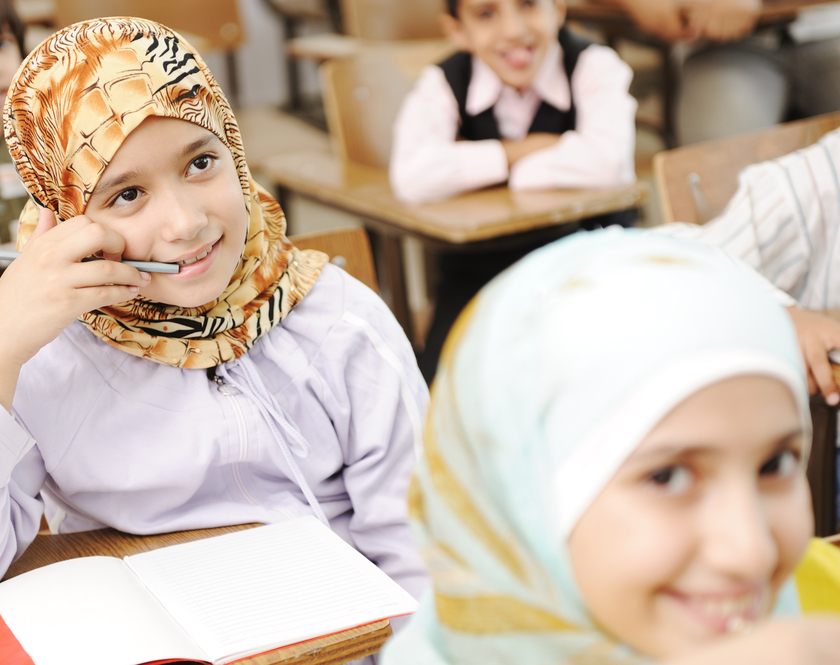
- Enforcement: In October, schools in Baku, Sumgayit, Ganja and the provinces began stopping hijab-wearing students at the gates; teachers were told they could no longer wear it at school.
- Protests: Students at Baku’s School No. 69 walked out and unfurled a banner saying the hijab is no obstacle to education; School No. 322 followed; the pattern repeated in Masally, Jalilabad and Hokmali. Boys joined the boycotts and some parents said they would keep sons home until girls were readmitted.
- Arrests: Dozens reported arrested — one report put October 12 arrests at 37, the next day’s at over 200. Figures vary by source.
- Digital blackout: Instagram and TikTok were reported failing for many users in Azerbaijan as protest footage spread, per Tehran Times.
- The disinformation wrinkle: a letter allegedly from the Ministry of Health claiming hijab restrictions in medical institutions went viral — and Azerbaijan’s Media and Broadcasting Council and Ministry of Health jointly confirmed it is FAKE.
- The context: roughly 96-98% of Azerbaijanis identify as Muslim; the constitution defines the country as secular while guaranteeing religious freedom.
The Resolution Behind the Crackdown
The legal trigger is dry and technical, which is precisely why it caught many off guard. On September 21, 2026, Azerbaijan’s Cabinet of Ministers adopted Resolution No. 309, amending the country’s school uniform regulations. The new wording bans school clothing that breaks uniformity or conflicts with the “principle of secularism”. The word “hijab” appears nowhere in the text.
That vagueness did not last long in practice. As the autumn term got underway in October, schools in Baku, Sumgayit and Ganja — and soon in the provinces — began refusing entry to students wearing headscarves. On October 6, the same standard was extended to teachers. One of them, Zahra Hasanova, told Al Jazeera she had simply been informed she could no longer wear the hijab at school — a garment she described as “a personal choice”.
The Government’s Case: Secularism in the Classroom
To understand the official position, you have to understand Azerbaijan. This is a country of about 10 million people where nearly everyone identifies as Muslim — surveys put the figure at 96 to 98 percent — yet whose constitution defines the state as secular and explicitly separates religion from government while guaranteeing freedom of religion.
The government’s argument, in essence, is that the classroom is a state space. Uniform rules keep schools neutral ground where students arrive as equals, undistinguished by religion or social background. Officials frame the measure not as targeting Islam but as protecting the secular character of public education — a principle with deep roots in Azerbaijani state policy.
“The Hijab Is No Obstacle to Education”: The Students’ Answer
The students answered with their feet. At School No. 69 in Baku’s Balakhani district, pupils walked out of class and unfurled a banner declaring that the hijab is no obstacle to education. School No. 322 followed suit. The same scene then repeated beyond the capital — in Masally, Jalilabad and Hokmali — suggesting this was not one neighbourhood’s grievance but a genuinely nationwide reaction.
What made the boycotts harder for authorities to dismiss as a fringe phenomenon was who joined them. Boys walked out alongside girls. Parents — including the fathers of boys — told reporters they would keep their sons home until the hijab-wearing girls were readmitted. The framing was deliberately educational, not theological: nobody disputes the value of schooling, the protesters insist; the dispute is whether a headscarf is compatible with it.
Arrests, a Hunger Strike, and Vanishing Social Media
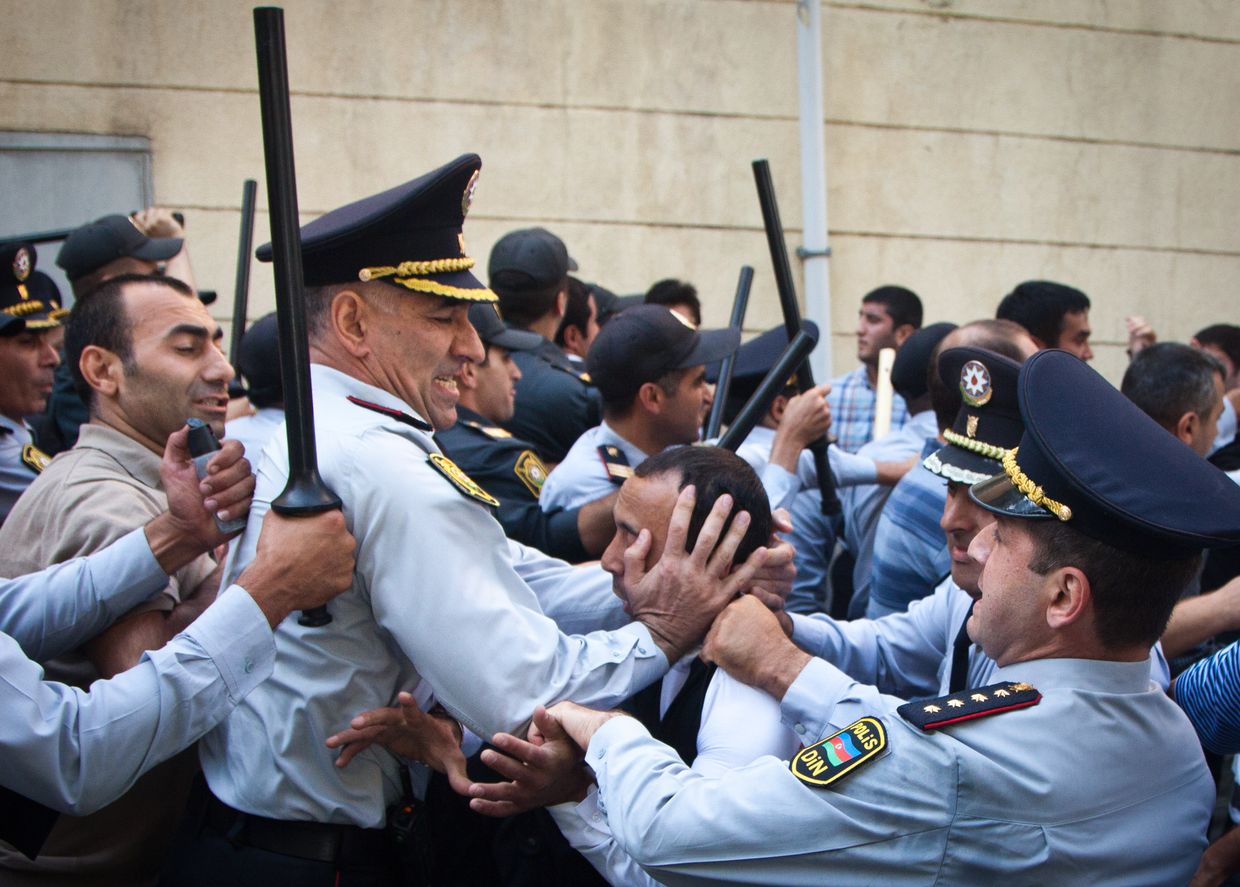
As footage of the walkouts spread, so did the crackdown. Reports of arrests multiplied — “dozens”, in the careful language of the reporting, with one account putting October 12 detentions at 37 and the next day’s at more than 200. The numbers vary because they come from different sources at different moments; what is not disputed is that enforcement is real and visible.
At the same time, Instagram and TikTok began failing for many users inside Azerbaijan just as protest videos were gaining traction, according to the Tehran Times. Whether the outages are technical or deliberate has not been established, but the timing has fed suspicions of an attempted information blackout. Meanwhile, a jailed journalist, Polad Aslanov, has gone on hunger strike over the hijab ban, according to jawawa — turning one prisoner’s protest into a rallying point for the wider campaign.
From Baku to Istanbul: Why It Is Spreading
The reaction has not stayed inside Azerbaijan’s borders. Solidarity campaigns and protests have reached Turkey, where commentators have drawn direct parallels with Turkey’s 1997 “postmodern coup” era, when headscarf restrictions in universities and public institutions became one of the most bitter secularism battles in the republic’s history. Once Turkey’s commentariat adopted the cause, the debate stopped being about Azerbaijani school regulations and became a referendum on how Muslim-majority states define secularism itself.
Fake Letters and the Disinformation Trap
One episode deserves its own warning label. As the crisis grew, a letter purportedly from Azerbaijan’s Ministry of Health began circulating online, claiming hijab restrictions would also be imposed in medical institutions. It spread fast — fear travels faster than fact.
It spread fast — fear travels faster than fact. But it was fake. Azerbaijan’s Media and Broadcasting Council and the Ministry of Health jointly confirmed the letter is a fabrication. The episode is a textbook case of how real controversies breed unreal ones: the underlying story is documented and real, but the atmosphere made an invented claim plausible enough to go viral.
The practical takeaway for readers: if a claim about this story feels explosive — a new ban, a new victim, a new decree — check whether it comes from an identifiable official source or an established newsroom before sharing it. This is exactly the kind of story where disinformation thrives.
Why Pakistanis Are Watching
This is not a distant story for Pakistani readers, and it is worth saying why plainly. Azerbaijan is one of Pakistan’s closest international partners — Pakistan backed Azerbaijan through the Nagorno-Karabakh conflict when few other countries did, and the two countries describe their relationship in brotherly terms. What happens to Muslims in Azerbaijan therefore lands in Pakistan with unusual emotional weight.
There is also a domestic resonance. Pakistan has its own long, unresolved arguments about dress codes, secularism in education, and the boundaries of religious expression in public institutions. For Pakistani readers, the Baku school gates are a mirror as well as a window — a chance to watch another Muslim-majority state wrestle with questions Pakistan has not settled for itself.
What Happens Next
The honest answer is that nobody knows, and the early signs point in both directions. The government has shown no sign of repealing Resolution No. 309, and extending the rule to teachers on October 6 suggests the direction is toward widening, not softening. But the breadth of the boycotts — across cities, across genders, drawing in parents — is the kind of social signal governments find hard to ignore indefinitely. If classrooms start emptying, the policy’s own stated goal (orderly, uniform education) begins to work against it.
Three things to watch: whether arrest figures keep climbing, whether the solidarity movement in Turkey grows into sustained pressure, and whether any official clarification narrows the resolution’s interpretation — for instance, an exemption that lets the government claim it never meant a ban at all. We will update this story as verified developments come in.
Frequently Asked Questions
Did Azerbaijan actually ban the hijab in schools?
Not in those words. Cabinet Resolution No. 309 (September 21, 2026) bans school clothing that breaks uniformity or conflicts with the “principle of secularism” — the text never mentions the hijab. But schools have interpreted and enforced it as a hijab ban, turning hijab-wearing students and teachers away since October.
When did the hijab ban enforcement start in Azerbaijan?
Enforcement began in October 2026, shortly after the autumn term started. Schools in Baku, Sumgayit, Ganja and the provinces began refusing entry to hijab-wearing students at the gates. On October 6, the rule was extended to teachers, who were told they could no longer wear the hijab at school.
How many people have been arrested in the Azerbaijan hijab protests?
Dozens have been reported arrested, but figures vary by source and by day. One report put October 12 arrests at 37 and the following day’s at more than 200. Because the numbers come from different outlets at different moments, treat any single figure with caution.
Is it true Azerbaijan banned the hijab in hospitals too?
No — that claim came from a fake letter that circulated online, purportedly from the Ministry of Health. Azerbaijan’s Media and Broadcasting Council and the Ministry of Health jointly confirmed the letter is a fabrication. It is a reminder to verify explosive claims about this story against official sources or established newsrooms.
Why is this story trending in Pakistan?
Azerbaijan is one of Pakistan’s closest allies — Pakistan backed Azerbaijan over Nagorno-Karabakh — so developments affecting Muslims there carry unusual emotional weight in Pakistan. Pakistanis also follow the story because it mirrors Pakistan’s own debates about religion, dress codes and secularism in public education.
What is the government of Azerbaijan’s justification for the rule?
The government’s position is that classrooms are state space and uniform rules protect the secular character of public education, keeping students neutral and equal regardless of religion or background. Officials frame it as defending secularism — a constitutional principle in Azerbaijan — rather than targeting Islam.