US Withdraws B-1 Bombers From Britain After Security Scare Near Iran Operations Base
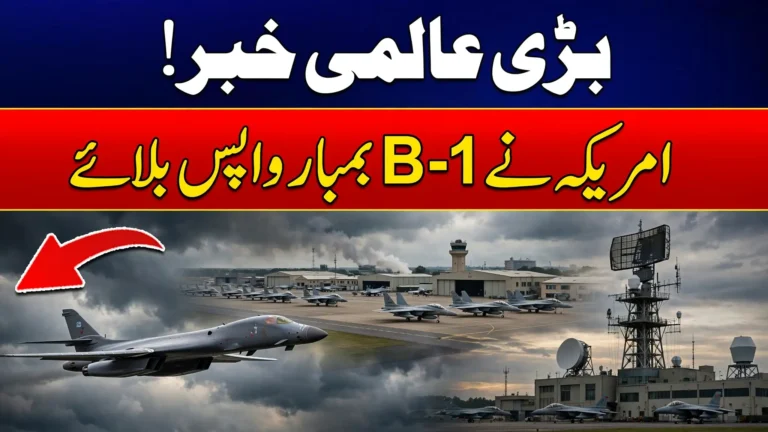
The United States has pulled its B-1 bombers out of Britain following a security scare close to a base linked to operations involving Iran, according to reporting published on October 5, 2026. The move quickly drew attention across defence circles because the long-range bombers had been positioned in Britain as part of a wider show…
The United States has pulled its B-1 bombers out of Britain following a security scare close to a base linked to operations involving Iran, according to reporting published on October 5, 2026. The move quickly drew attention across defence circles because the long-range bombers had been positioned in Britain as part of a wider show of presence during a tense period in the Middle East. While officials have not presented the withdrawal as a change in overall policy, the timing underlines how sensitive forward deployments have become when bases, airspace and regional threats are all under close watch. For readers following the standoff, the development is less about a single aircraft movement and more about how quickly operational plans can shift when security concerns rise around an overseas base.
What Happened Around The Deployment
Reports on October 5 said the bombers were withdrawn from Britain after a security scare near the base used for Iran-related operations. The reporting, carried by Geo News citing international news agency material, framed the decision as a precaution linked to the immediate security environment around the deployment rather than a routine rotation announced long in advance. No detailed public timeline was given for when the aircraft left, where they were redeployed, or when, if at all, they might return to a British base.
That lack of detail is common in fast-moving military deployments. Air forces rarely publish precise movement schedules for strategic bombers, and host governments usually limit comment to confirming that operations are handled safely and in coordination with allies. What can be said clearly from the published report is that a security concern was serious enough for the United States to change the posture of a high-value asset in Britain, and that the decision was newsworthy precisely because B-1 deployments are normally planned signals of deterrence, not short-notice reactions.
Why Britain Matters For US Bomber Operations
Britain has long been an important staging point for American air power operating towards Europe and the Middle East. Bases in England give the US Air Force range, maintenance support and political backing from a close ally, while allowing bombers to fly missions without permanently basing them inside a conflict zone. The B-1 Lancer, a supersonic long-range bomber designed to carry heavy conventional payloads over intercontinental distances, is often used in exactly this role: visible enough to send a message, flexible enough to be moved when the risk picture changes.
The Iran connection explains why even a precautionary move attracts global attention. Any adjustment to bomber posture is read in Tehran, Washington, London and across the Gulf as a signal about readiness and intent. Analysts therefore tend to separate two questions that headlines often merge. The first is tactical: was a specific base facing a specific concern that made a temporary move prudent? The second is strategic: does the withdrawal change the broader balance or the message the United States wants to send? On the evidence published so far, only the first question can be answered with confidence. There has been no announced change to alliance commitments, and a relocation of bombers does not by itself mean missions have ended.
- The bombers were based in Britain in support of operations linked to Iran.
- Reporting on October 5, 2026 linked the withdrawal to a security scare near that operations base.
- No public return date or replacement deployment was announced in the report.
- Officials did not present the move as a change to the wider US-UK alliance.
What To Watch Next
The next signals will come from equally careful official language. If the bombers reappear at a British base in the coming days, the episode will look like a short security pause. If they operate instead from another allied location, it may suggest planners prefer a different footprint while tensions remain high. Statements from the US Air Force, the UK Ministry of Defence and regional governments will matter more than speculation about individual flights, especially because bomber movements are easy to photograph but hard to interpret without knowing mission orders, maintenance cycles and threat assessments.
For Pakistan and the wider region, the story is a reminder that Middle East security decisions taken in Europe can still affect energy markets, shipping confidence and diplomatic calculations far away. Oil traders, airlines avoiding sensitive airspace and governments balancing ties with both Washington and Tehran all watch the same headlines for different reasons. Until more verified detail is published, the responsible reading is narrow: a US bomber deployment in Britain was changed after a security scare connected to Iran operations, and allies are saying little beyond that. TimelyUps will update this story only when further confirmed reporting is available, rather than filling gaps with rumour.
Source: Geo News – https://www.geo.tv/latest/685022-us-withdraws-b-1-bombers-from-britain-after-security-scare-near-iran-operations-base