
Pakistan, Türkiye to Deploy Troops to Saudi Arabia as Mecca Pact Activated
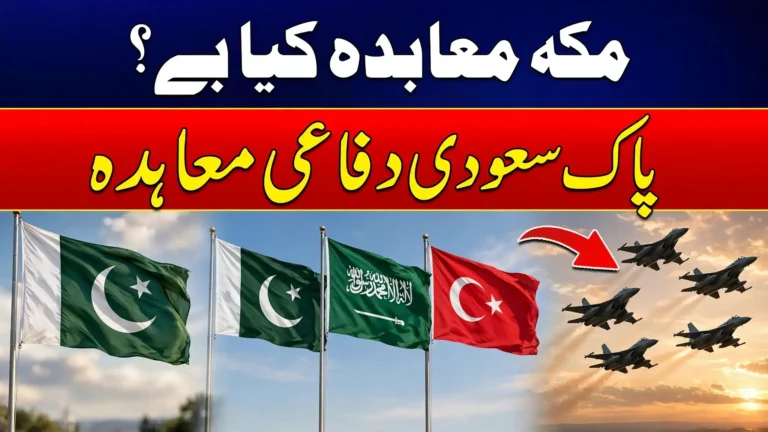
Pakistan, Türkiye and Saudi Arabia have activated the Mecca defence pact and agreed to rapidly deploy military forces to the Gulf kingdom, following a wave of Houthi attacks on Saudi targets. The decision, taken at an emergency meeting in Riyadh on 5 October 2026, is the first time the alliance has been invoked since it…
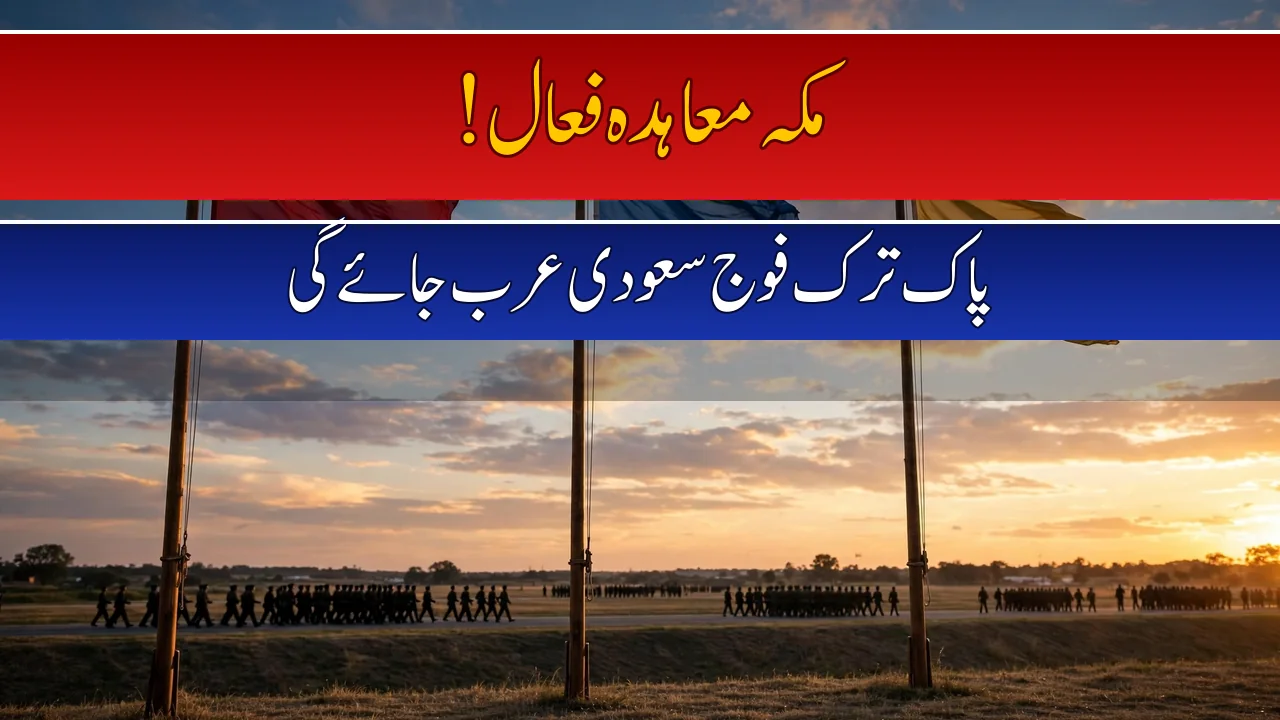
Pakistan, Türkiye and Saudi Arabia have activated the Mecca defence pact and agreed to rapidly deploy military forces to the Gulf kingdom, following a wave of Houthi attacks on Saudi targets. The decision, taken at an emergency meeting in Riyadh on 5 October 2026, is the first time the alliance has been invoked since it was signed in August — and it puts Pakistan at the centre of one of the Middle East’s most dangerous escalations.
The announcement came just hours after Saudi-backed Yemeni government forces launched a counteroffensive against the Iran-aligned Houthis, retaking the port city of Mocha and claiming control of the strategic Bab al-Mandeb strait, with 100 Saudi coalition fighter jets providing air support.
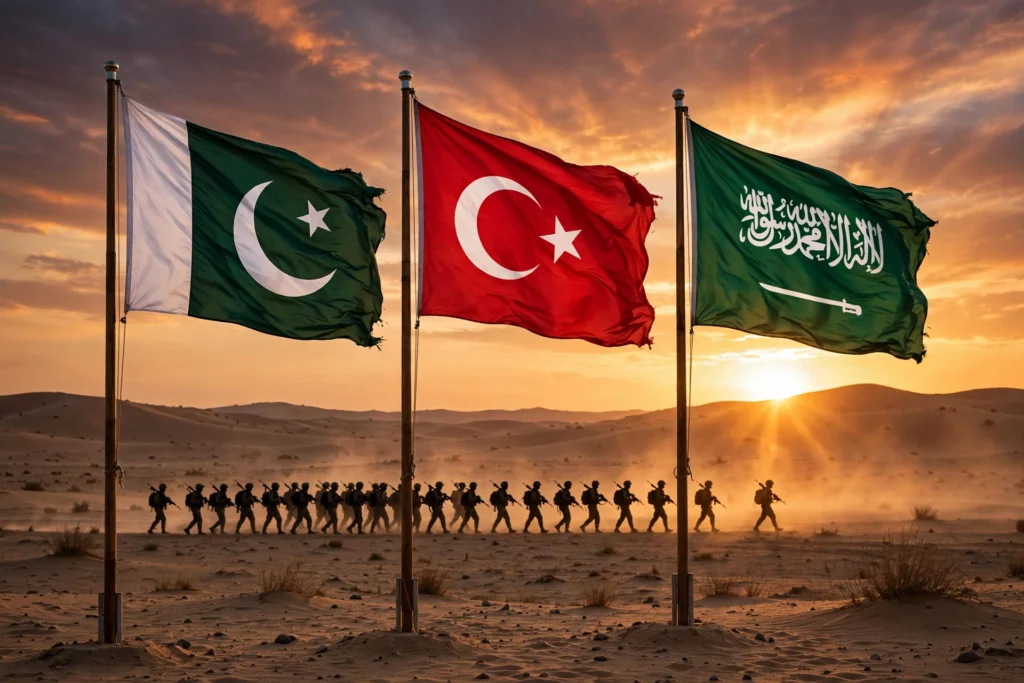
What Was Agreed in Riyadh
The three countries’ defence and foreign ministers met in the Saudi capital on Monday under the alliance’s Strategic Political and Defence Committee. After the meeting, Saudi Defence Minister Khalid bin Salman said the committee had agreed to “activate collective deterrence measures” in response to what he called “heinous attacks” by the Houthis against the kingdom and holy sites.
- Rapid deployment: A joint statement from Pakistan’s Foreign Ministry said the three countries would “provide the agreed military forces and capabilities and ensure their rapid deployment” to Saudi Arabia.
- Collective defence: The pact treats an attack on one member as an attack on all three — a clause modelled on NATO’s founding principle.
- Within the law: The commitments will be carried out under “approved arrangements” and in line with each country’s own laws.
- First activation: The Mecca Alliance for Defence had existed only on paper since its signing on 7 August 2026 — until now.
Why the Pact Was Triggered Now
Saudi Arabia blames Yemen’s Houthis for a string of recent attacks, including a drone strike on a power distribution station in Madinah and earlier missile barrages in September. The Houthis denied responsibility for the Madinah attack but have claimed strikes on Riyadh’s King Khalid International Airport and an Aramco refinery in Rabigh — claims Riyadh has not confirmed.
Pakistani Defence Minister Khawaja Asif had already warned that if aggression spilled over into Saudi Arabia, “definitely the Mecca agreement will become operational.” That warning has now become reality.
What Is the Mecca Pact?
The Mecca Alliance for Defence was signed on 7 August 2026 by Turkish President Recep Tayyip Erdoğan, Saudi Crown Prince Mohammed bin Salman and Pakistani Prime Minister Shehbaz Sharif. It grew out of the wider regional crisis triggered by the US-Israel war on Iran.
- Firepower: Together, the three members field nearly 1.4 million active troops, about 3,400 military aircraft, 6,000 tanks and more than 340 naval vessels, according to the 2026 Global Firepower Index.
- Institutions: A permanent secretariat is being set up in Riyadh, initially headed by a Pakistani secretary general — retired Lieutenant General Nauman Mahmood — for three years.
- Defensive: Pakistan’s Foreign Minister Ishaq Dar has stressed the pact is defensive in nature and open to other members; more than six countries have reportedly expressed interest in joining.
- Industry: The agreement also covers defence-industry cooperation and joint technology development.
Iran’s Diplomatic Countermove
Adding a twist to the crisis, Dar revealed that Iran is distancing itself from the Houthis. After speaking with Iranian Foreign Minister Abbas Araghchi, Dar said Tehran had suggested the Houthis be engaged politically rather than targeted militarily — a proposal that will be considered by the alliance’s committee.
That leaves Pakistan in a familiar but difficult position: bound by a defence commitment to Saudi Arabia, while trying to keep its long border with Iran calm and its policy of dialogue with Tehran intact. “As Muslims,” Dar said, Pakistan would honour its commitments.
What This Means for Pakistan
This is arguably the most consequential foreign-policy decision Pakistan has taken this year, and it touches ordinary Pakistanis in several ways:
- Troops abroad: Pakistani soldiers serving in Saudi Arabia is not new — Pakistan has long stationed troops in the kingdom — but a formal pact activation raises the stakes and the potential for casualties.
- Expats: More than two million Pakistanis live and work in Saudi Arabia. Their safety depends on the kingdom staying stable, which is exactly what the deployment aims to protect.
- Remittances: Saudi Arabia is Pakistan’s biggest source of remittances. Escalation that disrupts the Saudi economy would hit Pakistani household incomes directly.
- Oil and inflation: The Houthi conflict already threatens shipping through the Bab al-Mandeb strait. Any wider war would push up oil prices — and with them, petrol prices and inflation in Pakistan.
What Happens Next
Watch for the scale and speed of the deployment, whether the Yemeni government’s counteroffensive holds its gains around Mocha and Bab al-Mandeb, and whether Iran’s proposal for political engagement with the Houthis gains traction. If the fighting widens, the Mecca pact’s first real test could quickly become Pakistan’s most serious military commitment abroad in years.
FAQs
What is the Mecca defence pact?
A mutual defence agreement signed on 7 August 2026 by Pakistan, Saudi Arabia and Türkiye, under which an attack on one member is treated as an attack on all. It was activated for the first time on 5 October 2026.
Why are Pakistani troops being sent to Saudi Arabia?
Following Houthi attacks on Saudi targets, including a power station in Madinah, the three pact members agreed to “activate collective deterrence measures” and rapidly deploy agreed military forces to the kingdom.
What did Iran propose?
Foreign Minister Ishaq Dar said Iran’s foreign minister suggested engaging the Houthis politically rather than militarily. The proposal will be considered by the alliance’s defence committee.
How does this affect Pakistanis?
Over two million Pakistanis work in Saudi Arabia, the country’s top source of remittances. Escalation could also raise oil prices and inflation in Pakistan, while a Pakistani troop deployment carries its own risks.


One Comment