Copa and UPS Planes Collide at Miami Airport a Day After US Ground Stop; Two Injured
By Hira Shahid | November 15, 2026 A Copa Airlines passenger jet and a UPS cargo plane collided while taxiing at Miami International Airport on Saturday night, November 14, 2026, leaving two people with minor injuries. The wingtip of the Copa Boeing 737 struck the nose of the UPS Boeing 767 at the intersection of…
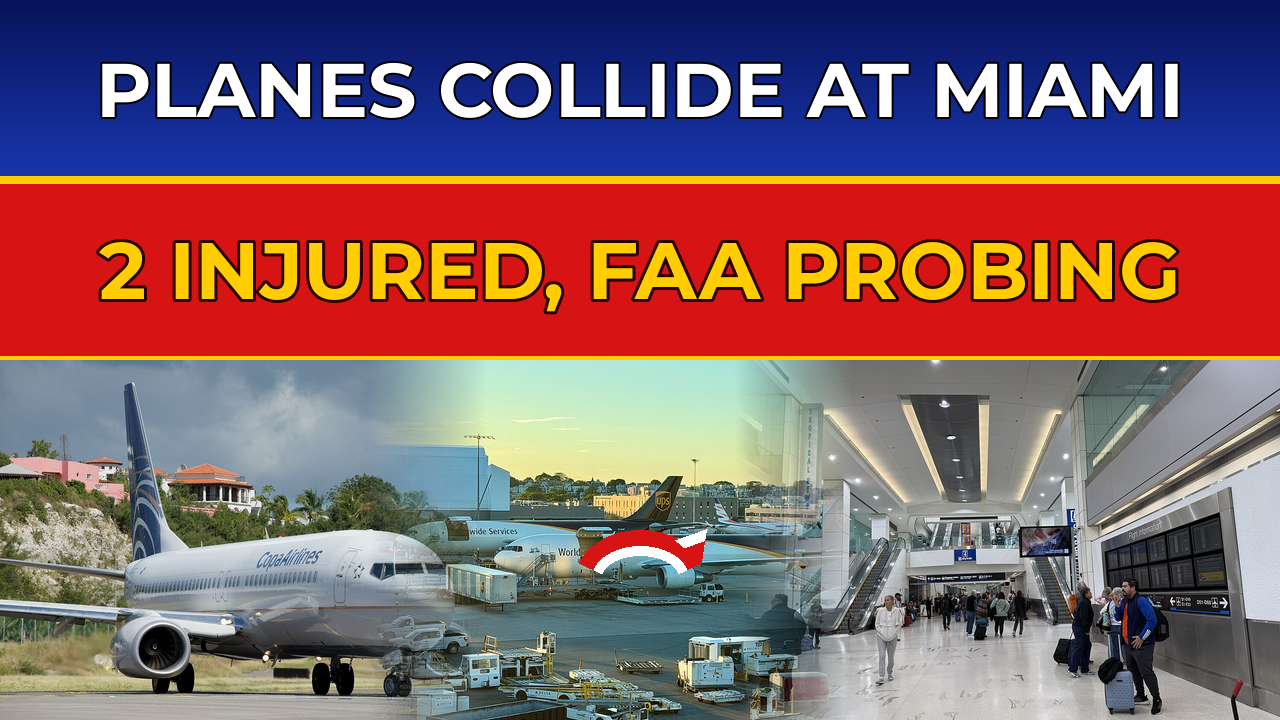
A Copa Airlines passenger jet and a UPS cargo plane collided while taxiing at Miami International Airport on Saturday night, November 14, 2026, leaving two people with minor injuries. The wingtip of the Copa Boeing 737 struck the nose of the UPS Boeing 767 at the intersection of two taxiways at around 9:15pm local time, the Federal Aviation Administration (FAA) said. The collision came just a day after a nationwide FAA ground stop grounded departures across the United States, though the FAA has not established any connection between the two events.
All 166 passengers and six crew members on the Copa flight disembarked safely and the aircraft was returned to the terminal. The two injured people were treated at the scene by fire and rescue teams and did not need to go to hospital. The FAA has opened an investigation, and has confirmed that air traffic controllers had told the UPS crew to give way to the Copa flight before the collision.
Key Facts: Miami Airport Plane Collision
| Detail | What Happened |
|---|---|
| Date and time | Saturday, November 14, 2026, around 9:15pm local time |
| Location | Miami International Airport, at the intersection of two taxiways |
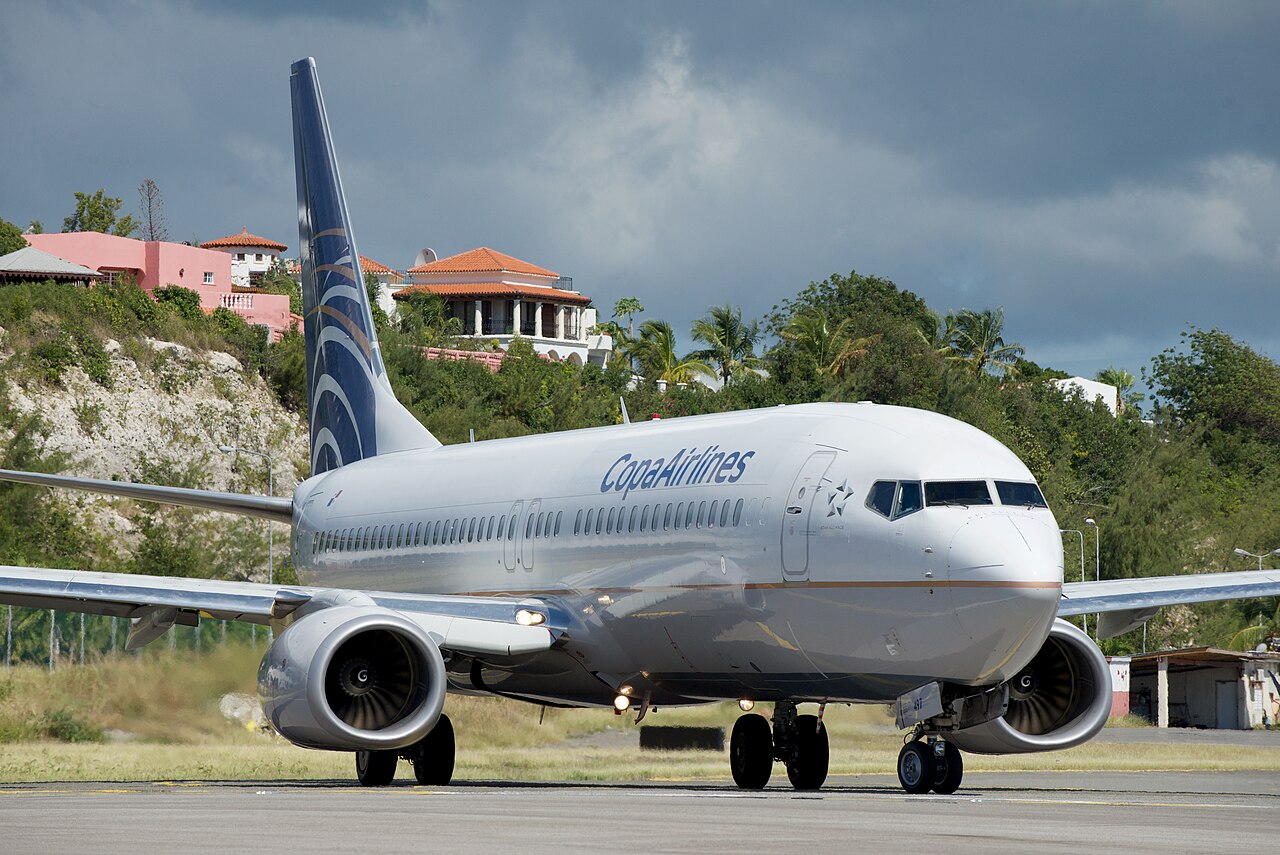
| Aircraft involved | Copa Airlines Boeing 737 and UPS Boeing 767 |
| How they collided | The Copa 737’s wingtip struck the nose of the UPS 767 while both were taxiing |
| Copa flight | Flight 427, arriving from Panama City, Panama; 166 passengers and 6 crew on board |
| UPS flight | Flight 358, preparing to depart for Bogota, Colombia |
| Injuries | 2 people with minor injuries, treated at the scene; no hospitalisation |
| Damage | Copa jet missing its left wingtip; UPS jet’s nose crumpled with a gaping hole in the panels |
| ATC instruction | Air traffic controllers had told the UPS crew to give way to the Copa flight, the FAA said |
| Investigation | FAA investigating; no cause established yet |
| Airport operations | Continued without disruption; flights redirected to other taxiways |
What Happened at Miami Airport
The Copa flight had just landed in Miami from Panama City and was taxiing to its gate. At the same time, the UPS freighter was taxiing for departure to Bogota. The two aircraft met at the point where two taxiways cross, and the Copa jet’s wingtip hit the UPS jet’s nose.
A photo of the UPS plane after the collision shows its nose crumpled, with a gaping hole in the panels. The Copa aircraft came off worse in a different way: its left wingtip was torn away in the impact.
Inside the Copa cabin, passengers felt the jolt before they understood what had happened. Cesar Ferreira, a passenger on the Copa flight, told CNN that the aircraft was taxiing after landing at a normal speed when the chatter around him suddenly got louder, followed by a collective scream and then the impact of another aircraft hitting theirs. He said the plane jerked abruptly sideways, some passengers started to panic, and the crew reacted quickly to keep everyone seated.
About ten minutes after the collision, the captain announced there was no imminent danger and that a tug would be brought in to move the plane. All 166 passengers and six crew members then disembarked, and the Copa aircraft was returned to the terminal.
“Somebody Hit Us”: The Radio Calls After the Collision
The air traffic control audio from the minutes after the collision captures how quickly the crews realised something had gone wrong. “Somebody hit us,” the Copa pilot said, as the controller asked the UPS crew whether they had made contact.
“Yeah, we went too far, and then he clipped us with the wing,” the UPS pilot replied in the audio. Later, the Copa pilot reported: “It seems that we are missing the left wingtip.”
Those exchanges are now part of the record the FAA will examine. What they do not do, on their own, is explain why the two aircraft ended up at the same point on the taxiway at the same time. The FAA has said only that its controllers had told the UPS crew to give way to the Copa flight, and that the agency is investigating. No cause has been established, and it would be wrong to assign blame before the investigation reports.
Two Minor Injuries, No Hospital Trips
Two people were hurt in the collision, and both injuries were minor. Miami-Dade Fire Rescue treated them at the scene, and neither person needed hospital transport, airport communications director Greg Chin told CNN.
Copa Airlines said in a statement that two passengers had received attention from airport paramedics for what preliminarily appeared to be minor injuries. The airline said it regretted the disruption the incident might cause its passengers, that the safety of passengers and crew was its top priority, and that it would cooperate with the authorities as they investigate.
UPS confirmed that one of its aircraft was involved and said its crew was safe. The company said it was committed to working with the authorities to determine what happened.
Given that two large aircraft made contact on a busy taxiway, the outcome could easily have been far worse. The fact that everyone on board walked away, and that only two people needed treatment at the scene, is the one piece of genuinely good news in the story.
The FAA Investigation and the Give-Way Instruction
The single most important fact the FAA has released so far is the instruction its controllers gave before the collision: the UPS crew had been told to give way to the Copa flight. The agency has not said more than that, and it has not assigned a cause.
Investigators will now work through the standard questions for a ground collision. They will listen to the full air traffic control recordings, check the taxi instructions given to both crews, look at the airport’s ground radar and surface movement records, and examine both aircraft. The condition of the UPS jet’s nose and the Copa jet’s missing wingtip will also be documented as part of the damage assessment.
Ground collisions between taxiing aircraft are rare at major airports, but they are not unheard of. They usually come down to a combination of factors: how busy the taxiways were, visibility, the exact wording and timing of controller instructions, and what each crew could see from the cockpit. A Boeing 767’s nose sits high off the ground, and a 737’s wingtip is easy to misjudge from the flight deck. None of that is an explanation for this collision. It is simply the ground the investigators will cover before they say anything definitive.
A Day After the Nationwide Ground Stop, and No Link Established
The timing of the collision is impossible to ignore. It happened on Saturday night, barely a day after the FAA imposed a nationwide ground stop on Friday, November 13, that grounded departures across the United States for around five hours and caused widespread cancellations and travel chaos. It was only the second nationwide ground stop since 9/11.
The ground stop was imposed as a safety precaution after a communications network failure disrupted radar and communications at air traffic control centres. US Transportation Secretary Sean Duffy said the disruption involved a router being installed by FAA contractor L3Harris at a remote facility, as part of work to replace older copper telecommunications connections with fibre-optic infrastructure. The faulty router flooded the air traffic control system, affecting 17 of the 22 air traffic control centres. FlightAware data put Friday’s cancellations at around 10,000, with a further 5,973 flights cancelled on Saturday. Around 60 routers of the same type were disabled as a precaution. FAA Administrator Bryan Bedford said normal flight schedules were unlikely to resume until late Sunday, with airlines facing the task of repositioning aircraft and crews.
It is natural to ask whether the two events are connected. The answer, on the evidence available so far, is that no official evidence links the Miami collision to the ground stop, and the FAA has not established any connection between them. The ground stop was a communications failure affecting the national air traffic system. The Miami collision was a ground movement incident between two taxiing aircraft at one airport, a day later, after flights had begun resuming in phases. Until the FAA’s investigation says otherwise, the two should be treated as separate events that happened to fall on consecutive days.
Miami Airport Has Seen Worse This Year
The collision is the second serious incident at Miami International Airport in just over two months. On September 6, 2026, 21 Air Flight 7598, a Boeing 767-33A freighter operating for Amazon Prime Air from San Juan, Puerto Rico, overran Runway 30 after landing, left the airport boundary and struck two vehicles. Five people on the ground were killed and three were seriously injured. The US National Transportation Safety Board published a preliminary report on October 1, 2026, and has not yet determined a probable cause. That was a far more serious accident than Saturday’s taxiway collision, and it is a reminder that the same airport has now had two major ground safety incidents in a single autumn.
What Happens Next
The FAA investigation is now the story to watch. The agency will publish its findings in due course, and the key questions are straightforward: what instructions were given to each crew, when, and whether they were followed; what the ground radar and recordings show; and whether any procedure or equipment issue played a part.
Both aircraft will need repairs before they fly again. The Copa 737 needs a new left wingtip at minimum, and the UPS 767’s nose damage, described as a gaping hole in the panels, will need a full structural assessment. Neither airline has said when the aircraft will return to service.
For passengers, the practical impact was limited. The Copa passengers were rebooked after disembarking, and the airport said operations continued with flights redirected to other taxiways. The wider disruption at US airports this weekend came from the ground stop and its aftermath, not from the Miami collision itself.
We will update this article when the FAA releases further information about the investigation.
Related Coverage
- FAA Nationwide Ground Stop: US Flights Grounded After Communications Failure — our full report on Friday’s nationwide ground stop, the L3Harris router failure behind it, and the phased resumption of flights.
- SpaceX Starship Flight 15: Double Catch and Launch Time — Starship’s latest test flight, which also made headlines in a busy weekend for US aviation.
- Jamaica Beat Mexico 3-2 in Nations League Quarter-Final — the weekend’s other big international result, from the Concacaf Nations League.
Frequently Asked Questions
What happened at Miami airport on November 14, 2026?
Two planes collided while taxiing at Miami International Airport at around 9:15pm local time on Saturday, November 14, 2026. The wingtip of a Copa Airlines Boeing 737 struck the nose of a UPS Boeing 767 at the intersection of two taxiways. Two people suffered minor injuries, and the FAA is investigating.
How many people were injured in the Miami airport collision?
Two people were injured, and both injuries were minor. They were treated at the scene by Miami-Dade Fire Rescue and did not require hospital transport. All 166 passengers and six crew members on the Copa flight disembarked safely.
Which flights were involved in the collision?
The Copa Airlines flight was Flight 427, a Boeing 737 arriving from Panama City, Panama, with 166 passengers and six crew on board. The UPS aircraft was Flight 358, a Boeing 767 preparing to depart for Bogota, Colombia.
Did air traffic control tell the UPS plane to give way?
Yes. The FAA said air traffic controllers had told the UPS crew to give way to the Copa flight before the collision. The agency is investigating the incident and has not yet established a cause, so no blame has been assigned.
Is the Miami collision linked to Friday’s FAA ground stop?
No link has been established. The FAA imposed a nationwide ground stop on Friday, November 13, after a communications network failure, but no official evidence connects that failure to the Miami taxiway collision a day later. The FAA has not established any connection between the two events.
Was this the first serious incident at Miami airport this year?
No. On September 6, 2026, a Boeing 767 freighter operating for Amazon Prime Air overran Runway 30 at the same airport and struck two vehicles, killing five people on the ground and seriously injuring three. The NTSB published a preliminary report on October 1, 2026, and has not yet determined a probable cause.