SpaceX Starship Flight 15 Tonight: First-Ever Double Catch Attempt — Launch Time, How to Watch
Latest: Launched — But the Booster Catch Failed, Ship Still in Orbit Starship Flight 15 is off the ground, but the historic double catch is already half gone. The 124-metre rocket lifted off on time at 22:45 UTC on Friday, 13 November — 3:45am PKT on Saturday, 14 November — from Orbital Launch Pad 2…

Latest: Launched — But the Booster Catch Failed, Ship Still in Orbit
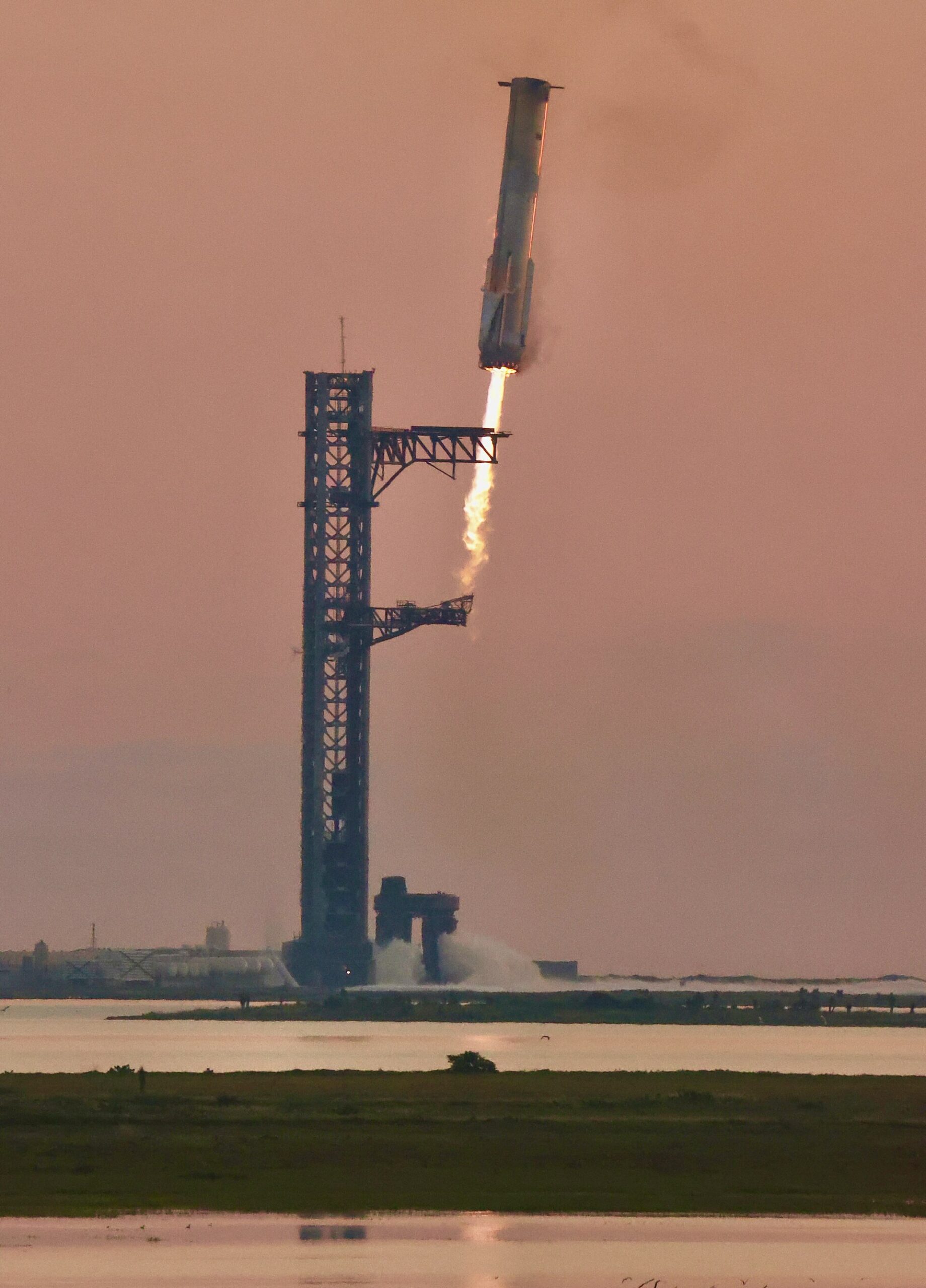
Starship Flight 15 is off the ground, but the historic double catch is already half gone. The 124-metre rocket lifted off on time at 22:45 UTC on Friday, 13 November — 3:45am PKT on Saturday, 14 November — from Orbital Launch Pad 2 at Starbase, Texas, after the FAA issued the launch licence on launch day. Max Q, main-engine cutoff and hot-staging all went to plan, and Ship 42 reached orbit. But Booster 22 will not be coming home to the tower: its boostback burn was only a partial success after one engine failed to relight, and at T+6 minutes 35 seconds the landing burn ended with the catch called off — the booster was diverted to a splashdown in the Gulf of Mexico instead of the launchpad.
That leaves the mission’s second half as the whole story now. Ship 42, named Don’t Panic, is in low Earth orbit at about 275km, where it is deploying 26 Starlink V3 satellites, three of them carrying cameras to inspect the ship’s heat shield. It will coast for roughly 22 hours and complete about 14 orbits before its deorbit burn, with the first-ever attempt to catch a Starship upper stage at the tower planned for about 21:17 UTC on Saturday — 2:17am PKT on Sunday, 15 November. Elon Musk had put the odds of a first-attempt ship catch at “at least 50 or 60 percent”.
The booster failure is a real setback for the reusability plan, but it does not end the flight: a caught ship on Sunday morning would still be a first in history, and the first full recovery of an orbital launch system would then be one flight away rather than achieved. This page will be updated again when the ship-catch attempt happens.
SpaceX Starship Flight 15 Tonight: First-Ever Double Catch Attempt — Launch Time, How to Watch
SpaceX is targeting Friday, 13 November 2026 for Starship Flight 15 from Starbase, Texas — the first attempt to catch both the Super Heavy booster and the Ship upper stage with the launch tower’s giant “chopstick” arms in a single flight. The 75-minute launch window opens at 4:45pm CT, which is 3:45am PKT on Saturday, 14 November in Pakistan. But the launch is not yet confirmed: as of Friday morning, the US Federal Aviation Administration had not issued the launch licence, and SpaceX’s own mission page lists the flight as “pending regulatory approval” — so the date can still slip.
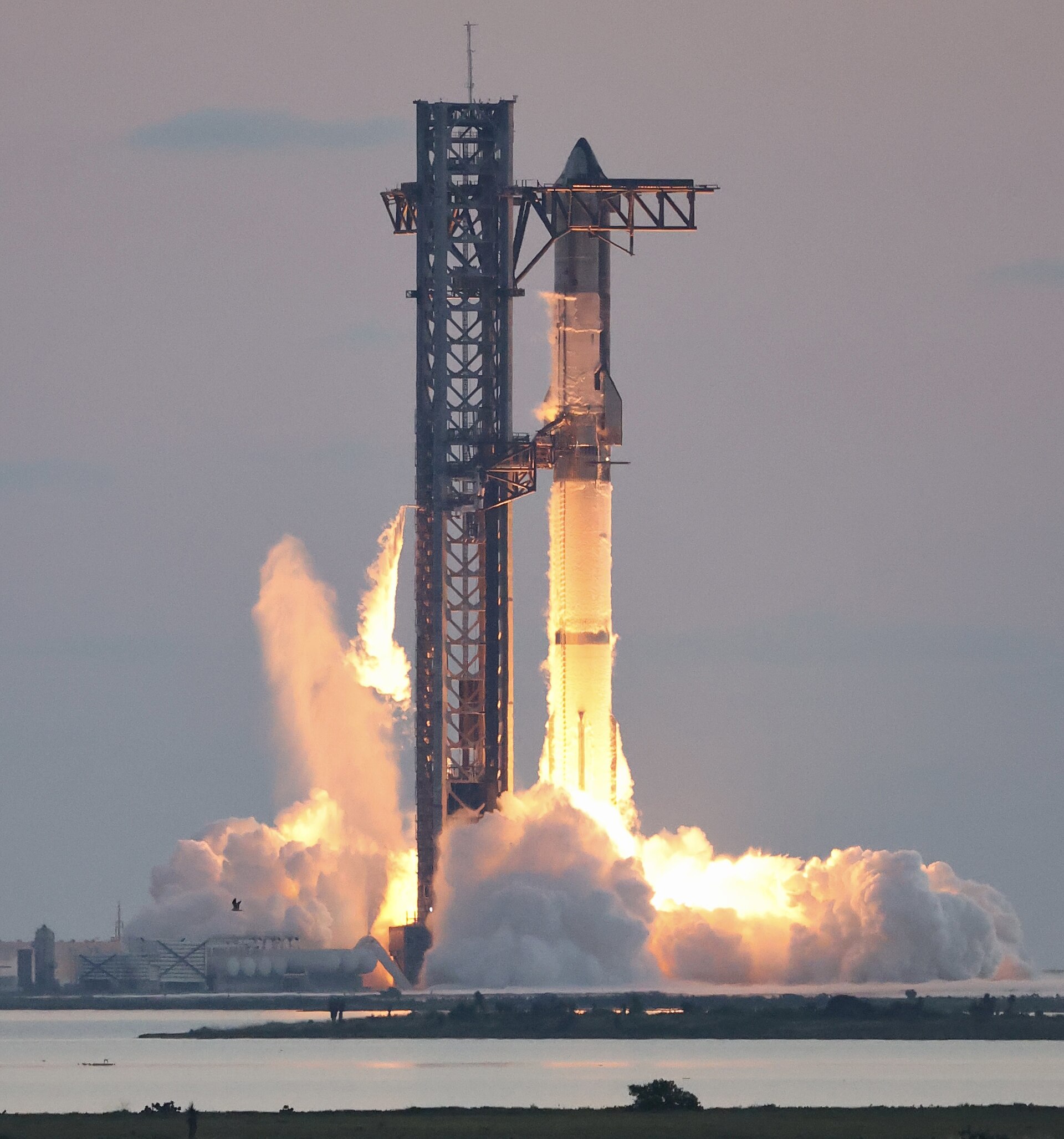
If it goes ahead, Flight 15 will be the most ambitious Starship test flight yet. SpaceX has caught the Super Heavy booster with the tower’s arms before, and it has brought the Ship back through the atmosphere — but it has never tried to catch both stages on the same flight. That is the whole point of this mission: to prove the world’s largest rocket can be fully and rapidly reused, with both halves coming home to the same tower.
For space fans in Pakistan, the timing is a late-night watch. Liftoff is targeted for 3:45am PKT on Saturday, 14 November, and SpaceX plans a live webcast starting about 30 minutes before liftoff on its website and on X. The booster catch would come just minutes after launch — while the Ship’s own catch attempt would not happen until early Sunday morning in Pakistan.
The first double catch: how the flight will unfold
The flight plan reads like two missions packed into one. Minutes after liftoff from Orbital Launch Pad 2, the Super Heavy booster will separate and fly itself back to Starbase, aiming to be caught by the launch tower’s arms at around T+6:35.
The Ship is the daring part. Instead of coming straight home, Ship 42 will stay in space for about 22 hours, completing 14 orbits at around 275 kilometres, while it deploys 26 Starlink V3 satellites. Only then will it begin its return, steering back to Starbase for its own catch attempt on Saturday, 14 November at about 2:45pm CT — 1:45am PKT on Sunday, 15 November in Pakistan.
There is an important condition on that second catch. The Ship will only be caught if it passes FAA-approved safety checks on the way home; if a catch stops being feasible, the attempt ends there. SpaceX has been careful to frame it as an attempt, not a guarantee — catching a spacecraft returning from orbit with mechanical arms has never been done before.
Why does it matter? Starship is designed to be fully reusable. If both catches work, the entire rocket can be recovered and flown again — the capability SpaceX says it needs for cheap satellite launches and, eventually, crewed missions to the Moon and Mars.
One big caveat: the licence has not arrived yet
Before any of this can happen, SpaceX needs a piece of paper. As of Friday morning, 13 November, the FAA had not yet issued the launch licence for Flight 15, and SpaceX’s own mission page lists the flight as “pending regulatory approval”. A Friday morning update described the licence as “not yet been issued — the single remaining hurdle”.
That is why every time in this article is a target, not a promise. SpaceX has backup launch windows running from 14 to 20 November, so if the licence does not arrive in time for Friday’s window, the flight can slip to another day in that range. Anyone setting an alarm for 3:45am PKT on Saturday should check SpaceX’s updates first.
The plan itself has been public for weeks. Elon Musk announced it on SpaceX’s Q3 earnings call on 20 October, saying: “For Flight 15… we’re going to attempt to catch both the booster and the ship.” SpaceX president Gwynne Shotwell added that the company has “had significant constructive engagement with the FAA, and we expect the license for our Flight 15 to include return to launch site and tower catch for both stages.” The expectation is there — the licence itself, as of Friday morning, is not.
Booster 22 and Ship 42: the Block 3 hardware
Flight 15 will fly on new hardware. Super Heavy Booster 22 and Ship 42 are both Block 3 — also called V3 — vehicles, the newest version of the Starship system. Booster 22 is the first Super Heavy V3 booster planned to return to the launch site for a catch.
Stacked together, the rocket stands 124 metres (407 feet) tall, making it the largest rocket in the world. This is the 15th Starship flight test since the programme began in April 2023, and it follows Flight 14 in late September 2026 — the first time Starship reached orbit.
Ship 42 will carry 26 Starlink V3 satellites into orbit, the second flight to carry operational Starlink satellites. Starlink is SpaceX’s satellite internet network, and the V3 satellites are its newest generation.
How to watch Starship Flight 15 — and what it means for the future
SpaceX plans a live webcast starting about 30 minutes before liftoff — around 3:15am PKT on Saturday, 14 November for viewers in Pakistan — on its website and on X. The webcast covers the launch and the booster catch live; the Ship’s return, a day later, is a separate watch at about 1:45am PKT on Sunday, 15 November.
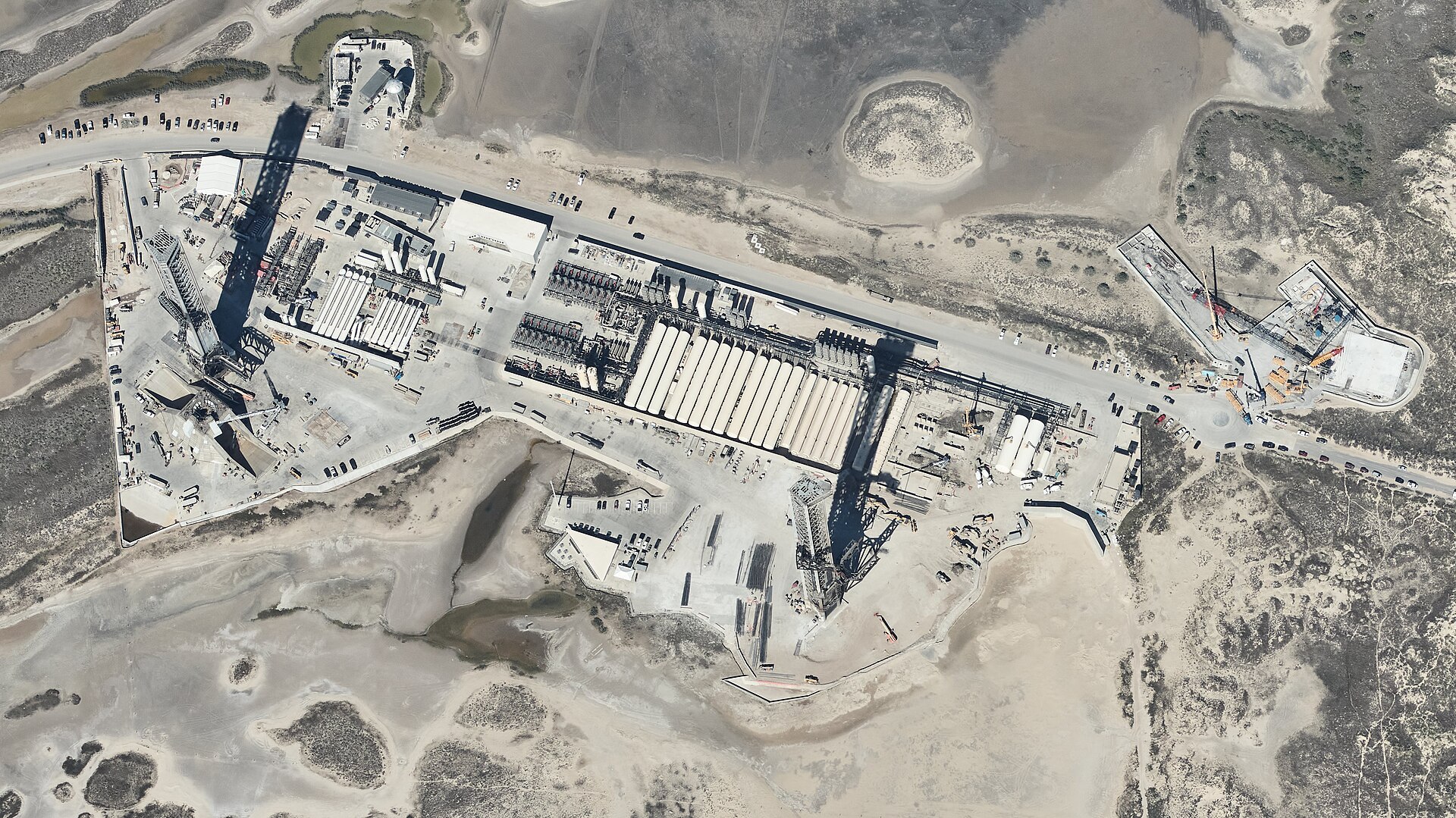
There is also a bigger story hanging over this flight. According to Florida Today, Flight 15 could be the last Starship flight from Texas before a Florida debut from Kennedy Space Center’s Launch Complex 39A — though no date for the first Florida launch has been announced yet.
For now, everything depends on the licence. If it arrives in time, Friday night in Texas — early Saturday morning in Pakistan — could deliver the most spectacular rocket landing ever attempted: a booster caught minutes after launch, and a spacecraft caught a day later, both by the same tower. If it does not, the wait continues into the backup windows. Either way, this article will be updated with the result after the launch.
Frequently Asked Questions
When is SpaceX Starship Flight 15 launching?
SpaceX is targeting Friday, 13 November 2026, with a 75-minute launch window opening at 4:45pm CT — 22:45 UTC, or 3:45am PKT on Saturday, 14 November in Pakistan. The date is a target, not a confirmed launch: as of Friday morning, the FAA had not yet issued the licence, and backup windows run from 14 to 20 November.
What time is the Starship Flight 15 launch in Pakistan?
Liftoff is targeted for 3:45am PKT on Saturday, 14 November 2026, with SpaceX’s live webcast starting about 30 minutes earlier, around 3:15am PKT. The Ship’s catch attempt is targeted for about 1:45am PKT on Sunday, 15 November.
What is the “double catch” on Starship Flight 15?
It is the first attempt to catch both stages of Starship with the launch tower’s “chopstick” arms in a single flight: the Super Heavy booster returns minutes after liftoff (catch at about T+6:35), and the Ship returns after about 22 hours and 14 orbits, with its catch attempt on Saturday, 14 November at about 2:45pm CT.
Has the FAA approved Starship Flight 15?
Not as of Friday morning, 13 November 2026. The FAA had not yet issued the launch licence, and SpaceX’s mission page lists the flight as “pending regulatory approval”. The licence was described as the single remaining hurdle, and the launch can slip to a backup window between 14 and 20 November if it does not arrive in time.
What are Booster 22 and Ship 42?
Booster 22 (Super Heavy) and Ship 42 are the two vehicles flying on Flight 15, both Block 3 (V3) hardware. Booster 22 is the first Super Heavy V3 booster planned to return to the launch site for a catch. Together the stacked rocket is 124 metres (407 feet) tall — the world’s largest rocket.
How can I watch Starship Flight 15 live?
SpaceX plans a live webcast starting about 30 minutes before liftoff on its website and on X. For viewers in Pakistan, that means tuning in from around 3:15am PKT on Saturday, 14 November for the launch and booster catch, and again around 1:45am PKT on Sunday, 15 November for the Ship’s catch attempt.
Related: OnePlus 16 Launched: Price in Pakistan, Specs and Features | WhatsApp View Once Text Messages Spotted in Android Beta | WhatsApp Message Scheduling: How to Schedule Messages