2026 Set to Be Second-Hottest Year on Record, EU Climate Monitor Warns
By Fatima Raza | Updated 6 November 2026 2026 is on track to become the second-hottest year ever recorded. That is the verdict of the European Union’s Copernicus Climate Change Service, which said on Friday that an exceptionally strong El Niño is piling extra heat on top of human-driven global warming. There is still a…
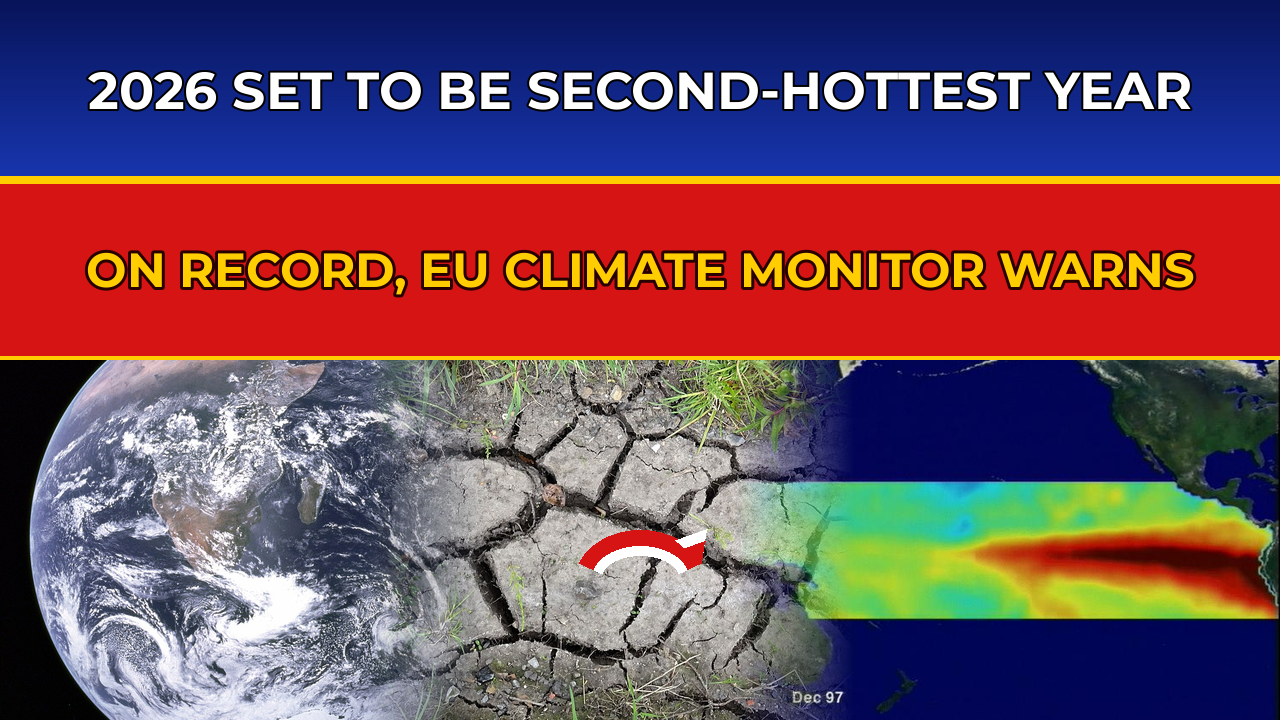
2026 is on track to become the second-hottest year ever recorded. That is the verdict of the European Union’s Copernicus Climate Change Service, which said on Friday that an exceptionally strong El Niño is piling extra heat on top of human-driven global warming. There is still a 20 per cent chance the year could tie or even beat 2024, the warmest year on record. Either way, 2026 is now virtually certain to finish more than 1.5°C hotter than pre-industrial times, and October has just gone down as the warmest October the world has ever seen.
If this year has felt unusually hot, you are not imagining it. Here is what Copernicus found, why El Niño is making it worse, what the 1.5°C figure really means, and what it could mean for Pakistan’s winter.
Key Facts: 2026 in Numbers
| Fact | Figure |
|---|---|
| 2026 ranking (most likely) | Second-hottest year on record |
| Chance 2026 ties or beats 2024 | 20% |
| Warmest year on record so far | 2024 |
| October 2026 vs pre-industrial (1850–1900) | 1.75°C above |
| October 2026 ranking | Warmest October on record |
| Months in a row above 1.5°C | Three (August, September, October) |
| 2023–2026 four-year average | Expected to top 1.5°C |
| Source | Copernicus Climate Change Service (EU), monthly bulletin, 6 November 2026 |
What Copernicus Actually Said
Copernicus, the EU’s climate monitoring service, released its monthly bulletin on Friday, 6 November 2026. Its headline finding is blunt: the world is on track for 2026 to be the second-hottest year on record. The only year standing ahead of it is 2024, and even that lead is not safe. Copernicus puts the chance of 2026 tying or exceeding 2024 at 20 per cent, remarkably high for a year with almost two months still to run.
The bulletin also confirms that global temperatures are now “virtually certain” to exceed 1.5°C above pre-industrial levels across the whole of 2026, and the four-year average from 2023 to 2026 is expected to top 1.5°C as well. October did much of the damage: the warmest October on record, with average global surface air temperatures 1.75°C above pre-industrial times (1850–1900). It was the third straight month to exceed 1.5°C, and October also set records for global and surface ocean temperatures.
“October has continued the pattern of remarkable global warmth, with record global and surface ocean temperatures,” said Samantha Burgess, strategic lead for climate at the European Centre for Medium-Range Weather Forecasts (ECMWF), the organisation that operates Copernicus. “An exceptionally strong El Niño is adding further heat to a climate already warmed by human activities,” she said.
Why 2026 Is So Hot: El Niño Has Not Even Peaked Yet
The single biggest reason 2026 is running so hot is El Niño, and the worrying part is that it has not peaked yet. Global forecasters have been warning for months that this El Niño, which is expected to peak later this year, would likely become the strongest ever observed. The phenomenon set an all-time temperature record in a key Pacific zone last month, according to Copernicus.
El Niño is the warming phase of a natural climate cycle. It temporarily raises sea temperatures in the tropical Pacific, and that extra ocean heat ripples out into weather patterns across the planet. It can increase the risk of drought in some regions and flooding in others, and it piles on top of the warming already caused by human activity. Greenhouse gases have spent decades turning up the thermostat, and El Niño is now pressing it harder still.
That combination is why forecasters are already looking past 2026. They say El Niño could help make 2027 the hottest year on record. If that happens, the record set in 2024 will have lasted barely three years.
The 1.5°C Line: What It Does and Does Not Mean
Nations agreed at the 2015 UN climate talks in Paris to keep global warming “well below” 2°C above pre-industrial levels, while pursuing efforts to limit it to 1.5°C. That 1.5°C is the preferred limit in the Paris Agreement, chosen to avert the worst impacts of climate change. But a single year above 1.5°C is not the same thing as the Paris target being broken. The target is about the long-term average, measured over decades.
Even so, the direction of travel is hard to ignore. The United Nations declared in September that the long-term 1.5°C target would be missed in a matter of years, and a four-year average above 1.5°C brings that moment closer. Scientists say the response is still clear: reduce greenhouse gas emissions from fossil fuels to limit the period of “overshoot” above 1.5°C and bring temperatures back down as quickly as possible. Overshoot means the world may pass 1.5°C for a while and then come back below it, but only if emissions fall fast enough.
A Year of Extremes Around the World
The heat of 2026 has not been an abstract statistic. It has shown up in disasters that made headlines all year. The Copernicus bulletin lands as nations prepare to meet on Monday, 9 November, for the UN’s two-week COP31 climate summit in Turkey, after a year marked by deadly floods in Nepal, searing heatwaves in Europe and major wildfires in Indonesia.
That list is a reminder that a global average temperature is not just a number on a chart. A warmer atmosphere holds more moisture, which feeds heavier rain and worse flooding in one place, while hotter, drier conditions feed heatwaves and wildfires in another. The same extra heat produces very different disasters in different countries.
What This Could Mean for Pakistan’s Winter
It is too early to turn a global temperature ranking into a local forecast, and no honest article should pretend otherwise. What can be said is that El Niño is one of the main drivers of how Pakistan’s winter behaves, shifting the odds for rainfall and temperature patterns across the season. Our detailed explainer on how El Niño could shape Pakistan’s winter looks at the pattern in full, including the polar vortex factor that can bring sudden cold snaps.
For the month ahead, the Pakistan Meteorological Department has issued its outlook for November. You can read the full details in our coverage of PMD’s November 2026 rainfall outlook for Pakistan. Winter also brings the annual gas question for households in Sindh and Balochistan, and the winter gas schedule is worth checking alongside the weather. A second-hottest year globally does not guarantee a warm winter at home, but it does mean the odds are tilted, so keep an eye on PMD updates as the season develops.
What Happens Next: COP31 and 2027
The timing of the Copernicus bulletin is no accident. It lands days before COP31, the UN’s two-week climate summit starting Monday in Turkey, where negotiators will argue over how fast countries cut emissions and who pays for the damage already happening. The bulletin gives them a fresh, uncomfortable fact to carry into the room: the world has just had its warmest October ever, and the year is almost certain to finish above 1.5°C.
Then comes 2027, which forecasters say El Niño could push to the top of the all-time list. If 2024, 2026 and 2027 end up as three of the hottest years ever recorded, it will be hard for anyone to call this a blip. The heat of 2026 is already measured and recorded. What happens next still depends on choices made now.
Frequently Asked Questions
Is 2026 the hottest year on record?
No, not quite. Copernicus says 2026 is most likely to finish as the second-hottest year on record, behind 2024. However, there is still a 20 per cent chance that 2026 could tie or exceed 2024 as the warmest year ever seen.
What is Copernicus?
The Copernicus Climate Change Service is the European Union’s climate monitoring service. It tracks global temperatures using satellite and ground-based data, and it is operated by the European Centre for Medium-Range Weather Forecasts (ECMWF).
What does 1.5°C above pre-industrial levels mean?
It means global temperatures are 1.5°C higher than the average during 1850–1900, the period used as the pre-industrial baseline. The Paris Agreement aims to limit long-term warming to 1.5°C. A single year above that level does not by itself break the target, which is measured over decades, but the four-year average from 2023 to 2026 is now expected to top 1.5°C as well.
What is El Niño and why does it make years hotter?
El Niño is the warming phase of a natural climate cycle in the tropical Pacific. It temporarily raises sea surface temperatures, which pushes extra heat into the atmosphere and shifts weather patterns worldwide. It can increase the risk of drought in some regions and flooding in others, and it adds to the warming already caused by human activity.
Will 2027 be hotter than 2026?
It could be. Forecasters say El Niño could help make 2027 the hottest year on record. That is not certain, because the strength and timing of El Niño matter, but if it happens, the 2024 record would have lasted only three years.
What is COP31 and why does it matter now?
COP31 is the UN’s two-week climate summit, starting on Monday, 9 November 2026, in Turkey. Countries will negotiate how fast to cut greenhouse gas emissions and how to deal with the damage from climate change. The Copernicus bulletin, showing 2026 almost certain to finish above 1.5°C, sets the backdrop for those talks.
What does this mean for Pakistan’s winter?
A global ranking does not translate directly into a local forecast, so no specific temperature or rainfall figure should be read into it. El Niño is, however, one of the main influences on Pakistan’s winter weather patterns. For the latest local outlook, see our coverage of the PMD November 2026 rainfall outlook and our explainer on how El Niño could shape Pakistan’s winter.
The planet has now produced its warmest October on record, three straight months above 1.5°C, and a year that will almost certainly rank as the second-hottest ever measured. The data is in. The question now is what the world does with it, starting at COP31 next week.