US Jobs Report: 165,000 Jobs Added in October, Unemployment Falls to 4.1% — Fed Hike Odds Jump
By Bilal Ahmed | Updated: November 6, 2026 US employers added 165,000 jobs in October 2026, far more than economists expected, and the unemployment rate edged down to 4.1%, the Bureau of Labor Statistics (BLS) said on Friday, November 6. The report also revised the previous two months sharply higher, and traders immediately raised their…
By Bilal Ahmed | Updated: November 6, 2026
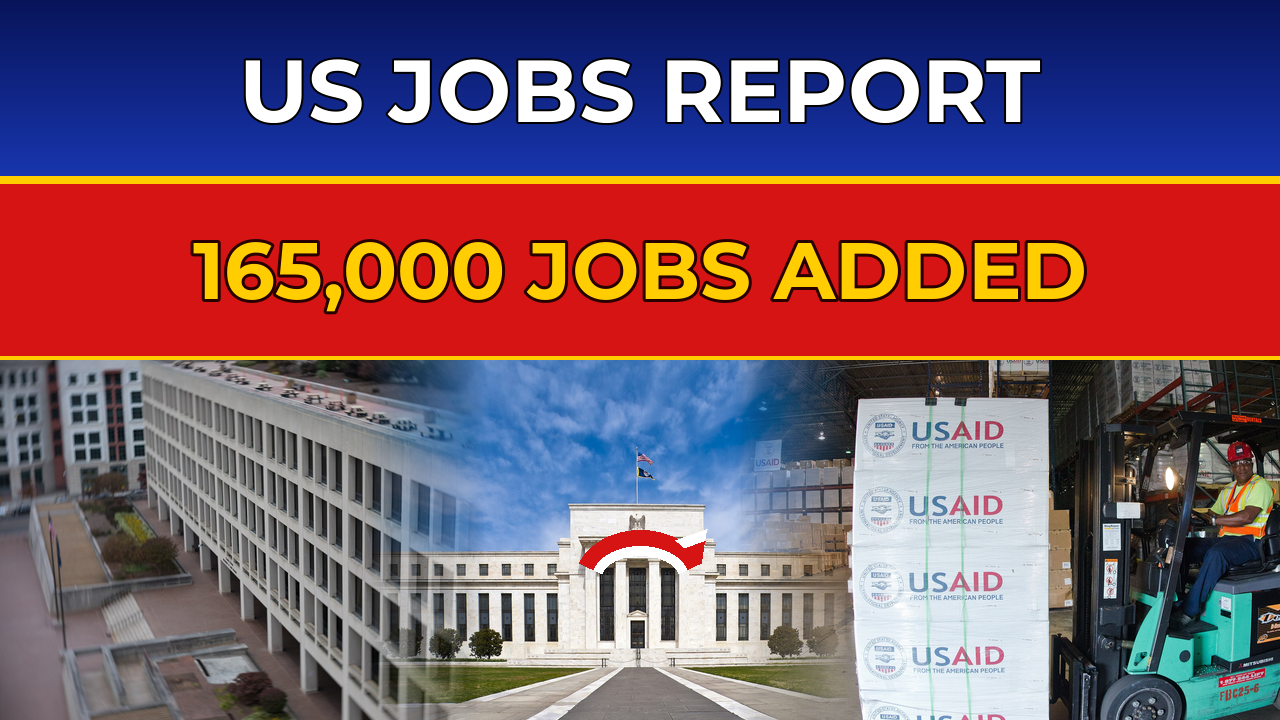
US employers added 165,000 jobs in October 2026, far more than economists expected, and the unemployment rate edged down to 4.1%, the Bureau of Labor Statistics (BLS) said on Friday, November 6. The report also revised the previous two months sharply higher, and traders immediately raised their bets on another Federal Reserve interest rate hike in December. Below is the full breakdown: which sectors hired, what happened to wages, what it means for the Fed, and what it could mean for Pakistan.
US Jobs Report October 2026: Key Facts
| Measure | October 2026 | September 2026 |
|---|---|---|
| Nonfarm payrolls added | +165,000 | +60,000 (revised up from +29,000) |
| Unemployment rate | 4.1% | 4.2% |
| Average hourly earnings | $38.00 (+0.4% on the month) | +0.1% on the month |
| Annual wage growth | +3.1% year on year | +3.0% year on year |
| Labour force participation rate | 61.9% | 61.8% |
| Number of unemployed people | 7.1 million | 7.1 million |
| Broader underemployment (U-6) | 7.9% | 7.6% |
| Average monthly job gains, prior 12 months | 48,000 | 45,000 |
Jobs Beat Forecasts by a Wide Margin
October was not a close call. Economists polled by Reuters had expected 65,000 new jobs, while the Dow Jones consensus was 59,000. The actual figure of 165,000 was roughly two and a half times the Reuters forecast, and above even the top end of the forecast range, which ran from 35,000 to 125,000. That matters because the American jobs market has looked tired for most of 2026: before October, employers had added an average of just 48,000 jobs a month over the previous year. One strong month does not make a trend, but a beat this large changes the tone of the debate. The unemployment rate slipped 0.1 percentage points to 4.1%, a change the BLS described as small, and it has stayed inside a narrow band of 4.1% to 4.3% since March.
Which Sectors Hired in October?
Hiring was concentrated in three areas. Professional and business services led with 70,000 new jobs, far above its average monthly gain of 15,000 over the prior 12 months, and the sector has now added 269,000 jobs since a recent low in October 2025. Health care added 42,000 jobs, above its 12-month average of 31,000 a month, led by hospitals (+16,000). Transportation and warehousing added 25,000 jobs, helped by 17,000 new jobs in couriers and messengers, while manufacturing added 19,000. Employment showed little change in most other major industries, including construction, retail trade, information, financial activities, leisure and hospitality, and government. The October gain was strong, in other words, but narrow.
August and September Were Much Stronger Than First Reported
One of the most important parts of the October report is not about October at all. The BLS revised August’s job gain up by 53,000, from 133,000 to 186,000, and September’s gain up by 31,000, from 29,000 to 60,000. Combined, the two months were 84,000 jobs stronger than previously reported. That changes the story of the autumn: September no longer looks like a near-standstill month, and August now looks like one of the stronger months of the year. But revisions of this size, in the same direction, two months in a row, are a genuine signal that the summer slowdown was overstated.
Wages Rose, but So Did Part-Time Work
Average hourly earnings rose 14 cents, or 0.4%, to $38.00 in October, the strongest monthly wage gain since January. Over the past 12 months, wages have risen 3.1%. For the Federal Reserve, it is a reason to stay cautious, because wage growth that runs too hot can feed into inflation. But the report also had a softer side. The broader underemployment rate, known as U-6, rose to 7.9% from 7.6%, and the number of people working part time for economic reasons jumped by 339,000 to 4.8 million, almost all of it because of slack work or business conditions. The labour force participation rate edged up to 61.9%, and the number of long-term unemployed, people jobless for 27 weeks or more, was 2.0 million. Employers are hiring again and wages are rising, but a growing number of Americans are stuck in part-time work when they want full-time jobs.
What the Jobs Report Means for the Fed
The Fed held its benchmark rate in a range of 3.75% to 4.00% on October 28, by a 10 to 2 vote, with Governor Lisa Cook and Cleveland Fed President Beth Hammack preferring a quarter-point increase. The Fed had raised the target range to 3.75% to 4.00% on September 16, 2026. After the jobs report, traders raised the probability of a 25-basis-point hike at the December 8-9 meeting to about 77%, up roughly 10 percentage points from the day before, according to CME FedWatch data. Two data releases still stand between now and the December meeting: October consumer prices, due on Tuesday, November 10, and the November jobs report, scheduled for Friday, December 4.
Early Signals Were Already Pointing Up
The official report did not come out of nowhere. Private payroll firm ADP reported on November 4 that private employers added 86,000 jobs in October, beating forecasts of 69,000. Separately, outplacement firm Challenger, Gray and Christmas reported on November 5 that US employers announced 43,994 job cuts in October, the fewest for any October since 2023, while announcing plans to hire 444,692 workers, the highest October total since at least 2009. Most of that hiring is seasonal: Amazon plans 300,000 hires and UPS 100,000.
What the US Jobs Report Means for Pakistan
For Pakistan, the report reaches the rupee, gold and the stock market through three channels. First, the dollar: a stronger US jobs market raises the odds of higher US interest rates, and higher US rates tend to support the dollar, which usually means imported fuel and goods cost more in rupees. There is some cushion: Pakistan’s foreign exchange reserves recently hit a record $26.86 billion. Second, gold: higher US rate expectations generally weigh on gold prices, because gold pays no interest. Pakistani buyers have already seen sharp moves this autumn: gold prices in Pakistan fell by Rs 5,100 per tola in a single day on October 30. Third, the stock market: global markets often wobble when US rate expectations shift, and the PSX is not immune, even though the KSE-100 index crossed 176,000 on November 5. The next number to watch is US inflation on November 10.
What to Watch Next
October showed the US labour market is far from stalling, but more Americans are stuck in part-time work, with underemployment rising. The next two releases, US inflation on November 10 and the November jobs report on December 4, will decide whether the Federal Reserve raises rates again on December 9.
Frequently Asked Questions
How many jobs did the US add in October 2026?
US employers added 165,000 nonfarm payroll jobs in October 2026, according to the Bureau of Labor Statistics, far above the 65,000 economists polled by Reuters had expected.
What is the US unemployment rate now?
The US unemployment rate is 4.1% as of October 2026, down from 4.2% in September. The BLS described the change as small, and the rate has stayed within 4.1% to 4.3% since March 2026.
Why did Fed rate hike odds rise after the jobs report?
Traders raised the probability of a December Fed rate hike to about 77%, up roughly 10 percentage points, according to CME FedWatch data. Strong hiring and 0.4% monthly wage growth give the Fed more room to focus on inflation.
When is the next US jobs report?
The next US jobs report, covering November 2026, is scheduled for Friday, December 4, 2026, at 8:30 a.m. ET, just before the Federal Reserve’s December 8-9 meeting.
What is the U-6 underemployment rate and why did it rise?
U-6 is the broadest measure of labour market slack. It rose to 7.9% from 7.6%, mainly because 339,000 more people were working part time for economic reasons.
What does the US jobs report mean for Pakistan?
A strong US jobs report raises the odds of higher US interest rates, which tends to support the dollar and can pressure gold prices. For Pakistan, that can mean costlier imports and a softer gold market, while the PSX takes its cue from global sentiment.