NASA Curiosity’s Mars Sulfur Mystery Explained — Two New Studies Reveal How Pure Sulfur Formed 3 Billion Years Ago
By Hira Shahid | Updated: 17 November 2026 Two new studies have finally explained one of NASA’s Curiosity rover’s strangest finds: pale-yellow crystals of almost pure sulfur, exposed in 2024 when the 899 kg rover cracked open an ordinary rock in the Gediz Vallis Channel of Gale Crater. A volcanic-gas explanation in Science (June 2026)…
By Hira Shahid | Updated: 17 November 2026
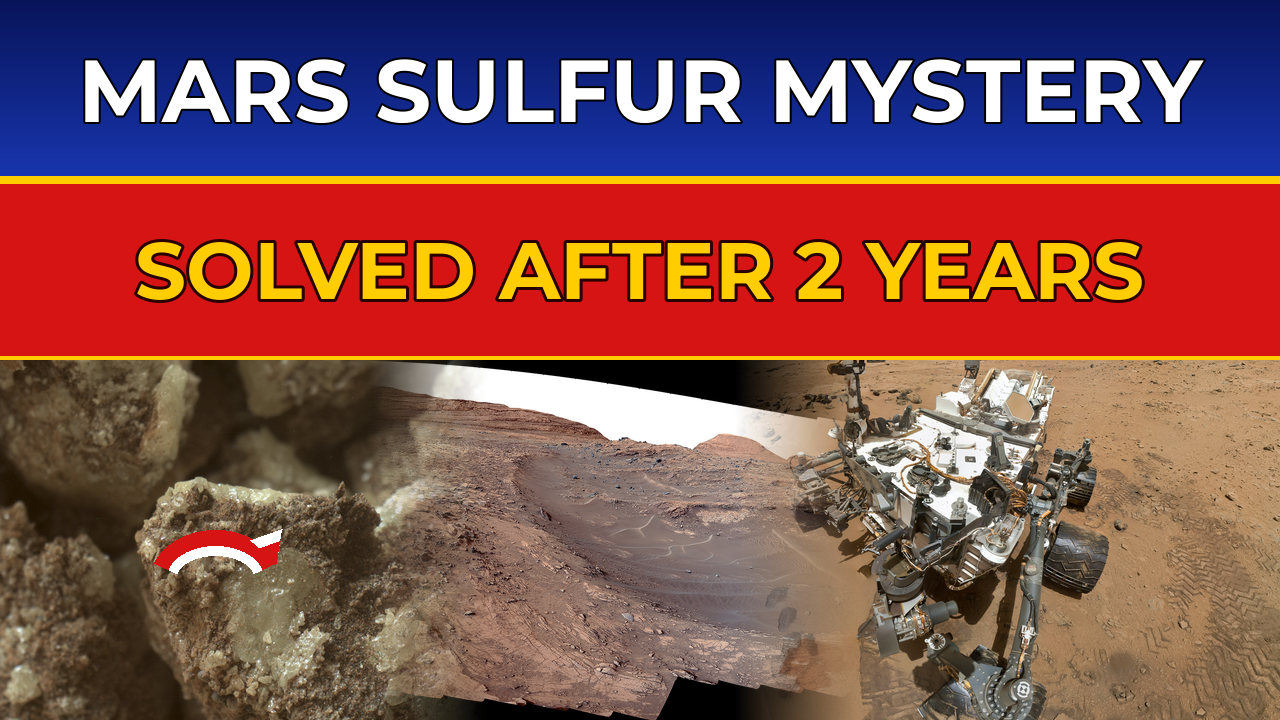
Two new studies have finally explained one of NASA’s Curiosity rover’s strangest finds: pale-yellow crystals of almost pure sulfur, exposed in 2024 when the 899 kg rover cracked open an ordinary rock in the Gediz Vallis Channel of Gale Crater. A volcanic-gas explanation in Science (June 2026) and a laboratory experiment in Geophysical Research Letters (July 2026) together show how the deposits formed naturally about 3 billion years ago. The discovery was a surprise in 2024; the news in 2026 is the explanation. Sulfur compounds are common on Mars, but pure elemental sulfur had never been found there before.
| Key fact | Detail |
|---|---|
| Rover | NASA’s Curiosity rover (899 kg), in Gale Crater since 2012 |
| Discovery | 2024 — Curiosity cracked open a rock in the Gediz Vallis Channel, revealing pale-yellow crystals of almost pure elemental sulfur |
| Why it was a first | Sulfates are common on Mars; pure elemental sulfur had never been found there before |
| Extent of the deposits | About 2,100 square metres of sulfur-bearing ground |
| Age of the deposits | Estimated at 3.1–2.8 billion years old |
| Study 1 | Science, June 2026 — Scott VanBommel (Washington University in St. Louis): ancient volcanic gases as the source |
| Study 2 | Geophysical Research Letters, July 2026 — Jiawei Wang, Cornell: sulfur formed in the lab from sulfide and chlorate in acidic water at room temperature |
| What it does NOT prove | Does not prove life on Mars — the studies explain chemistry, not biology |
The 2024 discovery: a rock that cracked open by accident
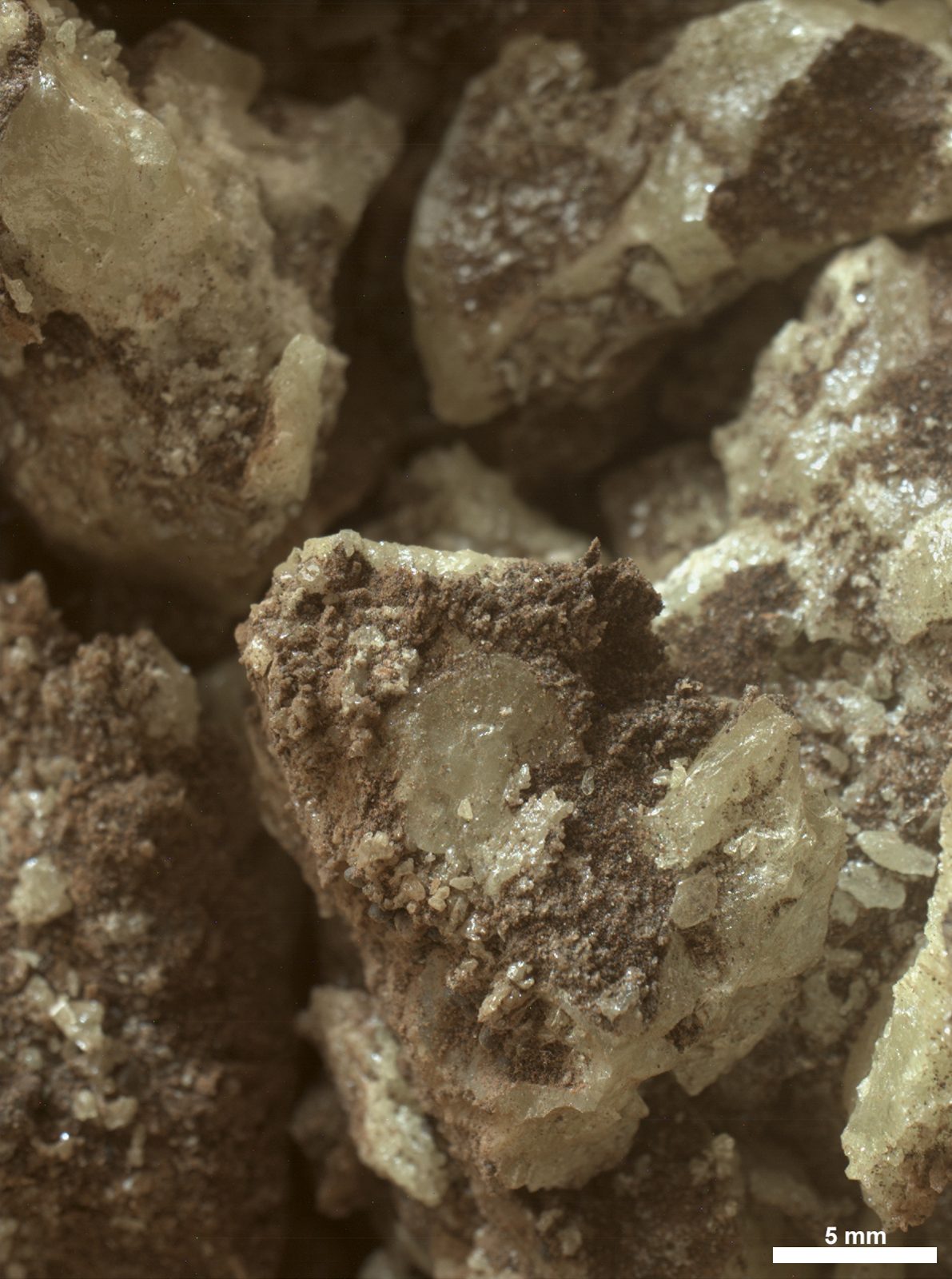
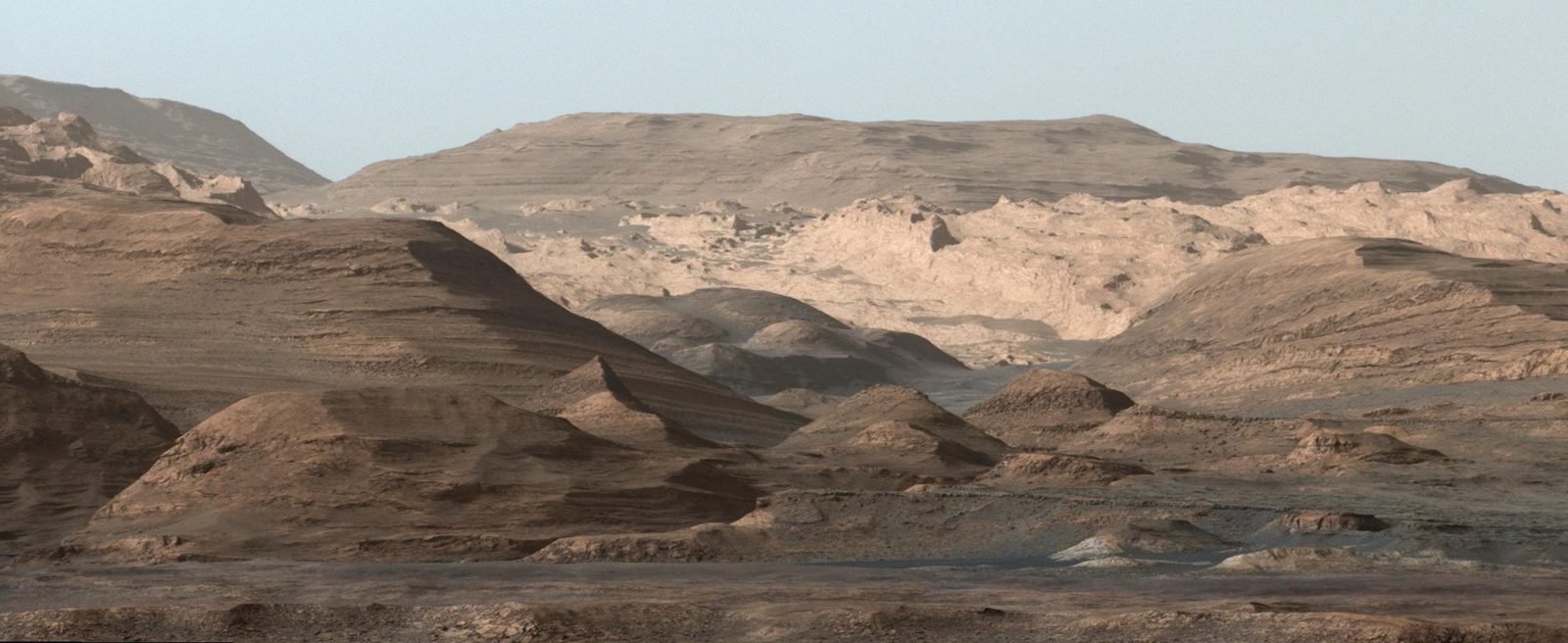
Curiosity was not hunting for sulfur at all. Crossing the Gediz Vallis Channel, an ancient valley on Mount Sharp inside Gale Crater, one wheel rolled over an ordinary-looking rock. It split, revealing pale-yellow crystals the team recognised at once as something new: elemental sulfur, the pure element, not sulfur locked inside a mineral salt.
That was the puzzle. Mars is rich in sulfates, salts that form as water evaporates, and Gediz Vallis had plenty. But nobody had seen sulfur on Mars on its own. On Earth pure sulfur usually comes from volcanoes or microbes — neither obviously available in an ancient, dry Martian channel.
Study 1: volcanic gases frozen into the ground
The first answer comes from Scott VanBommel of Washington University in St. Louis and colleagues, in Science (June 2026). Re-examining Curiosity’s images and chemical measurements, they mapped the sulfur-bearing ground at roughly 2,100 square metres — far too large to be a fluke inside one rock.
Their explanation starts with ancient volcanoes. Sulfur-rich magmatic gases rose and were trapped in Mars’ frozen near-surface layer, the cryosphere. Later, as erosion carved Gediz Vallis, the pressure dropped, the gases were released, and elemental sulfur was left behind — deposits formed 3.1–2.8 billion years ago, when Mars was much wetter.

Study 2: sulfur without life and without heat
The second study attacks from the opposite end. Jiawei Wang of Cornell University and colleagues, in Geophysical Research Letters (July 2026), asked whether elemental sulfur could form under Martian conditions, without living things. In the lab they mixed dissolved sulfide with chlorate in acidic water at room temperature, and tiny yellow sulfur crystals appeared — no microbes, no high temperatures.
This matters because the most exciting reading was always biological: on Earth, microbes help produce sulfur deposits, so a sulfur patch on Mars could hint at past life. The Cornell experiment removes that temptation, showing a purely chemical route to the same crystals.
How the two explanations compare
| Mechanism | What it says | Status |
|---|---|---|
| Volcanic gases | Magmatic vapour trapped in the frozen near-surface layer, released as erosion cut Gediz Vallis; deposits 3.1–2.8 billion years old | Science, June 2026 (VanBommel) |
| Water chemistry | Sulfide plus chlorate in acidic water forms sulfur crystals at room temperature — no life, no heat needed | Geophysical Research Letters, July 2026 (Wang); lab-demonstrated |
| Impact melting | An impact melted sulfur-bearing rock; a candidate crater about 390 m wide sits upstream | EGU26 abstract only (Maggioni et al.) — not peer-reviewed |
The two peer-reviewed studies are not rivals: the volcanic-gas model explains where the sulfur came from, and the lab chemistry shows the final step can happen without biology. Together they close the loop left open in 2024.
A third idea: an ancient impact
A third candidate deserves a careful label. An EGU26 conference abstract by Maggioni and colleagues, updated on 16 November 2026, proposes a meteorite impact melted sulfur-bearing rock, pointing to a candidate crater roughly 390 metres across upstream of the deposits, backed by numerical simulations. It is a possible mechanism, not a confirmed one: a conference abstract is not a peer-reviewed paper.
What this does not mean: no proof of life
The one thing the new studies do not do is bring Mars life any closer. It is tempting to read a chemical that life makes on Earth as a sign of life on Mars, but the Cornell experiment warns against that leap: the same yellow crystals can appear through plain chemistry, with nothing alive nearby. The find still matters — it shows Mars’ ancient chemistry was richer than expected, and helps separate chemicals that need biology from ones that do not.
Why the sulfur mystery matters
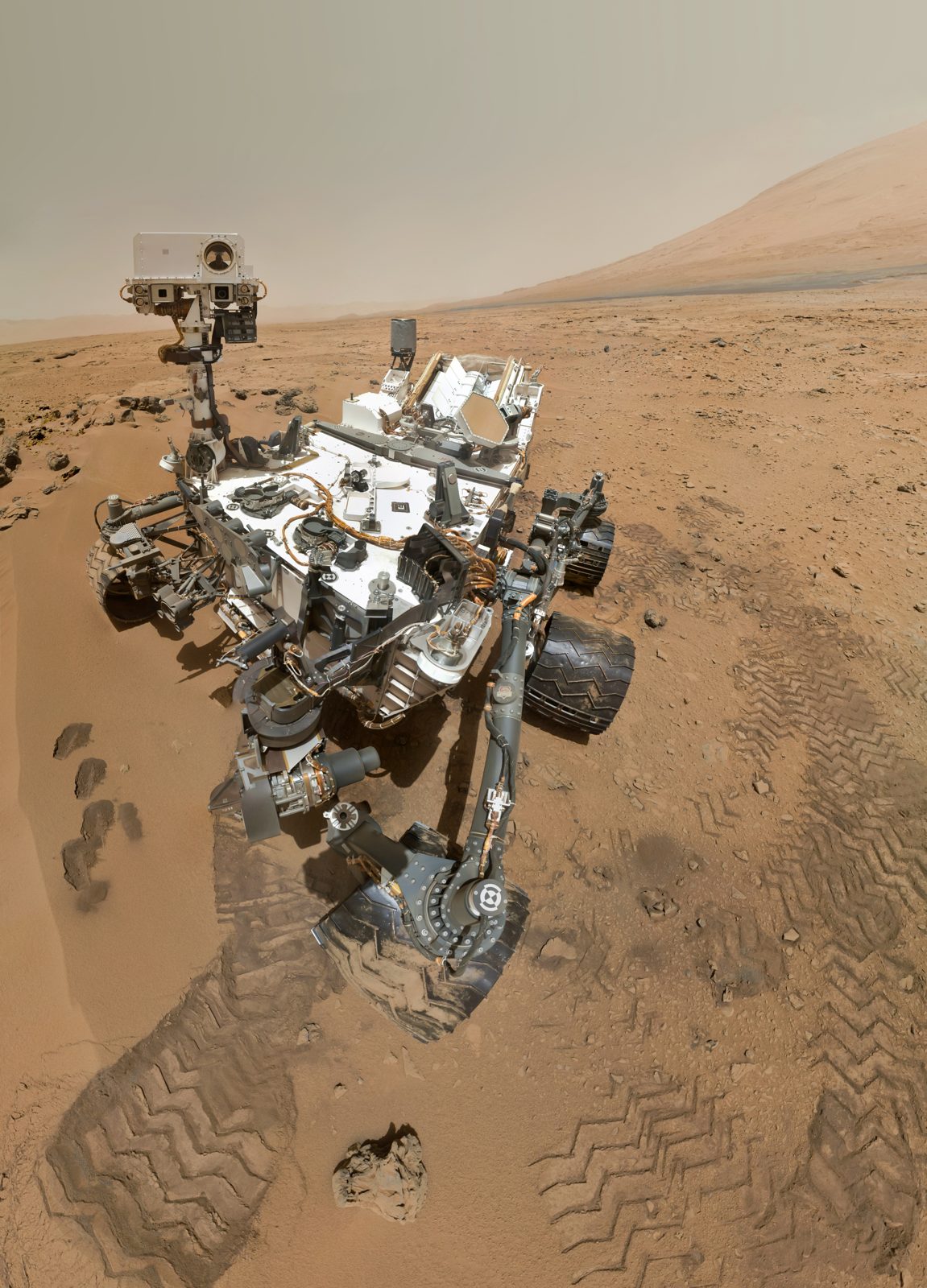
For a rover that landed in 2012, Curiosity is still producing firsts: the first pure elemental sulfur ever seen on Mars, and now the first serious explanations of it. A rock cracked in 2024, two papers in 2026 — a surprise in the field, then years of measurement, modelling and lab work.
More from TimelyUps
- OnePlus 16 Launched: Price in Pakistan and Full Specs
- WhatsApp Message Scheduling Feature: How To Use It
- ICC 2027 World Cup Qualifier Format Confirmed
Frequently asked questions
What did NASA’s Curiosity rover find on Mars?
In 2024, Curiosity drove over a rock in the Gediz Vallis Channel of Gale Crater. It burst open, revealing pale-yellow crystals of almost pure elemental sulfur — the first pure sulfur found on Mars.
Is the sulfur discovery new?
No. The discovery dates to 2024. What is new is the explanation: two 2026 studies, in Science (June) and Geophysical Research Letters (July), show how it probably formed.
How did pure sulfur form on Mars?
Volcanic gases were trapped in Mars’ frozen near-surface layer and released as erosion carved Gediz Vallis; sulfur can also crystallise from sulfide and chlorate in acidic water at room temperature. The deposits are 3.1–2.8 billion years old.
Does the sulfur prove there was life on Mars?
No — chemistry, not biology. The Cornell experiment grew sulfur crystals from sulfide and chlorate in acidic water at room temperature, with nothing alive involved.
Where on Mars was the sulfur found?
In the Gediz Vallis Channel, a valley on Mount Sharp inside Gale Crater, where Curiosity has worked since 2012. The sulfur-bearing ground there covers about 2,100 square metres.
What is the impact theory of the Mars sulfur?
An EGU26 abstract (Maggioni et al.) suggests an impact melted sulfur-bearing rock, citing a candidate crater about 390 metres wide upstream. Possible only — an abstract, not a peer-reviewed study.