Pakistan to Host UN Space Technology Conference Oct 27-31
Pakistan is about to become the centre of the global space-for-disaster-management conversation. SUPARCO, on behalf of the Government of Pakistan, will host the UN–Pakistan International Conference on “Leveraging Space Technology for Early Warning for All (EW4All), Climate Action and Disaster Risk Assessment” from October 27 to 31, 2026, in Islamabad — with the Tribune reporting…
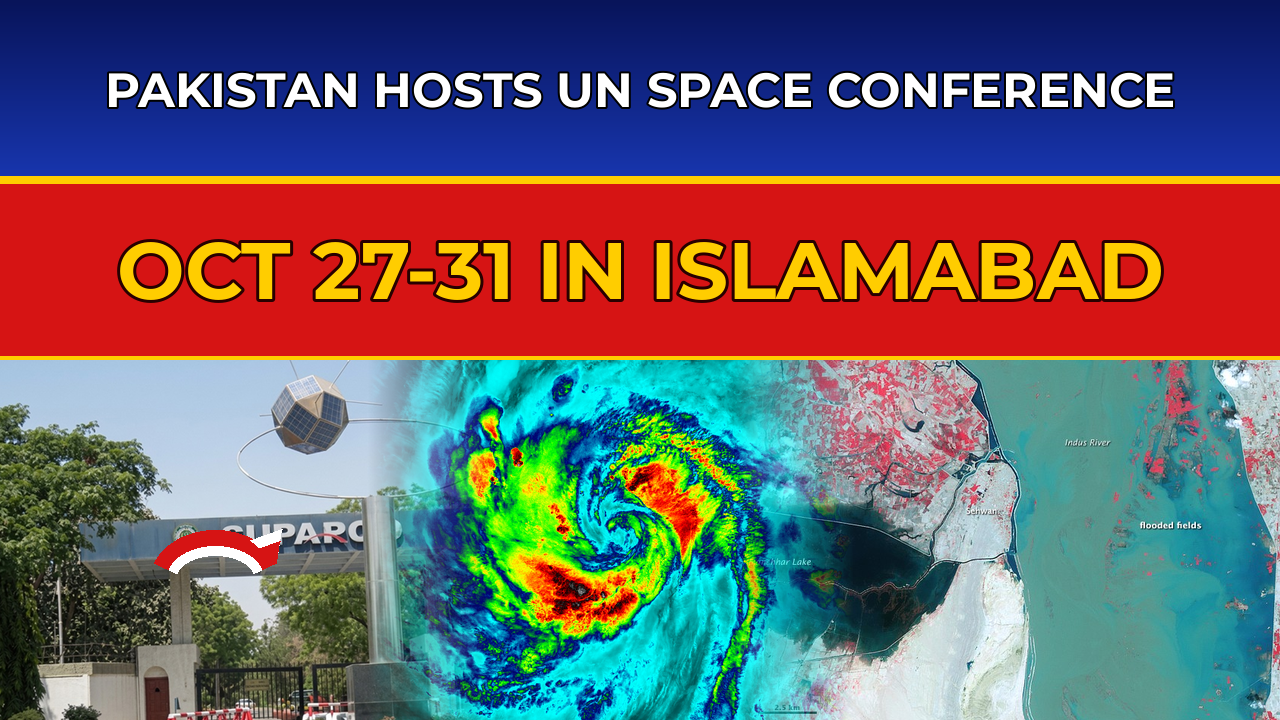
Pakistan is about to become the centre of the global space-for-disaster-management conversation. SUPARCO, on behalf of the Government of Pakistan, will host the UN–Pakistan International Conference on “Leveraging Space Technology for Early Warning for All (EW4All), Climate Action and Disaster Risk Assessment” from October 27 to 31, 2026, in Islamabad — with the Tribune reporting the venue as the Serena Hotel. The five-day event brings 200–250 participants to the capital, including 60–70 international delegates and around 150 national participants, and will be followed by a separate international training course in early November.
This is not just another conference with speeches and photo ops. For a country that lost over 1,700 lives in the 2022 floods, breathes some of the world’s worst winter smog and faces intensifying heatwaves every summer, what happens in those five days could quietly reshape how Pakistan sees disasters coming — and how it responds to them.
Pakistan to host UN space technology conference — key facts
Everything you need to know at a glance:
| Detail | Information |
|---|---|
| Event | UN–Pakistan International Conference on “Leveraging Space Technology for Early Warning for All (EW4All), Climate Action and Disaster Risk Assessment” |
| Host | SUPARCO, on behalf of the Government of Pakistan |
| Dates | October 27–31, 2026 |
| Venue | Islamabad (reported as the Serena Hotel) |
| Participants | 200–250 total: 60–70 international delegates, ~150 national participants |
| Co-sponsors | UNOOSA (through UN-SPIDER), APSCO (Asia-Pacific Space Cooperation Organisation), ISNET (Inter-Islamic Network on Space Sciences and Technology) |
| Follow-up event | International Training Course on “Space-Based Disaster Management – Shifting Focus from Reactive to Proactive Approaches”, November 2–6, 2026, Islamabad |
| Closes | October 31 with a closing ceremony and a technical visit to the NDMA |
What the conference is actually about
Strip away the formal title and the agenda is refreshingly practical: how satellites, geospatial data and artificial intelligence can warn people before disasters strike, rather than simply documenting the damage afterward.
The core themes run through almost every session:
- Satellite observations and geospatial data — using space-based imagery to track what is happening on the ground in near real time.
- Early warning systems (the EW4All initiative) — the UN’s goal that every person on Earth should be protected by early warnings by the end of the decade.
- GeoAI — combining satellite data with artificial intelligence to spot flood, drought and heatwave risks before they become emergencies.
- Disaster risk assessment — mapping vulnerability so governments and agencies can plan, not just react.
- Environmental monitoring — tracking water resources, agriculture and forests from space.
The conference is explicitly aligned with three global frameworks: the Sendai Framework for Disaster Risk Reduction, the Paris Agreement on climate change, and SDG 13 (Climate Action). In plain terms, this is the international community’s flagship agenda meeting in Islamabad — not in Geneva or Vienna.
Who is behind it: UNOOSA, APSCO and ISNET
The co-sponsor list tells you how seriously this is being taken. UNOOSA — the United Nations Office for Outer Space Affairs — is co-sponsoring through its UN-SPIDER programme, which is the UN’s dedicated platform for using space-based information for disaster management and emergency response. When UNOOSA shows up, the event is on the official UN calendar, and indeed the conference programme is listed on UNOOSA’s website.
The other two co-sponsors matter just as much for Pakistan. APSCO, the Asia-Pacific Space Cooperation Organisation, is the regional space body Pakistan works through on shared satellite and technology programmes. ISNET, the Inter-Islamic Network on Space Sciences and Technology, brings the Muslim-world science cooperation angle — particularly relevant for shared challenges like drought monitoring and food security across the region.
For those following Pakistan’s broader space story, this conference lands at a moment when the country’s satellite ambitions are visibly accelerating — our recent coverage of Pakistan’s satellite internet framework showed how quickly the space sector is moving domestically.
Why this matters for Pakistan: floods, smog and heatwaves
Here is where the conference stops being abstract and starts affecting ordinary life. Pakistan is one of the most climate-vulnerable countries in the world, and the disasters we face are exactly the ones this conference is about:
- Floods — the 2022 super floods submerged a third of the country. Satellite monitoring of river levels, glacial melt and monsoon cloud systems is how you buy days of warning instead of hours. Only weeks ago, the PDMA issued rain alerts for Lahore and Rawalpindi — the alert machinery exists, but better satellite data makes it sharper.
- Smog and air quality — every winter, Lahore and Punjab choke on smog. Satellites track crop burning, emissions and weather patterns that trap pollution, giving authorities the data to act early.
- Heatwaves — lethal heat is becoming routine in Sindh and Balochistan. GeoAI models built on satellite thermal data can predict which districts will be hit hardest and when.
- Glacial lake outburst floods (GLOFs) — the northern areas face growing GLOF risk, and satellite surveillance of glacier lakes is the front line of that defence.
An early warning that reaches a village in Sindh 48 hours before a flood crest arrives is the difference between evacuation and catastrophe. That is the practical promise of EW4All — the initiative this conference is named for.
The November follow-up: training course for disaster managers
The conference does not end on October 31. From November 2 to 6, 2026, Islamabad will host the International Training Course on “Space-Based Disaster Management – Shifting Focus from Reactive to Proactive Approaches”.
The title is the whole point: most disaster management in Pakistan (and honestly, in most developing countries) is reactive — relief tents and compensation after the fact. This training course is designed to shift practitioners toward the proactive side: reading satellite data, interpreting risk maps and triggering early action. If the conference is the policy conversation, the training course is the skills pipeline behind it.
NDMA’s role: closing ceremony and technical visit
The conference wraps up on October 31 with a closing ceremony and a technical visit to the National Disaster Management Authority (NDMA) — the agency that sits at the centre of Pakistan’s disaster response system.
This is significant. International space conferences often end with declarations; this one ends with the delegates walking into the offices of the people who will actually use the tools. Whatever satellite-data techniques, early-warning models or GeoAI approaches are discussed during the week get handed directly to the national authority responsible for floods, earthquakes and disaster coordination.
Pakistan’s growing space profile
Context matters here. Pakistan’s space programme has been visibly stepping up — and this conference adds diplomatic weight to that trajectory. Hosting a UN-level space conference signals that Pakistan wants to be seen not just as a user of space technology but as a regional convenor of the people who build and govern it.
It is also worth noting the timing: the recognition keeps stacking up for Pakistan’s technology sector, which recently won 11 awards at the ASOCIO Digital and AI Awards 2026 in Jakarta. A UN space conference in Islamabad is part of the same story — Pakistan positioning itself in the global tech conversation rather than watching from the sidelines.
What to watch for during the conference week
For readers who want to follow this as it happens, here are the things worth watching between October 27 and 31:
- Any new data-sharing or cooperation agreements between Pakistan and international space agencies.
- Announcements on early warning systems specifically for Pakistan — flood forecasting, smog tracking, heatwave alerts.
- GeoAI tools or pilot projects demonstrated for disaster risk assessment.
- Outcomes of the NDMA technical visit — any follow-up commitments for the national disaster authority.
- Training course enrolment — which countries’ disaster managers will attend the November session.
TimelyUps will update this story as the conference programme unfolds.
Frequently asked questions
When is the UN–Pakistan space technology conference?
The UN–Pakistan International Conference on “Leveraging Space Technology for Early Warning for All (EW4All), Climate Action and Disaster Risk Assessment” runs from October 27 to 31, 2026, in Islamabad.
Who is organising the conference in Islamabad?
The conference is hosted by SUPARCO on behalf of the Government of Pakistan, co-sponsored by UNOOSA (through UN-SPIDER), the Asia-Pacific Space Cooperation Organisation (APSCO) and the Inter-Islamic Network on Space Sciences and Technology (ISNET).
How many people are attending the conference?
Around 200–250 participants are expected — 60–70 international delegates and approximately 150 national participants.
What is EW4All?
EW4All (Early Warning for All) is the UN initiative aiming for every person on Earth to be protected by an early warning system — against floods, storms, heatwaves and other hazards — by the end of this decade. Space technology (satellites, geospatial data and GeoAI) is one of its key tools.
What is the November training course about?
From November 2 to 6, 2026, Islamabad hosts the International Training Course on “Space-Based Disaster Management – Shifting Focus from Reactive to Proactive Approaches”, training disaster-management practitioners to use satellite data for proactive risk reduction instead of only responding after disasters.
Where is the conference being held and how does it end?
The conference is being held in Islamabad (reported as the Serena Hotel) and concludes on October 31 with a closing ceremony and a technical visit to the National Disaster Management Authority (NDMA).
By Fatima Raza — TimelyUps’ science and technology correspondent covering space, climate and innovation. Updated: October 22, 2026.