Pakistan’s Financial Inclusion Reaches 71% as Gender Gap Narrows to 27%, Says SBP Governor
Pakistan’s financial inclusion rate has reached 71 per cent, while the gender gap in access to finance has narrowed to 27 per cent, State Bank of Pakistan (SBP) Governor Jameel Ahmad said on Tuesday. Addressing the inaugural session of a four-day joint learning programme organised by the SBP and the Alliance for Financial Inclusion (AFI)…
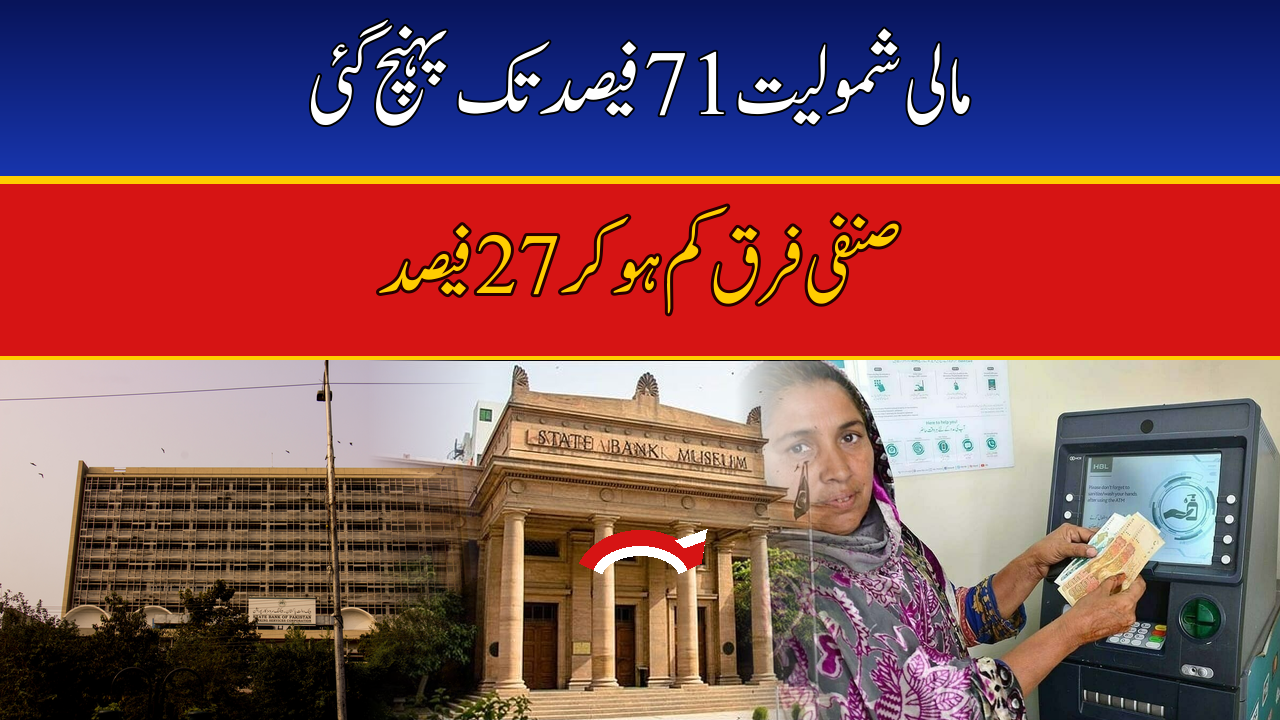
Pakistan’s financial inclusion rate has reached 71 per cent, while the gender gap in access to finance has narrowed to 27 per cent, State Bank of Pakistan (SBP) Governor Jameel Ahmad said on Tuesday. Addressing the inaugural session of a four-day joint learning programme organised by the SBP and the Alliance for Financial Inclusion (AFI) in Islamabad, the governor said the progress shows more Pakistanis than ever before are now inside the formal financial system — but warned that the people most exposed to climate shocks are still the least likely to have insurance, savings or a bank account.
| Key fact | Detail |
|---|---|
| Financial inclusion rate | 71 per cent, as stated by SBP Governor Jameel Ahmad on November 3, 2026 |
| Gender gap in financial access | 27 per cent, down from 47 per cent in 2018 and 34 per cent in 2023 |
| Who said it | SBP Governor Jameel Ahmad, at the SBP–AFI joint learning programme in Islamabad |
| Programme | Four-day programme on inclusive green finance policy, with 38 participants from central banks and regulators of 24 countries |
| 2028 targets (NFIS 2024–28) | 75 per cent inclusion and a 25 per cent gender gap by 2028 |
| Inclusion trajectory | 16 per cent (2015) → 64 per cent (2023) → 67 per cent (June 2025) → 71 per cent (November 2026) |
| Climate-finance focus | Smallholder farmers, micro and small enterprises, and low-income households |
| SBP initiatives named | Pakistan Green Taxonomy, climate-related financial risk regulations, Climate Stress Testing Guidelines (December 2025) |
| Women’s programme | Pakistan Women Inclusive Finance Programme, launched with Asian Development Bank support |
What the governor actually announced
The headline numbers came during the opening session of a four-day joint learning programme on inclusive green finance policy implementation, run by the State Bank together with the Alliance for Financial Inclusion, a global network of central banks and regulators. Thirty-eight participants from 24 countries are attending the Islamabad programme, which is about turning green finance policies into practical measures rather than leaving them on paper.
Governor Ahmad used the occasion to put Pakistan’s own numbers on the table: financial inclusion at 71 per cent, and a gender gap of 27 per cent. In plain terms, the inclusion rate measures how much of the adult population is inside the formal financial system — holding an account and able to use regulated savings, payments and credit — while the gender gap measures how far behind women remain compared with men. Both figures have moved in the right direction, and both still have a way to go before the targets the State Bank has set for 2028.
How far Pakistan has come — and what remains
The trajectory is worth spelling out, because it shows this is a decade-long climb rather than a one-year jump. Financial inclusion stood at just 16 per cent in 2015, rose to 64 per cent by 2023, reached 67 per cent by June 2025, and now stands at 71 per cent. The National Financial Inclusion Strategy for 2024–28 aims to push that to 75 per cent by 2028.
The gender story runs in parallel. The gap between men’s and women’s financial access was 47 per cent in 2018 and 34 per cent in 2023; it is now 27 per cent, with a target of 25 per cent by 2028. The State Bank credits its Banking on Equality policy — Pakistan’s first gender-mainstreaming framework for the banking sector, launched in 2021 — and its successor second edition for much of that narrowing, alongside the Pakistan Women Inclusive Finance Programme launched with Asian Development Bank support. For ordinary readers, the practical meaning is simple: millions of women who had no account a decade ago now have one, but more than a quarter of the gap remains to be closed.
Why climate finance dominated the speech
Although the inclusion numbers made the headlines, the governor’s main argument was about climate. Smallholder farmers, micro and small enterprises, and low-income households are the most exposed to floods, heat and crop failures, he said — yet they are the least likely to have insurance, savings or formal finance to recover when disaster strikes. Climate change and financial exclusion, in his framing, are linked problems: the communities facing the greatest risk have the thinnest financial cushion.
That is why the programme in Islamabad matters beyond the speeches. The State Bank pointed to three instruments it has already put in place: the Pakistan Green Taxonomy, which defines what counts as a green investment; regulations on climate-related financial risks for banks; and Climate Stress Testing Guidelines issued in December 2025, which push banks to test how their loan books would hold up under climate shocks. The idea is that finance should flow towards resilience — solar irrigation, climate-proof housing, insured crops — instead of leaving vulnerable households to borrow informally at high cost after each disaster.
What this means for ordinary account holders
For a reader wondering what a 71 per cent inclusion rate means at street level, the honest answer is that it is a national average, not a promise about any one person’s experience. If you already hold a bank or microfinance account, use a digital wallet linked to the formal system, or receive salary or remittances through a bank, you are counted inside that 71 per cent. If you still deal entirely in cash — as many small traders, daily wagers and rural households do — you are part of the remaining share the State Bank is trying to reach before 2028.
The gender gap figure matters in the same practical way. A woman opening her first account, or a woman entrepreneur moving from informal borrowing to a formal loan, is exactly the kind of change the 27 per cent figure is tracking. The State Bank’s own message to banks has been consistent: women’s access is not a side project but a driver of growth, because households with an account save more, borrow more safely and recover faster from shocks.
None of this means the job is done. The governor’s own framing — celebrating 71 per cent while pointing to the households still outside — is a reminder that the last stretch, from 71 to 75 per cent, will be harder than the earlier gains, because it means reaching the most remote, the poorest and the most climate-exposed Pakistanis first.
Frequently Asked Questions
What is Pakistan’s financial inclusion rate now?
71 per cent, according to State Bank Governor Jameel Ahmad, speaking in Islamabad on November 3, 2026, at the SBP–Alliance for Financial Inclusion joint learning programme.
What is the gender gap in financial inclusion?
27 per cent. The gap was 47 per cent in 2018 and 34 per cent in 2023, and the National Financial Inclusion Strategy targets 25 per cent by 2028.
What is financial inclusion, in simple terms?
It is the share of the adult population that uses formal financial services — holding a bank or microfinance account and being able to save, pay and borrow through regulated institutions, rather than relying entirely on cash or informal lenders.
What are Pakistan’s financial inclusion targets for 2028?
Under the National Financial Inclusion Strategy 2024–28, the State Bank aims to raise inclusion to 75 per cent and reduce the gender gap to 25 per cent by 2028.
Why did the SBP governor link climate change with financial inclusion?
Because the people most exposed to climate shocks — smallholder farmers, micro and small enterprises, and low-income households — are the least likely to have insurance, savings or formal finance to recover, so extending climate finance to them is central to the State Bank’s agenda.
What is the Pakistan Green Taxonomy?
It is the State Bank’s framework defining which investments count as green, alongside climate-related financial risk regulations and Climate Stress Testing Guidelines issued in December 2025, designed to steer bank lending towards climate resilience.
What is the Pakistan Women Inclusive Finance Programme?
A programme launched by the State Bank with Asian Development Bank support to expand women’s access to finance, complementing the Banking on Equality policy for the banking sector.
Related reading: Banking Mohtasib Secures Rs1.2 Billion in Refunds for Bank Customers | Pakistan Elected Chair of Borrowers’ Platform Governing Council | Govt Ends LPG Monopoly: Quota System Abolished, Transparent Auctions to Cut Cylinder Prices