Saudi-Pakistan Private Equity Fund Launched — 75% of the Money Will Be Invested in Pakistan
Saudi-Pakistan Private Equity Fund Launched — 75% of the Money Will Be Invested in Pakistan By Bilal Ahmed | Published: 9 November 2026 | Category: Business Saudi and Pakistani investors have launched a new private equity fund to boost trade and investment between the two countries, signing a memorandum of understanding in Islamabad on Monday,…
Saudi-Pakistan Private Equity Fund Launched — 75% of the Money Will Be Invested in Pakistan
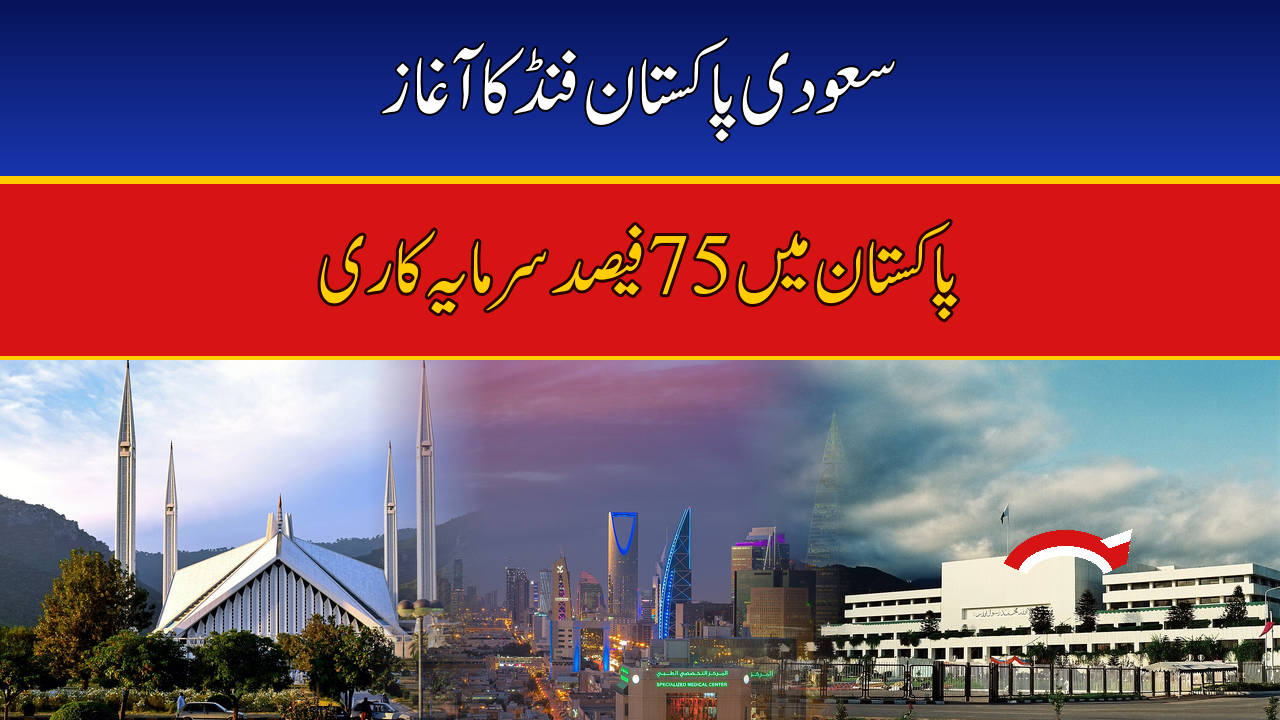
Saudi and Pakistani investors have launched a new private equity fund to boost trade and investment between the two countries, signing a memorandum of understanding in Islamabad on Monday, 9 November 2026. The Saudi-Pakistan Joint Business Council (SPJBC) says the fund will start at a “multi-hundred million” size and grow from there, with three-quarters of the money — 75% — to be invested in Pakistan and the remaining 25% in Saudi Arabian projects.
It is the most concrete private-sector investment step to come out of the rapidly deepening Saudi-Pakistan relationship this year — and it matters because this is not a government loan or a deposit. It is private capital, contributed equally by Saudi and Pakistani investors, aimed at real businesses: farms, mines, construction firms, ports, power companies and technology ventures.
Key Facts
| Detail | What we know |
|---|---|
| Fund | Saudi-Pakistan Private Equity Fund |
| Announced | Monday, 9 November 2026 (MoU signed) |
| Launched by | Saudi-Pakistan Joint Business Council (SPJBC) |
| Initial size | “Multi-hundred million” — no exact figure announced |
| Where the money goes | 75% in Pakistan, 25% in Saudi Arabia |
| Who pays in | Saudi and Pakistani private investors, contributing equally |
| Chairman | Prince Mansour bin Mohammad Al Saud |
| Pakistani Co-Chair | Fawad Mukhtar, Chairman, Fatima Group |
| Target sectors | Agriculture, mining, construction, airports, motorways, ports and maritime, energy, power distribution, IT |
| Status | Regulatory approvals pending; fund structuring and first investments to follow |
What Exactly Was Announced?
The Saudi-Pakistan Joint Business Council, a body formed by the governments of both countries to deepen private-sector trade and investment, signed the MoU on Monday to establish the fund. Council members from both countries attended, with the Pakistani side led in part by Fawad Mukhtar, the council’s Co-Chair and Chairman of Fatima Group, who joined virtually.
The council said the fund’s initial size is “multi-hundred million” and is expected to expand based on the opportunities available across sectors. No exact figure has been announced — the council deliberately described the size in broad terms, with growth tied to the quality of the deals it finds rather than a fixed headline number.
Saudi and Pakistani private investors will contribute equally to the fund, so neither side is a junior partner. That matters: it makes the fund a genuinely joint vehicle rather than a one-way flow of Gulf money into Pakistan, and it gives Pakistani business groups a direct stake in the fund’s decisions.
Where the Money Will Go
The split is the clearest part of the announcement. Three-quarters of the fund will be invested in Pakistan, while the rest will go to Saudi Arabian projects, the council said. In practice, the bulk of the capital is earmarked for Pakistani businesses and assets, with a smaller share reserved for opportunities inside the Kingdom, including commercial investments in the holy cities.
The fund intends to invest in high-growth private businesses, with a focus on agriculture, mining and industries including construction. It will also look at commercial projects arising from the Government of Pakistan’s programme to monetise its land bank — including airports and motorway development, and port and maritime development — unlocking the value of under-utilised public land through commercially structured, transparent investments.
That land-bank angle is worth watching closely. Pakistan has been moving to raise money from state assets and bring private capital into infrastructure, and the government has already been working on a privatisation push. Pakistan aims to raise $1 billion through the privatisation of five to six entities, and a fund of this kind — with Gulf capital and local business backing — is exactly the sort of buyer and partner such a programme needs.
Who Is Behind the Fund?
The council is chaired by Prince Mansour bin Mohammad Al Saud, who led a high-level Saudi business delegation to Pakistan in October, meeting political leaders, senior officials, chambers of commerce and leading business groups.
At the signing, Prince Mansour said the two countries were “bound by a friendship and kinship that run deeper than any agreement”, adding that Pakistan was a natural partner for the Kingdom and that Saudi investors were looking for partners and markets where they could grow with confidence. “Having looked closely at Pakistan, what we see today is a more stable economy with real opportunities,” he said.
Several of Pakistan’s most prominent business figures were involved, including the chief executives of The Bank of Punjab, Habib Bank Limited, Faysal Bank and United Bank Limited, and the heads of Lake City Group and Bestway Group. Arif Habib, the veteran stockbroker and businessman, described the fund as “a vote of confidence in profitable investment opportunities in Pakistan”.
On the Saudi side, the signing was attended by the council’s two vice chairmen, Mohammad bin Abdulaziz Al Ajlan, CEO of Al Ajlan Group, and Abdulaziz Bin Ali Al Ashrafi of Tayba Group, along with other Saudi business leaders.
The MoU also allows institutions on both sides to be invited to participate in the equity of the fund management company — banks and investment institutions from Pakistan and Saudi Arabia could take ownership stakes in the company that will run the fund.
What Has to Happen Before the First Investment?
The fund is not investing tomorrow. Its establishment must comply with the regulatory requirements of both governments, and only once approvals are in place will the two sides move ahead with the fund’s structuring and first investments. That is a normal sequence for a cross-border fund — but it is also the point at which announcements like this are most often tested. For now, the honest position is that the MoU is a commitment to build the fund, not a completed fund. The size is described, not fixed. The sectors are named, not yet funded.
Why This Matters for Pakistan
The launch comes at a moment when Islamabad and Riyadh are deepening ties across the board — not just in business, but in defence and diplomacy too. In August this year, Prince Mansour called on Prime Minister Muhammad Shehbaz Sharif at the PM House during a visit to Pakistan, and the two sides discussed investment in agriculture, ports, highways, airport outsourcing, real estate, energy, power distribution and information technology.
That August meeting followed the signing on 7 August of a joint defence agreement between Pakistan and Saudi Arabia, alongside Turkiye, pledging to strengthen collective security and deepen defence cooperation. Later the same month, the two countries agreed to boost Pakistani agricultural and food exports to the Gulf state up to $3 billion. And in June, Pakistan invited Saudi investors to take part in building the long-awaited Sukkur-Hyderabad Motorway (M6) and two other major highway projects.
The financial relationship has also been steadied from the Saudi side: Saudi Arabia has rolled over its $3 billion deposit with Pakistan, a move that has repeatedly helped shore up Pakistan’s foreign exchange reserves. The new fund adds a different, longer-term layer — equity investment in productive businesses rather than short-term balance-of-payments support. It also fits a wider pattern of Gulf engagement: Oman’s Foreign Minister visited Pakistan for a joint ministerial commission, another sign that the region’s capitals are treating Pakistan as a serious investment destination again.
The real test will be the first deals. A fund that moves quickly into agriculture, mining or power distribution — sectors where Pakistan has genuine assets and genuine bottlenecks — could do more for confidence than any number of MoUs. For Pakistani businesses, the fund’s arrival means a new, well-capitalised buyer and partner is entering the market. For ordinary Pakistanis, the payoff will only be visible if the money turns into jobs, exports and better infrastructure.
What to Watch Next
Three things will show whether the fund lives up to its announcement: the regulatory approvals and formal structuring, the naming of the fund management company and whether institutions from both sides take equity in it, and the first investments — which sectors they land in, and how quickly they follow.
FAQs
How big is the Saudi-Pakistan private equity fund?
The council has said only that the fund’s initial size is “multi-hundred million” and is expected to expand based on the opportunities available. No exact figure has been announced, so any specific number circulating online should be treated with caution until the council confirms it.
How much of the fund will be invested in Pakistan?
Three-quarters — 75% — of the fund will be invested in Pakistan, while the remaining 25% will go to Saudi Arabian projects, according to the council’s statement.
Which sectors will the fund target?
Agriculture, mining and construction, plus commercial projects from the government’s land-bank monetisation programme, including airports, motorways, ports and maritime development. It will also look at energy, power distribution and information technology, and commercial investments in Saudi Arabia, including in the holy cities.
Who is running the fund?
The fund was launched by the Saudi-Pakistan Joint Business Council, chaired by Prince Mansour bin Mohammad Al Saud, with Fawad Mukhtar, Chairman of Fatima Group, as the Pakistani Co-Chair. Institutions from both countries may be invited to take equity in the fund management company.
When will the fund make its first investments?
Not immediately. The fund must first comply with the regulatory requirements of both governments. Once approvals are in place, the two sides will move ahead with the fund’s structuring and its first investments.
Is this part of a wider Saudi-Pakistan economic push?
Yes. The fund follows a series of steps this year, including Prince Mansour’s August meeting with Prime Minister Shehbaz Sharif, the joint defence agreement signed on 7 August, an agreement to boost Pakistani agricultural and food exports to Saudi Arabia up to $3 billion, and Saudi Arabia’s rollover of its $3 billion deposit with Pakistan.
The Saudi-Pakistan private equity fund is a serious signal of intent from private investors on both sides — equal partners, a clear 75-25 split in Pakistan’s favour, and a target list covering the sectors where Pakistan most needs capital. The announcement is the easy part. Now comes the work of approvals, structuring and the first deal.