Japan to Expand Training and Skills Cooperation with Pakistan, Ambassador Says
By Daniyal Sheikh | 18 November 2026 Japan and Pakistan will expand cooperation on professional training and skills development, Japanese Ambassador to Pakistan Shuichi Akamatsu said while addressing the closing ceremony of the Japanese Workplace Excellence Programme in Islamabad on Tuesday, 17 November 2026. The ambassador said Japan attaches great importance to sharing its work…
By Daniyal Sheikh | 18 November 2026
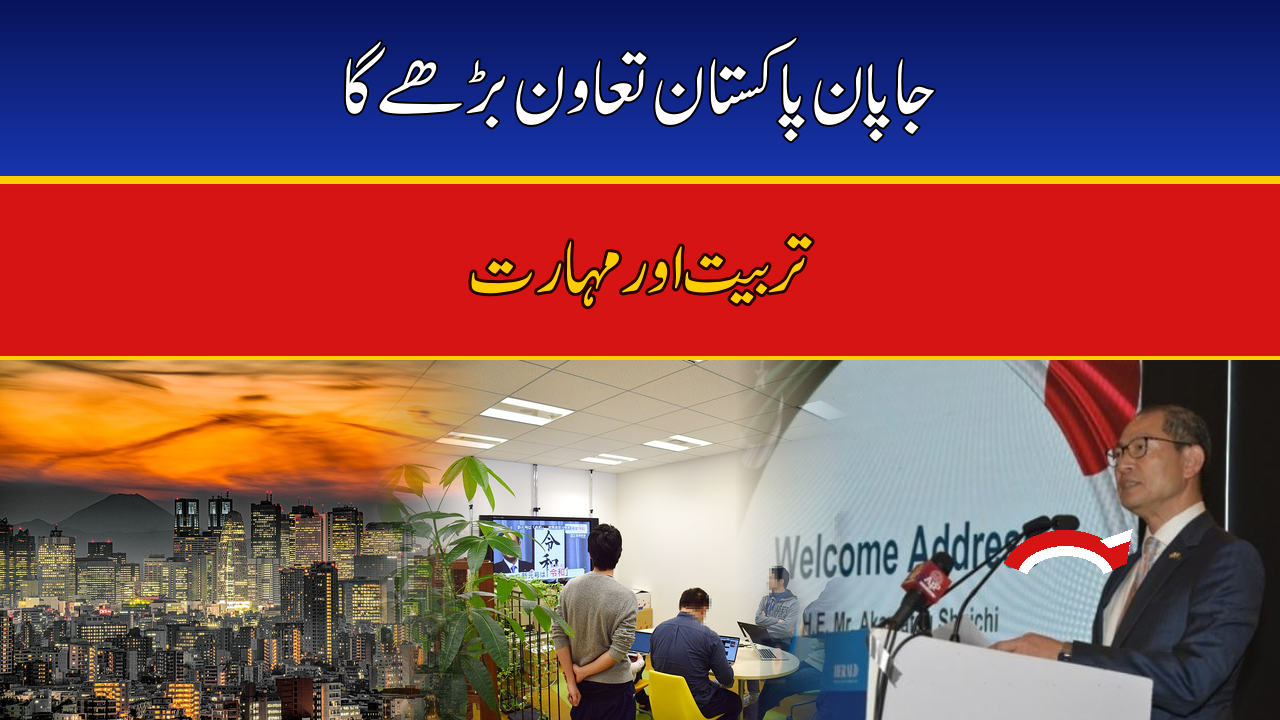
Japan and Pakistan will expand cooperation on professional training and skills development, Japanese Ambassador to Pakistan Shuichi Akamatsu said while addressing the closing ceremony of the Japanese Workplace Excellence Programme in Islamabad on Tuesday, 17 November 2026. The ambassador said Japan attaches great importance to sharing its work culture, discipline, quality standards and professional expertise with Pakistan, and that both countries should explore new opportunities for training, skills development and the exchange of experiences.
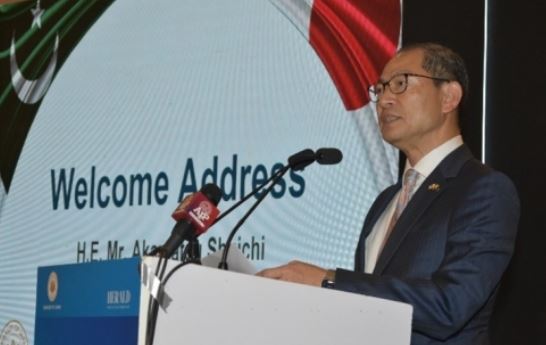
The announcement came at the end of a training programme jointly organised by the Japan Pakistan Advancement Centre (JPAC), the Pakistan Japan Business Forum (PJBF) and the Quality Enhancement Cell (QEC) of Allama Iqbal Open University (AIOU). A book on Japanese work culture and professional skills was also launched at the ceremony.
Key facts
| Detail | What we know |
|---|---|
| Announcement | Japan and Pakistan to expand professional training and skills cooperation |
| Announced by | Shuichi Akamatsu, Japanese Ambassador to Pakistan |
| Date and place | Tuesday, 17 November 2026, Islamabad |
| Occasion | Closing ceremony of the Japanese Workplace Excellence Programme |
| Organisers | Japan Pakistan Advancement Centre (JPAC), Pakistan Japan Business Forum (PJBF), AIOU Quality Enhancement Cell (QEC) |
| Resource person | Dr Kamran Musa, Pakistan Institute of Quality Control (PIQC) |
| Other speakers | Murtaza Y. Mandviwalla (PJBF Chairman), Syed Feroz Alam Shah (PJBF Vice Chairman), Dr Saima Nasir (Director, AIOU Directorate of Quality Enhancement) |
| Also launched | A book on Japanese work culture and professional skills |
What the ambassador said
Ambassador Akamatsu said Japan attaches great importance to sharing its successful work culture, discipline, quality standards and professional expertise with Pakistan. He said such initiatives can broaden cooperation between the two countries while enhancing the institutional capacity and professional competencies of Pakistani organisations.
He called for new opportunities in professional training, skills development and the exchange of experiences to be explored, so that friendly relations between Pakistan and Japan keep growing stronger.
What the programme taught
The Japanese Workplace Excellence Programme aimed to familiarise participants with Japanese work culture and modern management principles, and to show how quality, productivity and professional performance inside organisations can be improved.
Dr Kamran Musa of the Pakistan Institute of Quality Control served as the programme’s resource person. He briefed participants on Japanese workplace management, quality improvement, effective planning, discipline and systematic work practices, using practical examples to show that continuous improvement, collective responsibility, effective strategies and a professional attitude are essential for achieving excellence in organisations.

PJBF Chairman Murtaza Y. Mandviwalla and Vice Chairman Syed Feroz Alam Shah also spoke at the ceremony. They highlighted the importance of strengthening Pakistan-Japan relations through professional collaboration, knowledge sharing and the promotion of Japanese workplace practices in Pakistani organisations. Participants were congratulated on successfully completing the programme.
Dr Saima Nasir, Director of AIOU’s Directorate of Quality Enhancement, said making quality an integral part of institutional culture has become essential for organisational growth and success. She said Japanese work culture, with its emphasis on discipline, punctuality, teamwork and continuous improvement, serves as a model worthy of emulation across the world, and that such training programmes not only enhance employees’ professional capabilities but also improve quality, transparency and overall institutional performance.
Japanese work practices at a glance
| Practice | What it means in plain words |
|---|---|
| Discipline and punctuality | Time is treated as a promise. Meetings start on time, deadlines are kept, and being late is taken seriously. |
| Continuous improvement (kaizen) | Small, steady improvements every day, instead of waiting for one big change. Everyone is expected to suggest better ways of working. |
| Teamwork and collective responsibility | Success and failure belong to the team, not one person. Colleagues support each other and share responsibility for results. |
| Quality standards | Work is checked at every step, not only at the end. Errors are fixed at the source so they do not repeat. |
| Systematic planning | Tasks are planned in detail before they begin, with clear roles, so that nothing important is left to chance. |
Why this matters for Pakistani professionals and students
For Pakistani professionals, the value of this cooperation is practical. Japanese workplace methods are used by some of the world’s most respected companies, and training in them can make a real difference in how a Pakistani organisation plans its work, controls quality and serves its customers. For students and young graduates, skills linked to Japanese work culture, especially when combined with Japanese language ability, can open doors to jobs with Japanese companies operating in Pakistan and to work opportunities in Japan itself.

Interest in Japan is already visible. A six-month Japanese Language Course run under the patronage of the Consulate General of Japan in Karachi began a new session on 11 November 2026 at the Pakistan Japan Cultural Association in Karachi, aimed at students, professionals and business people who want to learn Japanese for higher education, employment, cultural exchange and business communication. The language course and the workplace training point in the same direction: practical skills that connect Pakistanis with Japan.
Islamabad remains the centre of this diplomatic and institutional engagement. Pakistan’s capital regularly hosts such ceremonies and cooperation announcements, and the city’s institutions, including AIOU, are natural partners for training programmes of this kind. Readers following Pakistan’s diplomatic calendar can also see how other partnerships are developing, such as Italy’s new embassy in Islamabad, while regional connectivity is expanding through projects like Pakistan-Turkmenistan direct flights and trade corridors.

What this announcement is, and what it is not
It is important to be clear about the scale of this news. This is a cooperation announcement made at a training programme’s closing ceremony, not a signed agreement with published funding figures, vacancy numbers or deadlines. No such numbers were announced at the ceremony, and this article does not invent any. What was announced is a direction: more professional training, more skills development and more exchange of experience between the two countries.
That matters because skills cooperation of this kind usually grows step by step. A training programme finishes, a book is launched, institutions stay in touch, and further courses and exchanges follow. For Pakistanis watching for real opportunities, the sensible next step is to follow announcements from JPAC, PJBF and AIOU, and to keep an eye on Japanese language and skills courses, rather than expecting a single job advertisement to appear overnight. The wider economic picture also matters for anyone planning to work abroad: Pakistan’s remittances reached $3.9 billion in October 2026, showing how much overseas work already contributes to the economy.
Frequently asked questions
What did Japan announce about training cooperation with Pakistan?
Japanese Ambassador Shuichi Akamatsu said Japan and Pakistan will expand professional training and skills cooperation, including new opportunities for training, skills development and exchange of experiences. He said this at the closing ceremony of the Japanese Workplace Excellence Programme in Islamabad on 17 November 2026.
What is the Japanese Workplace Excellence Programme?
It is a training programme that familiarises participants with Japanese work culture and modern management principles, including quality improvement, productivity, discipline and systematic work practices. It was jointly organised by the Japan Pakistan Advancement Centre, the Pakistan Japan Business Forum and Allama Iqbal Open University’s Quality Enhancement Cell.
Who was the resource person for the programme?
Dr Kamran Musa from the Pakistan Institute of Quality Control (PIQC) served as the resource person. He briefed participants on Japanese workplace management, quality improvement, effective planning, discipline and systematic work practices.
What is kaizen, and why does it matter?
Kaizen is the Japanese idea of continuous improvement: small, steady improvements made every day by everyone in an organisation, rather than waiting for one big change. Speakers at the ceremony highlighted continuous improvement, along with punctuality, discipline and teamwork, as practices Pakistani organisations can learn from.
How can Pakistanis learn Japanese for jobs or study in Japan?
A six-month Japanese Language Course under the patronage of the Consulate General of Japan in Karachi began a new session on 11 November 2026 at the Pakistan Japan Cultural Association in Karachi. It is aimed at students, professionals and business people learning Japanese for higher education, employment, cultural exchange and business communication.
Does this announcement include jobs or funding figures?
No. No vacancy counts, funding amounts or deadlines were announced at the ceremony. This is a cooperation announcement from a training programme’s closing ceremony, and further details are expected to come from the organising institutions, JPAC, PJBF and AIOU.
Updated: 18 November 2026. This article will be updated if the organising institutions announce further training programmes, courses or exchanges.